

Flossing does not whiten teeth in the chemical sense. It removes plaque, food debris, and surface buildup between your teeth, which can make your smile look brighter and cleaner, but it does not bleach the tooth itself. The real distinction is mechanical cleaning versus chemical whitening, and understanding that difference shapes everything else in your routine.
TL;DR:
- Flossing removes surface plaque and debris, creating an optical effect that makes teeth appear brighter but does not alter the actual tooth color.
- Whitening coated floss offers a mild polishing effect, yet it only provides a light abrasive scrub rather than a true bleaching treatment.
- Proper flossing technique, including gentle guiding and flossing beneath the gumline, is essential for effective cleaning and reducing inflammation.
- Chemical whitening requires peroxide-based products to penetrate the enamel and work on intrinsic stains, which flossing alone cannot achieve.
- Building an effective routine involves daily flossing, brushing, and using whitening products as directed, with professional treatment for deeper discolorations.
Table of Contents
- Does Flossing Whiten Teeth by Removing Plaque and Stains?
- Which Floss Types Actually Help With Stains?
- How to Floss the Right Way (and What Bleeding Means)
- Flossing vs. Whitening Strips: What Each One Actually Fixes
- Building a Routine That Actually Brightens Your Smile
- Why This Advice Holds Up
- The Real Problem With How This Question Gets Marketed
- Sources
Does Flossing Whiten Teeth by Removing Plaque and Stains?
Plaque is a sticky film of bacteria that builds up along the gumline and between teeth within hours of eating. Left alone, it picks up pigment from coffee, wine, and other foods, forming what dentists call extrinsic stains: the yellowish or grayish tint sitting on the tooth’s outer surface rather than inside the enamel.
Flossing physically scrapes that film out from between teeth where a toothbrush cannot reach. Once the plaque and trapped particles are gone, the natural enamel underneath is visible again, which often looks noticeably lighter by comparison. That is an optical shift, not a chemical one. Nothing about the tooth’s actual pigment changes.
There is a second, less obvious factor: gum health. Inflamed, reddened gums draw the eye and make the whole smile look duller. Consistent flossing reduces that inflammation over time, and healthy pink gums frame the teeth in a way that makes them appear brighter, even when the enamel shade hasn’t shifted at all.
What’s actually happening when your smile “looks whiter” after flossing:
- Plaque and food particles are cleared from between teeth, exposing natural enamel.
- Extrinsic surface stains from coffee, tea, or wine get disrupted before they set in.
- Gum tissue calms down, reducing redness that makes teeth look duller by contrast.
- Bad breath and buildup near the gumline are reduced, which supports the overall clean look of a smile.
Which Floss Types Actually Help With Stains?
Not all floss works the same way, and the marketing on some “whitening” products overstates what a piece of string can do.
- Standard waxed or unwaxed floss removes plaque and debris effectively; the material itself doesn’t affect tooth color.
- Whitening-coated floss (often listing silica or calcium peroxide) adds a mild polishing agent that can buff away light surface stain during the pass. The effect is real but modest, closer to a light abrasive scrub than a bleaching treatment.
- Interdental brushes work well for wider gaps between teeth and can dislodge stubborn debris a flat floss strand slides past.
- Water flossers flush out loose particles with pressurized water, useful for people with braces or bridges, though they’re less effective than floss at scraping adherent plaque.
The plausible claim across all of these is mechanical: they remove what’s sitting on the tooth. Any claim that a floss “lifts stains” the way a peroxide gel does is stretching the science.
How to Floss the Right Way (and What Bleeding Means)
Technique matters more than most people realize. Snapping floss between teeth or skipping the gumline defeats most of the purpose.
- Break off about 18 inches of floss and wind most of it around your middle fingers, leaving a couple of inches to work with.
- Guide the floss between two teeth using a gentle back-and-forth motion, never snapping it into the gum.
- Curve the floss into a C shape against one tooth and slide it beneath the gumline.
- Move it up and down against the tooth surface, then repeat on the neighboring tooth before moving to the next gap.
- Use a fresh section of floss for each space to avoid redistributing bacteria.
Daily flossing, ideally before bed, is the standard recommendation from the American Dental Association, since it clears the day’s buildup before it sits overnight. Occasional light bleeding when you start flossing regularly usually means your gums are inflamed and adjusting; it typically settles within a week or two. Bleeding that persists past that point, or that comes with swelling or pain, is worth mentioning to a dentist.
Pro Tip: Floss before you brush, not after. It loosens debris between teeth so your toothpaste’s fluoride and any whitening agents can actually reach the tooth surface instead of stopping at the plaque layer.
Flossing vs. Whitening Strips: What Each One Actually Fixes
Chemical whitening and mechanical cleaning solve two different problems, and confusing them is where most people waste money or time.
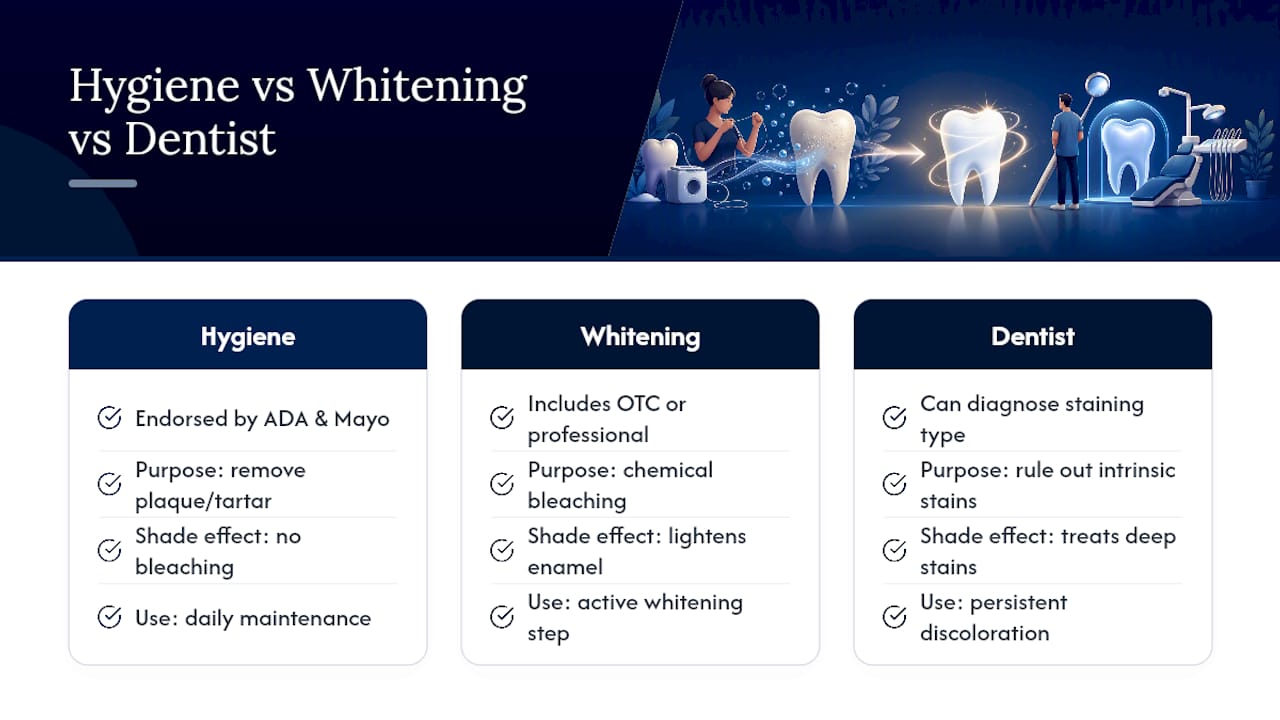
Bleaching agents like hydrogen peroxide or carbamide peroxide work by breaking stain molecules down into smaller, less pigmented pieces, according to the American Dental Association. That chemical reaction penetrates into the enamel and even the dentin underneath, which is why it can lighten intrinsic discoloration, the kind that comes from aging, genetics, or certain medications, not just surface grime. Flossing and brushing cannot touch that layer at all.
Here’s how the realistic timelines stack up:
- Whitening toothpaste relies on abrasives and sometimes an optical agent called blue covarine; expect a subtle change over two to six weeks, according to Mayo Clinic.
- Peroxide-based strips and gels work faster and more visibly, though they can cause temporary sensitivity.
- Professional in-office bleaching or dentist-supplied trays deliver the strongest, most consistent results, per the ADA, but sensitivity risk is higher without proper guidance.
At-home whitening generally needs several days to weeks of consistent use before you see real lightening, according to Cleveland Clinic. Flossing doesn’t speed up that chemical process, but it does something bleaching can’t: it keeps gums calm and healthy, which lowers irritation risk when you do add a peroxide product into the mix.
One number worth remembering: whitening toothpaste alone can take two to six weeks to show a visible difference, while peroxide-based options move faster but carry a real sensitivity tradeoff, per Mayo Clinic.
Building a Routine That Actually Brightens Your Smile
The most reliable approach pairs daily mechanical cleaning with a whitening product matched to your goals and sensitivity level. Here’s a realistic weekly structure:
- Brush twice daily with a fluoride or whitening toothpaste, two minutes each session.
- Floss once daily, ideally at night, to clear plaque before it hardens into tartar.
- Apply a whitening product (strips, pen, or gel) on the schedule its instructions specify, rather than daily indefinitely.
- Rinse with water after coffee, tea, or red wine to limit how long pigment sits on enamel.
- Cut back on smoking and heavily pigmented foods if re-staining happens quickly after treatment.
Over the counter options work fine for surface stains and mild yellowing. If your teeth carry deeper discoloration, have visible restorations, or you’ve tried OTC products without results, that’s the point to see a dentist rather than escalate the home routine. A comparison of whitening treatment options can help you figure out which tier actually fits your situation before you spend money guessing.
Why This Advice Holds Up
This isn’t a fringe take. The American Dental Association and Mayo Clinic both draw the same line between mechanical cleaning and chemical bleaching, and neither claims flossing alters tooth shade. For readers building a maintenance routine, the evidence points to one conclusion: daily hygiene protects your results, it doesn’t replace an actual whitening step. If discoloration persists after weeks of consistent flossing and an OTC product, a dentist can rule out intrinsic staining that no amount of brushing will touch.
The Real Problem With How This Question Gets Marketed
Most of the confusion around flossing and whitening comes from product copy, not dentistry. Brands attach “whitening” to floss packaging because the word sells, not because silica-coated string competes with a peroxide gel. That’s not dishonest exactly, but it sets people up to expect a bleaching effect from a cleaning tool.
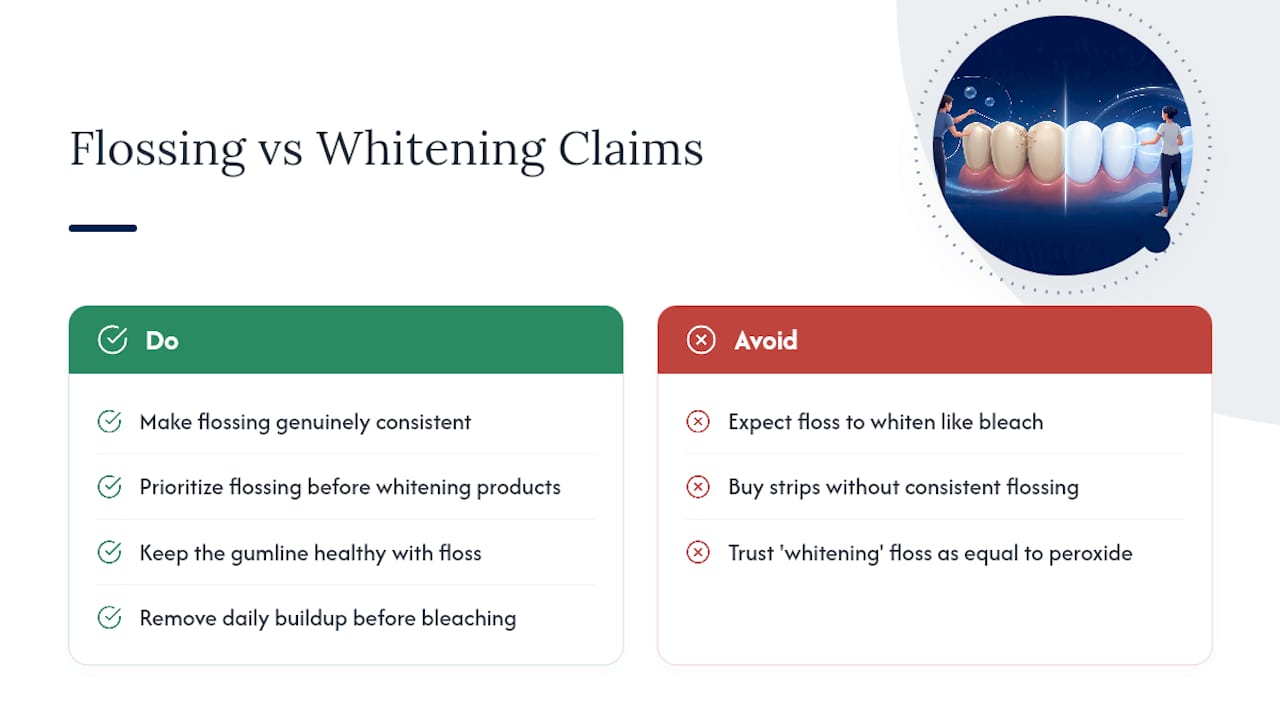
The bigger miss in most advice on this topic is that it treats flossing as either everything or nothing: either it’s dismissed as irrelevant to appearance, or it’s oversold as a whitening method. Neither is accurate. Flossing is the maintenance layer that makes any whitening product actually work better and last longer, by keeping the gumline healthy and clearing the daily buildup that would otherwise dull results.
If you’re chasing a brighter smile, prioritize the boring part first: get flossing genuinely consistent before you spend money on stronger whitening. A peroxide strip applied over neglected gums and thick plaque is fighting an uphill battle it doesn’t need to fight.
— Lenney
This article is general information, not a substitute for advice from a qualified doctor. Consult a qualified healthcare professional about your own circumstances before acting on anything here.
Sources
- How to brighten your smile | Cleveland Clinic (podcast/resource)
- Whitening | American Dental Association
- Mayo Clinic Q&A: Many safe choices available to help whiten teeth