

You’ve probably seen the claims: rub lemon juice on your teeth, brush with charcoal, or just buy a whitening toothpaste and watch your smile transform. Common teeth whitening misconceptions like these are everywhere, and they cost people real money, real enamel, and real disappointment. The gap between what people believe about whitening and what actually works is wider than most realize. This guide cuts through the noise with evidence-backed facts so you can make smarter decisions about your smile.
Table of Contents
- Key takeaways
- 1. Common teeth whitening misconceptions start with toothpaste
- 2. Charcoal and acidic fruits are not safe whitening shortcuts
- 3. Whitening does not work on crowns, veneers, or fillings
- 4. Teeth whitening is not inherently painful or dangerous
- 5. How to navigate teeth whitening myths and make smarter choices
- My honest take on why these myths refuse to die
- Safe, effective whitening from Getsmilefam
- FAQ
Key takeaways
| Point | Details |
|---|---|
| Toothpaste has real limits | Whitening toothpaste removes surface stains but cannot change your tooth’s intrinsic color. |
| Natural remedies can cause harm | Charcoal and acidic fruits risk enamel erosion without delivering real whitening results. |
| Restorations don’t respond to whitening | Crowns, veneers, and fillings keep their original shade regardless of treatment. |
| Sensitivity is manageable, not inevitable | Most side effects come from misuse or ill-fitting trays, not the whitening itself. |
| Stain type determines success | Matching your whitening method to your specific stain type is what actually drives results. |
1. Common teeth whitening misconceptions start with toothpaste
Whitening toothpaste is one of the most misunderstood products in oral care. Many people reach for it expecting the same results as a professional bleaching treatment. The reality is much more limited.
Whitening toothpaste only removes surface stains caused by coffee, tea, or food. It does not contain the bleaching agents needed to alter the intrinsic color of your enamel. True whitening requires a peroxide-based agent to stay in contact with the tooth surface for an extended period, something a two-minute brushing session simply cannot achieve.
Here is what separates whitening toothpaste from actual whitening treatments:
- Surface action only: Toothpaste uses mild abrasives or low-concentration peroxide to polish away extrinsic stains
- No contact time: Bleaching chemistry requires sustained exposure. Rinsing the product away after brushing cuts that process short
- No shade change: Professional treatments work on the dentin layer beneath enamel to lighten intrinsic color
- Maintenance role: Whitening toothpaste shines as a maintenance tool after treatment, not as a standalone solution
Pro Tip: If you want to get the most from a whitening toothpaste, use it after completing a proper bleaching treatment to keep your results looking fresh. The BLU Whitening Toothpaste from Getsmilefam is specifically designed for this kind of maintenance.
2. Charcoal and acidic fruits are not safe whitening shortcuts
Social media has turned activated charcoal and lemon juice into wellness darlings. The idea that something “natural” must also be safe and effective is one of the more stubborn teeth whitening myths circulating today.

Activated charcoal works through abrasion, not bleaching. It scrubs away surface debris in the same way sandpaper removes paint. That might sound effective until you realize that enamel does not grow back. Charcoal toothpaste lacks clinical evidence for both safety and whitening efficacy, with the American Dental Association noting potential risks to enamel integrity. Repeated abrasive use thins the enamel layer, which actually makes teeth look more yellow over time because the darker dentin underneath becomes more visible.
Acidic fruits like lemons and strawberries follow the same destructive logic. Frequent acid exposure softens enamel and makes it prone to erosion and sensitivity. Any temporary brightness you notice comes from acid dissolving a thin layer of enamel, not from any whitening chemistry. That is not a trade worth making.
The risks from these methods include:
- Accelerated enamel thinning and increased translucency
- Heightened tooth sensitivity to hot and cold
- Greater vulnerability to cavities as enamel weakens
- Uneven color results as some areas erode faster than others
Pro Tip: Before adding any trending whitening product to your routine, check whether it carries an ADA Seal of Acceptance or uses clinically studied ingredients. If it does not, treat the claims with skepticism.
3. Whitening does not work on crowns, veneers, or fillings
This is one of the most consequential misunderstandings about teeth whitening, especially for anyone who has had cosmetic dental work done. People often assume that whitening treatments will bring all their teeth to the same bright shade. That is not how it works.
Restorations maintain their original shade regardless of whitening treatment. Crowns, veneers, porcelain fillings, and composite bonding are made from materials that simply do not absorb bleaching agents. If you whiten your natural teeth without accounting for existing restorations, the result is often a color mismatch that is actually more noticeable than any staining you started with.
| Feature | Natural teeth | Restorations (crowns, veneers, fillings) |
|---|---|---|
| Responds to bleaching agents | Yes | No |
| Can lighten several shades | Yes | No |
| Color may fade over time | Yes | Stays fixed to original shade |
| Risk of color mismatch | Low if done uniformly | High if whitening done afterward |
| Requires replacement for shade change | No | Yes |
Beyond restorations, whitening results on natural teeth are also not permanent. Lifestyle habits like drinking coffee, red wine, and smoking gradually restain enamel over months. Intrinsic stains caused by aging, certain medications like tetracycline, or early dental trauma are less responsive to whitening treatments and often require a customized protocol or alternative cosmetic approaches.
Pro Tip: If you have crowns or veneers, consult your dentist before whitening. You may need to time your natural tooth whitening to match any planned restoration replacements.
4. Teeth whitening is not inherently painful or dangerous
Fear of sensitivity keeps many people from trying whitening at all, and it is one of the most widespread common whitening misconceptions. Yes, some people experience temporary sensitivity or mild gum irritation. No, that does not mean whitening is harmful by nature.
The research is clear that hydrogen peroxide concentration, contact time, and pH are the variables that determine whether a product causes side effects. Properly formulated and correctly applied products minimize those risks significantly. Most adverse effects people report trace back to specific causes that are entirely preventable:
- Ill-fitting trays: When a tray does not seal properly, gel leaks onto the gums and causes irritation
- Overuse: Leaving whitening products on longer than directed concentrates the chemical action unnecessarily
- High concentrations without supervision: Over-the-counter products with unusually high peroxide percentages increase sensitivity risk
- Pre-existing sensitivity: People with exposed dentin or worn enamel are more susceptible before whitening even begins
Sensitivity from tray-based whitening is reduced substantially when the tray fits well enough to prevent gel from contacting the gums. That single factor accounts for the majority of gum-related complaints. For people who already have sensitive teeth, lower-concentration formulas applied over more sessions are often just as effective with far less discomfort. You can explore whitening options for sensitive teeth that are specifically designed to minimize these concerns.
Pro Tip: If you experience sensitivity during whitening, try spacing sessions further apart and using a desensitizing toothpaste in between. Most sensitivity resolves within 24 to 48 hours of stopping treatment.
5. How to navigate teeth whitening myths and make smarter choices
Knowing what is false is only half the battle. The other half is building a decision-making approach that actually serves your goals. Sorting through teeth whitening facts vs myths becomes much easier once you have a framework.
-
Match the method to the stain. Surface stains from food and drinks respond well to at-home peroxide-based products. Intrinsic stains from aging or medications often need professional-grade treatment or extended protocols. Skipping this match is the single biggest reason people feel whitening “did not work” for them.
-
Get a baseline consultation. A dentist can identify restoration placements, screen for enamel thinning, and recommend the right concentration range for your situation. This is not an upsell. It is protection against wasted time and money. Learn more about what to expect from whitening results and professional guidance before you begin.
-
Build a maintenance routine. Whitening results fade. A maintenance schedule using a quality whitening toothpaste, regular touch-ups, and limiting stain-causing foods extends your results dramatically. Treating whitening as a one-time event rather than a practice is a setup for disappointment.
-
Spot misinformation before it costs you. If a whitening claim does not mention active ingredients, contact time, or concentration, treat it as a red flag. Phrases like “whiter in seconds” or “chemical-free whitening” with no supporting evidence deserve serious skepticism.
Pro Tip: The at-home whitening benefits guide from Getsmilefam breaks down what professional associations say about at-home options, which helps you filter real solutions from marketing noise.
My honest take on why these myths refuse to die
I have spent years watching people come in frustrated after trying products that promised dramatic results and delivered irritated gums or no visible change at all. What strikes me every time is not the products themselves. It is how confident people feel about information they picked up from a TikTok video or a wellness blog.
The truth I have come to is this: most whitening disappointments are entirely predictable. They happen because the person chose a method that was never going to work for their specific type of staining, or they followed advice that sounded scientific but had no clinical grounding. Charcoal is the clearest example. It has been repeated so many times that it feels like common knowledge, even as the evidence consistently shows it causes more problems than it solves.
What I have learned is that education is genuinely the most useful intervention. When someone understands why their crowns will not whiten, or why brushing with charcoal is scraping away enamel rather than bleaching it, they stop chasing shortcuts. They start asking better questions and get better results.
My advice? Prioritize enamel safety above all else. A brighter smile that costs you long-term sensitivity or structural damage is not a win. There are well-formulated, evidence-backed products that deliver real results without that trade-off. Seek those out, read what is actually in them, and match your expectations to what the chemistry can realistically achieve.
— Lenney
Safe, effective whitening from Getsmilefam
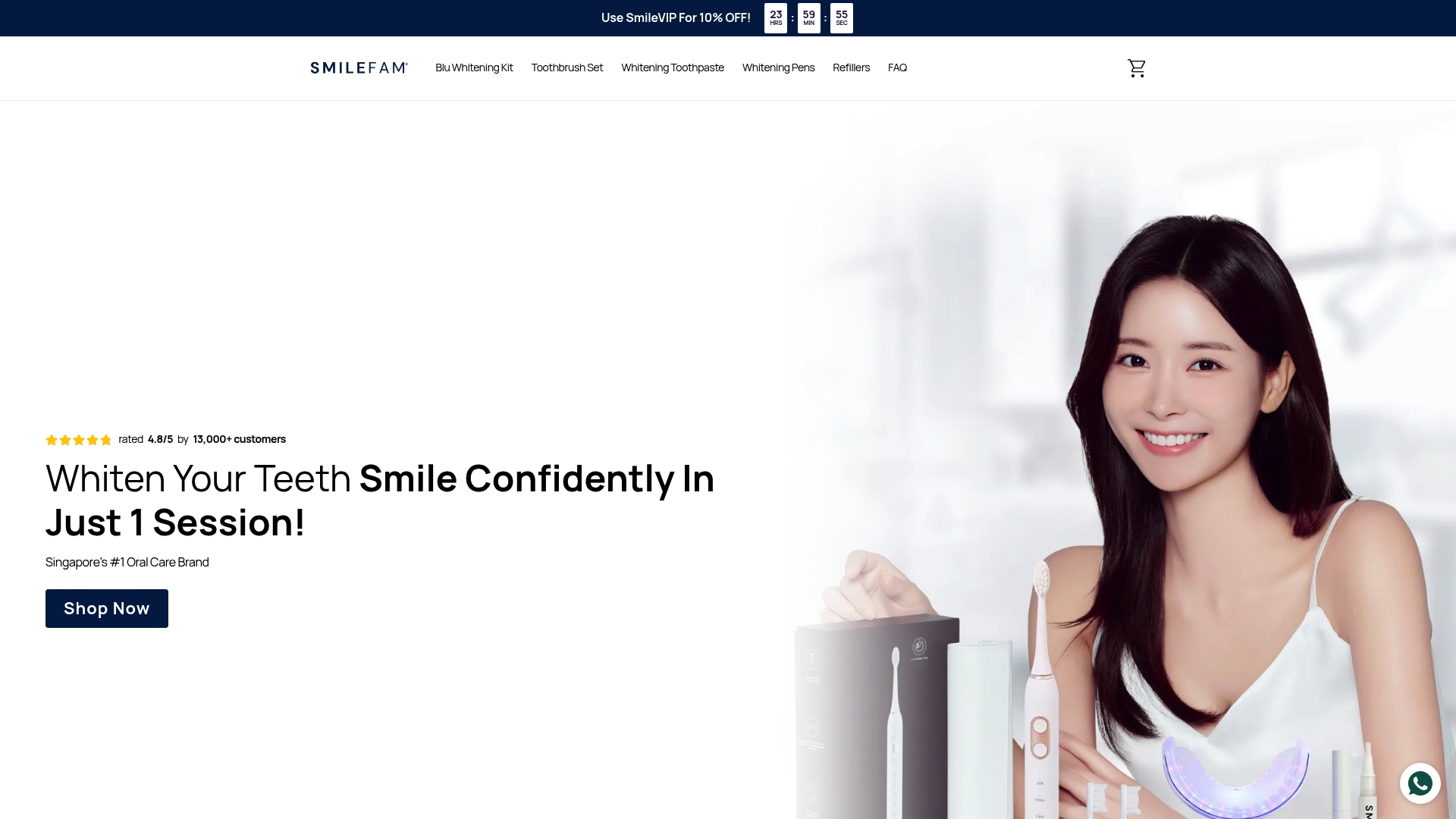
If this article made one thing clear, it is that the product you choose matters enormously. Getsmilefam was built around exactly that principle. The Snow Serum™ Whitening Pen uses BLU Whitening Technology developed in Singapore, formulated without hydrogen peroxide and designed to be safe for sensitive gums. For daily maintenance, the BLU Whitening Toothpaste keeps results fresh between sessions. And if you want the full treatment experience at home, the BLU Teeth Whitening Kit delivers professional-level results without the clinic price tag. Every product uses lab-approved, enamel-safe ingredients so you get the brightness without the risk.
FAQ
Does whitening toothpaste actually whiten teeth?
Whitening toothpaste removes surface stains through mild abrasion but cannot change your tooth’s intrinsic color. True whitening requires bleaching agents in contact with enamel for an extended period, which brushing does not achieve.
Is activated charcoal toothpaste safe for whitening?
No. Activated charcoal is abrasive rather than bleaching, and there is no clinical evidence it whitens teeth effectively. Repeated use can wear down enamel and actually make teeth appear more yellow over time.
Will teeth whitening work on my crowns or veneers?
Whitening treatments only affect natural tooth enamel. Crowns, veneers, and fillings maintain their original shade after whitening, which can create a visible color mismatch if you have both natural teeth and restorations.
Why do my teeth feel sensitive after whitening?
Sensitivity usually results from gel contacting the gums due to a poor tray fit, or from using a concentration that is too high for your enamel condition. It is temporary and manageable with proper technique, spacing sessions further apart, or switching to a lower-concentration formula.
How long do teeth whitening results last?
Results typically last several months to a year depending on your diet, oral hygiene, and whitening method. Stain-causing habits like coffee and red wine shorten results, while regular maintenance with a whitening toothpaste and periodic touch-ups extend them.