

Teeth whitening promises a brighter smile, but for millions of people, it delivers something else first: a sharp, shooting pain that makes the whole process feel like a bad trade. If you have sensitive teeth, you already know this frustration. The good news is that learning to avoid teeth sensitivity during whitening is not complicated. It requires the right products, the right preparation, and a few habits you probably have not tried yet. This guide walks you through every stage of the whitening process so you can get real results without the discomfort.
Table of Contents
- Understand why teeth become sensitive during whitening
- Prepare your teeth and gums to reduce sensitivity risk
- Apply teeth whitening safely to minimize sensitivity
- Manage sensitivity during and after whitening treatments
- Avoid common whitening mistakes that worsen sensitivity
- Why gentler whitening approaches are best for sensitive teeth
- Discover SmileFam’s gentle teeth whitening solutions for sensitive smiles
- Frequently asked questions
Key Takeaways
| Point | Details |
|---|---|
| Lower peroxide reduces sensitivity | Choosing whitening products with lower peroxide concentration significantly lowers the chance and intensity of teeth sensitivity. |
| Desensitizing prep is effective | Applying desensitizing gels or toothpaste before whitening substantially decreases discomfort without compromising whitening results. |
| Proper application matters | Using custom-fitted trays, avoiding gum contact, and following recommended wear times prevent irritation and pain during whitening. |
| Manage sensitivity proactively | Pause treatments if pain occurs, use remineralizing agents, and maintain enamel-protective habits to ensure comfort and treatment success. |
| Gentle methods build confidence | A gradual whitening approach focused on sensitivity and enamel health yields sustainable, comfortable improvements to your smile. |
Understand why teeth become sensitive during whitening
Before you can prevent the problem, you need to know what is actually happening inside your mouth. Whitening products work because peroxide molecules are small enough to pass through enamel and break apart stain molecules deeper in the tooth. That same permeability is exactly what causes pain.
When peroxide travels through enamel, it opens tiny pores that expose the dentin layer underneath. Dentin connects directly to your tooth’s nerve, which is why you feel that sharp twinge when sipping cold water after a whitening session. According to a randomized clinical trial, 35% hydrogen peroxide causes a 74% sensitivity rate compared to just 44% with 6% concentration. That gap is enormous and tells you exactly why concentration choice matters.
Sensitivity does not come from whitening alone. Peroxide opening enamel pores and gum contact with whitening gel are both major contributors. If gel leaks out of a tray and sits on your gum line, you will feel irritation that mimics tooth sensitivity even when your teeth themselves are fine.
Here are the main factors that raise your sensitivity risk:
- High peroxide concentration (above 10% for at-home use)
- Pre-existing enamel erosion from acidic drinks or aggressive brushing
- Gum recession that exposes root surfaces without enamel protection
- Ill-fitting trays that allow gel to contact gum tissue
- Worn or cracked enamel that gives peroxide a faster path to nerve endings
“Enamel health is your first line of defense against whitening sensitivity. Protect it before you even open the box.”
For more detail on choosing the right products, explore these safety tips for sensitive whitening before moving forward.
With a clear understanding of what causes sensitivity, let’s explore how to prepare effectively to minimize discomfort before whitening.
Prepare your teeth and gums to reduce sensitivity risk
Most people skip the preparation phase entirely, then blame the whitening product when their teeth ache. Preparation is where you actually control how your whitening experience goes.
Start two weeks early with the right toothpaste. Using a sensitivity toothpaste containing potassium nitrate for two weeks prior reduces sensitivity by 50 to 60%. That is a dramatic reduction for something as simple as switching your toothpaste before you begin. Potassium nitrate works by calming the nerve signals inside the tooth rather than just masking pain at the surface.
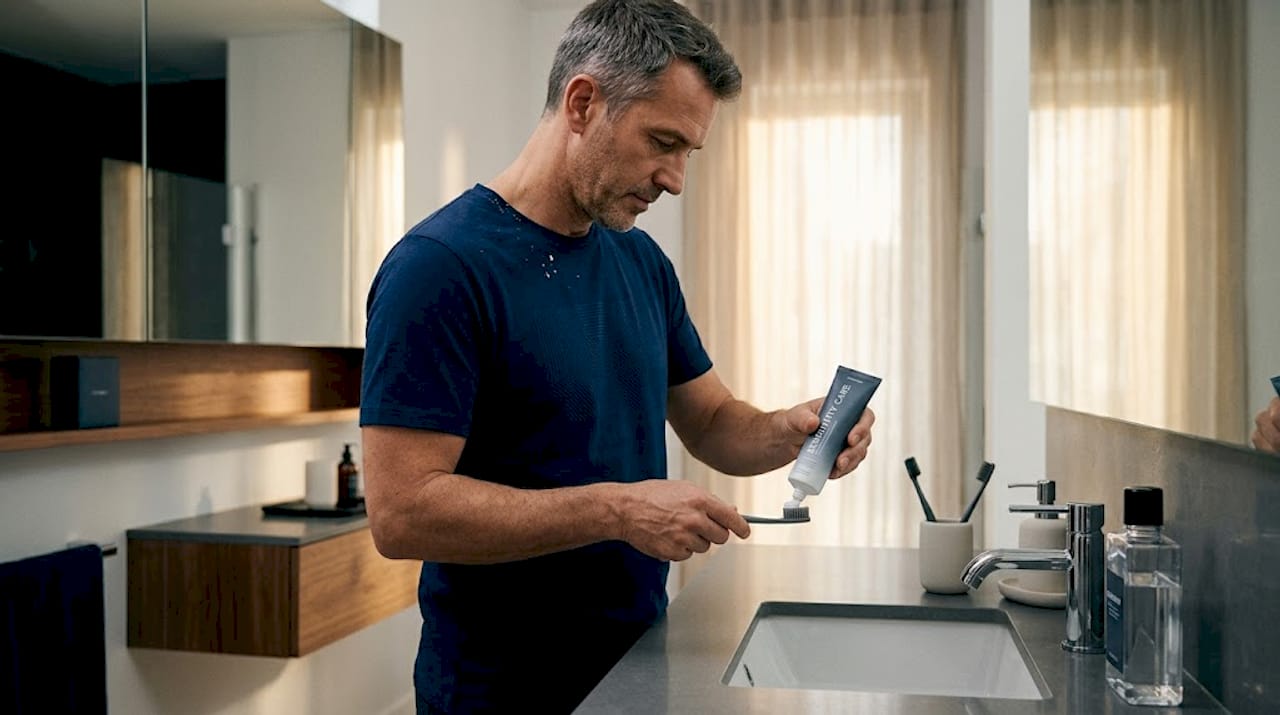
Add a desensitizing gel session right before whitening. A clinical trial found that pre-treatment with desensitizing gel containing 2% sodium fluoride and 5% potassium nitrate significantly lowers sensitivity without reducing whitening effectiveness at all. You get both comfort and results. Apply it for the time recommended on the package, then rinse and proceed with whitening.
Protect your enamel through daily habits. Enamel erosion makes every other strategy less effective. Avoiding acidic foods and abrasive brushing protects enamel and reduces sensitivity triggers before, during, and after whitening.
Here is a practical preparation checklist:
- Switch to a potassium nitrate sensitivity toothpaste two weeks before starting
- Stop drinking acidic beverages like soda, citrus juice, and sports drinks during the prep period
- Brush with a soft-bristled toothbrush using gentle, circular strokes
- Apply a fluoride desensitizing gel the day before your first whitening session
- Check for any obvious gum recession or cracked teeth and consult a dentist if concerned
Pro Tip: Look for desensitizing toothpaste options that combine fluoride with potassium nitrate. This dual-action approach tackles sensitivity from two directions at once.
Here is a quick comparison of preparation methods and their sensitivity impact:
| Preparation method | Reduces sensitivity? | Affects whitening results? | Time needed |
|---|---|---|---|
| Sensitivity toothpaste | Yes, 50 to 60% | No | 2 weeks |
| Desensitizing gel (pre-treatment) | Yes, significantly | No | 1 day before |
| Avoiding acidic foods | Yes, moderate | No | Ongoing |
| Soft-bristled toothbrush | Yes, mild | No | Ongoing |
| Fluoride rinse | Yes, moderate | No | Daily |
Explore more desensitizing whitening options that pair well with the prep strategies above.
Proper preparation lays the foundation; next, we’ll detail how to safely perform whitening while minimizing sensitivity.
Apply teeth whitening safely to minimize sensitivity
How you apply your whitening product matters just as much as what is in it. Rushed or careless application turns a manageable treatment into a painful one.
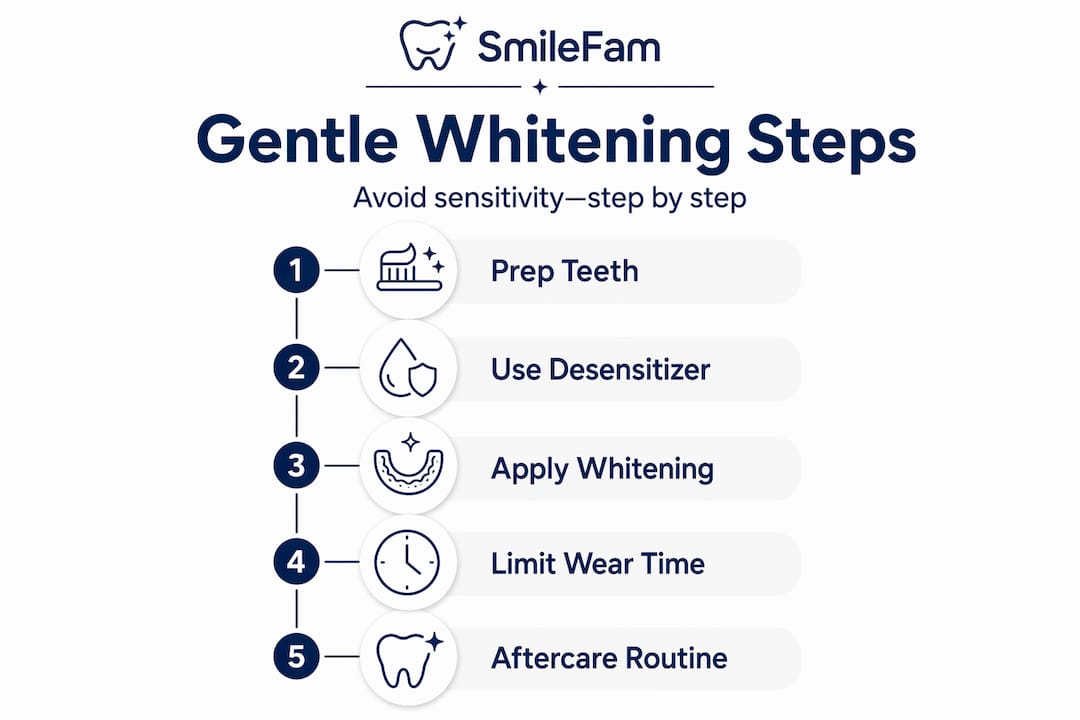
Follow these steps for a careful, low-sensitivity application:
- Choose a lower concentration product. Lower peroxide concentrations of 6 to 10% and shorter wear times reduce sensitivity in whitening strips and trays. If your teeth are already sensitive, stay in the 6% range to start.
- Wait after brushing. Give your enamel 30 to 60 minutes to settle after brushing before applying strips or gel. Fresh brushing temporarily opens the enamel surface slightly, which increases peroxide absorption and sensitivity.
- Use a rice-grain amount of gel per tooth. This is less than most people assume. A thin, even layer is enough. Excess gel does not whiten better; it just increases the chance of gum contact and irritation.
- Avoid overfilling trays. Overfilled trays and poorly fitting devices cause gel to overflow onto gum tissue, which creates burning and pain that feels like tooth sensitivity even when the teeth themselves are fine.
- Start with 5 to 10 minutes, not the maximum time. Build up gradually across sessions rather than pushing for maximum wear time on day one.
Pro Tip: If you use whitening strips and find the edges consistently touch your gums, trim a thin line off the bottom edge with scissors before applying. This small adjustment can eliminate gum irritation entirely.
Here is how different application approaches compare for sensitive teeth:
| Whitening method | Peroxide range | Wear time | Sensitivity risk | Best for sensitive teeth? |
|---|---|---|---|---|
| In-office (professional) | 25 to 40% | 60 to 90 min | High | No |
| At-home tray (custom fit) | 6 to 15% | 30 to 60 min | Moderate | Yes, with precautions |
| Whitening strips | 6 to 10% | 10 to 30 min | Low to moderate | Yes |
| Peroxide-free pen | 0% | As directed | Very low | Best option |
| Abrasive whitening toothpaste | 0% | Daily | Low | Depends on abrasivity |
For a deeper look at choosing the right format, these at-home whitening tips walk through common decisions and trade-offs worth knowing before you buy anything.
Manage sensitivity during and after whitening treatments
Even with perfect preparation and careful application, some sensitivity may still appear. How you respond to those early signals determines whether you finish your whitening cycle comfortably or give up entirely.
Here is how to manage sensitivity if it shows up:
- Stop for the day at the first sign of sharp pain. Pausing whitening for at least one day when sensitivity occurs prevents it from worsening and gives enamel time to recover. Pushing through is never worth it.
- Apply MI Paste or a remineralizing product immediately after whitening. These products deposit calcium and phosphate back into the enamel surface, which speeds recovery and reduces the window of post-treatment sensitivity.
- Avoid temperature extremes on treatment days. Skip the iced coffee and the very hot soup. Your dentin tubules are more open right after whitening, and temperature extremes hit the nerve directly during this window.
- Take an over-the-counter pain reliever an hour before if you expect sensitivity. Ibuprofen works well here because it reduces inflammation rather than just blocking pain signals.
- Keep using fluoride toothpaste and mouthwash throughout the process. Applying fluoride products post-treatment strengthens enamel and decreases ongoing sensitivity over the course of treatment.
“Whitening is a process, not an event. Space your sessions out and let your teeth recover between treatments. The results will come.”
Pro Tip: Try using your aftercare oral tools as part of a post-whitening routine rather than just brushing and rinsing. Pairing remineralizing toothpaste with a gentle electric toothbrush at low pressure is one of the most effective ways to reduce next-day sensitivity.
Also look into these sensitivity management strategies for a full picture of how to pace and protect your whitening routine.
Avoid common whitening mistakes that worsen sensitivity
Even people who prepare well can undo their progress with a few avoidable errors. These are the mistakes that most commonly turn a manageable treatment into a painful one.
- Overfilling the tray. More gel does not mean faster whitening. Overfilled trays and ill-fitting devices push gel onto the gums, causing burning that makes the whole session feel unbearable.
- Using DIY abrasive remedies. Apple cider vinegar and activated charcoal are popular social media suggestions that actually erode enamel and make sensitivity worse. Enamel does not grow back. Once it is gone, sensitivity becomes permanent.
- Aggressive brushing right after whitening. Your enamel is at its most permeable during and immediately after treatment. Scrubbing hard at this point causes micro-abrasions that keep dentin exposed longer.
- Ignoring product instructions. Every whitening product is formulated for a specific wear time, frequency, and application method. Stretching those limits does not speed up results; it just increases exposure and risk.
- Using a one-size tray with cheap gel. Generic trays almost never fit perfectly. Poor fit means you are spending money on gel that sits on your gums rather than your teeth.
“Chasing a shortcut with whitening almost always costs you time. The recovery from a sensitivity flare adds days to your schedule that patience would have prevented.”
Develop safe whitening habits from day one and you will move through your whitening cycle faster because you will not need to stop and recover.
Why gentler whitening approaches are best for sensitive teeth
Here is an honest truth most whitening marketing does not want you to think about: the products promising the fastest, most dramatic results are almost always the ones most likely to hurt you.
High-concentration peroxide works faster, yes. But choosing lower peroxide concentrations strategically balances whitening benefits and sensitivity risks for long-term enamel health. The people who get the best whitening outcomes over time are not those who used the strongest gel once. They are the ones who maintained a consistent, low-irritation routine for several weeks.
Think of it this way: enamel is not renewable. Every avoidable exposure to high-concentration peroxide or abrasive products is a withdrawal from a finite account. A lower-dose, desensitizing-supported approach to long-term sensitive whitening keeps that account healthy.
There is also a confidence angle worth considering. If whitening hurts, you stop doing it. You lose the consistency that actually creates visible results. A gentler approach that you can sustain without wincing is practically superior to an aggressive one you abandon after the second session. Pain is not a sign the product is working. It is a sign the treatment is moving faster than your enamel can handle.
The right mindset is risk budgeting. Accept a moderate whitening pace, invest two weeks in preparation, follow the application rules, and give your teeth recovery time between sessions. That is the framework that gets you a brighter smile without trading enamel health for speed.
Discover SmileFam’s gentle teeth whitening solutions for sensitive smiles
If this guide convinced you that gentler whitening is smarter whitening, SmileFam was built exactly for that approach. Every product in the SmileFam line is formulated without harsh hydrogen peroxide and uses enamel-safe ingredients proven to minimize discomfort from the first session.
The Ultimate Whitening Bundle for sensitive teeth pairs whitening treatment with sensitivity support so you are not choosing between results and comfort. The BLU Whitening Toothpaste with desensitizing agents gives you the two-week preparation advantage built right into your daily routine. And for a complete care system, the Whitening electric toothbrush bundle combines gentle cleaning with whitening support at a price that makes in-office treatments feel unnecessary. Combining expert advice with SmileFam’s gentle products is your best path to a brighter smile without sensitivity.
Frequently asked questions
Can I whiten my sensitive teeth without feeling pain?
Yes. Using lower concentration whitening products, preparing with desensitizing toothpaste or gel, and following careful application protocols lets you whiten with minimal or no pain. Lower 6% hydrogen peroxide causes significantly less sensitivity than higher concentrations while still whitening effectively.
How does desensitizing gel reduce whitening sensitivity?
Desensitizing gels with potassium nitrate and fluoride calm nerve activity and block dentin tubules, cutting off the pain signal before it starts. Using 2% sodium fluoride with 5% potassium nitrate before bleaching significantly lowers sensitivity without reducing whitening effectiveness.
What lifestyle changes help protect enamel during whitening?
Avoid acidic foods and drinks, brush gently with a soft-bristled toothbrush, skip abrasive toothpastes, and use fluoride products daily. These habits work together to keep enamel intact when it is most vulnerable. Avoiding acid and abrasive brushing directly reduces sensitivity triggers throughout the whitening process.
Should I pause whitening if I experience sensitivity?
Yes, pause for at least one day so your teeth can recover, and apply a remineralizing product like MI Paste during the break. Skipping whitening for a day when sensitivity occurs prevents it from escalating into prolonged discomfort.