

You want a brighter smile, but every time you try a whitening product, your gums burn, your teeth ache, or you see zero results after weeks of effort. That frustration is real, and it’s more common than you think. The good news is that safe, effective daily whitening is absolutely possible, even for people with sensitive gums. This guide breaks down exactly what to look for, which product types actually work, how key ingredients compare, and which daily habits lock in your results for the long haul.
Table of Contents
- How to choose safe daily whitening: Key criteria
- Best types of safe daily whitening products
- Hydrogen peroxide vs. carbamide peroxide: What’s right for you?
- Keeping your teeth white safely: Habits and maintenance tips
- Our take: What really works for safe daily whitening in Singapore
- Looking for safe, gentle whitening that fits your daily routine?
- Frequently asked questions
Key Takeaways
| Point | Details |
|---|---|
| Safety first | Choose whitening products with proven safety and efficacy standards, especially for sensitive gums. |
| Gentle ingredients | Carbamide peroxide and peroxide-free options are often less irritating for daily use than hydrogen peroxide. |
| Consistent habits | Daily brushing, avoiding stain-causing foods, and regular touch-ups help results last longer. |
| Realistic expectations | Visible whitening takes weeks and results require ongoing maintenance for best effect. |
How to choose safe daily whitening: Key criteria
With the stakes of whitening safely in mind, let’s see how to evaluate your options before buying.
Not all whitening products are created equal. Walk into any pharmacy in Singapore and you’ll find shelves packed with strips, gels, pens, and toothpastes all promising a dazzling smile. The challenge is knowing which ones are safe enough for daily use, especially if your gums are already on the sensitive side.
Here’s a numbered framework to help you evaluate any product before you commit:
-
Check for recognized safety and efficacy standards. The American Dental Association (ADA) Seal of Acceptance is one of the most trusted markers of product safety. Products bearing this seal have been independently tested. For whitening at home, the ADA Seal acceptance framework makes clear that choosing products with proven safety and efficacy standards, and using them exactly as directed, is the most reliable way to minimize gingival (gum) irritation and tooth sensitivity.
-
Understand what’s actually in the formula. Peroxide-based products work faster but carry a higher risk of irritation. Peroxide-free formulas use alternative whitening agents like enzymes, activated charcoal, or mild abrasives. Neither category is universally better. The right choice depends on your sensitivity level and how quickly you want results.
-
Technique matters as much as the product itself. Even a gentle whitening gel can cause gum damage if it’s applied carelessly. Keep whitening agents off your gum line, follow the recommended usage frequency, and never leave a product on longer than instructed.
-
When in doubt, consult a dentist. If you have gum disease, exposed roots, crowns, or veneers, a dentist can tell you which products are safe for your specific situation. Self-diagnosing sensitivity and experimenting with random products is a gamble that rarely pays off.
Expert note: If you experience irritation, burning, or bleeding gums after using any whitening product, stop immediately and get professional dental advice. These are warning signs, not minor inconveniences.
Pro Tip: Before buying any whitening product, flip it over and read the active ingredients list. If you can’t identify what’s doing the whitening work, that’s a red flag worth investigating before you put it in your mouth.
Best types of safe daily whitening products
Understanding these criteria, here are the product types that deliver safe, daily whitening for most people in Singapore.
The market offers several formats, each with different strengths and limitations. Knowing which category fits your lifestyle and sensitivity level saves you money and protects your oral health.
-
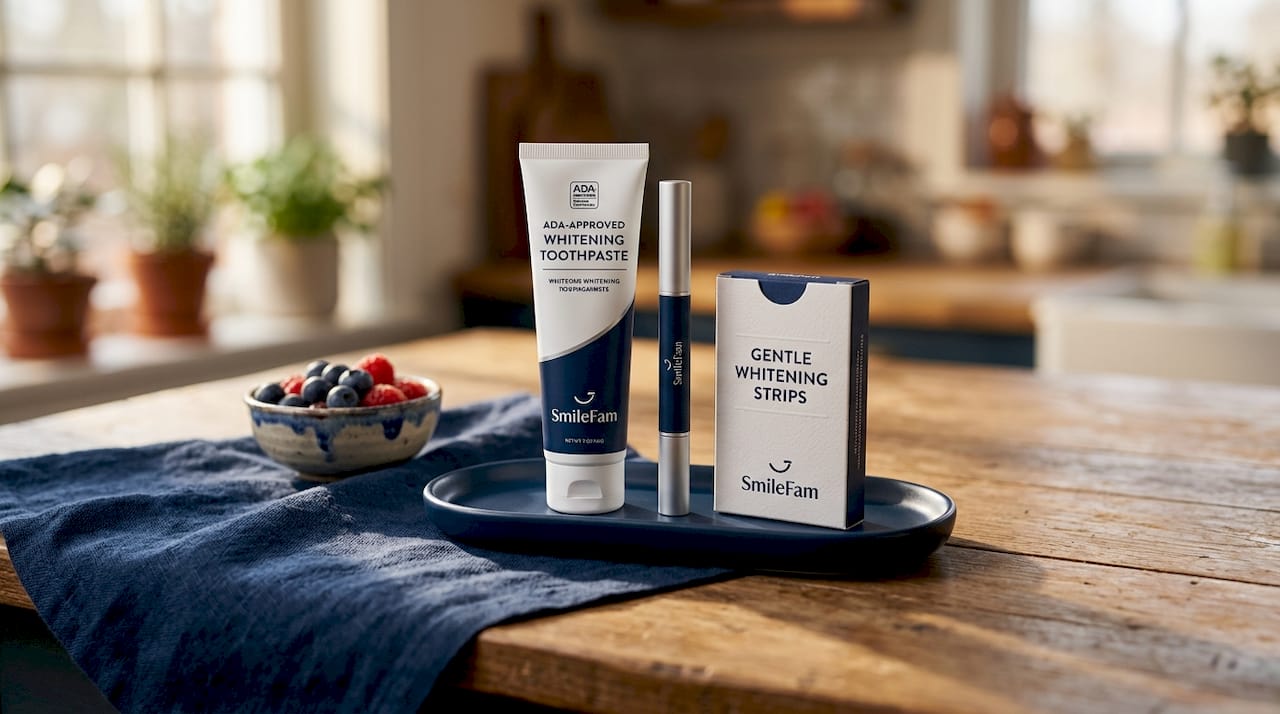
Whitening toothpastes. These are the most accessible entry point for daily whitening. They typically use mild abrasives like hydrated silica or low-concentration peroxide to lift surface stains. The key advantage is that you’re already brushing twice a day, so there’s no extra step. A quality whitening toothpaste can maintain brightness and prevent new stains from setting in. They won’t dramatically change the natural shade of your teeth, but for daily upkeep, they’re hard to beat.
-
Peroxide-free whitening strips. These are a gentler alternative to traditional strips. They typically rely on PAP (phthalimido peroxy caproic acid) or similar compounds that oxidize stains without releasing the free radicals that cause gum and tooth sensitivity. Results are slower, but the trade-off is significantly less irritation. For people with chronically sensitive gums, this is often the smarter starting point.
-
Mild peroxide gels or whitening pens. These deliver more visible results than toothpastes alone, but require careful application. The pen format is particularly useful because it lets you apply gel precisely to tooth surfaces while avoiding the gum line. Daily-adapted formulas typically use lower peroxide concentrations (around 3 to 6 percent) to balance effectiveness with safety.
-
Electric toothbrushes with whitening modes. An often overlooked option, electric toothbrushes with oscillating or sonic technology remove significantly more surface staining than manual brushing. Some models include a dedicated whitening mode that increases brush speed for polishing. This approach delivers gentle daily care without any chemical exposure, making it ideal for people who react to even the mildest whitening agents.
According to ADA News, a safety-first daily strategy for sensitive gums means favoring lower-irritation approaches such as whitening toothpaste that doesn’t require peroxide contact, or peroxide-free strip formats, combined with strict technique to avoid gum contact. If any burning, bleeding, or persistent sensitivity occurs, stopping and seeking dental advice is the right move.
Pro Tip: Rotate your approach. Use a whitening toothpaste daily and reserve a whitening pen or strips for two to three sessions per week. This layered strategy keeps results consistent without overloading your teeth and gums with repeated chemical exposure.
Hydrogen peroxide vs. carbamide peroxide: What’s right for you?
As active ingredients matter, let’s compare the most common whitening chemicals in daily products.
Most whitening products that use peroxide rely on one of two forms: hydrogen peroxide or carbamide peroxide. They both work through chemical oxidation, meaning they break down stain molecules inside the enamel. But they behave differently in your mouth, and that difference matters a lot for daily users.
| Feature | Hydrogen peroxide | Carbamide peroxide |
|---|---|---|
| Speed of action | Fast (works within minutes) | Slower (releases over 2 to 4 hours) |
| Sensitivity risk | Higher, especially with daily use | Lower, better for sensitive users |
| Typical concentration | 3% to 10% in OTC products | 10% to 22% in professional kits |
| Best for | Occasional, targeted whitening | Daily or extended wear use |
| Gum irritation risk | Moderate to high | Lower with correct application |
| Result visibility | Noticeable quickly | Gradual but steady improvement |
Statistic callout: Research cited by ADA News confirms that while hydrogen peroxide and carbamide peroxide can both whiten effectively through oxidation, carbamide peroxide is generally slower acting and may reduce sensitivity compared with hydrogen peroxide. For daily users who want to whiten without waking up to sore gums, carbamide peroxide is typically the safer long-term choice.
The practical takeaway is this: if you’re whitening every day or near daily, carbamide peroxide gives you a more forgiving experience. Hydrogen peroxide works faster, but that speed comes at a cost that many sensitive users simply aren’t willing to pay.
Keeping your teeth white safely: Habits and maintenance tips
Techniques aren’t just about products. Your habits and regular care matter as much as what’s in the whitening kit.
You can use the best whitening product on the market, but if you’re drinking black coffee every morning and skipping your nighttime brush, your results will fade faster than you’d expect. Sustainable whitening is a combination of smart product use and consistent daily habits.
Here are the habits that make the biggest difference:
- Brush twice daily with a fluoridated toothpaste to strengthen enamel and prevent new stains from penetrating the surface.
- Floss every day. Plaque buildup between teeth creates a surface that stains more easily and holds discoloration longer.
- Rinse with water after consuming staining foods or drinks. You don’t need mouthwash every time. A simple water rinse within a few minutes of eating or drinking reduces stain-setting significantly.
- Avoid or limit the biggest staining offenders: coffee, tea, red wine, dark sodas, soy sauce, tomato-based sauces, and dark berries.
- After a whitening session, give your teeth a break from very hot or very cold foods for at least 24 hours. Whitening temporarily opens enamel pores, and extreme temperatures can trigger sharp sensitivity during that window.
Reality check: Visible whitening results from at-home products typically take two to four weeks of consistent use. Don’t expect overnight transformation. The process is gradual, and that’s actually a sign it’s working safely.
Ashford Dental Centre notes that stains return over time with diet and lifestyle, and that maintenance brushing combined with avoiding stain-heavy foods and drinks is what keeps at-home whitening tips working long after the initial treatment. Meanwhile, Precision Dental NYC recommends fluoridated toothpaste and avoiding very hot or cold foods in the days immediately after whitening to manage post-treatment sensitivity effectively.
| Staining food or drink | Staining level | How to reduce impact |
|---|---|---|
| Black coffee | Very high | Use a straw, rinse with water after |
| Red wine | Very high | Limit frequency, rinse after |
| Tea (especially black) | High | Opt for herbal teas, rinse after |
| Tomato sauce | Moderate | Brush within 30 minutes |
| Dark berries | Moderate | Rinse immediately |
| Cola and dark sodas | High | Use a straw, reduce consumption |
Results from consistent daily whitening typically last between 6 and 12 months, but that range depends heavily on your diet and maintenance routine. Heavy coffee or tea drinkers may see fading closer to the 4 to 6 month mark without active upkeep.
Our take: What really works for safe daily whitening in Singapore
Now that you know the science and options, here’s our fresh take on what actually matters for daily whitening in Singapore.
Here’s something most whitening guides won’t tell you: the biggest mistake people make isn’t choosing the wrong product. It’s choosing the right product and using it wrong. Overuse, skipping technique steps, and chasing faster results by layering multiple whitening products simultaneously are the real culprits behind sensitivity flare-ups and disappointing outcomes.
Daily whitening is a long game. The people who see the best long-term whitening results aren’t the ones who use the strongest formula available. They’re the ones who are consistent, patient, and disciplined about their habits between sessions.
We also want to push back on the idea that aggressive or highly abrasive products are a shortcut to a whiter smile. In Singapore’s humidity, many people already experience more oral sensitivity than they realize. Abrasive whitening products can wear down enamel over time, and once enamel is gone, it doesn’t come back. Gentle, consistent approaches protect your teeth while still delivering real results.
The final thing worth saying plainly: product credentials matter. An ADA Seal, dentist-recommended status, or lab-verified formula isn’t just marketing. It’s evidence that someone with expertise has reviewed the product and confirmed it does what it claims without causing unnecessary harm. For sensitive users especially, those credentials are worth paying attention to. When something sounds too good to be true, like “whiten 10 shades in one day at home,” it usually is.
Looking for safe, gentle whitening that fits your daily routine?
For those ready to act on today’s guide, here are some of the safest, sensitivity-friendly whitening solutions available.
If you’ve been searching for a whitening routine that’s actually designed with sensitive gums in mind, SmileFam’s lineup was built for exactly that. Every product uses enamel-safe, lab-approved formulas without harsh hydrogen peroxide, which means you get real results without the burning or aching that comes with aggressive treatments.
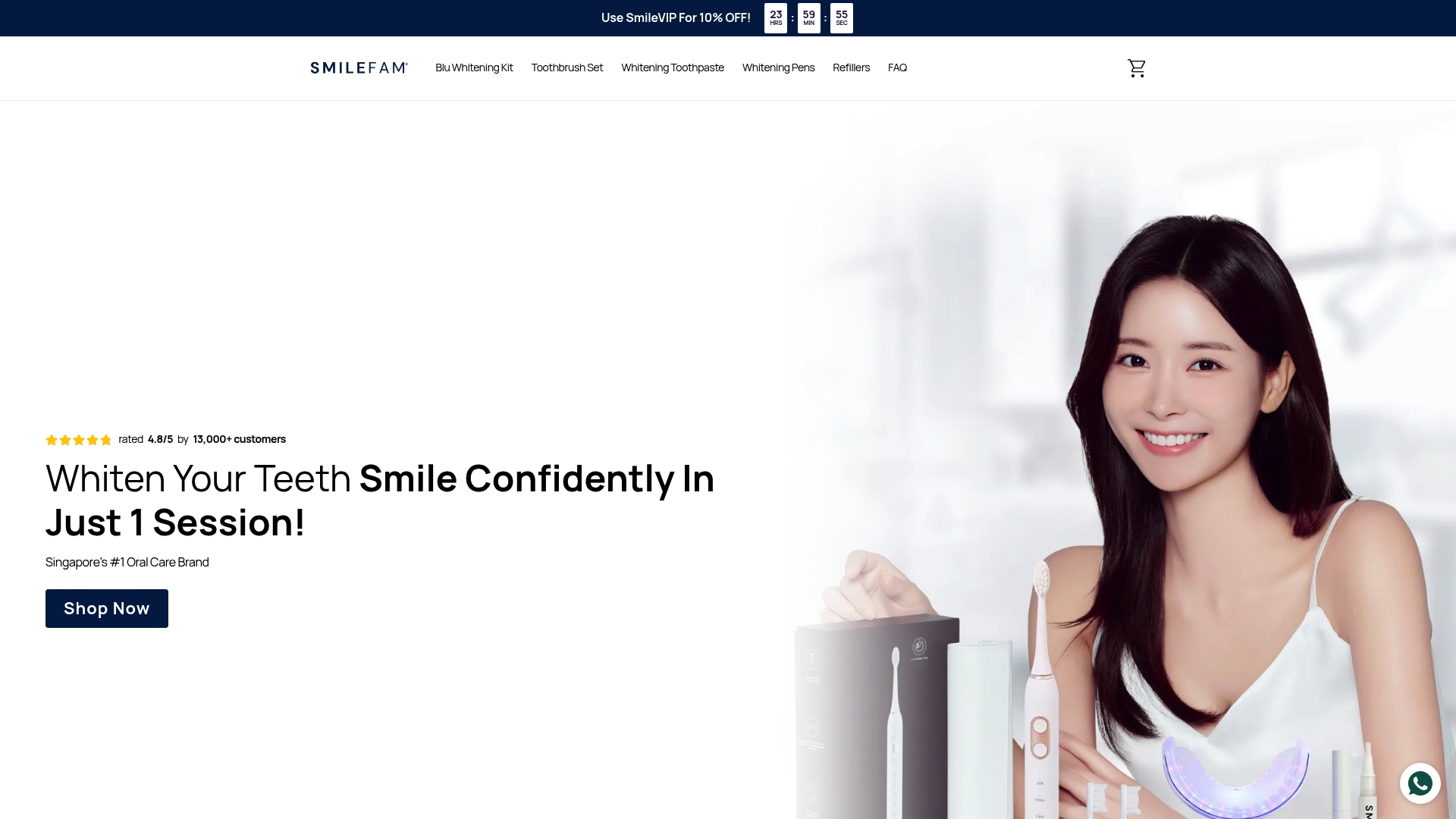
Start with the BLU Whitening Toothpaste for daily maintenance that keeps surface stains from building up. For more visible results, the Snow Serum Whitening Pen uses BLU Whitening Technology developed right here in Singapore, delivering precision application that targets teeth without touching your gums. Want the full routine in one go? The Ultimate Whitening Bundle combines the best of both worlds for a complete, sensitivity-friendly whitening system you can use every day.
Frequently asked questions
Are daily whitening products safe for sensitive gums?
If chosen carefully and used as directed, daily whitening options like peroxide-free toothpaste or gentle strips can be safe for sensitive gums. The ADA recommends biasing toward lower-irritation approaches and strict technique to avoid gum contact.
What should I do if my teeth feel sensitive after whitening?
Use a fluoridated toothpaste, avoid very hot or cold foods for a few days, and pause whitening if sensitivity continues. Precision Dental NYC confirms these steps help manage post-whitening irritation effectively.
How long do results last from daily whitening?
Results typically last 6 to 12 months but can fade faster with frequent consumption of staining foods or drinks. Ashford Dental Centre notes that maintenance brushing and diet adjustments are key to extending those results.
Should I consult a dentist before starting daily whitening?
Consulting your dentist is wise, especially if you have sensitive gums or underlying oral health issues. The ADA advises that at-home whitening users should look for the ADA Seal of Acceptance and check with their dentist to minimize risks.