

Many Singapore adults assume a bright smile is something only their dentist can maintain, making regular cosmetic appointments feel unavoidable. That assumption quietly drains both time and money. The truth is that safe, properly regulated at-home whitening products can handle much of the brightness maintenance you used to rely on your dental clinic to provide. This article breaks down the science, the Singapore-specific regulations, and the practical steps that let you keep your smile looking sharp without booking an appointment every few months for cosmetic touch-ups.
Table of Contents
- Why most dental visits for whitening are cosmetic, not essential
- How at-home whitening works: Products, regulation, and science in Singapore
- Effectiveness of at-home whitening and management of sensitivity
- Whitening dentifrices: Delaying clean-and-whiten appointments for stains
- The limits of whitening: When to see a dentist and avoid pitfalls
- Whitening and motivation: A psychological boost for oral hygiene
- What most people get wrong about whitening and dental visits
- Safe, effective whitening options for your smile
- Frequently asked questions
Key Takeaways
| Point | Details |
|---|---|
| Cosmetic visits reduced | At-home whitening lets you maintain a brighter smile and spread out in-clinic touch-ups. |
| Safety relies on proper use | Use only regulated, dentist-approved or compliant products to avoid side effects like sensitivity. |
| Routine checkups are essential | Whitening does not replace preventive dental care, so regular exams are still vital. |
| Motivation improves hygiene | Seeing results from whitening often encourages better daily brushing and care. |
Why most dental visits for whitening are cosmetic, not essential
Let’s start by clarifying the difference between essential and cosmetic dental appointments.
Not all dental visits are created equal. A routine check-up to screen for cavities, gum disease, or oral cancer is genuinely important for your health. But a visit specifically to remove coffee stains or restore a shade you lost over the last few months? That falls firmly in the cosmetic category, and it is precisely the kind of appointment that smart at-home care can help you avoid.
Cosmetic dental appointments for whitening often involve professional bleaching sessions or scale-and-polish procedures aimed at improving appearance rather than treating disease. These sessions can cost anywhere from $150 to $500 or more per visit at Singapore clinics. When you factor in how frequently surface stains return from daily habits like drinking coffee, tea, or eating certain foods, those costs add up fast.
Teeth whitening can reduce the need for some cosmetic touch-up appointments by letting people maintain brightness at home between or instead of in-clinic sessions. That is a meaningful shift in how you manage your smile, and it saves money with whitening over the long term.
Here is what this distinction means for your dental calendar:
- Essential visits: Biannual check-ups for oral health screening, cavity treatment, and gum assessments
- Cosmetic visits you may reduce: Standalone whitening sessions, stain removal touch-ups, and shade-matching appointments
- How at-home products help: Regular use maintains brightness and prevents the visible stain buildup that drives cosmetic appointment demand
“The goal is not to skip the dentist entirely. It is to be smarter about which appointments you actually need versus which ones you have been booking out of habit.”
Separating these two categories gives you real control over your oral care calendar and your budget.
How at-home whitening works: Products, regulation, and science in Singapore
Now that you know which visits whitening can help you avoid, let’s explain what makes whitening work and how to do it safely at home, especially in Singapore.
Whitening products work primarily by using peroxide-based compounds, either hydrogen peroxide or carbamide peroxide, to break down the chemical bonds in stain molecules embedded in the enamel and dentin layers of your teeth. Hydrogen peroxide penetrates the tooth surface and oxidizes the color-causing compounds, making them appear lighter. Carbamide peroxide breaks down into hydrogen peroxide and urea when applied, providing a slower but sustained release of the active ingredient.
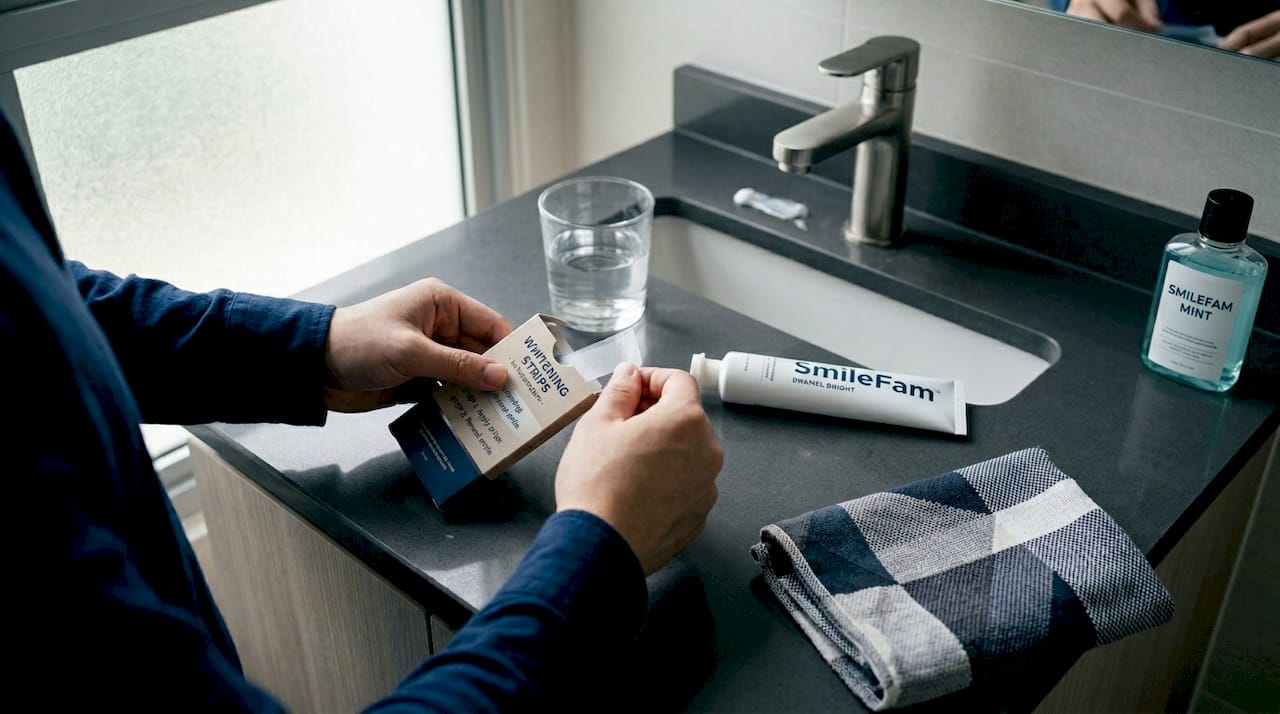
Singapore regulates how much peroxide consumers can access without a dentist. OTC whitening products are limited to low peroxide concentrations, while higher-concentration whitening is restricted to dental practitioners. This protects consumers from the enamel damage and gum irritation that can occur with excessive peroxide exposure.
Here is a quick comparison of the options available to Singapore adults:
| Product type | Peroxide level | Supervision needed | Typical results |
|---|---|---|---|
| OTC whitening pen/strips | Low (regulated) | None | Gradual stain removal |
| Dentist-prescribed take-home kit | Medium to high | Dental assessment required | Faster, deeper whitening |
| In-clinic session | High | Dentist on-site | Immediate, dramatic shift |
| Whitening toothpaste | Abrasive/non-peroxide | None | Surface stain maintenance |
For most Singapore adults managing everyday staining from food, drinks, and lifestyle habits, OTC-regulated products like home whitening kits with BLU Whitening Technology offer a practical, enamel-safe solution. These are formulated without harsh hydrogen peroxide, using lab-approved ingredients designed for sensitive gums, which is a significant advantage for daily use.
Beyond the whitening agent itself, cosmetic product safety has become a more mainstream concern, and regulators in Singapore take ingredient compliance seriously. Always check that any product you use is compliant with the Health Sciences Authority (HSA) guidelines.
Pro Tip: Look for products that use carbamide peroxide or peroxide-free whitening technology if you have naturally sensitive teeth. These formulas release active ingredients more gradually, reducing the chance of post-whitening sensitivity.
Pair any bleaching product with whitening toothpaste options to keep surface stains from rebuilding between whitening sessions.
Effectiveness of at-home whitening and management of sensitivity
Safe products are only half the story. The next question is how effective they are, and what real users experience.
Clinical research gives us solid ground here. At-home whitening, even at low concentrations, can achieve measurable and clinically acceptable color change with a manageable, often mild, risk of sensitivity. That is important reassurance for anyone wondering whether regulated OTC products are actually worth using.
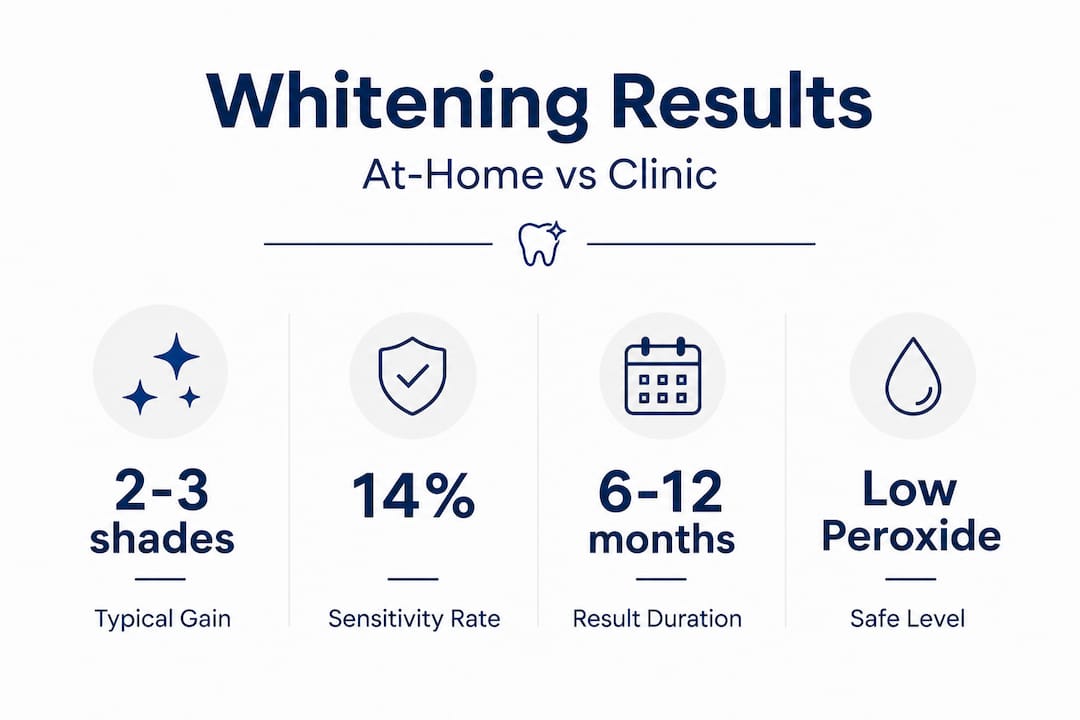
Studies typically measure tooth color change using the Vita shade guide, a standardized scale dentists use to classify tooth brightness. Participants using low-concentration take-home gels over 2 to 4 weeks consistently record improvements of 2 to 5 shade units on average. That is a visible, real-world result you can see when you smile.
| Whitening method | Average shade improvement | Sensitivity incidence | Duration of results |
|---|---|---|---|
| Low-concentration take-home gel | 2 to 5 shade units | 15 to 65% (mostly mild) | 3 to 6 months |
| High-concentration in-clinic | 5 to 8 shade units | 30 to 70% | 6 to 12 months |
| Whitening toothpaste daily use | 1 to 2 shade units | Very low | Ongoing with use |
Tooth sensitivity is the most commonly reported side effect. Sensitivity rates in studies can run up to 65%, but most cases are described as mild and temporary, resolving within 24 to 48 hours after each application. Managing this matters because unnecessary trips to the dentist for sensitivity complaints are a hidden cost many people do not anticipate.
Here is how to minimize sensitivity and use whitening products safely:
- Start with shorter application times. Use the product for less than the maximum recommended duration for the first few sessions and build up gradually.
- Space out your sessions. Using a whitening product every other day instead of daily can significantly reduce sensitivity without sacrificing results.
- Use a sensitivity toothpaste in between. Potassium nitrate-based toothpastes calm the nerve endings inside the tooth during whitening treatment.
- Avoid acidic food and drinks right after whitening. Your enamel is temporarily more porous post-treatment, making it more vulnerable to staining and irritation.
- Stop and consult your dentist if pain persists. Mild tingling is normal; sharp, lasting pain is not.
Pro Tip: For users who want faster results without daily commitment, the Snow Serum™ Whitening Pen applies a targeted whitening formula directly to each tooth surface, giving you flexibility to use it on your schedule without full-session commitment every time.
Whitening dentifrices: Delaying clean-and-whiten appointments for stains
Besides bleaching gels, everyday products like whitening dentifrices also help reduce cosmetic dental visits.
Whitening dentifrices, meaning whitening toothpastes, work through a combination of mild abrasives and sometimes low-level whitening agents to physically and chemically lift surface stains from the enamel. They do not penetrate deeply into the tooth like peroxide gels do, but for daily stain prevention from coffee, tea, and food, they are genuinely effective.
Systematic review evidence supports that whitening dentifrices reduce tooth surface discoloration compared with regular dentifrices, helping people delay professional clean-and-whiten demand for superficial stains. This is significant because a large portion of cosmetic dental appointments exist purely to remove the kind of surface staining a good whitening toothpaste can handle at home.
Key things to know about whitening toothpastes:
- They are most effective against extrinsic stains (on the outer tooth surface) rather than intrinsic stains embedded deeper in the enamel
- Consistency matters more than intensity: Using a quality whitening toothpaste twice daily beats occasional intensive treatments for everyday stain prevention
- They complement, not replace, whitening gels: Use both for a layered approach that keeps stains off and gradually improves overall brightness
- Choose low-abrasion formulas for enamel safety: High-abrasion products used aggressively over time can wear down enamel, which is the opposite of what you want
Key stat: Clinical studies included in systematic reviews found that participants using whitening toothpastes showed statistically significant reductions in stain index scores compared to those using regular toothpastes. For everyday coffee drinkers in Singapore, this means adding whitening toothpaste to your routine is not optional, it is foundational.
The limits of whitening: When to see a dentist and avoid pitfalls
Whitening can help save on some dental visits, but it cannot or should not replace all check-ups.
This is where a lot of people make costly mistakes. Whitening products address stains and shade. They do not treat cavities, gum disease, cracked teeth, or any other pathology. If you have an untreated cavity and you apply whitening gel over it, you risk driving the peroxide deeper into an already compromised tooth, which can cause significant pain and potentially worsen the damage.
Whitening is not a substitute for dental care when pathology exists, and professional assessment before whitening really matters. A quick dental check before starting any whitening program is smart practice, not an extra expense.
Common mistakes that actually increase your dental visits:
- Starting whitening over untreated decay. Pain and damage that follow will require urgent dental appointments.
- Overusing whitening products. More frequent application does not mean faster results. It usually means more sensitivity and more potential for enamel disruption.
- Using non-regulated, high-peroxide products from overseas. These can cause chemical burns to your gums and may void any warranty or trust guarantee from a reputable brand.
- Ignoring persistent sensitivity. If sensitivity does not resolve within a few days, it may signal a pre-existing issue that needs dental attention.
Pro Tip: Think of your annual dental check-up as the quality-control appointment for your at-home whitening program. Your dentist can confirm your enamel is in good shape and flag anything that would make whitening a bad idea before you start.
“Whitening works best when it is the finishing touch on a healthy mouth, not a shortcut around proper dental care.”
For more on smart cosmetic care tips that protect rather than compromise your health, building good habits alongside whitening makes all the difference.
Whitening and motivation: A psychological boost for oral hygiene
Besides physical stain removal, whitening products can play a surprising role in motivating long-term oral care.
Here is something the whitening industry does not talk about enough: getting visible results from a whitening routine actually makes people brush and floss more consistently. When you see your teeth looking noticeably brighter after a few weeks of effort, you become far more motivated to protect that result. You start rinsing after coffee. You floss before bed. You reach for your toothbrush more often.
Professional dental bleaching can influence oral hygiene behavior via motivational and psychological factors, indirectly lowering the likelihood of extra dental visits from problems caused by poor maintenance. That is a real and underappreciated benefit.
“When your smile visibly improves, you protect it more actively. The investment in whitening becomes an investment in the habits that keep your whole mouth healthier.”
The habits that support a bright smile are exactly the habits that protect your oral health long-term:
- Twice-daily brushing with a whitening formula removes both bacteria-laden plaque and fresh surface stains
- Flossing daily prevents staining and plaque accumulation between teeth, an area whitening strips cannot always reach
- Rinsing after staining foods and drinks limits how deeply color compounds settle into enamel
- Regular hydration with water naturally dilutes and washes away stain-causing agents throughout the day
The confidence-boosting grooming effect of a noticeably brighter smile also carries real mental health benefits. Feeling better about your appearance directly correlates with how much attention and care you give your overall appearance, and that includes your teeth.
What most people get wrong about whitening and dental visits
With all the science and tips above, let’s cut through the hype and set realistic expectations.
We see a lot of overpromising in the whitening space, and it does not help anyone. Some products and marketers suggest you can go from coffee-stained to celebrity-white in a week. That expectation sets people up for disappointment, and disappointed users often end up booking expensive in-clinic sessions they did not actually need if they had stayed consistent with a realistic at-home routine.
Some whitening claims are overstated online; results vary significantly with stain type and individual adherence. Yellow stains from aging and lifestyle respond well to whitening. Gray stains from antibiotics or trauma respond poorly. No gel, pen, or strip will change that.
Our honest take: at-home whitening is genuinely effective for the majority of Singapore adults dealing with ordinary surface and lifestyle staining. But it works best when expectations match reality. Gradual, consistent improvement over weeks rather than instant transformation is the real story here. The people who get the most value from products like the SmileFam bundle kit are those who use them regularly as part of a broader oral hygiene routine, not as a one-time fix.
The actual key to reducing dental visits and saving money is not any single product. It is the combination of realistic expectations, consistent use, regular preventive check-ups, and choosing products that are safe for your specific situation.
Safe, effective whitening options for your smile
Ready to put these tips into practice? Here are your safest options for Singapore.
Getting started with at-home whitening does not have to be complicated. Choose products built specifically for the Singapore market, formulated within safe concentration guidelines, and tested for enamel safety.
At SmileFam, the proprietary BLU Whitening Technology was developed in Singapore with exactly this audience in mind. The BLU Whitening Toothpaste fits seamlessly into your daily brush routine and tackles surface stains before they build up. For deeper whitening sessions, the BLU Teeth Whitening Kit delivers noticeable results without harsh peroxide formulas. And for targeted, on-the-go touch-ups, the Snow Serum™ Whitening Pen gives you precision whitening whenever you need it. All three are enamel-safe, gentle on sensitive gums, and designed to help you maintain your smile between dental check-ups, not skip them entirely.
Frequently asked questions
Can at-home whitening completely replace dental visits?
No, at-home whitening helps reduce cosmetic appointments but does not replace dental check-ups for oral health; whitening cannot substitute dental care when underlying pathology exists.
Is tooth sensitivity normal during whitening, and when should I see a dentist?
Mild sensitivity is common and usually temporary, but if pain persists beyond 48 hours or your gums become irritated, stop use immediately; sensitivity incidence can reach 65% in studies, though most cases are mild.
Are Singapore’s at-home whitening products effective despite lower peroxide levels?
Yes, clinical data confirm that low-concentration products deliver visible results for surface stains; whitening dentifrices show statistically significant reductions in surface discoloration with consistent use.
How does whitening help reduce the frequency of cosmetic dental visits?
By maintaining brightness and removing everyday stains at home, you no longer need clinic visits purely for cosmetic touch-ups; whitening lets people maintain brightness at home between or instead of in-clinic sessions.
Will whitening products harm my teeth if used incorrectly?
Yes, excessive or unsuitable use can cause sensitivity, mucosal irritation, or mask existing dental problems; adverse effects including sensitivity and irritation are documented, so always follow product instructions and get a dental assessment before starting.