

You’re staring at the mirror, coffee in hand, wondering why your smile looks duller than it did a year ago. The whitening aisle at the pharmacy doesn’t help either — strips, gels, pens, trays, toothpastes, LED kits. Every product promises a movie-star smile in days. It’s overwhelming, and frankly, confusing. This article cuts through the noise. We’ll break down exactly what makes at-home whitening worth your time and money, how it compares to professional treatments, what the research actually says about results, and how to do it safely so you protect your enamel while brightening your smile.
Table of Contents
- What makes at-home teeth whitening appealing?
- Top benefits of at-home teeth whitening
- Comparing at-home and professional whitening: What’s the real difference?
- Key safety considerations and best practices
- The real-world verdict: What actually works for home whitening?
- Get started: Gentle, effective whitening solutions from SmileFam
- Frequently asked questions
Key Takeaways
| Point | Details |
|---|---|
| Affordable and convenient | At-home whitening offers a budget-friendly, flexible way to maintain a brighter smile. |
| Best for surface stains | It works best for mild to moderate stains from food or drink on your tooth surface. |
| Consistency is key | You need to follow product instructions closely and repeat use as recommended for best results. |
| Safety matters | Only use whitening products with proven safety and avoid them if you have underlying dental issues. |
What makes at-home teeth whitening appealing?
The most obvious reason people choose at-home whitening is simple: it costs far less than sitting in a dental chair. Professional in-office whitening treatments can run anywhere from $300 to $1,000 per session. Over-the-counter kits, by comparison, typically fall in the $20 to $100 range, making them accessible to almost anyone who wants a brighter smile without breaking the bank.
But cost is just the starting point. There’s also the undeniable convenience factor. You don’t have to schedule an appointment weeks out, take time off work, or sit under bright dental lights for an hour. You do it at home, on your schedule, whether that’s a Tuesday evening or a quiet Sunday morning. That kind of flexibility matters when life is already packed.
Privacy is another reason people prefer at-home options. Not everyone is comfortable walking into a dental office specifically for cosmetic work. Whitening at home lets you experiment at your own pace, in your own bathroom, without judgment or pressure.
Here are the core reasons at-home whitening stands out:
- Significantly lower cost than professional treatments, often 80 to 90 percent less
- No appointment needed, so you fit sessions into your existing routine
- Repeat use as needed to maintain or gradually build results over time
- Comfort and privacy of treating yourself at home
- Accessible without a dentist referral, making it easy to get started
- Wide variety of product formats, including strips, trays, pens, and whitening toothpastes
Pro Tip: Pairing a whitening treatment with a dedicated BLU Whitening Toothpaste as part of your daily routine helps you maintain the gains you make between sessions, rather than starting from scratch each time.
The accessibility piece is bigger than most people realize. According to Johns Hopkins Medicine, at-home whitening is convenient and often cheaper than in-office whitening, making it appealing for both affordability and flexible scheduling. That combination of lower cost and greater convenience is why millions of people reach for an at-home kit first.
Top benefits of at-home teeth whitening
Now that you know why at-home options are popular, here’s a closer look at the specific benefits you can expect when used correctly.
The most well-documented benefit is the reduction of extrinsic stains. These are surface-level stains caused by things like coffee, tea, red wine, and tobacco. A systematic review on whitening dentifrice confirmed that whitening toothpastes can meaningfully reduce both the area and intensity of these stains. That’s not minor. Surface stains are exactly what most at-home users are dealing with, and the research confirms these products work against them.
Here’s a numbered breakdown of the top benefits:
- Visible reduction in surface stains. Regular use of at-home whitening products tackles the most common form of tooth discoloration, the kind caused by food and drinks.
- Confidence boost without a major investment. A noticeably brighter smile can improve how you feel in photos, conversations, and professional settings, all without a costly procedure.
- Ongoing maintenance. Unlike a single professional session, at-home whitening lets you touch up results weekly or monthly, so your smile stays consistently bright.
- Safe and accessible for most healthy adults. When used as directed, most at-home whitening products are appropriate for general use without requiring a dental referral.
- Customizable intensity. You control how often you whiten. If you’re prepping for an event, you can increase frequency. During busy stretches, you can scale back without losing progress entirely.
“At-home whitening can work for some users when used correctly, but results depend strongly on the cause and type of discoloration and adherence to instructions.”
That quote matters. Results are real, but they’re tied directly to how consistently and correctly you use the product. Someone who skips sessions or applies products incorrectly won’t get the same outcome as someone who follows the process faithfully.
Pro Tip: For the most effective at-home whitening routine, consider the Ultimate Whitening Bundle, which combines multiple whitening steps into one cohesive system. Layering compatible products designed to work together tends to produce better results than mixing random items from different brands.
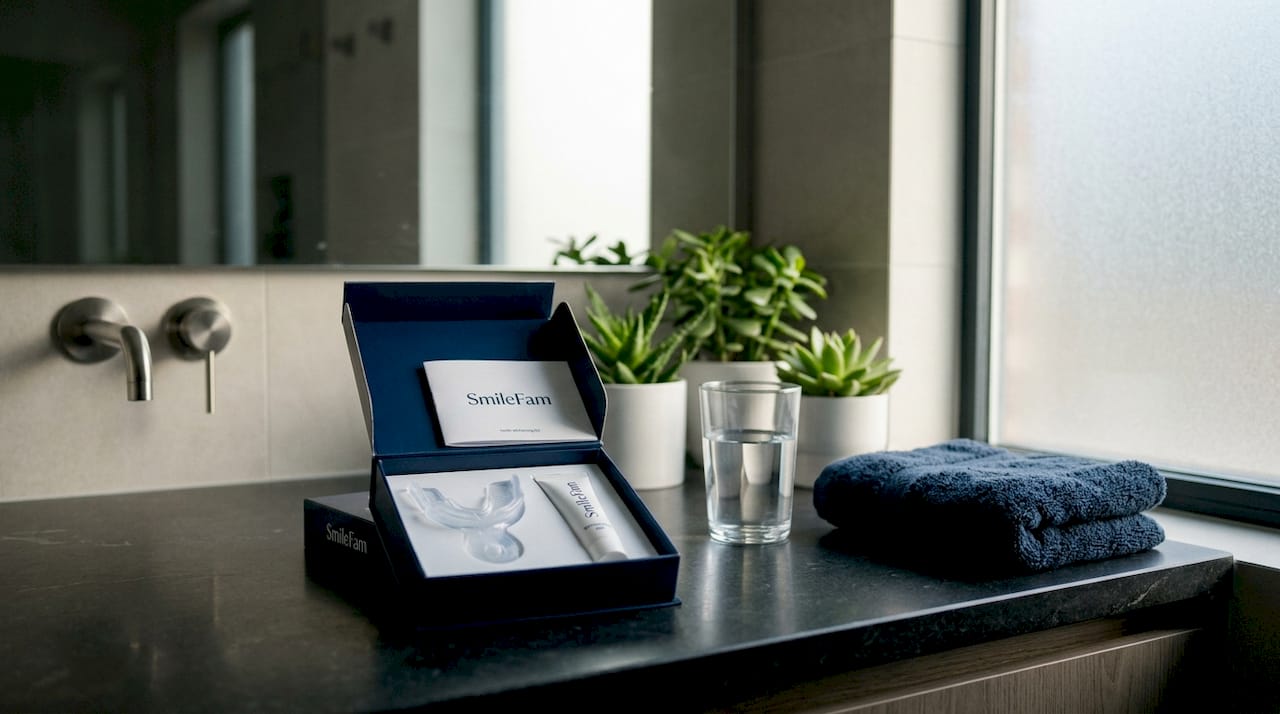
The BLU Teeth Whitening Kit is a strong starting point for anyone new to structured at-home whitening. It takes the guesswork out of the process while keeping safety at the center.
Comparing at-home and professional whitening: What’s the real difference?
To help you choose confidently, let’s put at-home whitening side by side with professional alternatives.
| Feature | At-home whitening | Professional whitening |
|---|---|---|
| Cost | $20 to $100 | $300 to $1,000+ |
| Convenience | High, use anytime | Requires appointments |
| Speed of results | Gradual over weeks | Often visible in one session |
| Intensity | Mild to moderate | Strong, dramatic change |
| Privacy | Complete | Office-based |
| Best for | Surface (extrinsic) stains | Deep or stubborn stains |
| Safety oversight | Self-managed | Dentist-supervised |
| Ongoing use | Easy and affordable | Expensive to repeat |
The table makes the tradeoffs clear. At-home whitening wins on cost, convenience, and repeat accessibility. Professional whitening wins on speed and the ability to address deeper discoloration under trained supervision.
It’s worth noting that at-home products may not provide the dramatic improvement of professional treatment. That’s not a criticism of at-home options. It’s just an honest acknowledgment that the two categories serve different needs. If you’re whitening for gradual maintenance and confidence with surface stains, at-home is a smart, practical choice. If you have severe discoloration from medication, aging, or trauma, a dentist conversation is the smarter starting point.
What often gets overlooked is the “correct use” piece. Many people underestimate how much technique and consistency influence results. Leaving a strip on longer than directed or using a whitening pen on a wet surface can reduce effectiveness and increase irritation risk. Reading the directions fully, every time, is genuinely important.
Some consumers also do well with a hybrid approach: start with a professional session to establish a bright baseline, then use the Whitening Electric Toothbrush Bundle and other at-home tools to maintain that result over time. This approach gets you the best of both worlds without ongoing professional costs.
Key safety considerations and best practices
With the differences in mind, let’s keep your smile bright and safe by outlining what you need to know for healthy whitening at home.
The most commonly reported side effects from at-home whitening are tooth sensitivity and gum irritation. Common downsides include increased sensitivity, gum irritation from peroxide contact, and uneven results due to fit or application issues. These effects are usually mild and temporary, but they can become a real problem if you overuse products or ignore warning signs.
Here’s when you should pause and consult a dentist before whitening:
- You have untreated cavities. Whitening agents can penetrate soft spots and cause pain or damage.
- You have active gum disease. Inflamed or receding gums are far more sensitive to whitening chemicals.
- Your enamel is visibly worn. Thin enamel provides less protection and can lead to sharp sensitivity.
- You have crowns, veneers, or bonding. These restorations don’t respond to whitening agents the same way natural enamel does, which can lead to uneven color.
- You’re pregnant or nursing. Out of caution, most dental professionals recommend avoiding whitening products during this time.
| Safety factor | Risk level | Recommendation |
|---|---|---|
| Healthy teeth, mild stains | Low | At-home whitening is appropriate |
| Sensitive teeth | Moderate | Use sensitivity-formulated products |
| Existing dental work | Moderate | Consult dentist first |
| Cavities or gum disease | High | Treat dental issues before whitening |
| Worn or thin enamel | High | Dentist evaluation required |
One of the most reliable safety signals to look for is the ADA Seal of Approval. According to the ADA’s home-use bleaching documentation, ADA-approved products meet established standards for safety and effectiveness. When you see that seal on the packaging, it means the product has passed independent review.
Pro Tip: The Snow Serum™ Whitening Pen uses an enamel-safe formula without harsh peroxide, making it a smarter starting choice for people with sensitive gums or anyone new to at-home whitening. Gentle chemistry still delivers results without the irritation risk.
Overuse is one of the most preventable mistakes at-home whiteners make. Using products more frequently than directed doesn’t speed up results. It amplifies sensitivity and can temporarily weaken enamel. Patience and consistency within the recommended guidelines always beat impatience.
The real-world verdict: What actually works for home whitening?
Here’s the honest take that most whitening guides won’t give you. The biggest predictor of your at-home whitening success isn’t the brand you pick. It’s your expectations and your discipline.
People who get great results from at-home whitening share one trait: they go in understanding that improvement is gradual. Two to four weeks of consistent use is a realistic timeline for seeing meaningful change on surface stains. That’s not a product failure. That’s exactly how the chemistry works, steady and cumulative rather than instant.
Where people get frustrated is when they expect professional-level results from a $25 kit after four days. That frustration is understandable, but it’s a mismatch of expectations rather than a product problem. Extrinsic stains respond well. Deep, intrinsic stains from old trauma, antibiotics like tetracycline, or natural tooth color genetics often don’t respond to at-home products at all. In those cases, a dentist can sometimes reset your baseline with a professional treatment, and then at-home products take it from there.
The overlooked advantage of at-home whitening is the maintenance game. Even people who have had professional whitening done will tell you results fade within months without upkeep. Consistent, gentle at-home use is how you protect your investment and keep your at-home smile confidence looking its best over the long term.
What the research and glossy marketing both miss is the human behavior side. The best whitening system is the one you’ll actually stick with. That means choosing a product that fits your lifestyle, not the one with the most dramatic before and after photos online.
Get started: Gentle, effective whitening solutions from SmileFam
When you’re ready for safe and effective teeth whitening at home, SmileFam makes the next step easy.
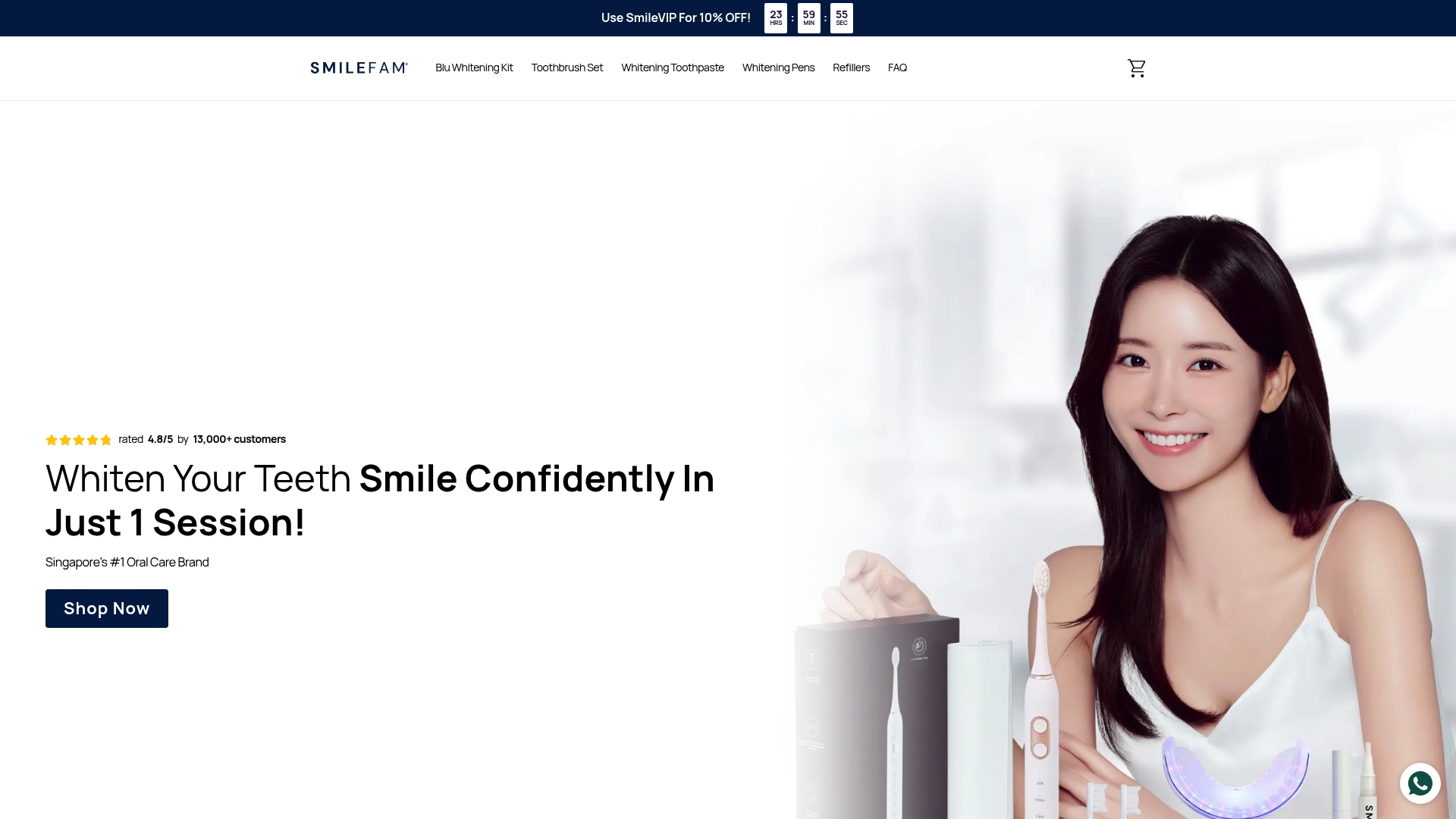
SmileFam’s product lineup is built for real people who want real results without harsh chemicals or complicated routines. The Ultimate Whitening Bundle brings together everything you need for a complete whitening system, covering daily maintenance and targeted treatment in one affordable kit. If you want to start simple, the BLU Whitening Toothpaste works into your existing routine without adding extra steps. And for precise, on-the-go touch-ups, the BLU Teeth Whitening Kit gives you the flexibility to whiten whenever and wherever it suits you. Every SmileFam product is formulated with enamel safety and gentle effectiveness in mind, because a brighter smile should never come at the cost of your dental health.
Frequently asked questions
How long does at-home teeth whitening take to show results?
Most users notice a visible change within two to four weeks of consistent use, though timelines vary based on the product and how often you apply it. At-home kits lighten teeth gradually over weeks or months with regular use.
Are at-home whitening kits safe for sensitive teeth?
Many at-home kits can increase sensitivity, so choose a product specifically formulated for sensitive teeth or check with your dentist before starting. Tooth sensitivity is one of the most commonly reported side effects of whitening products.
What stains respond best to at-home whitening?
At-home whitening is most effective on mild to moderate surface stains from coffee, tea, or wine. At-home whitening provides a confidence boost most reliably for mild to moderate extrinsic staining rather than deeper discoloration.
How do I know if a whitening product is ADA approved?
Check the product packaging for the ADA Seal of Approval, or look up the brand on the ADA’s official list of reviewed products. Some products carry the ADA Seal of Approval, which signals they’ve passed independent safety and effectiveness review.
Can at-home whitening address deep, intrinsic stains?
No. Deep intrinsic stains from internal tooth discoloration typically require professional dental intervention for any noticeable improvement. At-home kits are less effective for deeper intrinsic discoloration and those cases usually need a dentist’s expertise.