

For most people who want visible whitening without a week of tooth sensitivity, a dentist-supervised 10% carbamide peroxide at-home regimen is the smarter starting point. It converts to roughly 3.5% hydrogen peroxide in the mouth, close enough to match short, higher-concentration hydrogen peroxide sessions on results while causing meaningfully less irritation.
The choice really comes down to three variables: efficacy, sensitivity, and supervision.
- Efficacy: Carbamide peroxide (CP) and hydrogen peroxide (HP) produce comparable whitening once wear time is adjusted for concentration.
- Sensitivity: CP’s slower breakdown spreads out oxygen release, which tends to be gentler on nerve endings than a fast HP surge.
- Supervision: Formulation matters as much as chemistry. Add desensitizers, get the pH right, and have a dentist check your gums and restorations first.
Key Takeaways
Carbamide peroxide’s slow release and hydrogen peroxide’s fast release can deliver comparable whitening once concentration and wear time are matched, but concentration, not chemical identity, drives most sensitivity risk.
| Point | Details |
|---|---|
| Conversion ratio | 10% carbamide peroxide breaks down to roughly 3.5% hydrogen peroxide, the actual active whitening agent. |
| Sensitivity risk scales with concentration | CP10% carries a 67% lower tooth sensitivity risk than CP20 to 22%, per network meta-analysis data. |
| Efficacy is largely comparable | Tray-delivered CP and HP show similar shade guide unit results once exposure time adjusts for concentration. |
| Storage stability differs | Carbamide peroxide is more chemically stable in storage; hydrogen peroxide degrades faster with heat and light. |
| Peroxide-free is a valid alternative | Getsmilefam’s Snow Serum™ Whitening Pen uses BLU Whitening Technology to target surface stains without hydrogen peroxide. |
Table of Contents
- Hydrogen Peroxide vs Carbamide: How Each One Actually Whitens Teeth
- What Does the Clinical Evidence Actually Show?
- Why Do Some Whitening Products Cause More Sensitivity Than Others?
- What Concentrations and Wear Times Should You Expect?
- How Should You Choose Between Carbamide and Hydrogen Peroxide?
- Where a Peroxide-Free Option Fits Into This Comparison
- What Happens to These Products in Storage?
- The Practical Bottom Line on Choosing a Whitening Agent
- Getting Whiter Teeth Without the Peroxide Trade-Offs
- Sources
Hydrogen Peroxide vs Carbamide: How Each One Actually Whitens Teeth
Carbamide peroxide isn’t a separate whitening chemical. It’s a delivery vehicle. Once it contacts saliva and enamel, it breaks down into hydrogen peroxide and urea. The hydrogen peroxide molecule is the one doing the actual work, diffusing into enamel and dentin, breaking apart into reactive oxygen species, and oxidizing the pigmented compounds that stain teeth.
The Singapore Dental Association notes that a 10% carbamide peroxide gel yields approximately 3.5% hydrogen peroxide as it decomposes. That conversion ratio is the single most useful number in this entire comparison, because it lets you translate between product labels that otherwise look impossible to compare. A tube labeled “16% CP” is roughly equivalent in active oxidizing power to a 5.6% HP product, not to a 16% HP product.
> Quick math: 10% CP ≈ 3.5% H2O2. Multiply any CP percentage by roughly 0.35 to estimate its hydrogen peroxide equivalent.
Where the two chemistries genuinely diverge is timing. Manufacturer data cited by Ultradent shows hydrogen peroxide releases most of its bleaching power within 30 to 60 minutes. Carbamide peroxide, by contrast, releases only about half its available oxygen in the first two hours, then keeps working for several hours after that. That’s why HP products are built for short, intense in-office visits, while CP products are built for trays you wear overnight or for several hours at a stretch.
This difference in kinetics explains a lot of what dentists see clinically:
- Fast-release HP concentrates oxidative stress into a narrow window, which whitens quickly but can spike sensitivity if the concentration is high.
- Slow-release CP spreads the same total oxidative work across a longer period, which is gentler on the pulp but requires patience.
- pH matters too. Urea’s breakdown slightly raises oral pH during the reaction, and some mechanistic research suggests that mild alkalinity may lower demineralization risk compared with more acidic hydrogen peroxide formulations.
- Additives like potassium nitrate or fluoride change the reactivity profile further, often blunting the nerve response without reducing whitening power.
None of this makes one chemical “stronger” than the other in any absolute sense. Hydrogen peroxide is simply the active molecule; carbamide peroxide is a slow-release container for the same active molecule.
What Does the Clinical Evidence Actually Show?
Systematic reviews are where marketing claims go to die, and the peroxide comparison is a good example of why. When researchers pool multiple randomized controlled trials, the differences between CP and HP mostly shrink rather than grow.
A systematic review and meta-analysis comparing tray-delivered carbamide peroxide against hydrogen peroxide for at-home bleaching found that CP gels showed a slight edge on ΔE, a colorimetric measure of overall color change. But when researchers switched to shade guide units, the standard visual method dentists actually use to judge before-and-after photos, the advantage disappeared. Tooth sensitivity and gingival irritation also came out statistically similar between the two groups.
That’s a meaningful finding because ΔE and shade guide units don’t always agree. A product can post better instrument-measured numbers while looking identical to the human eye. So the honest summary is: tray-delivered CP may have a marginal edge on paper, but nothing a patient would notice in the mirror.
“Slightly better whitening efficacy in terms of ΔE” for tray-delivered CP came with “no significant differences” in shade guide units, sensitivity, or irritation, according to the pooled trial data. In practice, that means the two chemistries land in roughly the same place when exposure time is matched to concentration.
A separate network meta-analysis focused specifically on carbamide peroxide concentrations, not a CP versus HP comparison, but its findings matter here because they clarify where the real risk sits. Researchers ranked CP10%, CP16%, and CP20 to 22% against each other using SUCRA scores, a statistical method for ranking treatments across multiple outcomes simultaneously.
A smaller clinical trial tested this head-to-head at the formulation level, comparing 3.5% hydrogen peroxide with potassium nitrate against 10% carbamide peroxide. Both groups whitened by roughly the same amount on the Vita shade scale, and the sensitivity difference between them didn’t reach statistical significance. That trial is a small sample, so it’s more a useful data point than a definitive verdict, but it lines up with the broader pattern: match the effective concentration and the exposure time, and the chemistry stops mattering as much as the formulation around it.
A few caveats keep this evidence from being airtight:
- Trials use different outcome measures (ΔE, shade guide units, visual analog scales for sensitivity), which makes pooling results across studies imprecise.
- Study populations, tray designs, and baseline tooth shades vary enough that heterogeneity is a recurring limitation flagged in these reviews.
- Certainty ratings on several outcomes land in the low-to-moderate range, meaning future, larger trials could shift these conclusions.
- Most trials measure outcomes at fixed short-term intervals, so long-term durability comparisons between CP and HP remain thinner than the short-term data.
The takeaway isn’t that one peroxide beats the other. It’s that concentration and wear time, not the base chemical, are what actually drive whitening outcomes once you control for total oxidative exposure.
Why Do Some Whitening Products Cause More Sensitivity Than Others?
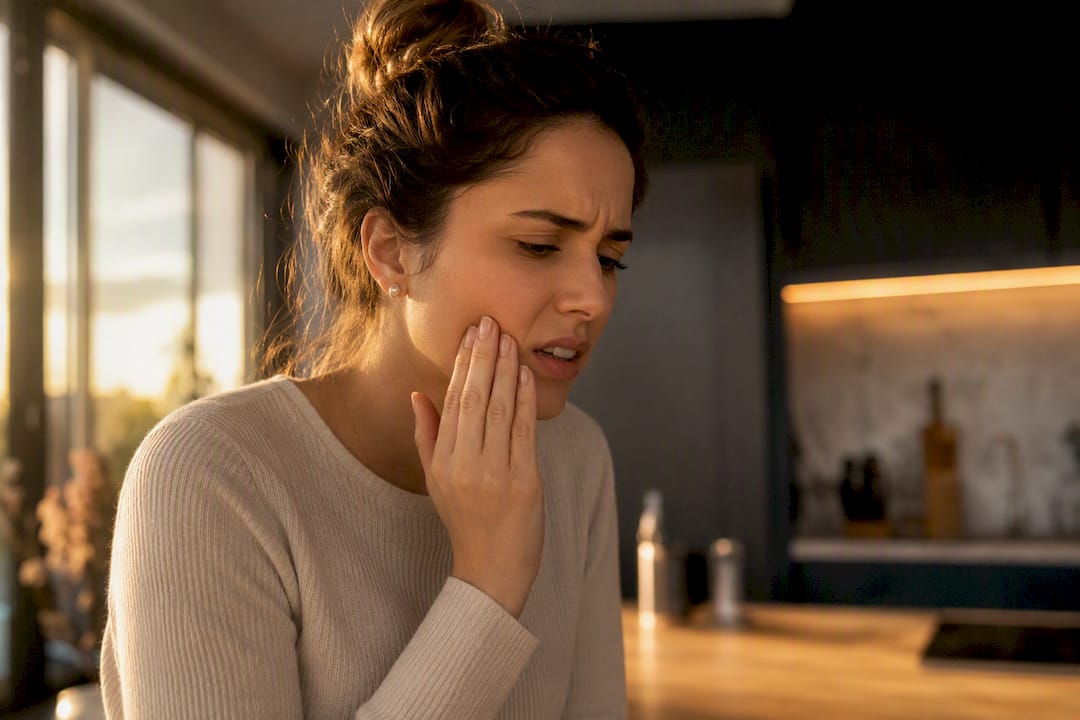
Sensitivity and gum irritation are the two adverse effects that show up most consistently across the whitening literature, and both track concentration more than they track which peroxide is used. The American Dental Association notes that over-the-counter products generally use lower concentrations of CP or HP precisely because transient tooth sensitivity and gingival irritation become more common as concentration rises.
The network meta-analysis on CP concentrations puts a real number on this.
Enamel effects tell a similar concentration-dependent story, though the evidence here comes mostly from laboratory studies rather than large clinical trials. One comparative study of morphological and mineral changes found greater calcium and phosphate loss with high-concentration hydrogen peroxide protocols (37.5%, applied across multiple sessions) than with comparable carbamide peroxide regimens at 16%, even when the CP protocol ran longer. That doesn’t mean HP is inherently harsher on enamel. It means aggressive, repeated, high-concentration HP protocols carry more mineral-loss risk than the slower, lower-concentration CP alternative, and that risk profile deserves the same caution regardless of which peroxide a specific product uses.
Practical mitigations that actually move the needle:
- Choose formulations with potassium nitrate, which desensitizes nerve endings and consistently reduces reported sensitivity in practice.
- Ask about fluoride remineralization before and after whitening to help offset any temporary mineral loss.
- Shorten session length rather than raising concentration if you want faster results, since kinetics research shows CP releases most of its oxygen well within a few hours anyway.
- Get professional oversight for anything above OTC-level concentrations, especially if you have exposed root surfaces, cracked enamel, or existing restorations.
The combination of low concentration and a desensitizing additive addresses both mechanisms of sensitivity at once.* For more on this, see our guide on reducing whitening sensitivity at home.
What Concentrations and Wear Times Should You Expect?
Concentration and time are two dials on the same machine, and adjusting one usually means adjusting the other. Here’s how that plays out across common formats.
- At-home carbamide peroxide (10 to 16%): Applied in a custom or boil-and-bite tray for 2 to 10 hours, often overnight, over one to three weeks depending on staining severity.
- In-office hydrogen peroxide (25 to 40%): Applied under professional supervision for short 15 to 30 minute intervals per session, sometimes repeated within a single visit, precisely because HP’s fast kinetics deliver most of the effect quickly.
- OTC whitening strips: Typically use lower HP concentrations (around 6 to 14%) with adhesive strips worn for 5 to 30 minutes daily, trading strength for convenience and consistent contact with the tooth surface.
- Whitening pens and touch-up gels: Usually apply a thin peroxide or peroxide-free layer for targeted spot treatment, best suited for maintenance between full treatments rather than as a primary whitening method.
- Tray gels sold for at-home supervised use: Combine CP concentrations with desensitizers, designed specifically for the multi-hour wear times that suit carbamide peroxide’s slow release profile.
Storage matters more than most people realize. Carbamide peroxide is generally the more chemically stable of the two, tolerating typical room-temperature storage reasonably well. Hydrogen peroxide degrades faster, especially with heat and light exposure, which is why HP-based products often carry shorter shelf lives and stricter storage instructions. A tube of HP gel left in a hot car or a sunlit bathroom cabinet can lose potency well before its printed expiration date, while CP formulations tend to hold up longer under the same conditions.
How Should You Choose Between Carbamide and Hydrogen Peroxide?
Match the chemistry to your actual situation, not to whichever product has the biggest percentage on the box. Walk through these questions first:
- How fast do you need results? In-office HP sessions deliver visible change in a single appointment. At-home CP takes one to three weeks but with less sensitivity risk along the way.
- How sensitive are your teeth already? If you’ve had trouble with whitening before, CP10% with potassium nitrate is the safer starting point, backed by the 67% lower sensitivity risk it carries versus higher CP concentrations.
- Do you have restorations, exposed roots, or enamel wear? These conditions call for a dental exam before any peroxide product, at any concentration.
- What’s your budget and tolerance for appointments? At-home CP kits cost less over time; in-office HP costs more per session but compresses the process.
- Are you willing to see a dentist first? You should, particularly for anything above OTC strength, or if you’re combining whitening with other cosmetic dental work.
For those who want dramatic results before an event and can tolerate a short, monitored HP session, in-office treatment fits better. And for anyone who wants to skip peroxide chemistry altogether, a peroxide-free formula is worth exploring before committing to either path.
Where a Peroxide-Free Option Fits Into This Comparison
Not everyone wants to manage peroxide kinetics, sensitivity risk, and enamel monitoring just to whiten their teeth. That’s the gap Getsmilefam’s BLU Whitening Technology was built to address, using enamel-safe formulas that skip hydrogen peroxide entirely while still targeting visible surface stains.
- The Snow Serum™ Whitening Pen is designed for people who want a fast at-home application without tray time or peroxide exposure.
- The formula is built for sensitive gums, avoiding the harsh chemical profile that drives most of the sensitivity complaints covered above.
- Author Lenney’s practical stance throughout this piece: peroxide-free options are genuinely adequate for surface-level staining and touch-ups, but deeper, set-in discoloration usually still responds better to professional peroxide-based bleaching under a dentist’s care.
It’s a lower-risk option for a specific kind of user, the one prioritizing comfort and simplicity over maximum bleaching depth.
What Happens to These Products in Storage?
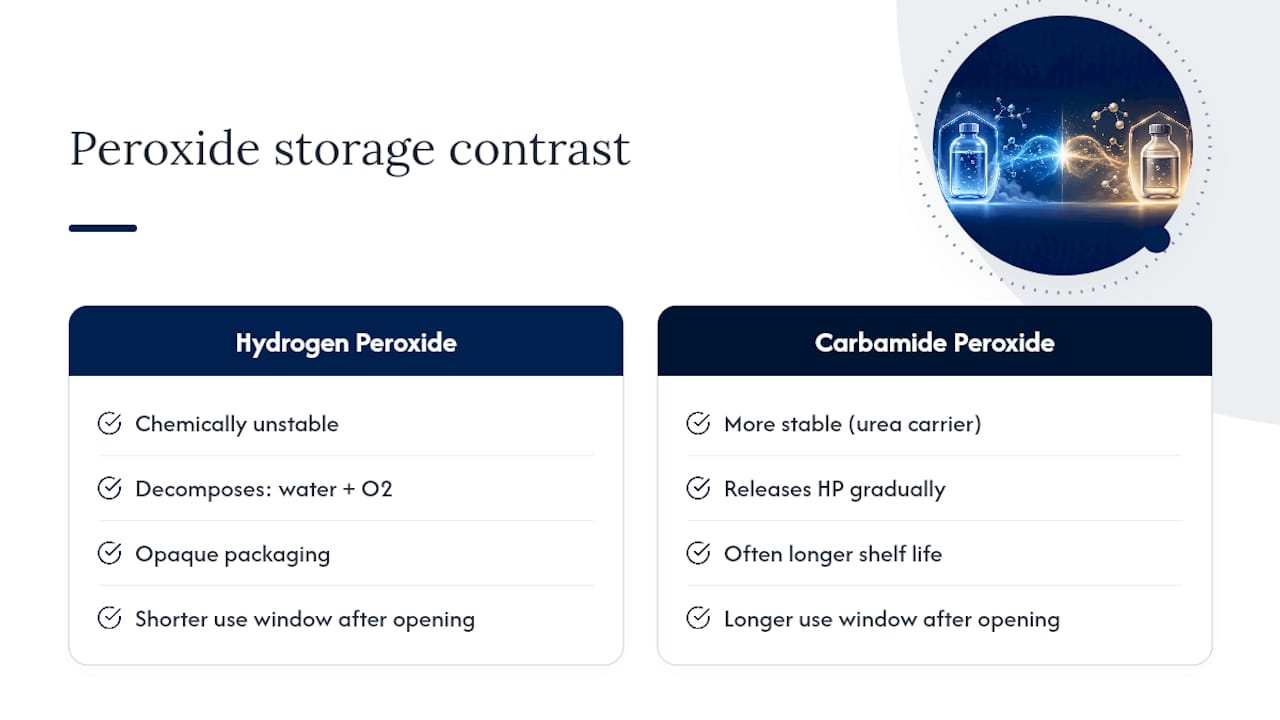
Environmental exposure degrades both peroxides, but not at the same rate, and that has real consequences for how you should store and use them. Hydrogen peroxide is chemically unstable by nature. It decomposes into water and oxygen gas on contact with light, heat, or even certain metal ions, which is why HP products typically ship in opaque packaging and carry shorter recommended use windows after opening.
Carbamide peroxide holds up better under normal storage because the urea component acts as a stabilizing carrier, releasing hydrogen peroxide gradually rather than sitting as free HP waiting to break down. That’s part of why CP-based tray gels tend to have longer shelf lives than comparable HP gels once manufactured.
Practical storage guidance follows directly from this chemistry. Keep any peroxide-based whitening product away from direct sunlight and away from bathroom heat and humidity, both of which accelerate breakdown and reduce the active concentration you’re actually applying. Refrigeration isn’t necessary for most consumer products, but a cool, dark drawer beats a steamy shower caddy every time. Once a tube or syringe has been opened and exposed to air repeatedly, expect gradual potency loss regardless of the printed expiration date, faster for HP products than for CP. If a whitening gel looks noticeably runnier, discolored, or has an unusual smell compared to when you bought it, that’s a sign the active peroxide content has likely already dropped below what the label promises.
The Practical Bottom Line on Choosing a Whitening Agent
The evidence doesn’t support treating this as a battle between two rival chemicals. Hydrogen peroxide is the active ingredient either way. Carbamide peroxide just delivers it more slowly, which is exactly why it tends to be gentler.
My honest read after going through the concentration studies: the biggest lever isn’t CP versus HP, it’s matching concentration and wear time to your actual sensitivity history, and not chasing the highest percentage on the shelf. Supervision and formulation, not brand loyalty to one peroxide, are what separate a comfortable result from a painful one.
Getting Whiter Teeth Without the Peroxide Trade-Offs
If everything above made you hesitate about tray gels, wear times, and sensitivity math, you’re exactly who Getsmilefam built its BLU Whitening Technology for. Instead of calculating CP-to-HP conversion ratios or timing multi-hour tray sessions, you get a formula designed to skip hydrogen peroxide altogether and still target visible surface staining in a single session.
The Snow Serum™ Whitening Pen works for people who want a quick at-home touch-up without the shelf-life concerns, storage precautions, or gum irritation risk tied to peroxide-based gels. It’s enamel-safe by design, built for sensitive gums, and skips the desensitizer-and-fluoride balancing act that peroxide users have to manage. If you travel often or want a lower-maintenance option for touch-ups between deeper treatments, the Premium Travel Kit packs the same peroxide-free formula into a format built for exactly that. Browse the current lineup and pick the format that fits how you actually whiten, at home, on your own schedule, without a tray in sight.
Sources
- Singapore Dental Association — Tooth whitening / bleaching guidance
- American Dental Association — Whitening