

Hydrogen peroxide whitening is defined as a bleaching process that uses oxidizing agents to break down tooth stains, but it carries documented risks that lead many people to avoid it entirely. Tooth sensitivity affects 55–75% of peroxide whitening users, and gingival irritation affects 25–40%, often causing people to stop treatment before completing it. That statistic alone explains why so many people search for safer options. The American Dental Association sets concentration guidelines for a reason: misuse of hydrogen peroxide causes real, measurable harm to enamel and soft tissue. If you have sensitive teeth, dental restorations, or simply want a gentler path to a brighter smile, understanding why avoid hydrogen peroxide whitening is the first step toward making a smarter choice.
What are the main risks of hydrogen peroxide whitening?
Tooth sensitivity is the most common side effect of peroxide whitening, and it is not minor. The oxidizing agent penetrates the enamel and reaches the dentin layer, triggering nerve responses that cause sharp, temporary pain. For people who already experience sensitivity, this effect is amplified and can last for days after a single session.
Gingival irritation is the second major concern. DIY or at-home high-concentration peroxide use without a gingival barrier raises the risk of chemical burns to the soft tissue lining your gums. Professional treatments use custom trays and isolation techniques to protect the gums, but over-the-counter strips and pens offer no such protection.
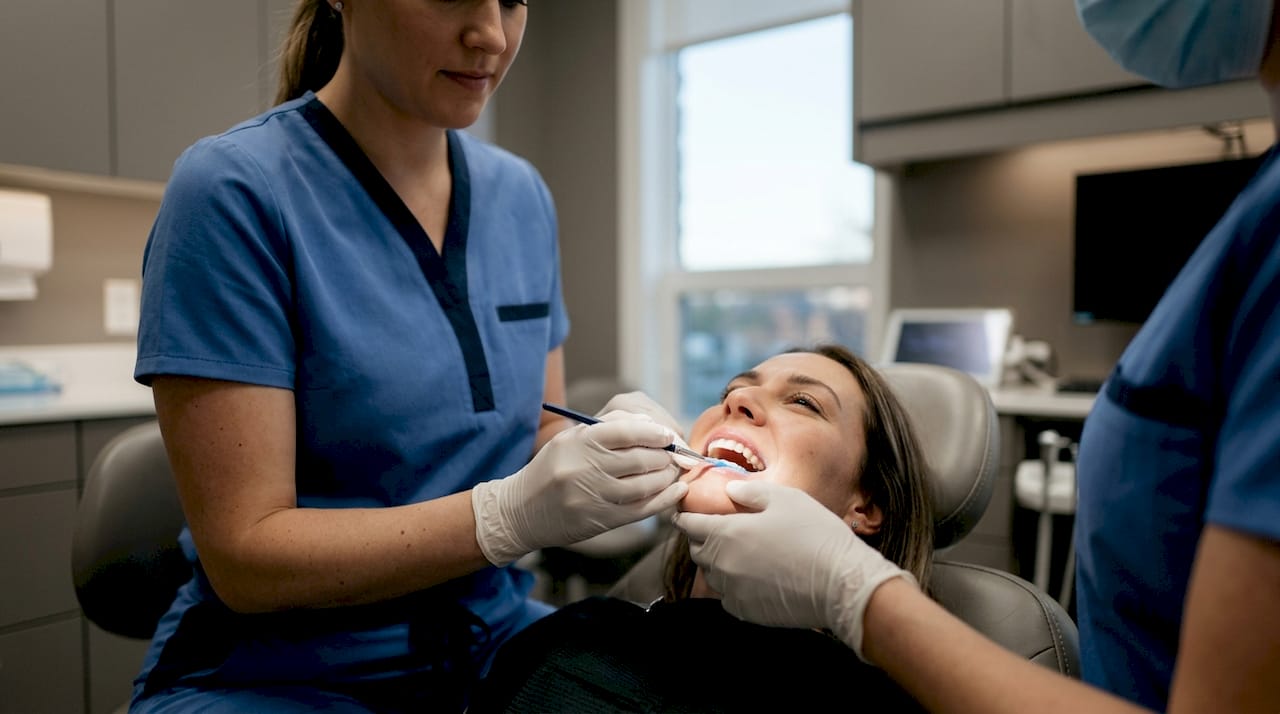
Enamel erosion is a longer-term risk that gets less attention. Repeated peroxide exposure reduces enamel microhardness, making teeth more vulnerable to acid damage from food and drink. This is not a cosmetic issue. Weakened enamel does not grow back.
Concentrated hydrogen peroxide causes soft tissue burns and, if ingested, poses serious health risks. This is why health authorities consistently warn against high-strength DIY applications.
The dose-time relationship is the core safety issue with peroxide whitening. Reducing either the concentration or the contact time significantly lowers sensitivity risk without a major loss in whitening effectiveness. Most adverse effects occur when people use too much product for too long, not from the ingredient itself at appropriate levels.
Pro Tip: If you experience sharp tooth pain during or after any whitening treatment, stop immediately and wait at least 48 hours before trying again. Continuing through sensitivity does not speed up results. It increases the risk of nerve inflammation.
Dental restorations present a separate problem. Peroxide whitening does not change the color of crowns, veneers, or implants. Hydrogen peroxide can cause color mismatch on existing restorations, leaving natural teeth visibly lighter than the fixed dental work beside them. That outcome is the opposite of what most people want.
How does concentration and usage duration affect safety?
The relationship between peroxide concentration, contact time, and risk is well established in clinical literature. Higher concentrations do not deliver proportionally better results. Moderate concentrations of 25–35% achieve whitening outcomes comparable to higher concentrations, with a lower incidence of sensitivity. That finding comes from a 2026 umbrella review of in-office bleaching protocols, and it changes how you should think about “stronger equals better.”
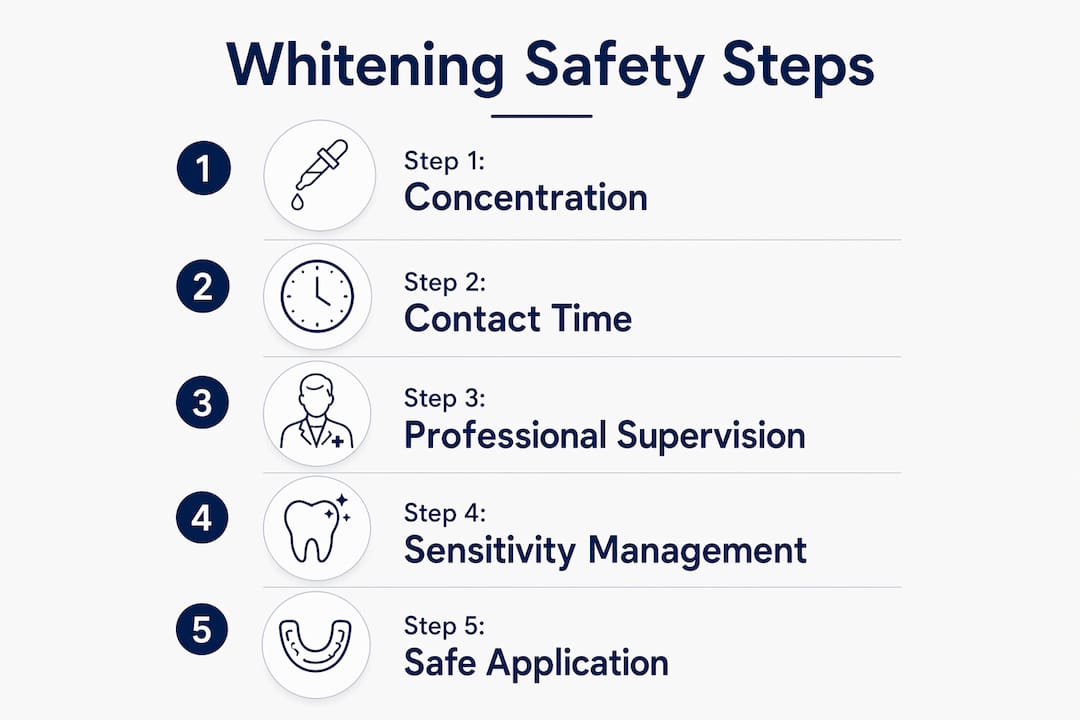
Prolonged exposure creates a compounding problem. Whitening effect plateaus with extended use, meaning longer application time does not improve results but does increase side effects. The oxidation threshold for tooth discoloration is reached before most people think to stop, so extra time in the tray is wasted risk.
Overnight use is the highest-risk scenario. Overnight use of over-the-counter whitening pens elevates pulpal hydrogen peroxide penetration and enamel softening risk, based on an in-vitro study measuring 8 hours of daily application over 10 days. Pulpal penetration can trigger inflammation inside the tooth, which is difficult to reverse.
| Application method | Concentration range | Sensitivity risk | Supervision needed |
|---|---|---|---|
| In-office professional | 25–35% | Moderate, managed | Yes |
| At-home tray (dentist-issued) | 10–16% | Low to moderate | Recommended |
| Over-the-counter strips | 6–10% | Low to moderate | No |
| Overnight OTC whitening pens | Varies | High | No |
Safety depends more on professional supervision and correct protocol than on the peroxide ingredient alone. A dentist who uses proper isolation, desensitizing agents, and timed application can deliver results with far fewer side effects than an unsupervised at-home user applying the same concentration.
Pro Tip: Ask your dentist about desensitizing gel applied before or after whitening. Potassium nitrate and fluoride-based formulas reduce post-treatment sensitivity significantly and are standard in professional protocols.
Why do some people prefer to avoid peroxide whitening completely?
The reasons go beyond side effects. For a meaningful portion of people, hydrogen peroxide whitening simply does not deliver the expected result, which makes the risk-benefit calculation unfavorable from the start.
Some stains respond poorly to peroxide whitening. Tetracycline staining, which comes from antibiotic use during tooth development, is notoriously resistant to bleaching agents. People with this type of discoloration often undergo multiple treatment cycles with minimal improvement, accumulating side effects without achieving their goal.
The most common reasons people choose to avoid peroxide whitening entirely include:
- Existing dental restorations. Crowns, implants, veneers, and bonding do not respond to bleaching. Whitening the surrounding natural teeth creates a visible mismatch.
- Chronic tooth sensitivity. People with pre-existing dentin hypersensitivity find that peroxide treatments worsen their baseline discomfort for days or weeks.
- Pregnancy or breastfeeding. Most dental guidelines recommend avoiding elective bleaching treatments during these periods due to insufficient safety data.
- Unrealistic expectations. Peroxide whitening works best on yellow, extrinsic stains. Gray or brown intrinsic discoloration responds poorly, leading to disappointment after multiple sessions.
- Preference for gentler methods. Many people simply want whitening teeth without peroxide because they prioritize enamel safety and gum comfort over maximum speed.
Risk-aversion is a legitimate reason to choose a different method. When sensitivity affects up to 75% of users, avoiding the ingredient entirely is a rational decision, not an overcautious one.
What are safer and effective alternatives to hydrogen peroxide whitening?
Peroxide-free whitening is not a compromise. Several non-peroxide agents and technologies deliver visible results without the sensitivity and gum irritation associated with bleaching.
- Sodium bicarbonate-based formulas. Baking soda is a mild abrasive that removes surface stains without chemical bleaching. It is well tolerated by sensitive teeth and has a long safety record in clinical dentistry.
- Activated charcoal and enzyme-based products. These work by adsorbing surface stain particles rather than oxidizing pigment inside the enamel. Results are more gradual but carry no sensitivity risk.
- PAP (phthalimidoperoxycaproic acid) whitening. PAP is a non-peroxide oxidizing agent that whitens enamel without releasing free radicals. Clinical studies show it causes significantly less sensitivity than hydrogen peroxide at equivalent whitening levels.
- Professional-grade desensitizing whitening systems. Some in-office systems combine low-concentration bleaching agents with fluoride and potassium nitrate to protect the pulp and enamel during treatment.
- Lifestyle and dietary adjustments. Reducing coffee, tea, red wine, and tobacco intake slows stain accumulation. Rinsing with water after consuming staining foods and drinks extends the results of any whitening treatment.
| Alternative method | Sensitivity risk | Best for | Whitening speed |
|---|---|---|---|
| PAP-based whitening | Very low | Sensitive teeth | Moderate |
| Sodium bicarbonate | Very low | Surface stains | Slow |
| Professional supervised low-peroxide | Low to moderate | Moderate discoloration | Fast |
| Enzyme-based products | Very low | Maintenance | Slow |
Understanding peroxide-free versus peroxide whitening helps you match the method to your actual situation. If your sensitivity is mild and your staining is moderate, a supervised low-concentration protocol may work well. If you have restorations or chronic sensitivity, a peroxide-free system is the more logical starting point.
Pro Tip: Pair any whitening method with a sensitivity-specific toothpaste containing potassium nitrate or stannous fluoride for at least two weeks before starting treatment. This pre-conditions the dentin and reduces the intensity of any post-treatment discomfort.
Key Takeaways
Hydrogen peroxide whitening causes measurable harm when misused, and peroxide-free alternatives now deliver comparable results with far lower risk for most people.
| Point | Details |
|---|---|
| Sensitivity is widespread | Tooth sensitivity affects 55–75% of peroxide whitening users, making it the most common reason people stop treatment. |
| Concentration matters more than strength | Moderate concentrations of 25–35% match higher-dose results with less sensitivity, per a 2026 umbrella review. |
| Overnight use is high risk | Extended OTC pen use increases pulpal penetration and enamel softening without improving whitening outcomes. |
| Restorations create color mismatch | Peroxide does not whiten crowns or implants, creating visible color differences after treatment. |
| Peroxide-free options are viable | PAP-based and sodium bicarbonate formulas whiten effectively with very low sensitivity risk for most people. |
The whitening trade-off nobody talks about honestly
I have spent years reading the clinical literature on bleaching, and the honest answer is that hydrogen peroxide whitening works. The problem is not the ingredient. The problem is how it gets used.
Most people who experience bad outcomes with peroxide whitening made one of three mistakes: they used a concentration too high for their sensitivity level, they left the product on longer than recommended, or they used an overnight product without understanding what that does to pulpal tissue. None of those outcomes are inevitable. They are the result of poor protocol, not a flawed ingredient.
That said, I think there is a real group of people for whom avoiding peroxide entirely is the right call. If you have multiple crowns or veneers, peroxide whitening will make your smile look patchy, not brighter. If you have chronic sensitivity, the treatment window between “effective” and “painful” is too narrow to manage safely at home. And if your staining is intrinsic, from antibiotics or fluorosis, peroxide will disappoint you after multiple sessions.
The gum-safe whitening conversation is also underrated. Most people focus on tooth sensitivity and ignore what repeated peroxide exposure does to gum tissue over time. Soft tissue irritation is not just uncomfortable. It signals that the chemical is reaching places it should not.
My practical advice: if you want to try peroxide whitening, do it under professional supervision with a moderate concentration and a short application time. If you want to avoid the risk entirely, the peroxide-free options available now are genuinely good. You do not have to choose between a bright smile and a comfortable one.
— Lenney
Getsmilefam’s gentle approach to a brighter smile
Getsmilefam builds its whitening products around one principle: effective results without the side effects that make people quit. The BLU Whitening Toothpaste uses the proprietary BLU Whitening Technology developed in Singapore, with lab-approved, enamel-safe ingredients and no hydrogen peroxide. It is designed specifically for people with sensitive gums who want consistent whitening without the nerve pain that follows most bleaching treatments.
For a more complete at-home system, the BLU Teeth Whitening Kit delivers visible results in a single session without harsh chemicals. Every formula is tested for enamel safety and gum compatibility, making it a practical option for anyone who has already experienced sensitivity from peroxide-based products or simply wants to avoid that risk from the start.
FAQ
What percentage of people get sensitivity from peroxide whitening?
Tooth sensitivity affects 55–75% of people who use peroxide whitening products. Gingival irritation affects an additional 25–40%, and both side effects frequently cause people to stop treatment early.
Is hydrogen peroxide safe for teeth at low concentrations?
Low concentrations used under professional supervision are generally considered safe for most people. Safety depends more on correct protocol and supervision than on the concentration alone, according to clinical literature on bleaching techniques.
How does avoiding hydrogen peroxide whitening help with dental restorations?
Hydrogen peroxide does not change the color of crowns, veneers, or implants. Whitening natural teeth with peroxide while leaving restorations unchanged creates a visible color mismatch, which is why people with significant dental work often choose peroxide-free methods.
What is the safest alternative to hydrogen peroxide whitening?
PAP-based whitening is currently the most studied non-peroxide alternative, with clinical evidence showing effective stain removal and very low sensitivity risk. Sodium bicarbonate formulas are also well tolerated and carry a long safety record.
Does avoiding chemical whitening products mean slower results?
Not necessarily. PAP-based systems and professionally supervised low-concentration treatments deliver results at a comparable speed to standard over-the-counter peroxide products, with significantly less sensitivity risk for most people.