

Fast teeth whitening without peroxide is achievable through enzyme- and mineral-based products that lift surface stains without chemical bleaching. These hydrogen peroxide free whitening options work by targeting extrinsic discoloration — the kind caused by coffee, tea, and tobacco — rather than penetrating enamel to alter tooth color from within. Brands like Lumineux and TheraBreath have built entire product lines around this approach, using ingredients like papain and glucose oxidase to break down stain molecules gently. If you have sensitive teeth or simply want to avoid harsh chemicals, these non-peroxide whitening methods offer a real path to a brighter smile.
What does science say about fast whitening without peroxide?
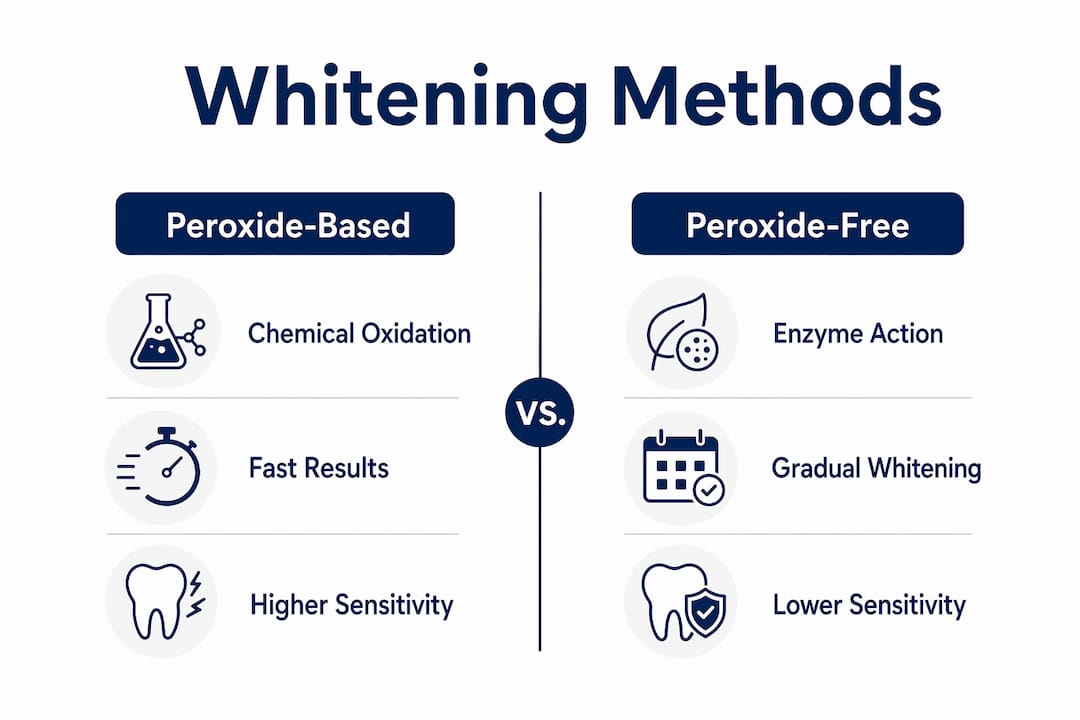
Peroxide-free whitening and peroxide-based whitening operate on fundamentally different chemistry. Peroxide products work by releasing oxygen molecules that penetrate enamel and oxidize both intrinsic and extrinsic stain compounds. Remove peroxide from the formula, and you shift the entire treatment to surface stain removal only. That distinction matters more than most product labels suggest.
Enzyme-based ingredients like papain (derived from papaya) and glucose oxidase break down the protein bonds that hold surface stains to enamel. Mineral abrasives like hydrated silica and baking soda physically polish those loosened pigments away. The result is a cleaner, brighter surface — not a chemically bleached one. For extrinsic stains from beverages and food, this approach works well. For deeper, intrinsic discoloration from aging or antibiotics, peroxide-free methods hit a hard ceiling.
Clinical evidence confirms the speed gap. Low-concentration peroxide strips (3% hydrogen peroxide) show measurable whitening after just a few applications in controlled trials. Peroxide-free products rarely match that speed or shade improvement, with most users seeing gradual changes over days or weeks rather than hours. That tradeoff is the core reality of choosing a safe whitening option with no peroxide.
The upside is significant, though. Peroxide bleaching carries sensitivity risk; peroxide-free options minimize that risk substantially. For anyone with naturally sensitive gums or enamel wear, that tradeoff is worth it.
| Method | Mechanism | Speed | Sensitivity risk |
|---|---|---|---|
| Peroxide-based strips | Chemical oxidation of stains | Fast (hours to days) | Moderate to high |
| Enzyme-based rinses | Protein bond breakdown | Gradual (days to weeks) | Low |
| Mineral polishing paste | Physical abrasion | Moderate | Very low |
| Whitening pens (peroxide-free) | Surface stain lifting | Moderate | Low |
Pro Tip: If you want the fastest visible result from a peroxide-free product, focus on extrinsic stains first. Cut coffee and tea for 48 hours before starting treatment. Stain-free enamel responds faster to enzyme and mineral action.
What ingredients and tools actually work for peroxide-free whitening?
Selecting the right product starts with reading the ingredient list, not the marketing copy. True peroxide-free products should list no hydrogen peroxide or carbamide peroxide anywhere in their formula. Some brands use “peroxide-free” as a front-label claim while hiding peroxide-related chemistry deeper in the formulation. Check the full ingredient list every time.
The ingredients with the strongest evidence for safe, effective stain removal include:
- Papain and bromelain: Plant-derived enzymes from papaya and pineapple that dissolve surface protein stains without abrasion
- Glucose oxidase: An enzyme that generates mild oxidative activity at the surface level, lifting pigments gently
- Hydrated silica: A fine mineral abrasive used in most whitening toothpastes for physical polishing
- Baking soda (sodium bicarbonate): A mild alkali that neutralizes acids and polishes stains; one of the most studied home remedies for bright teeth
- Lemon peel oil and coconut oil: Found in some natural formulations; limited clinical evidence but low risk profiles
Product formats matter as much as ingredients. Whitening pens deliver precise application to individual teeth and work well for touch-ups. Enzyme rinses coat the whole mouth and are good for maintenance. Polishing toothpastes work best as a daily foundation. Strips without peroxide offer longer contact time but vary widely in ingredient quality.
For safety certification, the ADA Seal of Acceptance is the most reliable marker. The ADA recommends verified products over DIY or natural methods that lack clinical evidence. Not every peroxide-free product carries the seal, but those that do have passed independent safety and efficacy testing.
Pro Tip: Stack your approach. Use a baking soda toothpaste as your daily base, add an enzyme rinse after meals, and apply a whitening pen for targeted treatment before bed. Each layer addresses stains differently, and the combined effect moves faster than any single product alone.
How to use peroxide-free whitening products for the fastest results
Speed with peroxide-free whitening comes from consistency and preparation, not from a single application. Follow this sequence to get the most out of any non-peroxide whitening method.
-
Brush and floss before every treatment session. Clean teeth absorb whitening ingredients more effectively. Plaque and food debris create a physical barrier between the product and enamel surface.
-
Avoid stain-causing foods and drinks for at least one hour before and after application. Coffee, red wine, and tomato-based sauces redeposit pigment onto freshly treated enamel faster than you’d expect.
-
Apply your enzyme rinse or whitening pen to dry teeth. Saliva dilutes active ingredients. Pat teeth lightly with a clean cloth or tissue before applying a pen or strip.
-
Follow the product’s recommended contact time exactly. More is not better with mineral abrasives. Overuse of polishing agents can thin enamel over time. For enzyme rinses, 60 seconds is typically sufficient.
-
Use the product daily for at least two weeks before evaluating results. Peroxide-free methods require repeated exposure to gradually lift surface pigments. One or two sessions will not produce visible change for most people.
-
Maintain results with a whitening toothpaste containing hydrated silica or baking soda. Daily polishing prevents new stains from bonding to enamel and extends the effect of your active treatment.
For anyone exploring whitening methods for sensitive teeth, this step-by-step approach works without triggering the nerve sensitivity that peroxide can cause. The key is patience combined with a structured routine rather than sporadic heavy use.
Pro Tip: Take a photo of your teeth in natural light before you start, then again at the two-week mark. Whitening progress is gradual enough that you may not notice it day to day. The photo comparison often reveals more improvement than you realized.
Common challenges with peroxide-free whitening and how to fix them
The biggest frustration consumers report is slow or invisible results. Understanding why helps you troubleshoot rather than abandon the method entirely.
Peroxide-free products rarely match the speed of peroxide-based whitening in clinical comparisons. If you are expecting the same dramatic shade shift you see in peroxide strip advertising, you will be disappointed. Peroxide-free whitening is a different category of treatment with a different timeline. Setting that expectation upfront prevents most of the frustration.
The second major issue is stain type. Extrinsic stains from beverages and tobacco respond well to enzyme and mineral treatments. Intrinsic stains from tetracycline antibiotics, fluorosis, or natural tooth aging do not. If your discoloration comes from inside the tooth rather than the surface, no peroxide-free product will produce meaningful change. A dentist consultation is the right next step in that case.
Watch out for these specific problems and their fixes:
- No visible change after two weeks: Confirm you are applying to clean, dry teeth. Wet application cuts ingredient effectiveness significantly.
- Increased sensitivity despite no peroxide: Overuse of abrasive products can thin enamel. Reduce frequency to every other day and switch to a gentler formula.
- “Peroxide-free” product causing irritation: Check the full ingredient list for carbamide peroxide or urea peroxide, which some brands include despite front-label claims. Ingredient label scrutiny is non-negotiable.
- Uneven whitening: You are likely applying inconsistently. A whitening pen with a brush tip gives more precise coverage than strips for hard-to-reach areas.
- Results fading quickly: You are reintroducing staining foods too soon after treatment. Give enamel at least two hours before consuming coffee or wine after any whitening session.
For a deeper look at managing sensitivity during any whitening routine, Getsmilefam’s guide on avoiding whitening sensitivity covers both peroxide and peroxide-free scenarios with practical adjustments.
Key takeaways
Fast teeth whitening without peroxide works best on extrinsic stains through consistent enzyme and mineral-based treatment, not through a single application.
| Point | Details |
|---|---|
| Mechanism differs from peroxide | Peroxide-free products remove surface stains; they do not bleach intrinsic discoloration. |
| Speed requires consistency | Repeated daily applications over two or more weeks produce visible results. |
| Ingredient verification matters | Always check for hydrogen peroxide or carbamide peroxide on the full ingredient list. |
| Stain type determines outcome | Extrinsic stains respond well; intrinsic discoloration requires professional peroxide treatment. |
| Safety certification guides selection | Products with the ADA Seal of Acceptance have passed independent safety and efficacy testing. |
Why I think most people approach peroxide-free whitening wrong
Most people treat peroxide-free whitening as a substitute for peroxide whitening. It is not. It is a different tool for a different job, and the moment you stop comparing the two, the results start making sense.
I have seen consumers buy enzyme-based whitening pens, use them twice, see no dramatic change, and conclude the product does not work. What actually happened is they applied the wrong expectations to the right product. Enzyme and mineral treatments are maintenance and gradual improvement tools. They shine when used consistently over weeks, not when used as a one-time fix before an event.
The products I find most credible are the ones that are transparent about their mechanism. If a brand claims “instant whitening” without peroxide and without any clinical context, that is a red flag. Genuine peroxide-free whitening takes time. Any brand honest enough to say that upfront is worth trusting more than one promising overnight results.
My practical advice: use peroxide-free methods as your daily foundation and reserve any stronger treatment for occasions when you genuinely need faster results. Enamel health is a long game. Protecting it with gentler chemistry while still making progress is the smarter approach for most people. The whitening timeline guide from Getsmilefam lays out realistic expectations better than most product pages do.
— Lenney
Try Getsmilefam’s peroxide-free whitening pen for real results
Getsmilefam built the Snow Serum™ Whitening Pen specifically for people who want visible whitening without the sensitivity that peroxide causes. The formula uses lab-approved, enamel-safe ingredients developed through BLU Whitening Technology in Singapore, with no hydrogen peroxide in the mix. The precision brush applicator makes it easy to target individual teeth or treat your full smile in under two minutes.
Customers consistently report noticeable improvement with regular use, and the pen is compact enough to use at home or on the go. If you want a peroxide-free option that is backed by real formulation work rather than marketing claims, the Snow Serum™ Pen is the place to start. Getsmilefam also offers a Premium Travel Kit for anyone who wants a complete peroxide-free whitening routine in one package.
FAQ
What is the fastest way to whiten teeth without peroxide?
The fastest peroxide-free whitening comes from combining an enzyme-based whitening pen with a baking soda toothpaste used daily. Consistent application over two weeks produces the most visible surface stain removal without chemical bleaching.
Do peroxide-free whitening products actually work?
Yes, but specifically on extrinsic stains from coffee, tea, and tobacco. Peroxide-free products remove surface discoloration effectively through enzyme action and mineral polishing, though they do not alter intrinsic tooth color.
How long does peroxide-free whitening take to show results?
Most users see gradual improvement after seven to fourteen days of consistent daily use. Unlike peroxide-based strips that can show change within hours, peroxide-free methods require repeated exposure to lift pigments progressively.
Is peroxide-free whitening safe for sensitive teeth?
Peroxide-free whitening is generally safer for sensitive teeth than peroxide-based products because it avoids the chemical penetration that triggers nerve sensitivity. Products with the ADA Seal of Acceptance offer the most reliable safety assurance.
Can I use peroxide-free whitening products every day?
Most enzyme and mineral-based products are formulated for daily use, but abrasive polishing pastes should be limited to avoid enamel wear. Follow the specific product instructions and reduce frequency if you notice any gum irritation or increased tooth sensitivity.