

Whitening your teeth sounds simple until the sharp zing hits mid-session. That experience stops a lot of people from trying again, and it’s completely understandable. But understanding how whitening without sensitivity works changes the conversation entirely. Modern formulations no longer rely on the same aggressive chemistry that made older products painful. Today, sensitivity-free whitening is built on smarter ingredient science, gentler delivery methods, and a deeper understanding of what actually causes discomfort in the first place. This guide breaks all of it down so you can finally whiten with confidence.
Table of Contents
- Key takeaways
- How whitening without sensitivity works at the root level
- Comparing whitening methods for sensitive teeth
- Practical strategies for pain-free whitening results
- Innovations making sensitivity-free whitening real
- My honest take on whitening without sensitivity
- Getsmilefam’s picks for sensitivity-free whitening
- FAQ
Key takeaways
| Point | Details |
|---|---|
| Peroxide isn’t your only option | Peroxide-free formulas can whiten effectively without triggering nerve sensitivity at all. |
| Ingredients matter more than strength | Potassium nitrate, fluoride, and hydroxyapatite protect nerves and seal enamel during whitening. |
| Gradual beats aggressive | Lower concentration agents used consistently outperform high-concentration treatments on sensitive teeth. |
| Post-care is non-negotiable | Fluoride rinses and remineralizing gels after whitening speed up enamel recovery and reduce pain. |
| Technology has changed the game | LED kits and peroxide-free pens now deliver real results without the dehydration that causes sensitivity. |
How whitening without sensitivity works at the root level
Most people assume sensitivity is just an unavoidable side effect of whitening. It isn’t. Sensitivity happens for a specific biological reason, and once you understand that reason, avoiding it becomes a lot more straightforward.
Your teeth are covered by enamel, and beneath that enamel sits dentin, which contains thousands of tiny channels called dentinal tubules. These tubules connect to the nerve at the center of your tooth. When a bleaching agent, typically hydrogen peroxide or carbamide peroxide, penetrates deep enough, it opens those tubules and exposes the nerve to temperature changes, air, and pressure. That exposure is what you feel as that sharp, shooting pain.
Whitening temporarily increases enamel permeability, causing short-term reactivity to temperature changes, with sensitivity typically lasting 24 to 48 hours post-treatment while enamel reseals naturally. People with pre-existing enamel thinning or gum recession experience this more intensely because their tubules are already closer to the surface before any whitening product even touches them.
Here is where sensitivity-free whitening products take a different approach. Instead of relying solely on high-concentration bleaching agents, they use compounds that seal or calm those tubules while whitening. Potassium nitrate works by calming the nerve itself. It enters the tubule and reduces the nerve’s ability to fire pain signals. Fluoride helps by attracting calcium back to the enamel surface, which physically blocks open tubules. Hydroxyapatite, a naturally occurring mineral that makes up most of your tooth structure, fills in micro-damage in enamel and seals tubule openings almost immediately on contact.
Products containing potassium nitrate and fluoride build nerve protection over consistent use, making them especially useful before and after any whitening session. Using a desensitizing toothpaste with these ingredients for two weeks before you start whitening gives the protection a head start.
Pro Tip: Apply a thin layer of potassium nitrate toothpaste to your teeth for 10 minutes directly before a whitening session. Spit, don’t rinse, and then apply your whitening product. This pre-loads nerve protection right when you need it most.
Comparing whitening methods for sensitive teeth
Not every whitening method carries the same sensitivity risk. The delivery system, concentration, and monitoring all play a significant role in how your teeth respond.
| Method | Effectiveness | Sensitivity risk | Cost | Convenience |
|---|---|---|---|---|
| Professional in-office | High | Low to moderate (monitored) | High | Low (dental visit required) |
| Custom at-home trays | High | Low (dentist-controlled) | Moderate | High |
| OTC whitening kits | Moderate | Moderate | Low to moderate | Very high |
| Whitening pens (peroxide-free) | Moderate | Very low | Low | Very high |
| Natural remedies (charcoal, baking soda) | Low | High | Very low | High |
Professional whitening stands apart because dentists use custom trays and desensitizing agents to minimize enamel and gum irritation, and they can adjust concentration or technique mid-session based on how you respond. That real-time feedback loop is something no at-home kit can fully replicate.
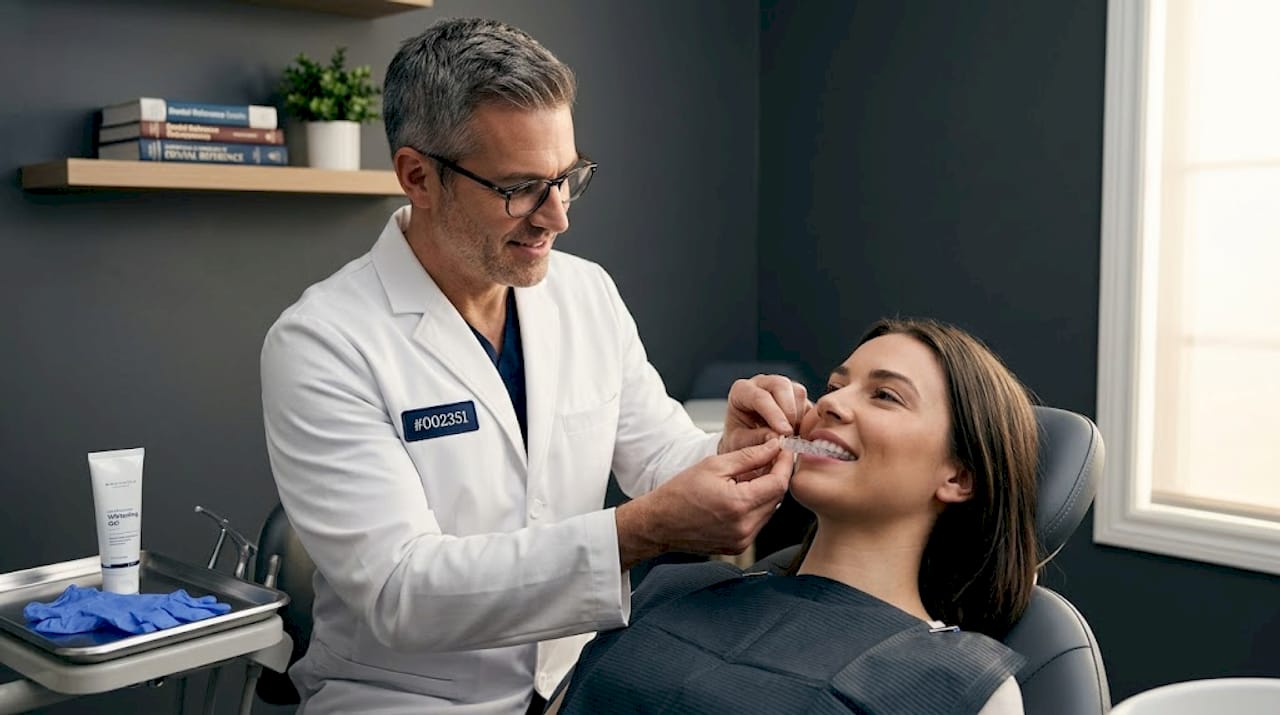
At-home kits using lower-concentration gels are the middle ground. Dentists prefer lower-concentration gels for sensitive teeth because they offer a better balance of whitening and comfort over a longer treatment period. The results take a little longer to appear, but the trade-off is far less discomfort and less risk of enamel damage.
Natural options look appealing because they feel safer, but the reality is more complicated. Natural whitening agents like charcoal can worsen sensitivity by wearing down enamel and exposing dentin, and dentists recommend caution or outright avoidance for sensitive teeth. Baking soda carries similar abrasion concerns with repeated use. Neither addresses the staining below the enamel surface that most people actually want to treat.
Practical strategies for pain-free whitening results
Knowing how the chemistry works is useful, but applying it in your daily routine is where the real difference happens. These steps give you a framework that actually reduces sensitivity without sacrificing results.
-
Start with a desensitizing toothpaste. Use a toothpaste containing potassium nitrate or fluoride for at least two weeks before you begin whitening. This isn’t optional prep. It’s the foundation that makes everything else more comfortable. For safe daily whitening picks, look for formulas that combine brightening with sensitivity protection.
-
Switch to a soft-bristled toothbrush. Aggressive brushing wears away enamel over time. Less enamel means more tubule exposure. Protect what you have before and during any whitening program.
-
Follow product instructions exactly. Overuse or improper application of high-concentration products can exacerbate sensitivity and enamel damage. Leaving a whitening tray on for twice the recommended time does not double your results. It doubles your risk.
-
Space out your sessions. Spacing whitening sessions allows enamel to remineralize between treatments, reducing cumulative sensitivity. A standard guideline is to treat every other day rather than daily, especially in the first week.
-
Adjust your diet during treatment. Acidic foods and beverages like coffee, citrus, and wine soften enamel temporarily. Whitening on top of already-softened enamel increases irritation. Cutting back for the duration of your whitening program makes a measurable difference.
-
Use a fluoride rinse after every session. Fluoride rinses and remineralizing gels strengthen enamel after whitening by attracting calcium back to the surface and sealing exposed tubules. This is the single most overlooked step in most people’s whitening routines.
Pro Tip: If you experience any sensitivity during a session, rinse immediately with lukewarm water and avoid hot or cold drinks for the next few hours. Do not try to push through pain. Your enamel is signaling that it needs recovery time.
Innovations making sensitivity-free whitening real
The most exciting developments in teeth whitening right now are not about getting stronger. They are about getting smarter. The direction the industry has moved since 2024 is toward formulas that achieve comparable brightness with a fraction of the irritation, and the results are genuinely impressive.
Here is what is actually changing the sensitivity equation:
-
Hydroxyapatite-based products seal exposed dentinal tubules on contact, offering immediate protection rather than waiting for enamel to resealed on its own. Consumer interest in hydroxyapatite products spiked 38% in 2025 to 2026 as awareness of sensitivity-free whitening grew. This ingredient is worth looking for on any whitening product label.
-
Peroxide-free whitening formulas use alternative brightening agents, often combining optical brighteners, mild enzymatic action, or essential oil complexes that lift surface stains without penetrating deeply enough to irritate nerves. These are particularly useful for daily maintenance and for people whose sensitivity makes even low-dose peroxide uncomfortable.
-
Updated LED-enhanced kits have addressed one of the biggest criticisms of earlier versions. Older LED kits accelerated whitening but dehydrated enamel in the process, triggering sensitivity. Recent LED-based home kits now combine lower gel concentrations with hydrating formulas specifically designed to avoid the dehydration response.
-
Combination whitening and desensitizing products are a single-step solution that delivers a mild bleaching agent alongside a nerve-calming compound. Rather than treating sensitivity as something to deal with after whitening, these products prevent it from occurring in the first place.
For a detailed breakdown of how these ingredients interact, the whitening ingredient science behind safer at-home results is worth reading before you choose a product.
My honest take on whitening without sensitivity
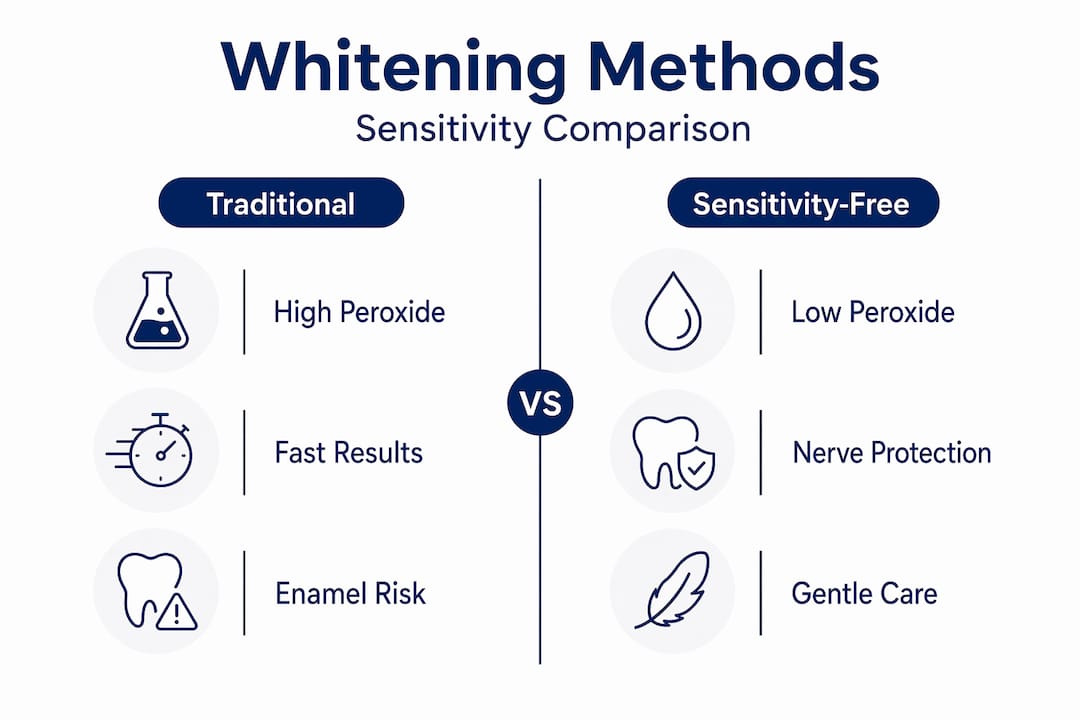
I’ve spent a long time watching people make the same mistake with whitening. They assume that the fastest path to white teeth is the strongest product they can find. I get it. The logic sounds reasonable. It isn’t.
What I’ve consistently seen is that the people who chase high-concentration bleaching gels end up with two to three days of real discomfort, abandon the routine, and end up no whiter than when they started. The people who commit to a lower-concentration product used consistently over three to four weeks finish with noticeably brighter teeth and zero sensitivity to speak of.
The “more is better” thinking also ignores something that doesn’t get talked about enough. Post-whitening care matters as much as the treatment itself. I’ve seen people follow a solid whitening routine perfectly and still end up sensitive because they skipped the remineralizing step at the end. A fluoride rinse takes 30 seconds. Skipping it is a real cost.
My personal observation is that peroxide-free options have crossed a quality threshold in the last two years where they are actually worth recommending to most people. Not as a compromise. As a genuine first choice for anyone who isn’t dealing with severe discoloration. The sensitivity risk is near zero and the convenience is unmatched.
Listen to your teeth. If something hurts, stop. Your body is telling you the concentration is too high or the frequency too much. That signal is not something to override with willpower. It is information.
— Lenney
Getsmilefam’s picks for sensitivity-free whitening
If you’ve been holding off on whitening because of sensitivity worries, Getsmilefam has two products worth knowing about.
The BLU Whitening Toothpaste is designed for daily use, combining gradual brightening with ingredients that actively protect enamel and reduce nerve sensitivity. It’s the kind of product you use before, during, and after a whitening cycle, not something you cycle off. For anyone who wants a gentler entry point into whitening, this is the starting line.
For targeted whitening without peroxide, the Snow Serum™ Whitening Pen uses Getsmilefam’s proprietary BLU Whitening Technology, developed in Singapore, to deliver visible results in a single session without the chemicals that trigger sensitivity. If you’ve tried other pens and found them either ineffective or uncomfortable, this one was built specifically to solve both problems. Getsmilefam also offers gentle care for seniors and sensitive mouths, with products formulated for maximum comfort.
FAQ
What is sensitivity-free whitening?
Sensitivity-free whitening refers to methods and products that brighten teeth without triggering nerve pain, typically by using lower-concentration or peroxide-free formulas combined with ingredients like hydroxyapatite, potassium nitrate, or fluoride that protect dentinal tubules.
How long does whitening sensitivity last?
Whitening sensitivity typically lasts 24 to 48 hours after treatment while enamel reseals naturally. Using a fluoride rinse immediately after whitening can shorten this recovery window significantly.
Can you whiten teeth without hydrogen peroxide?
Yes. Peroxide-free whitening pens and toothpastes use alternative agents to lift surface stains effectively, and they carry a much lower sensitivity risk. These are a strong option for daily use or for people who cannot tolerate peroxide-based products.
How do you avoid sensitivity when whitening at home?
Use a desensitizing toothpaste for two weeks before starting, follow product instructions exactly, space sessions every other day, and apply a fluoride rinse after each treatment. Skipping any of these steps meaningfully increases your sensitivity risk.
Are natural whitening methods safe for sensitive teeth?
Most natural methods like charcoal and baking soda are not recommended for sensitive teeth because their abrasive texture can wear down enamel over time, making sensitivity worse rather than better.