

Most people assume the strongest whitening formula wins. That idea sounds logical, but it overlooks a critical factor: your enamel, your gums, and Singapore’s strict regulations don’t care about marketing claims. Over-the-counter teeth whitening in Singapore is capped at 0.1% hydrogen peroxide, which surprises many shoppers who’ve seen aggressive “professional strength” messaging online. The real question isn’t how strong a product is. It’s whether the formula actually delivers results safely, within the rules, and without wrecking your smile in the process.
Table of Contents
- What makes teeth whitening ingredients work?
- Singapore’s regulations: What you need to know
- Formulation and delivery: Why it’s not just about percentages
- Comparing whitening ingredients: Toothpastes vs. gels vs. pens
- Balancing results and safety: Sensitivity, enamel, and realistic outcomes
- Why Singapore’s “less is more” whitening approach is safer and smarter
- Whiten your teeth safely with trusted, Singapore-compliant solutions
- Frequently asked questions
Key Takeaways
| Point | Details |
|---|---|
| Peroxides power whitening | The main actives, hydrogen peroxide and carbamide peroxide, oxidize stains to visibly whiten teeth. |
| Singapore laws protect safety | OTC whitening products are capped at 0.1% hydrogen peroxide to minimize risk and encourage safe use. |
| Formulation truly matters | A product’s effectiveness and safety depend on its full formula, including delivery technology and enamel-protective agents. |
| DIY kits can be risky | Unregulated, high-peroxide products can damage teeth and should be avoided in favor of approved solutions. |
| Results take patience | Consistent use of safe, compliant at-home products readily achieves noticeable whitening with minimal sensitivity. |
What makes teeth whitening ingredients work?
At the core of nearly every whitening product is a chemical process called oxidation. When an active ingredient like hydrogen peroxide contacts a stained tooth surface, it releases oxygen molecules that break apart the chromogen compounds responsible for discoloration. Chromogens are simply the pigmented molecules from coffee, tea, red wine, and similar foods that bind to your tooth enamel over time.
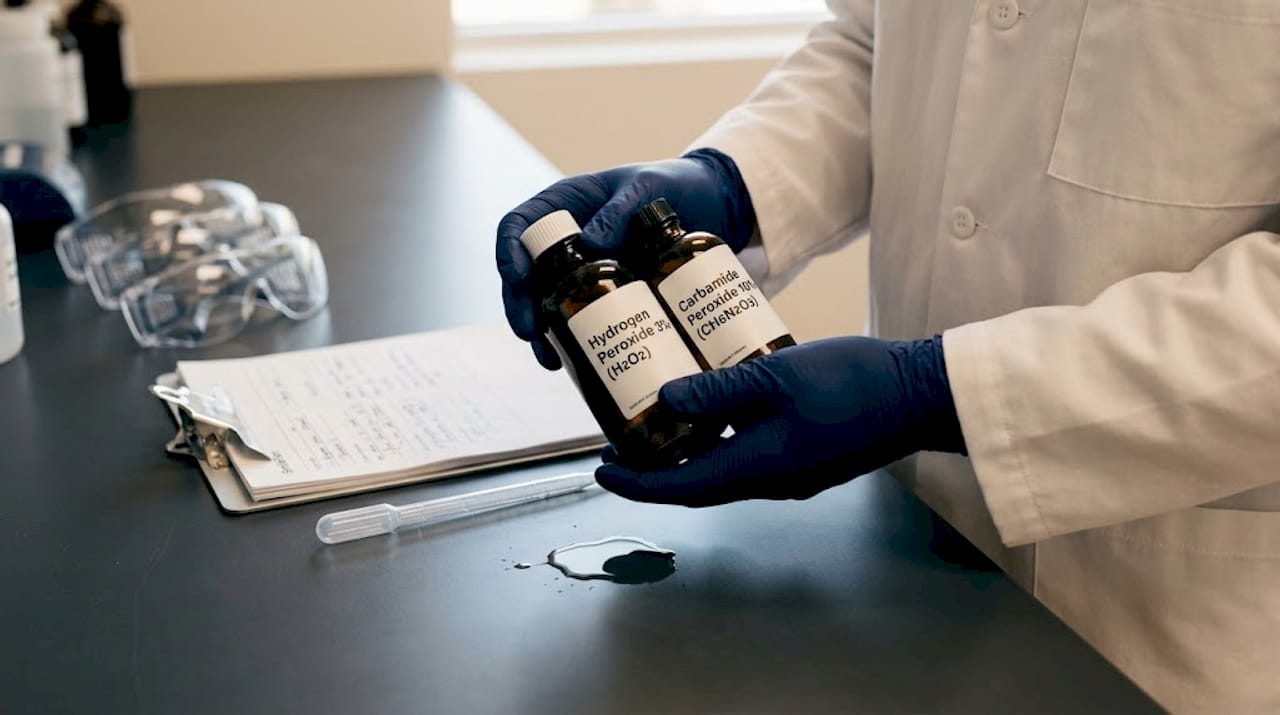
The primary whitening ingredients in at-home products are hydrogen peroxide and carbamide peroxide, both of which whiten by chemically oxidizing and breaking down those stain molecules. Hydrogen peroxide acts quickly because it releases oxygen almost immediately. Carbamide peroxide, on the other hand, breaks down more slowly, first converting into hydrogen peroxide and urea. This slower release makes carbamide peroxide a gentler option, especially when you’re using a product over several days or weeks.
Understanding at-home whitening means recognizing that speed isn’t always a virtue. Faster oxidation at high concentrations can irritate the pulp (the nerve tissue inside the tooth) and cause temporary but uncomfortable sensitivity.
| Ingredient | Typical concentration | Release speed | Best for |
|---|---|---|---|
| Hydrogen peroxide | 0.1% to 6% | Fast | Quick visible results |
| Carbamide peroxide | 10% to 22% | Slow | Overnight or extended wear |
| Non-peroxide agents | Varies | Gradual | Sensitivity-prone users |
A few important points about enamel safety:
- Concentration matters. Higher peroxide levels penetrate deeper but increase the risk of sensitivity and enamel dehydration.
- Exposure time matters equally. A high concentration used briefly may cause less harm than a moderate concentration left on teeth for hours.
- Formulation affects outcomes. Two products with identical peroxide percentages can behave very differently depending on their carrier gels, pH levels, and additives.
“Rapid whitening is not automatically safer or more effective. Controlled, lower-concentration formulations used consistently tend to deliver reliable shade improvements with fewer adverse effects.”
The key takeaway: chasing a big peroxide number misses the point. It’s the full formula that delivers results you can trust.
Singapore’s regulations: What you need to know
Singapore applies some of the strictest cosmetic product regulations in Southeast Asia, and teeth whitening is no exception. The OTC hydrogen peroxide limit for consumer whitening products is 0.1%, which is a legal ceiling enforced by the Health Sciences Authority (HSA). Products exceeding this threshold require a dentist’s prescription and must be administered under professional supervision.
This isn’t an arbitrary number. The 0.1% limit exists to protect consumers from enamel and gum damage caused by unsupervised high-concentration use. Dentists using higher-strength gels have training, protective barriers (like gum shields), and clinical oversight to manage risks. Most home users don’t have any of that.
Here’s where it gets more serious: the HSA has issued consumer warnings about DIY whitening kits bought through unofficial online channels that contain unregulated peroxide concentrations. These unregulated products pose genuine risks to teeth and gums, including chemical burns, enamel erosion, and lasting sensitivity.
| Product type | Max peroxide allowed | Supervision required | Where to buy |
|---|---|---|---|
| OTC consumer products | 0.1% hydrogen peroxide | None | Pharmacies, online retailers |
| Dentist-supervised kits | Up to 6% (home) | Dentist prescribed | Dental clinics |
| In-clinic treatment | 25% to 40% | Mandatory | Dental office only |
| Unregulated DIY kits | Unknown/unlabeled | None | Unofficial channels (avoid) |
Statistic to note: Products purchased from unverified sellers may contain concentrations 10 to 20 times higher than the legal OTC limit. This isn’t a gray area. It’s a real health risk that Singapore regulators take seriously.
Pro Tip: Always check that your whitening product is labeled as compliant with HSA guidelines. Reputable brands selling legal whitening kits in Singapore will disclose their formulation credentials clearly. If a product makes dramatic promises with no regulatory labeling, that’s a red flag worth heeding.
The practical upside of the 0.1% limit is that compliant products, when formulated correctly, still deliver visible results. You just need the right formula and consistent use. We’ll explain why that’s entirely achievable in the next section.
If you want to buy the Ultimate Whitening Bundle for a complete at-home system, make sure the brand explicitly states regulatory compliance on its product pages.
Formulation and delivery: Why it’s not just about percentages
Here’s something that surprises most whitening shoppers: two products with the same peroxide concentration can produce dramatically different results. The reason comes down to formulation and delivery, specifically how well the active ingredient stays on your teeth, how evenly it spreads, and how efficiently it releases over time.
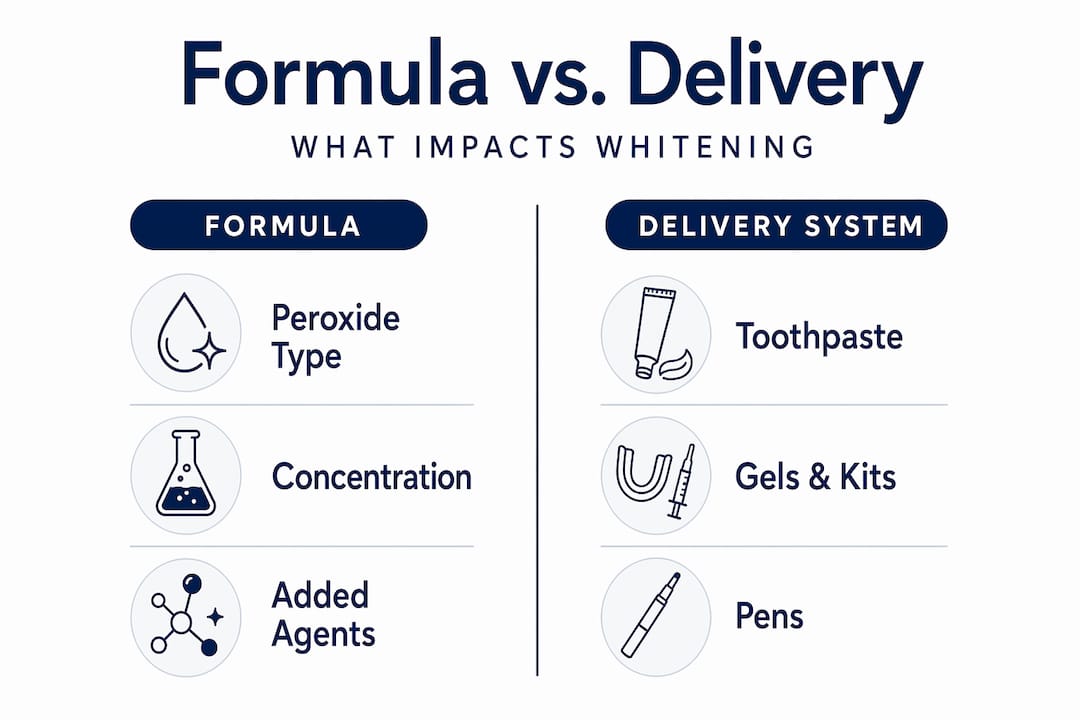
Research published in a comparative study on whitening products confirms that delivery system and formulation, not just peroxide concentration, materially affect both whitening effectiveness and enamel safety. Carriers, polymers, and additives change the gel’s viscosity, adhesion, and release behavior. A thicker gel stays in contact with the tooth surface longer. A polymer-enhanced formula adheres better to uneven enamel surfaces. A pH-buffered formula reduces acid exposure time.
Some advanced whitening products also incorporate remineralizing agents like nano-hydroxyapatite (a microscopic form of the same mineral that makes up tooth enamel) alongside the whitening agent. Nano-hydroxyapatite works by filling in small surface imperfections and fortifying the enamel while whitening takes place. This two-in-one approach is why well-formulated whitening pens can deliver results comparable to much stronger formulas.
Key factors that elevate a whitening formula beyond its ingredient list:
- Adhesion polymers that keep the gel on teeth rather than rinsing away with saliva
- Controlled-release carriers that slow peroxide activation for gentler, longer exposure
- Buffered pH to reduce enamel acid stress during treatment
- Remineralizing additives like hydroxyapatite or fluoride to counter any mineral loss
- Viscosity modifiers for even application across the entire tooth surface
Pro Tip: When comparing whitening products, look beyond the peroxide percentage on the label. Check whether the product includes a remineralizing agent and whether the brand discloses its delivery technology. These details tell you far more about real-world performance than a headline number.
A well-designed formula at 0.1% hydrogen peroxide, applied consistently with the right carrier technology, can outperform a poorly formulated 3% gel used irregularly. Consistency and smart formulation beat brute strength every time.
Comparing whitening ingredients: Toothpastes vs. gels vs. pens
Not all whitening products attack the same problem. Understanding which format targets which type of stain helps you build a realistic plan for your teeth.
Whitening toothpastes rely primarily on mild abrasives and sometimes low-level oxidizing agents to polish away surface stains. According to a meta-analysis on whitening toothpastes, these products show significant reductions in stain area and intensity compared to regular toothpaste, but they mainly target extrinsic discoloration (surface stains from food and drink) rather than intrinsic stains embedded deeper in the tooth structure. The BLU Whitening Toothpaste is a good daily maintenance option for keeping extrinsic stains under control between treatments.
Gel systems and tray kits are the standard approach for targeting deeper intrinsic stains. The gel sits in contact with the tooth surface for a defined period, allowing peroxide or other active agents to reach chromogens below the surface enamel. These work over multiple sessions rather than all at once. The Whitening Electric Toothbrush Bundle pairs mechanical cleaning with whitening action for a more thorough daily routine.
Whitening pens deliver a thin layer of formula precisely where you need it, making them ideal for targeted application and top-up treatments. They’re portable, easy to use, and particularly effective for users who find trays uncomfortable.
| Product type | Targets | Speed | Best use case |
|---|---|---|---|
| Whitening toothpaste | Surface/extrinsic stains | Gradual | Daily maintenance |
| Gel/tray kit | Intrinsic + extrinsic stains | Moderate to fast | Full whitening treatment |
| Whitening pen | Spot treatment + maintenance | Fast per application | Touch-ups and travel |
It’s also worth noting that stain sources vary. Tobacco and nicotine-related staining behaves differently from coffee or tea stains, often requiring more consistent treatment cycles rather than a one-time product switch.
How to choose the right formula for your needs:
- Identify your primary stain type. Surface stains respond to toothpaste and pens. Deeper yellow tones need gel-based treatment.
- Check your sensitivity history. If your teeth react sharply to cold drinks, start with a non-peroxide or very low-concentration option.
- Confirm regulatory compliance. Only use products that meet Singapore’s 0.1% OTC limit.
- Consider your lifestyle. Pens and strips suit busy schedules; tray kits suit those who can commit to a regular evening routine.
- Look for added protection. Formulas with remineralizing agents are worth the slightly higher price, especially for daily use.
Balancing results and safety: Sensitivity, enamel, and realistic outcomes
Sensitivity is the most common side effect of peroxide-based whitening, and it discourages many people from continuing a routine that would otherwise work well. The good news is that most sensitivity experienced with OTC formulas is transient. It typically peaks within the first few sessions and fades once you pause or complete treatment.
A clinical study on peroxide whitening and sensitivity found that lower-concentration home regimens can still whiten effectively while managing sensitivity outcomes. This is strong evidence that you don’t need aggressive formulas to see real results.
“For people with sensitivity concerns, the goal should be gradual, consistent whitening at safe concentrations rather than trying to shortcut the process with stronger products.”
Practical strategies to minimize sensitivity and protect your enamel:
- Space out your sessions. Every other day is often sufficient for low-concentration products and gives enamel time to rehydrate.
- Use a remineralizing toothpaste before and after treatments. This helps replenish any minerals temporarily displaced by the whitening process.
- Avoid very cold or hot foods for 30 minutes after treatment. Tooth tubules are temporarily more open right after whitening.
- Don’t exceed the recommended contact time. More isn’t better here. Stick to the instructions on your product.
- If sensitivity spikes, take a 2 to 3 day break. The whitening progress won’t reverse; your enamel just needs time to settle.
Realistic outcomes matter too. At Singapore’s OTC limit, you can expect a gradual improvement of two to four shades over several weeks of consistent use. That’s a meaningful change, visible in photos and to others. It won’t match the dramatic in-office result from a 30-minute laser session, but it also won’t cost $600 or require a dental appointment.
Why Singapore’s “less is more” whitening approach is safer and smarter
There’s a prevailing attitude in the global whitening market that stronger equals more professional. Walk into any conversation about teeth whitening online and you’ll find people hunting for the highest peroxide percentage they can import. This thinking is not only misguided, it’s potentially dangerous.
Singapore’s regulatory framework pushes back against that mindset, and we think it actually helps most at-home users get better long-term results. Here’s the logic: high-strength peroxide kits used without supervision frequently cause overexposure, resulting in sensitivity that forces people to stop treatment entirely. They end up with patchy results, irritated gums, and wasted money. The controlled, cumulative approach supported by Singapore’s regulations avoids all of that.
Research consistently shows meaningful whitening at low concentrations when the formula is well-designed and used regularly. The win comes from consistency and smart formulation, not from risking enamel damage. There’s also a real financial argument here. If you want to explore saving money with safer whitening, you’ll find that compliant OTC products used consistently are significantly more cost-effective than repeated professional treatments or the gamble of an unregulated DIY kit that damages your teeth and sends you to a dentist anyway.
Personalization is the final piece. Your stain type, your sensitivity level, your daily habits, and your whitening goals are unique. A product designed to comply with Singapore’s safety standards and formulated with those variables in mind will outperform any generic “maximum strength” kit bought from an unverified seller.
Whiten your teeth safely with trusted, Singapore-compliant solutions
You now understand which ingredients work, why formulation matters more than raw concentration, and how Singapore’s regulations are designed to protect your smile rather than limit it. The next step is choosing products built around those principles.
SmileFam’s full whitening range is developed specifically to meet Singapore’s safety standards, combining effective active ingredients with smart formulation technology for results you can see without the risks you want to avoid. Start daily maintenance with the BLU Whitening Toothpaste to tackle surface stains, step up to the BLU Teeth Whitening Kit for a full treatment cycle, or go all in with the Ultimate Whitening Bundle for a comprehensive approach to a brighter, more confident smile. Every product is formulated with your safety and Singapore’s regulations front and center.
Frequently asked questions
Are whitening toothpastes as effective as peroxide gels or pens?
Whitening toothpastes are excellent for removing surface stains but do not bleach deep intrinsic tooth discoloration as effectively as peroxide gels or pens. Evidence from a whitening toothpaste meta-analysis confirms they primarily target extrinsic rather than embedded stains.
Is stronger hydrogen peroxide always better for whitening?
Higher concentrations do not automatically produce better results and significantly increase the risk of sensitivity and enamel damage. Singapore’s HSA consumer warnings specifically address DIY kits with unregulated peroxide levels that put teeth and gums at real risk.
What whitening ingredients are allowed in Singapore OTC products?
Singapore OTC whitening products are legally capped at 0.1% hydrogen peroxide; anything stronger requires a dentist’s prescription and clinical supervision.
Does at-home whitening cause sensitivity or harm my enamel?
Most OTC formulas cause only mild, temporary sensitivity when used as directed. Research confirms that lower-concentration home regimens can whiten effectively while keeping sensitivity outcomes manageable, though misuse of high-peroxide DIY kits can cause lasting harm.