

You want a whiter smile, and you want it now. That impatience is completely understandable, but it is also where most people go wrong. Understanding how fast whitening works is not just a matter of curiosity. It determines which product you pick, how you use it, and whether you end up with a genuinely brighter smile or a mouthful of sensitivity and disappointment. This guide cuts through the noise with real timelines, honest comparisons, and the science that explains why some methods take hours while others take weeks.
Table of Contents
- Key takeaways
- How fast whitening works: the science behind the speed
- Comparing whitening methods and timelines
- Factors that affect how quickly you see results
- Safe practices to speed up whitening without causing damage
- Quick tips for faster results at home
- My honest take on whitening timelines
- Get faster results with Getsmilefam
- FAQ
Key takeaways
| Point | Details |
|---|---|
| Speed depends on concentration | Higher peroxide concentrations whiten faster but increase the risk of temporary sensitivity. |
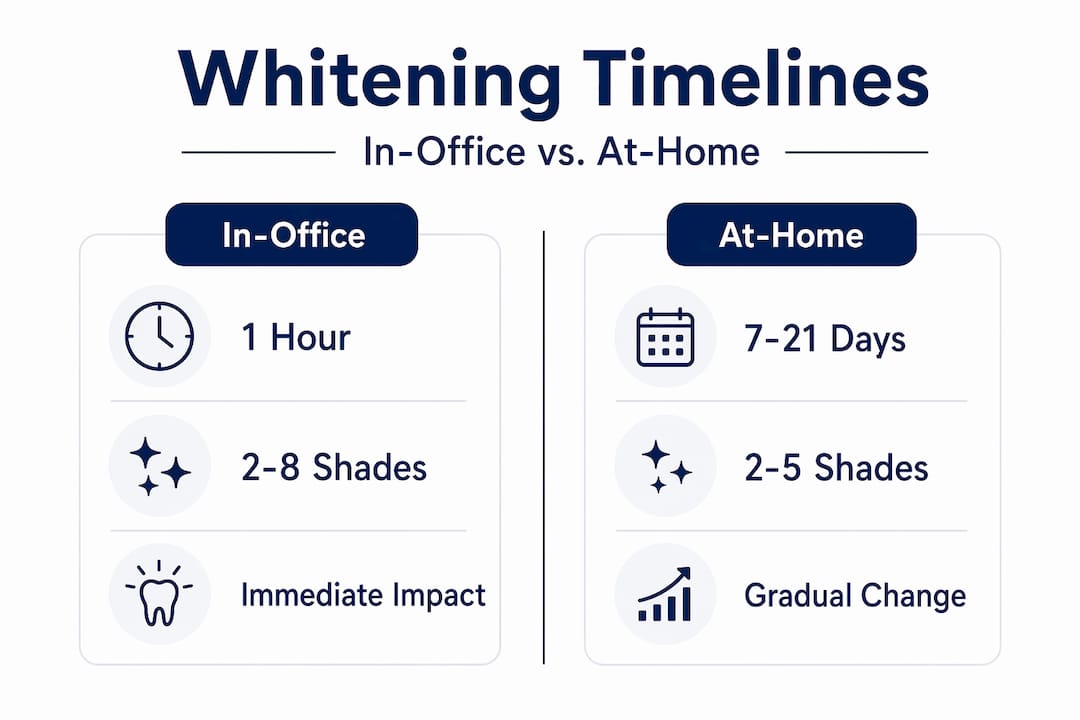
| In-office beats everything for speed | Professional whitening delivers 2 to 8 shades of improvement in a single one-hour appointment. |
| At-home strips need 3 to 21 days | Initial results show within 3 to 7 days, with full results after 2 to 3 weeks of consistent use. |
| Your lifestyle affects how long results last | Coffee, wine, and smoking accelerate color rebound and shorten how long your results stay bright. |
| Overuse slows you down, not speeds you up | Misusing whitening products causes sensitivity and uneven results, which sets your progress back. |
How fast whitening works: the science behind the speed
Every whitening product, whether a professional gel or a whitening pen, works through the same core mechanism. Peroxide breaks stains. The key variable is how fast that process happens, which comes down to concentration, contact time, and how deeply the peroxide can penetrate your enamel.
What peroxide actually does
Hydrogen peroxide and carbamide peroxide are the two agents used across virtually all whitening methods. When either one contacts your teeth, it breaks down into reactive oxygen molecules. These molecules penetrate enamel and dentin through microscopic channels, reaching the stain molecules locked inside the tooth structure and oxidizing them. Oxidation essentially dismantles the color-causing compounds, which is why your teeth appear lighter.
The speed of this reaction is directly tied to concentration. A 35 to 45 percent hydrogen peroxide gel used in a dental office acts much faster than a 6 to 10 percent at-home formula. Higher concentration means more reactive molecules working at once, which translates to more stain breakdown in less time. Contact time matters just as much. Leaving a product on longer exposes the enamel to more peroxide activity, but there is a ceiling where additional time yields diminishing returns and increasing irritation.
Why your teeth look brighter immediately, then settle
One thing most people do not know: the shade you see right after whitening is not your final result. Enamel dehydration during treatment temporarily makes teeth appear even whiter than the actual bleaching outcome. As your enamel rehydrates over the next 24 to 48 hours, the shade settles back slightly. This is completely normal. Your true result finalizes after that rehydration window, so avoid judging effectiveness the same day you treat.
Pro Tip: Take a photo of your teeth before starting any whitening treatment. Natural lighting, same angle each time. Comparing photos after a week is far more accurate than relying on your perception in the mirror.
Key biological factors that affect whitening speed:
- Peroxide concentration (higher = faster results)
- Contact time per session
- Enamel thickness and porosity
- Type and severity of staining
- Frequency of application
Comparing whitening methods and timelines
Not all whitening products operate on the same timeline. Choosing the right method depends on how quickly you need results and how much sensitivity you are willing to tolerate.
| Method | Active Ingredient % | Typical Time to See Results | Shade Improvement |
|---|---|---|---|
| In-office professional | 25 to 45% H2O2 | 1 to 2 hours | 2 to 8 shades |
| Custom take-home trays | 10 to 22% carbamide peroxide | 1 to 2 weeks | 3 to 6 shades |
| Whitening strips | 6 to 14% H2O2 | 3 to 7 days initial, 14 to 21 days full | 2 to 5 shades |
| Whitening toothpaste | Low abrasive/low peroxide | 2 to 6 weeks | 1 to 2 shades |
| Whitening pens | 5 to 12% H2O2 | 1 to 2 weeks with consistent use | 1 to 3 shades |
In-office whitening
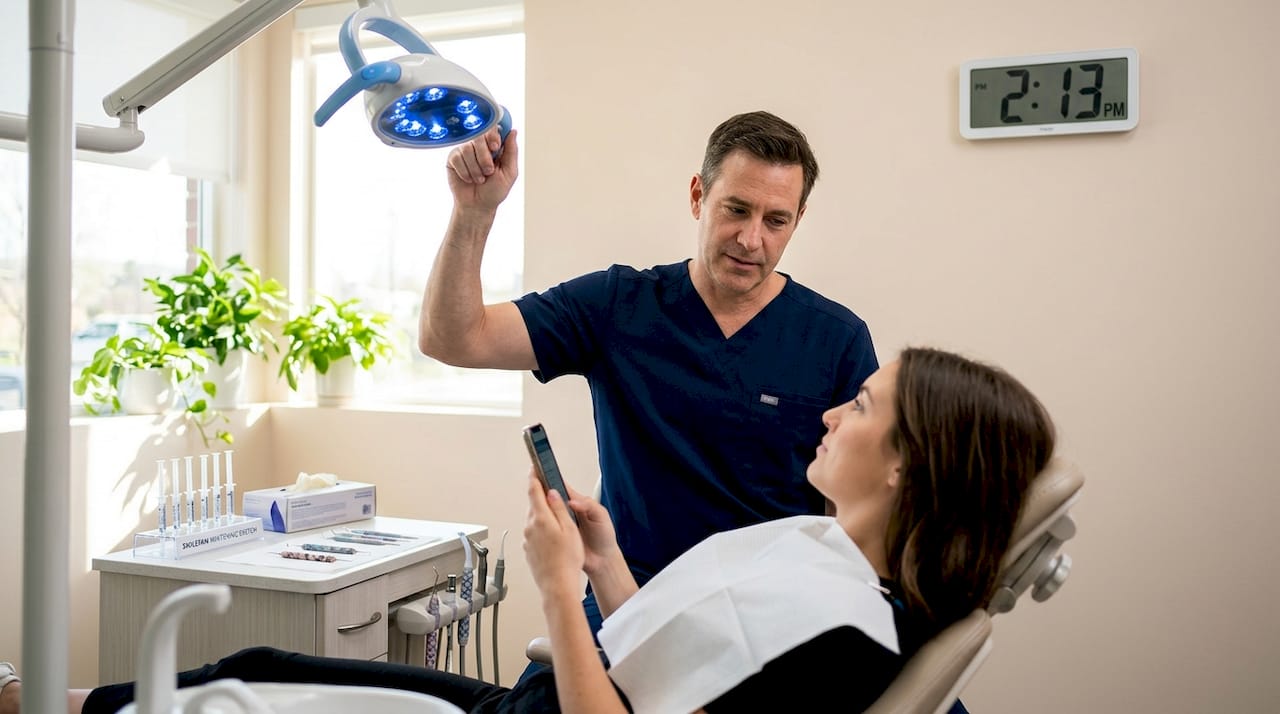
Professional whitening is the fastest option, period. A single session delivers a 2 to 8 shade improvement in roughly one hour, thanks to high peroxide concentrations and sometimes light or laser activators. Those activators speed up the chemical reaction but do not bleach teeth on their own. The trade-off is real though. Faster results at higher concentrations mean a greater chance of temporary tooth sensitivity, which typically fades within a day or two.
Custom take-home trays
Custom trays fit your teeth precisely, which means better coverage and more even contact with the gel. Custom-fitted trays outperform over-the-counter strips in predictability and coverage, often with less gum irritation. Most people see meaningful results within one to two weeks of nightly use. The concentration used is lower than in-office gels, so the process is slower but gentler.
Whitening strips and over-the-counter products
Whitening strips show initial results within 3 to 7 days, with the full course taking 14 to 21 days for a 2 to 5 shade improvement. They are accessible and effective for surface stains, but their one-size strip design means coverage is imperfect on teeth that are not perfectly aligned.
Whitening toothpaste works differently. It relies on mild abrasives and low-level peroxide to polish away surface discoloration, which takes weeks to show up and offers minimal improvement on deeper staining.
Pro Tip: For faster at-home whitening speed results, layer your approach. Use a whitening strip treatment for the first two weeks, then switch to a whitening pen for touch-ups and maintenance. You get the strong initial push from the strips without the ongoing cost.
Factors that affect how quickly you see results
Understanding the method is only half the picture. Your personal biology and daily habits have a serious impact on how quickly whitening works and how long those results stick around.
-
Stain type matters most. Extrinsic stains from coffee, tea, or red wine sit on and near the enamel surface. These respond fastest to whitening treatment, sometimes within a few days. Intrinsic stains, which live deeper in the dentin from antibiotics, trauma, or aging, are far slower to improve and may not fully respond to at-home products at all.
-
Diet and lifestyle accelerate or reverse your results. Coffee, red wine, and smoking are the biggest culprits. These habits speed up the return of discoloration and can cut your results window significantly. Staying on top of oral hygiene, including regular brushing and flossing, extends how long whitening results last.
-
Sensitivity can force you to slow down. Some people simply cannot tolerate daily treatment at higher concentrations. Sensitivity that causes you to skip sessions or reduce contact time means slower results overall. If you push through pain and irritate your gums, you may need a full break before resuming, which pushes your timeline back further. For guidance on products that are kinder to sensitive teeth, safe whitening options can make a real difference.
-
Enamel structure varies person to person. Thicker, denser enamel slows peroxide penetration. That is not a flaw. It is actually protective. But it does mean two people using the exact same product for the same number of days can see noticeably different results.
-
Whitening has a ceiling. Professional results plateau after roughly 8 to 10 weeks of consistent home use or two to three office appointments. Past that plateau, adding more sessions delivers little additional whitening and raises the risk of enamel sensitivity and damage.
Results typically last 6 to 12 months before gradual rebound brings teeth back toward their baseline shade. Scheduling touch-up sessions every six months and limiting staining foods and drinks right after treatment gives you the most value from each whitening cycle.
Safe practices to speed up whitening without causing damage
Going faster is tempting, but misusing whitening products is one of the most common ways people sabotage their own results. Here is what to get right.
- Follow the instructions exactly. This sounds obvious, but overuse and misuse are the leading causes of sensitivity, gum irritation, and uneven whitening. Leaving strips on twice as long does not double the result. It doubles the irritation.
- Do not skip the pre-whitening dental check. Cavities, cracked enamel, or gum disease can all cause peroxide to penetrate in unintended ways, leading to sharp pain and uneven results. Treating these issues first creates a clean foundation.
- Manage sensitivity proactively. Use a sensitivity toothpaste with potassium nitrate for two weeks before starting treatment. If sensitivity flares mid-course, reduce session frequency instead of stopping entirely.
- Know when whitening is not the answer. Dental crowns, veneers, and bonding do not respond to peroxide. If you have significant cosmetic work on your front teeth, whitening the surrounding natural teeth can create a mismatch. A dentist can flag this before you invest in product.
- Get professional supervision when in doubt. Professional oversight consistently produces more even, longer-lasting results compared to fully self-directed methods, especially for intrinsic staining.
Pro Tip: Avoid eating or drinking anything except water for at least 30 minutes after any whitening treatment. Your enamel is temporarily more porous post-treatment and will absorb pigments faster than usual.
Quick tips for faster results at home
Realistic expectations matter here. No at-home hack transforms your smile overnight. But several evidence-backed approaches can meaningfully speed up how quickly you see visible improvement.
- Whitening pens and overnight formulas. Pens applied before bed give the peroxide maximum contact time without food or drink interfering. Consistent nightly use over one to two weeks produces noticeable results on surface stains.
- LED light kits. Blue LED light accelerates peroxide breakdown, which speeds up the whitening reaction. It is a legitimate accelerant, not a gimmick, but the peroxide concentration in the formula remains the primary driver of results. A low-concentration gel with LED will still work more slowly than a high-concentration gel without it.
- Baking soda paste. A paste of baking soda and water used a few times a week provides mild abrasive polishing that lifts surface stains. It is not a bleaching treatment, so do not expect shade change. It does make your teeth look cleaner and brighter while your actual whitening treatment does the deeper work.
- Post-whitening care. Rinse with water immediately after treatment, avoid dark-colored foods and drinks for 24 hours, and brush with a sensitivity formula that evening. These steps protect the work you have done and extend how long whitening results last.
- Whitening toothpaste limitations. Using a whitening toothpaste as a standalone instant whitening solution will disappoint you. It works as a maintenance tool, not a treatment. Pair it with a real peroxide-based product if speed is your goal.
My honest take on whitening timelines
I have spent a lot of time watching people try to shortcut the whitening process. And I get it. You have a wedding in two weeks or a job interview that matters. The pressure to look your best fast is real.
What I have learned is this: the biggest mistake people make is treating whitening like a one-time fix rather than a short course of treatment. If you use strips correctly for two weeks, you will see a meaningful change. If you use them wrong for one night expecting miracles, you will decide whitening does not work and give up.
I also think people underestimate the sensitivity factor. Faster does not always mean better. I have seen people push through daily high-concentration treatments when every session is causing real discomfort, and they end up needing a two-week break anyway, which erases any time advantage they thought they had. A consistent lower-concentration approach often gets you to the same place, with less grief.
My personal view: a whitening pen for daily touch-ups combined with a proper at-home kit for your initial treatment gives you flexibility without the intensity of professional-grade sessions. It also keeps costs manageable. You can read more about this approach at home whitening savings. The key is starting realistic, staying consistent, and protecting your results afterward.
— Lenney
Get faster results with Getsmilefam
If you are ready to move from reading to results, Getsmilefam has the tools to match your timeline.
The BLU Teeth Whitening Kit uses proprietary BLU Whitening Technology developed in Singapore for fast, visible results in a single session, without hydrogen peroxide, making it a strong option for sensitive gums. For a complete system, the Ultimate Whitening Bundle combines the whitening kit with supporting products for sustained brightness over time. Need something portable? The Snow Serum™ Whitening Pen is built for on-the-go touch-ups between full treatments. Every formula is lab-approved and enamel-safe, so you get the speed without the trade-offs that typically come with aggressive whitening.
FAQ
How quickly does whitening work with strips?
Most whitening strips deliver initial visible results within 3 to 7 days, with the full 2 to 5 shade improvement appearing after 14 to 21 days of consistent use.
How fast does in-office whitening work?
In-office whitening produces a 2 to 8 shade improvement in approximately one hour, making it the fastest available whitening method due to high peroxide concentrations.
Can I speed up whitening results at home?
Using an LED accelerator light alongside your peroxide gel can speed up the reaction, and consistent nightly application maximizes contact time, but the concentration of your formula remains the primary factor in how rapid whitening is achieved.
How long do whitening results typically last?
Whitening results generally last 6 to 12 months before the shade gradually returns toward baseline, depending on your diet, oral hygiene, and whether you use touch-up treatments.
Does whitening toothpaste work fast?
Whitening toothpaste works slowly and is best used for maintenance. Standalone, it may take 2 to 6 weeks to produce 1 to 2 shades of surface improvement and does not address deeper intrinsic staining.