

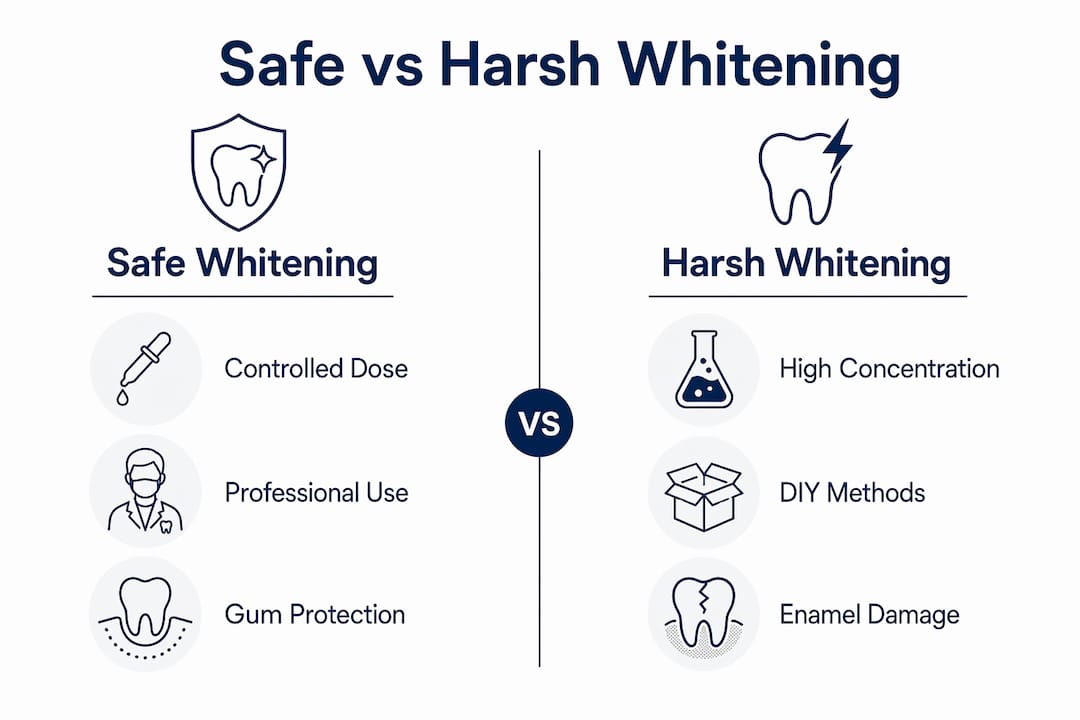
Safe teeth whitening is the use of controlled peroxide-based treatments applied at specific concentrations and durations to minimize enamel damage and gum irritation. Harsh or DIY methods, including charcoal scrubs, lemon juice mixed with baking soda, and non-dental hydrogen peroxide, skip those controls entirely and risk permanent harm. Understanding how safe whitening differs from harsh methods comes down to three factors: what concentration is used, how long it contacts your teeth, and whether a dental professional is involved. The American Dental Association (ADA) and peer-reviewed research from 2026 both confirm that these three variables determine whether whitening is a cosmetic benefit or a dental mistake.
How safe whitening differs from harsh methods, according to science
The core distinction is dose control. Professional supervision mitigates risks significantly compared to unsupervised over-the-counter bleaching, where 44.2% of patients report transient sensitivity and gingival irritation. That number sounds alarming, but the word “transient” matters. When whitening is done correctly, those effects resolve within days.
Peroxide concentration is the main lever. Carbamide peroxide releases hydrogen peroxide slowly, producing gentler contact with enamel compared to direct high-concentration hydrogen peroxide. Professional in-clinic treatments use 35 to 40% hydrogen peroxide but pair that strength with protective protocols, including gum barriers and custom trays, that prevent tissue exposure. That combination produces stable whitening outcomes over 18 months with low adverse events in clinical trials.
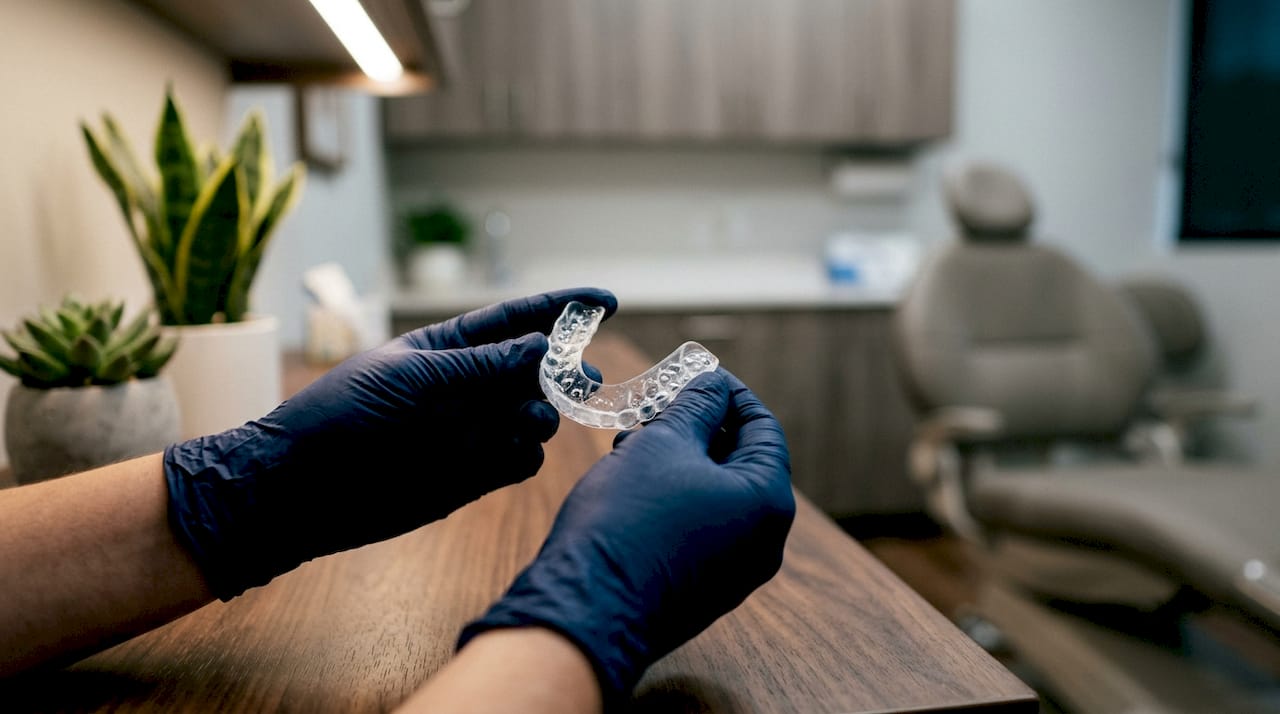
Contact time matters just as much as concentration. Leaving any peroxide formula on longer than directed does not whiten teeth faster. It increases the window for chemical irritation without improving the cosmetic result. The key to safe whitening is not speed or concentration alone but a controlled dose over time managed by dental professionals.
| Factor | Safe whitening | Harsh or unsupervised methods |
|---|---|---|
| Peroxide concentration | 10–40%, professionally calibrated | Uncontrolled or non-dental formulations |
| Contact time | Strictly timed per protocol | Often extended or unmonitored |
| Gum protection | Barriers and custom trays used | Generic trays or no protection |
| Supervision | Dentist-guided or ADA-approved OTC | DIY, no professional oversight |
| Sensitivity risk | Transient, manageable | Potentially irreversible |
How gentle whitening methods protect your enamel and gums
The physical design of the delivery system is what separates gentle whitening solutions from harmful ones. Custom-fitted trays isolate gel from gum tissue far more effectively than generic OTC strips or trays, which allow gel seepage that causes irritation and chemical burns. A tray that fits your exact dental anatomy keeps the active ingredient where it belongs: on the tooth surface.
DIY abrasive methods cause a different category of damage. Charcoal and acidic DIY methods like lemon juice combined with baking soda combine chemical erosion from the acid with mechanical erosion from the abrasive. Enamel does not regenerate. Once it is gone, it is gone. Dentists consistently warn that the cosmetic benefit of these trends does not come close to justifying the irreversible structural loss.
Gum protection is often underestimated as a safety mechanism. In clinical practice, protecting gum tissue from peroxide exposure matters more than concentration alone. A 35% hydrogen peroxide gel applied with a proper gum barrier causes less soft tissue damage than a 10% OTC gel that seeps freely under a poorly fitting strip. The barrier is the protection, not just the formula.
Pro Tip: If you are using an at-home whitening kit, pair it with a remineralizing or desensitizing toothpaste containing potassium nitrate or fluoride. Use it for two weeks before starting treatment to strengthen enamel and reduce the sensitivity response.
For a deeper look at whitening options for sensitive teeth, Getsmilefam covers the specific formulas and application methods that work without compromising enamel health.
What side effects look like with safe vs. harsh whitening
Side effects exist on a spectrum, and where you land depends heavily on which method you choose. Between 43% and 80% of patients experience temporary tooth sensitivity after peroxide-based whitening, with the range driven by concentration and application time. That wide spread reflects the difference between a controlled professional treatment and an unsupervised OTC product used incorrectly.
Temporary sensitivity results from microscopic enamel changes that allow chemical access to the nerve. Individual enamel condition varies significantly between people, which is why a personalized approach always outperforms a one-size-fits-all product. Someone with thin enamel or existing sensitivity will react more strongly to the same formula than someone with dense, healthy enamel.
Here is what to watch for and how to respond:
- Tooth sensitivity during or after treatment: Normal with peroxide-based products. Use a desensitizing toothpaste and extend the gap between sessions. If it persists beyond 48 hours, stop and consult a dentist.
- Gingival irritation or white spots on gums: Usually caused by gel seepage from a poorly fitting tray. Switch to a better-fitting product or seek professional application.
- Enamel softening or increased translucency: A sign of overuse. Repeated overuse reduces enamel microhardness; follow recommended intervals to allow remineralization.
- Chemical burns from non-dental hydrogen peroxide: Non-dental formulations lack proper pH control, leading to unpredictable tissue irritation and burns. Never use medicine cabinet hydrogen peroxide on your teeth.
- Persistent or worsening pain: Stop treatment immediately. This is not a normal side effect and requires a dental evaluation.
Hydrogen peroxide-free color correctors show under 3% sensitivity and zero enamel erosion in studies, making them a strong option for people who react strongly to peroxide. They represent a growing category of genuinely gentle whitening solutions.
How to choose and use whitening products safely
Choosing the right product starts before you open any box. Follow these steps to whiten safely whether you go the professional route or stay at home.
-
Get a dental exam first. Whitening over untreated cavities, cracked enamel, or active gum disease causes direct harm. A dentist can identify these issues before they become painful complications.
-
Look for ADA-accepted products. The ADA Seal of Acceptance on a whitening product means it has been evaluated for safety and effectiveness. This is the clearest signal that a product follows best practices for teeth whitening.
-
Match concentration to your situation. ADA guidance places OTC carbamide peroxide between 10% and 38%, with hydrogen peroxide at around 10% for most at-home treatments. Start at the lower end if you have sensitive teeth or have never whitened before.
-
Follow the instructions exactly. Overuse is the leading cause of irritation and sensitivity. Leaving strips on for twice the recommended time does not double the whitening. It doubles the risk.
-
Avoid unverified DIY remedies. Lemon juice, activated charcoal, and non-dental hydrogen peroxide are not safe whitening methods. They are abrasive or chemically aggressive in ways that no cosmetic benefit justifies.
-
Build in recovery time. Safe whitening follows recommended intervals to allow enamel remineralization between sessions. Rushing the schedule is how transient sensitivity becomes a longer-term problem.
-
Scale up gradually if you are sensitivity-prone. Sensitivity-prone individuals should start with gentler formulas and increase strength only if tolerated. This stepwise approach prevents the harsh side effects that make people abandon whitening altogether.
For practical guidance on avoiding sensitivity during whitening, Getsmilefam’s resource covers the specific steps that make the biggest difference for people who have struggled with discomfort before.
Key takeaways
Safe whitening works because it controls peroxide concentration, limits contact time, and uses physical barriers to protect gum tissue, while harsh methods skip all three controls and risk permanent enamel and soft tissue damage.
| Point | Details |
|---|---|
| Concentration and contact time | Lower peroxide with timed application prevents enamel damage and reduces sensitivity risk. |
| Physical barriers matter most | Custom trays and gum shields protect soft tissue more than formula strength alone. |
| DIY abrasives cause permanent harm | Charcoal and acidic mixtures erode enamel irreversibly; no cosmetic gain justifies the loss. |
| Side effects are manageable when controlled | Transient sensitivity resolves within 48 hours under proper protocols; persistent pain signals misuse. |
| Peroxide-free options are viable | Hydrogen peroxide-free color correctors show under 3% sensitivity and zero enamel erosion in studies. |
Why I think the DIY whitening trend is the worst thing to happen to oral health
I have read through a lot of the clinical literature on whitening safety, and one pattern stands out clearly: the people who end up with real, lasting damage are almost never the ones who went to a dentist. They are the ones who found a TikTok trend, mixed something acidic with something abrasive, and applied it daily for a month because they saw results in someone else’s before-and-after photo.
The DIY trend mixing lemon juice with baking soda is a perfect example of how two individually plausible ideas combine into something genuinely harmful. Baking soda alone is a mild abrasive used in some ADA-accepted toothpastes at controlled particle sizes. Lemon juice alone is acidic, which softens enamel temporarily. Together, applied repeatedly, they strip enamel in a way that no amount of remineralizing toothpaste fully reverses. Dentists are not being overcautious when they warn against this. They are describing what they see in patients who come in wondering why their teeth are suddenly more sensitive than ever.
What I find most frustrating is the framing that professional or properly formulated whitening is somehow the “expensive” or “complicated” option. A whitening pen with a well-controlled formula costs less than a single coffee habit for a week. The cost of treating enamel erosion or gum damage is orders of magnitude higher. Prioritizing long-term oral health over a quick fix is not a luxury. It is the only math that makes sense.
Gentle whitening solutions, used correctly, genuinely work. The evidence on professional in-office bleaching shows stable results over 18 months. That is not a compromise. That is the actual goal.
— Lenney
Getsmilefam’s approach to safe, effective whitening
Getsmilefam builds its whitening products around the principle that speed and safety are not opposites. The Snow Serum™ Whitening Pen uses a precisely controlled formula designed to whiten without the enamel aggression associated with high-concentration peroxide products. It is built for people who want real results without the sensitivity that makes so many whitening products hard to stick with. For daily maintenance, the BLU Whitening Toothpaste combines whitening benefits with enamel protection, making it a practical fit for sensitive smiles. Getsmilefam also offers specialized care for seniors, where gentleness and safety take priority above all else.
FAQ
What makes a whitening method safe vs. harmful?
Safe whitening uses controlled peroxide concentrations, timed application, and physical barriers to protect gums. Harsh methods skip these controls, risking enamel erosion and chemical burns.
Is hydrogen peroxide always dangerous in whitening products?
No. Hydrogen peroxide is safe when properly formulated and used at the right concentration and duration. Non-dental formulations from medicine cabinets lack pH control and should never be used on teeth.
How long does sensitivity last after safe whitening?
Temporary sensitivity from properly used peroxide-based products typically resolves within 48 hours. Sensitivity lasting longer than that signals overuse or a product that is not right for your enamel condition.
Are natural or DIY whitening methods safer than peroxide?
No. DIY methods like charcoal or lemon juice with baking soda cause irreversible enamel erosion and acid damage. Properly formulated peroxide products, used as directed, are significantly safer than these alternatives.
Can I whiten my teeth safely at home without a dentist?
Yes, with ADA-accepted products used exactly as directed. A dental exam before starting is strongly recommended to rule out cavities or enamel issues that would make whitening harmful.