

Yes, whitening kits expire. Most peroxide-based gels are good for about 12 months unopened, non-peroxide formulas can hold up to 24 months, and both timelines shrink fast once you break the seal. The single rule that matters most: keep peroxide products cold, sealed, and out of direct light, since heat and air are what actually kill potency, not time on the shelf by itself.
TL;DR:
- Peroxide whitening gels typically last 12 months unopened if stored cold and sealed, but degrade faster once opened, especially at room temperature.
- Non-peroxide formulas like PAP+ can last up to 24 months unopened and are more resistant to heat and light degradation, making storage easier.
- Once opened, peroxide gels lose potency within 2 to 6 months, with refrigerating syringe tips prolonging effectiveness.
- Signs of degraded whitening products include separation, change in smell, or reduced whitening results, and used products should be replaced promptly.
- Non-peroxide pens offer a more stable, travel-friendly alternative that doesn’t require refrigeration, especially for people with inconsistent storage conditions.
Table of Contents
- How Long Whitening Kits, Gels, Strips, And Pens Actually Last
- Why Whitening Gels Break Down: Peroxide Chemistry Vs PAP+
- Opened Vs Unopened: How Fast The Clock Speeds Up
- How To Tell If A Whitening Product Has Lost Its Punch
- What Happens When You Use An Expired Kit
- Storage Habits That Actually Extend Shelf Life
- When To Replace A Kit Instead Of Stretching It
- Getsmilefam’s Approach To Formula Stability
- A Quick Checklist Before You Use An Older Kit
- A Steadier Option If Cold Storage Isn’t Realistic For You
- Sources
How Long Whitening Kits, Gels, Strips, And Pens Actually Last
The number on the box only tells part of the story. Formulation type drives most of the variation in whitening kit shelf life, and the gap between peroxide and non-peroxide products is bigger than most people expect.
Professional whitening gels typically carry a 12 to 24 month shelf life, with hydrogen peroxide and carbamide peroxide gels landing closer to 12 months under proper cold storage. PAP+ and other non-peroxide formulas can stretch to 24 months sitting at room temperature, since there’s no unstable oxidizer breaking down in the tube.
At-home consumer products follow a similar pattern. Whitening strips generally list 12 to 24 months of shelf life on the pouch, while pens and whitening toothpaste tend to have shorter effective windows because their formulas are diluted for daily use rather than concentrated treatment.
- Unopened peroxide gel, room temperature bathroom shelf: degrades noticeably faster than the printed date suggests, especially in humid climates.
- Opened syringe, refrigerated between sessions: holds closer to its potential, but still won’t match an unopened tube.
- PAP+ pen, kept in a drawer: barely affected by ambient temperature swings, which is the main selling point of non-peroxide chemistry.
A standard whitening syringe holds enough gel for several sessions. Once you crack the seal, every session after that is a countdown, not a fixed allowance.
Why Whitening Gels Break Down: Peroxide Chemistry Vs PAP+
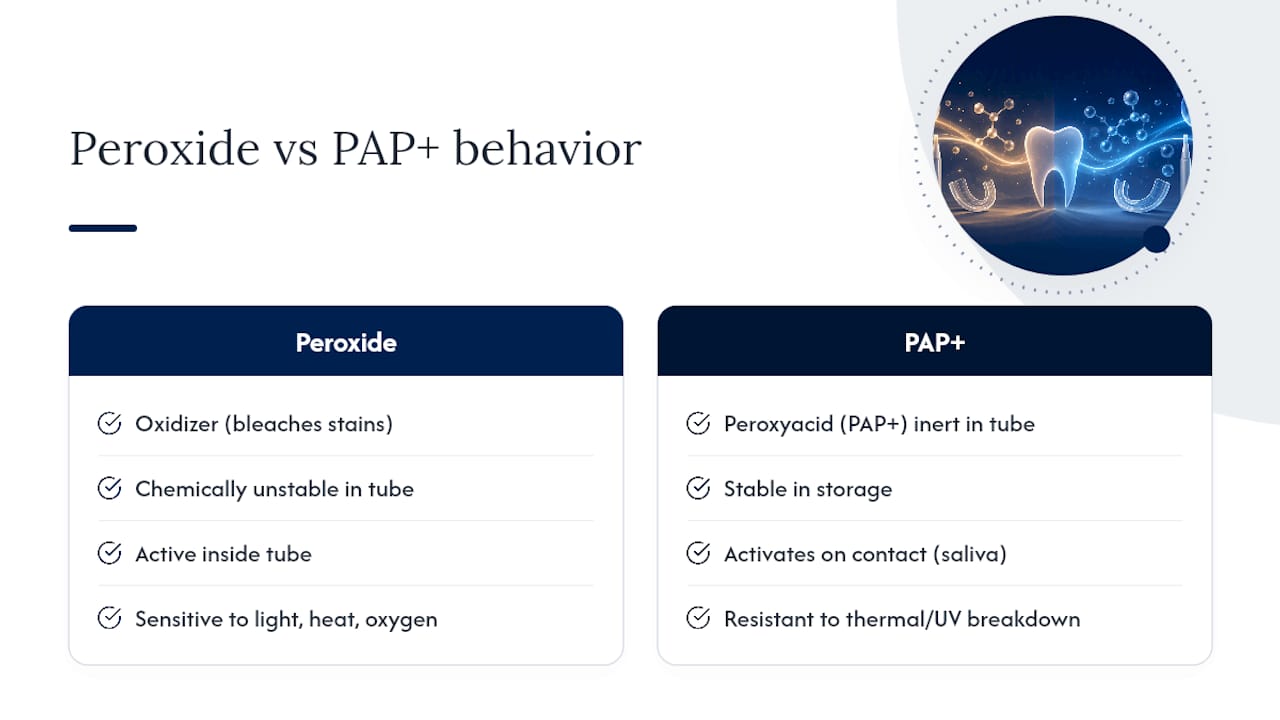
Hydrogen peroxide and carbamide peroxide are oxidizers by design. That’s how they whiten. But the same chemical instability that bleaches stains also makes them break down on their own, through oxidation triggered by heat, light, and oxygen exposure. Once air gets into an opened syringe, that breakdown accelerates, which is why an opened tube left on a counter loses strength far faster than one that stays sealed and cold.
Non-peroxide actives like PAP (phthalimido peroxy caproic acid) work differently. They stay chemically inert in the tube and only activate on contact with the tooth surface and saliva, which is part of why they resist thermal and UV degradation so much better in storage.
Packaging matters almost as much as the chemistry inside it. Opaque syringes block light-driven breakdown, induction seals slow oxygen exposure, and gels shipped without a cold chain can lose meaningful potency before they even reach your door — keeping your kit complete with tools like an eyelash disposable brush ensures easy, hygienic application during travel.
That last point explains a lot of one-star reviews that blame a “weak” product when the real culprit was a hot delivery truck.
Opened Vs Unopened: How Fast The Clock Speeds Up
Sealed and unopened, a refrigerated peroxide gel can hold close to its full potency right up to the printed expiry date. Break that seal, though, and the picture changes: air and moisture start working on the active ingredient immediately, not gradually over months.
Realistic opened-product windows look like this:
- Unopened, refrigerated peroxide gel: close to the full 12 to 24 months on the label.
- Opened carbamide peroxide, refrigerated between uses: roughly 2 to 6 months of usable potency.
- Opened hydrogen peroxide gel: shorter still, often just a few weeks to a couple of months, since HP is more reactive than CP.
- Opened PAP+ formula: far more forgiving, since there’s no peroxide to oxidize away.
The habit that actually protects an opened syringe is boring but effective: reseal the cap tightly after every use, get it back in the fridge within minutes, and treat any gel you haven’t used in a couple of months with suspicion rather than confidence.
How To Tell If A Whitening Product Has Lost Its Punch
Your eyes and nose are better detectors than you’d think. There’s no home test that measures actual peroxide concentration, so visual and functional checks are what you’ve got.
- Gel has turned watery or separated into layers instead of staying uniform.
- The plunger has backed out on its own, a sign of gas building up inside from decomposition.
- A sour, chemical, or “off” smell that wasn’t there when you first opened it.
- Strips that have gone brittle, curled, or dried out inside the pouch.
- Noticeably weaker results after a full session compared to your last fresh kit.
Pro Tip: If a single session produces zero visible change and the gel looks or smells even slightly different from when it was new, don’t chase it with a second application hoping it “kicks in.” Replace it instead of troubleshooting a product that’s already degraded.
What Happens When You Use An Expired Kit
The most likely outcome isn’t dramatic. Using an expired whitening product rarely causes acute harm, because degraded peroxide typically just breaks down into water and oxygen. What you lose is effectiveness, not safety, in most cases.
That said, a gel that’s separated or changed consistency can shift in pH or texture enough to irritate gums or increase sensitivity in some people. If you notice burning, unusual sensitivity, or irritation that lasts beyond a session, stop treatment and check with a dental professional rather than pushing through with an old product.
Storage Habits That Actually Extend Shelf Life
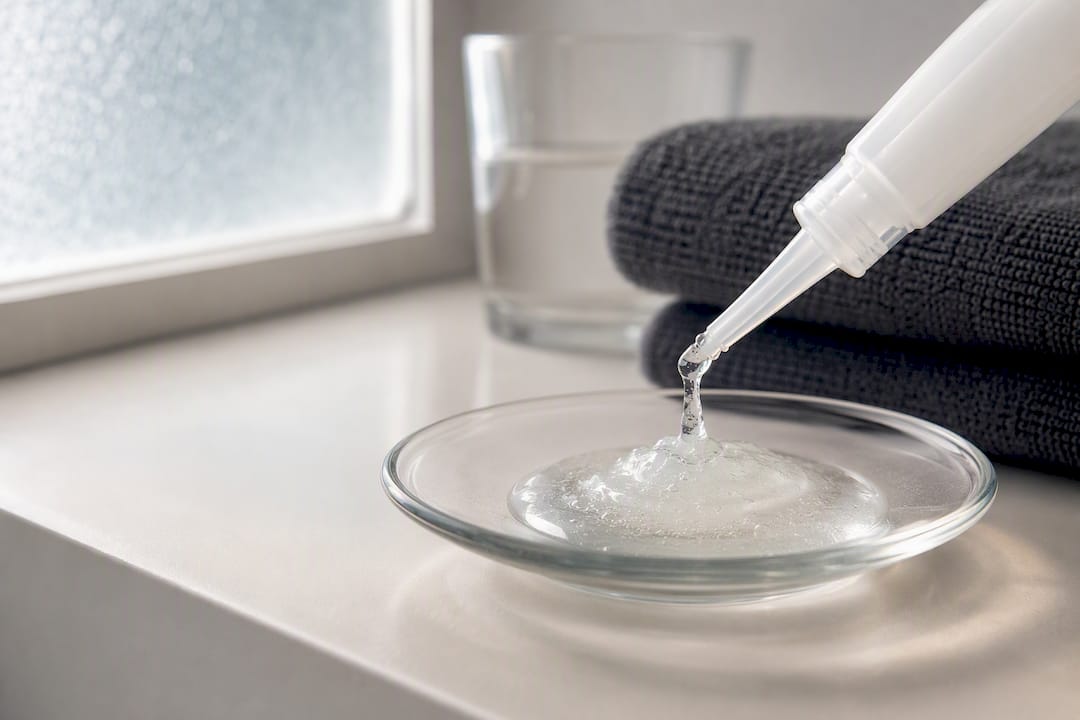
Storage conditions matter more than most buyers realize. One breakdown of syringe longevity notes that freezing damages the formula, so refrigeration, not freezing, is the target for most peroxide products.
- Follow the manufacturer’s label first. If it says refrigerate at 2 to 8°C, do exactly that rather than guessing.
- Store in the main fridge compartment, never the door, where temperature swings every time it opens.
- Keep syringes in their original opaque packaging, or add a secondary light-blocking case if the tube itself is clear.
- Reseal caps immediately after each use to limit air exposure between sessions.
- If a kit sat in a hot mailbox or car for hours during shipping or travel, inspect it closely before use rather than assuming it’s fine.
Non-peroxide kits skip most of this hassle. Because PAP+ formulas stay stable at room temperature, they’re the more forgiving choice for anyone who travels often or simply doesn’t want to manage a cold chain for a cosmetic product.
When To Replace A Kit Instead Of Stretching It
Buying decisions shape shelf life just as much as storage does. Check the manufacture and expiry dates before purchase, not after, and pick stock with the longest remaining window rather than whatever’s cheapest on a clearance shelf.
- Match the formula to your storage reality: peroxide if you can reliably refrigerate it, PAP+ if you can’t or won’t.
- Buy a kit sized for how many sessions you’ll realistically use, rather than a bulk syringe that sits opened for months.
- Treat any kit with a damaged induction seal or a torn box as compromised, regardless of the printed date.
If your whitening habit is tied to a regular schedule, pairing it with sensible frequency guidelines helps you buy the right volume instead of guessing.
Getsmilefam’s Approach To Formula Stability
Some brands offer non-peroxide, enamel-safe whitening pens using whitening technology designed to sidestep the storage headaches that come with harsh peroxide formulas. Such stability profiles can also be suitable for sensitive gums, since they contain no oxidizing agents that need refrigeration or careful handling to stay effective.
For kit-specific aftercare and storage notes, readers can check the guide to maintaining whitening results and the broader at-home whitening guide for handling tips between sessions.
A Quick Checklist Before You Use An Older Kit
Before reaching for a kit that’s been sitting around, run through this: check the printed expiry date, recall how it’s actually been stored (fridge or bathroom shelf), inspect the gel or strip for separation, smell, or brittleness, and do a cautious single-session check rather than a full course. Stop immediately if you notice irritation. When any answer is uncertain, buying fresh costs less than a bad reaction or a wasted week of no results.
— Lenney
A Steadier Option If Cold Storage Isn’t Realistic For You
If keeping a peroxide syringe cold and sealed sounds like more maintenance than you want to deal with, some non-peroxide whitening pens skip that problem entirely. Because they are built on alternative whitening technology instead of hydrogen or carbamide peroxide, they don’t rely on unstable oxidizers that need refrigeration to hold their potency, which can make them practical picks for sensitive gums and for anyone who travels or encounters heat exposure frequently.
For readers who want a kit built for portability without worrying about heat exposure during transit, the Premium Travel Kit is designed with stable, travel-ready packaging in mind. Getsmilefam backs its whitening products with a purchase guarantee, so if you’re due for a fresh kit rather than a gamble on an old one, that’s the page to start with.
This article is general information, not a substitute for advice from a qualified doctor. Consult a qualified healthcare professional about your own circumstances before acting on anything here.
Sources
- Whitening Gel Shelf Life: The Ultimate Stability & Activity Guide - IVISMILE
- What Happens to the Active Ingredients in Whitening Gel Over Time? | Teeth Whitening London
- How long does teeth whitening last? — Healthline