

Smoking makes teeth yellow because tar and other smoke residues physically stick to enamel, while nicotine oxidizes into a compound that deepens the discoloration. Quitting stops new staining almost immediately, but existing stains rarely fade on their own. Removing them usually takes a professional cleaning or a whitening treatment. Smokers report moderate-to-severe tooth discoloration at roughly twice the rate of non-smokers, and tar, not nicotine, is the main culprit behind that color change.
- Smoking coats teeth in tar and combustion particles that bond to enamel.
- Nicotine plays a smaller, less understood role, mostly through oxidation.
- Brushing removes surface residue but not stains trapped in tartar or enamel pores.
- Quitting halts further damage; a dental visit reverses most of what’s already there.
Key Takeaways
Smoking yellows teeth primarily through tar and particulate deposition on enamel, and reversing it requires professional cleaning or whitening, not brushing alone.
| Point | Details |
|---|---|
| Tar is the main culprit | Combustion particulate, not nicotine, does most of the staining damage to enamel. |
| Stains hide under tartar | Plaque that hardens into tartar traps stains where a toothbrush can’t reach them. |
| Quitting stops new stains | Existing discoloration usually needs professional cleaning or whitening to fully reverse. |
| Vaping stains less, not zero | E-cigarettes and heated tobacco stain at lower intensity but still cause discoloration. |
| Getsmilefam offers a gentle option | The Snow Serum™ Whitening Pen uses BLU Technology without harsh chemicals for sensitive gums. |
Table of Contents
- Why Does Smoking Stain Teeth in the First Place?
- What Other Oral Health Problems Come With Smoking?
- Do Vapes and Heated Tobacco Stain Teeth Less?
- Can Whitening Actually Remove Smoking Stains?
- Will Quitting Smoking Actually Whiten My Teeth?
- How Can You Slow Yellowing While You Still Smoke?
- Can a Dentist Tell You Smoke From Your Teeth?
- Cosmetic Concerns Deserve a Health-First Answer
- A Safer At-Home Option Worth Considering
- Frequently Asked Questions
- Sources
Why Does Smoking Stain Teeth in the First Place?
Cigarette smoke is not one substance. It’s a mix of tar, particulate matter, and gases, and the tar fraction does most of the cosmetic damage. Tar is sticky by nature, and every drag deposits a thin film of it across enamel. Over months and years, that film builds into a visible yellow, brown, or even gray tint.
A systematic review and meta-analysis pooling 27 studies found that cigarette smoke causes clear staining of enamel, dentine, and even dental materials like fillings and crowns, with cigarettes producing a larger color change than any other tobacco product tested. Nicotine’s involvement is murkier. Researchers know it oxidizes when exposed to air and saliva, turning into a yellow-tinted byproduct, but the same review found tar and combustion particulate to be the primary agents, not nicotine itself.
Here’s the part most smokers don’t realize: enamel isn’t a smooth, sealed surface. It has microscopic pores and ridges, and years of smoke exposure roughen that surface further. That roughness gives tar more places to grip. Once plaque forms over stained enamel and hardens into tartar, the stain gets sealed in, which is why a stain that looked mild a year ago can look stubborn now.
- Tar and particulate matter deposit directly on enamel with every cigarette.
- Nicotine oxidizes into a yellow compound but plays a secondary role.
- Rough, pitted enamel traps more staining particles over time.
- Plaque that hardens into tartar locks stains beneath the surface.
Not all tobacco products stain equally. Combustible cigarettes cause the most visible discoloration, waterpipe smoking and heated tobacco products land in the middle, and e-cigarettes tend to stain the least intensely, though “least” doesn’t mean “not at all.”
Cigarette smoke produces measurably greater tooth discoloration than any alternative tobacco or nicotine product studied, largely because combustion generates far more tar and particulate matter than vaping or heating tobacco does.
Pro Tip: If you’re trying to visualize this for yourself, think of it in four steps: smoke exposure, tar deposition on enamel, that residue getting trapped inside plaque, and finally the visible color shift. Picturing that chain makes it obvious why a whitening toothpaste alone rarely finishes the job.
What Other Oral Health Problems Come With Smoking?
Yellowing is often the most visible symptom, but it’s rarely the only one. Smoking is linked to higher rates of periodontitis and slower healing after dental procedures, and stained teeth frequently show up alongside these deeper issues rather than instead of them.
- Increased plaque and tartar buildup, since smoking reduces saliva flow.
- Higher risk of gum disease and delayed healing after cleanings or extractions.
- Persistent bad breath that mouthwash only masks temporarily.
- Elevated risk of oral lesions and, in some cases, oral cancer.
Discoloration is often the visible warning sign of what’s happening underneath. See a dentist promptly if you notice bleeding gums that don’t resolve, teeth that feel loose, or a mouth sore that lingers longer than two weeks.
Do Vapes and Heated Tobacco Stain Teeth Less?
Yes, generally, but not by enough to call them stain-proof. The same systematic review found e-cigarettes and heated tobacco products cause staining at a lower intensity than combustible cigarettes, mainly because they produce less particulate matter and no combustion tar.
- Lower tar and particulate output means less staining material reaching enamel.
- Flavored e-liquids and colored aerosols can still discolor teeth over time.
- Independent evidence on “reduced staining” claims from manufacturers remains limited and mixed.
Switching products may slow the process. It won’t stop it. Quitting nicotine altogether is still the only way to guarantee no new tobacco-related staining.
Can Whitening Actually Remove Smoking Stains?
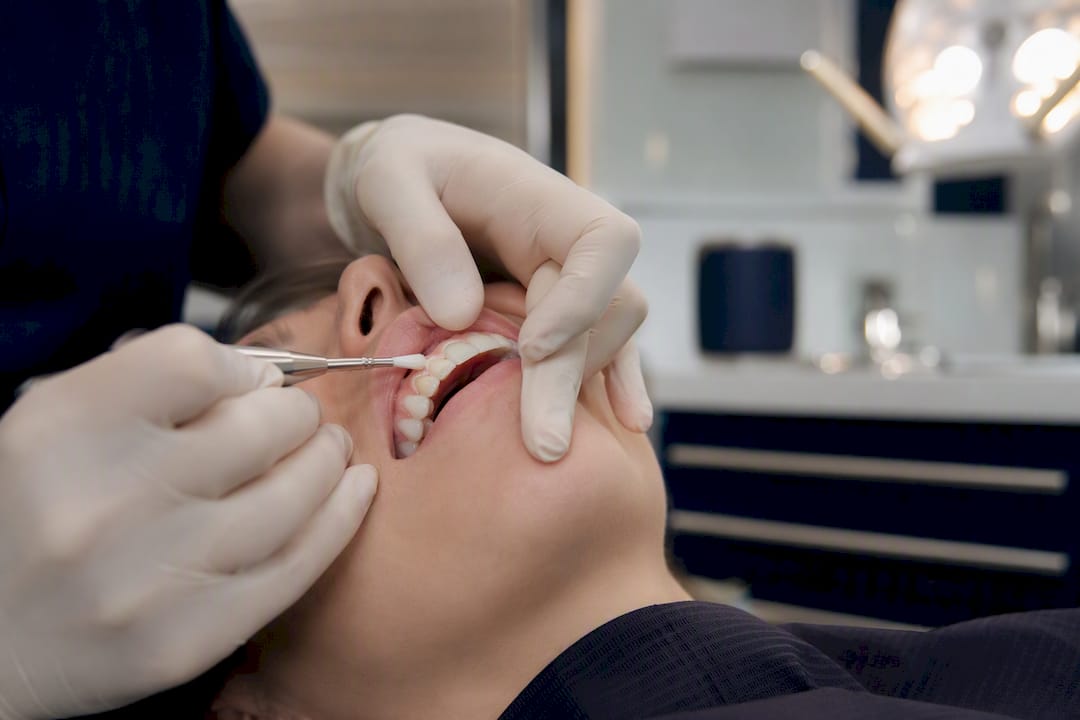
Yes, in most cases, though the approach depends on how deep the staining goes. Dental sources note that tobacco stains penetrate enamel’s microstructure, which means the fix usually needs to go beyond a tube of whitening toothpaste.
The realistic sequence looks like this:
- Professional cleaning first. A hygienist scales off tartar, which often removes a surprising amount of surface discoloration on its own.
- Stain-depth evaluation. Your dentist checks whether the remaining color sits in enamel or has crept into dentin.
- In-office or take-home professional whitening. Stronger, dentist-supervised treatments handle moderate to heavy staining faster than store shelf kits.
- At-home whitening maintenance. Pens, strips, or trays help maintain results between professional visits for lighter, ongoing upkeep.
- Restorations for resistant cases. Veneers or crowns become an option when stains have penetrated too deep for whitening to fully correct.
Brushing alone usually can’t remove deep tobacco stains because much of the discoloration sits under tartar or inside enamel pores where a toothbrush simply can’t reach. Over-the-counter whitening toothpaste can polish surface stains, but it won’t touch anything trapped beneath plaque.
Cost and timeline vary by provider and how deep the staining runs, but a cleaning plus a round of professional whitening typically shows visible change within one to two visits, while resistant stains needing restorations take longer and cost more. At your consult, ask about realistic shade expectations, sensitivity management, and whether your enamel needs safe stain removal specific to smokers’ teeth before whitening begins.
Pro Tip: Ask your dentist to grade your stains as extrinsic or intrinsic before committing to a whitening plan. Extrinsic (surface) stains respond fast to cleaning and whitening; intrinsic stains buried in dentin need a different strategy entirely.
Will Quitting Smoking Actually Whiten My Teeth?
Partly, and the timeline matters here. Quitting stops new staining right away, but the tar already bonded to your enamel doesn’t disappear on its own. Saliva flow improves within days, which helps your mouth start naturally clearing debris again, and breath tends to improve within the first couple of weeks.
Visible color change is a different story. Quitting halts further damage but rarely restores original tooth color without treatment; most people need a professional cleaning, and often a whitening round, to see the shade shift they’re hoping for.
- Days to weeks: better breath, improved saliva flow, reduced plaque formation.
- Weeks to months: gum tissue often looks healthier and less inflamed.
- After professional treatment: visible whitening, usually within one to a few appointments.
Pro Tip: Pair your quit date with a dental cleaning scheduled a few weeks out. Combining cessation with active treatment gets you a whiter, healthier mouth faster than either step alone.
How Can You Slow Yellowing While You Still Smoke?
Small daily habits make a real difference even before you quit. Rinse with water right after smoking, hold off on coffee or red wine until your mouth has cleared, and chew sugar-free gum to keep saliva moving. Smoking reduces saliva production, which speeds up tartar formation, so anything that stimulates saliva helps.
- Brush twice daily with fluoride toothpaste and floss every day.
- Use an electric toothbrush and clean between teeth with interdental brushes.
- Book professional cleanings every three to six months to clear tartar before it traps stains.
Skip the habits that backfire: scrubbing hard with an abrasive brush thins enamel and exposes yellower dentin underneath, and relying solely on whitening toothpaste won’t touch stains locked under tartar.
| Habit | Effect on staining |
|---|---|
| Rinse with water after smoking | Reduces tar residue sitting on enamel |
| Aggressive scrubbing | Thins enamel, worsens yellow appearance |
| Sugar-free gum | Stimulates saliva, slows plaque buildup |
| Whitening toothpaste alone | Handles surface stains only, not tartar-trapped stains |
| Regular professional cleanings | Removes tartar before stains get sealed in |
Can a Dentist Tell You Smoke From Your Teeth?
Often, yes. Staining patterns, gum tissue changes, and specific plaque buildup along the gumline are common tells, though dentists focus on treating what they see rather than passing judgment.
Book an appointment if home care hasn’t budged your staining, your gums bleed regularly, a tooth feels loose, or a mouth sore hasn’t healed after two weeks. Bring your smoking history and ask directly about realistic whitening timelines and how they’ll manage sensitivity during treatment.
Cosmetic Concerns Deserve a Health-First Answer
Wanting whiter teeth isn’t vanity. It’s one of the most common, most understandable reasons smokers look for a fix, and it’s a legitimate starting point. The mistake is treating whitening as a substitute for quitting or for professional care, rather than a complement to both.
The smartest path combines sensible at-home whitening with an actual dental checkup, especially if you’ve never had your gums evaluated. A whiter smile is worth chasing. Just chase it alongside your health, not instead of it.
A Safer At-Home Option Worth Considering
If you’re not ready for an in-office whitening appointment but want visible results now, Getsmilefam built the Snow Serum™ Whitening Pen for exactly that gap. It uses BLU Whitening Technology, developed to work without hydrogen peroxide or harsh chemicals, so it’s formulated to be gentle on sensitive gums while still targeting surface staining from smoking.
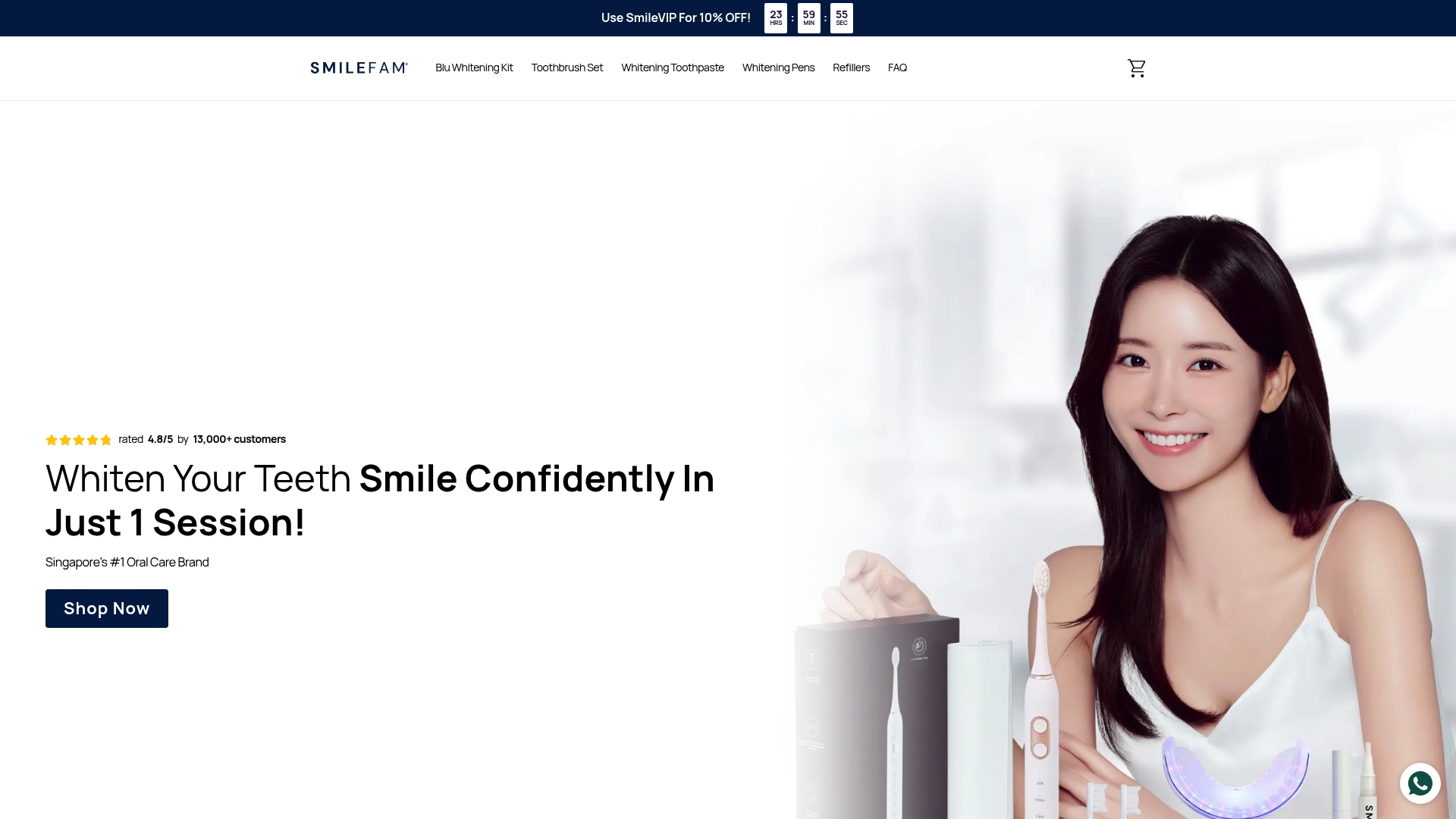
That matters for smokers specifically, since enamel already under stress from tar buildup and dry mouth doesn’t need an aggressive bleaching agent piled on top. Getsmilefam’s approach is built around single-session visible results with an enamel-conscious formula, which makes it a reasonable middle step between daily brushing and a full in-office whitening plan. If your staining is extensive or your gums are already sensitive, talk to your dentist before starting any whitening routine, at-home or otherwise.
Ready to see what it can do for your smile? Shop the Snow Serum™ Whitening Pen and check whether it fits into your routine alongside your regular dental care.
Frequently Asked Questions
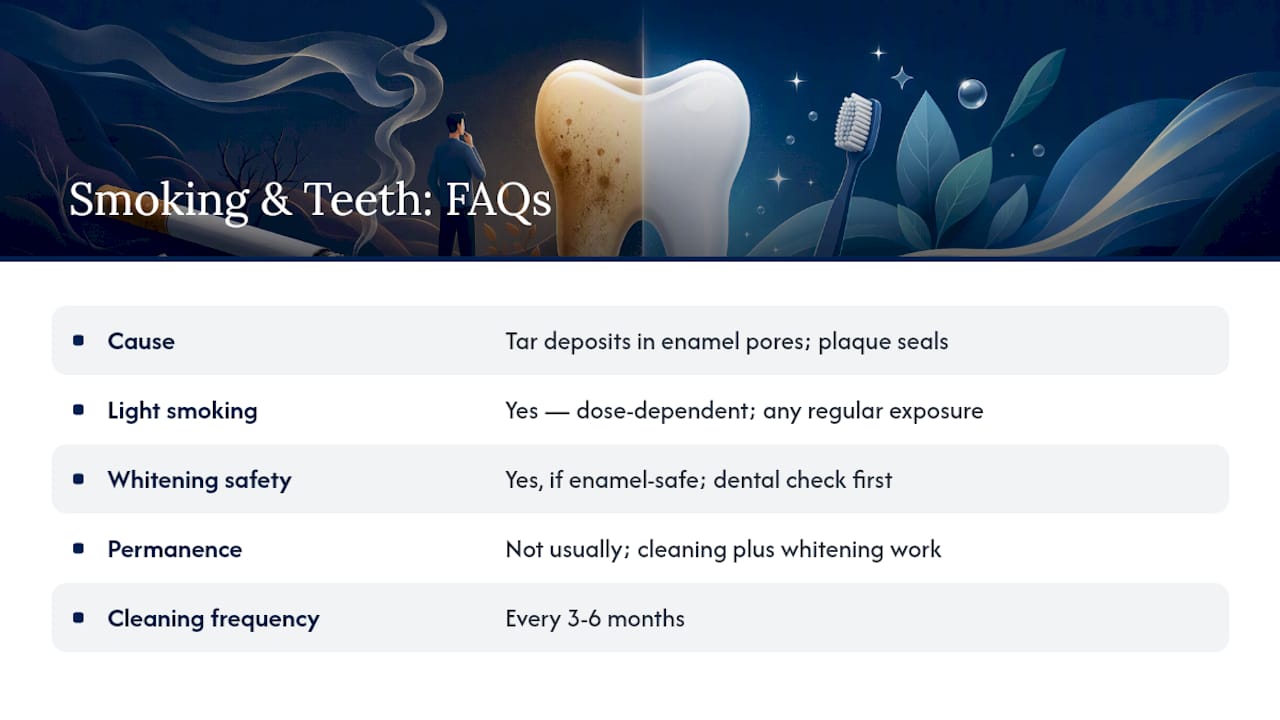
Why does smoking turn teeth yellow so fast? Tar in cigarette smoke deposits on enamel with every cigarette, and because enamel has microscopic pores, that residue builds up quickly, especially once it gets sealed under plaque and tartar.
Does light or occasional smoking still cause staining? Yes, though less severely. Staining is dose-dependent, meaning heavier, longer smoking history produces darker, more resistant discoloration, but any regular exposure adds up over time.
Is teeth whitening safe for smokers? Generally yes, when it uses enamel-safe formulas and follows a dental evaluation first, especially if gums are sensitive or staining is extensive. Options like enamel-conscious whitening for smokers are built with that in mind.
Can yellow teeth from smoking be permanent? Not usually. Even deep tobacco stains typically respond to professional cleaning combined with whitening, though restorations may be needed in longstanding, severe cases.
How often should smokers get professional cleanings? Every three to six months is standard advice, since tartar forms faster with reduced saliva flow, and regular scaling prevents stains from getting locked in permanently.
This article is general information, not a substitute for advice from a qualified doctor. Consult a qualified healthcare professional about your own circumstances before acting on anything here.
Sources
- Smoking and tooth discolouration: findings from a national cross-sectional study
- Effect of tobacco and nicotine in causing staining of dental hard tissues and dental materials: A systematic review and meta‐analysis (DOI record)
- Tooth discoloration (Cleveland Clinic)
- Smokers’ teeth: Why teeth look yellow and how to treat it (Healthline)