

Cosmetic teeth whitening and general dentistry share the same chair, but almost nothing else. One is purely about color. The other covers everything from cavities to gum disease to oral cancer screening. If you’re trying to figure out which path makes sense for your smile, the distinction between these two fields shapes every decision, from who treats you to what results you can realistically expect.
How cosmetic whitening differs from general dentistry at a glance
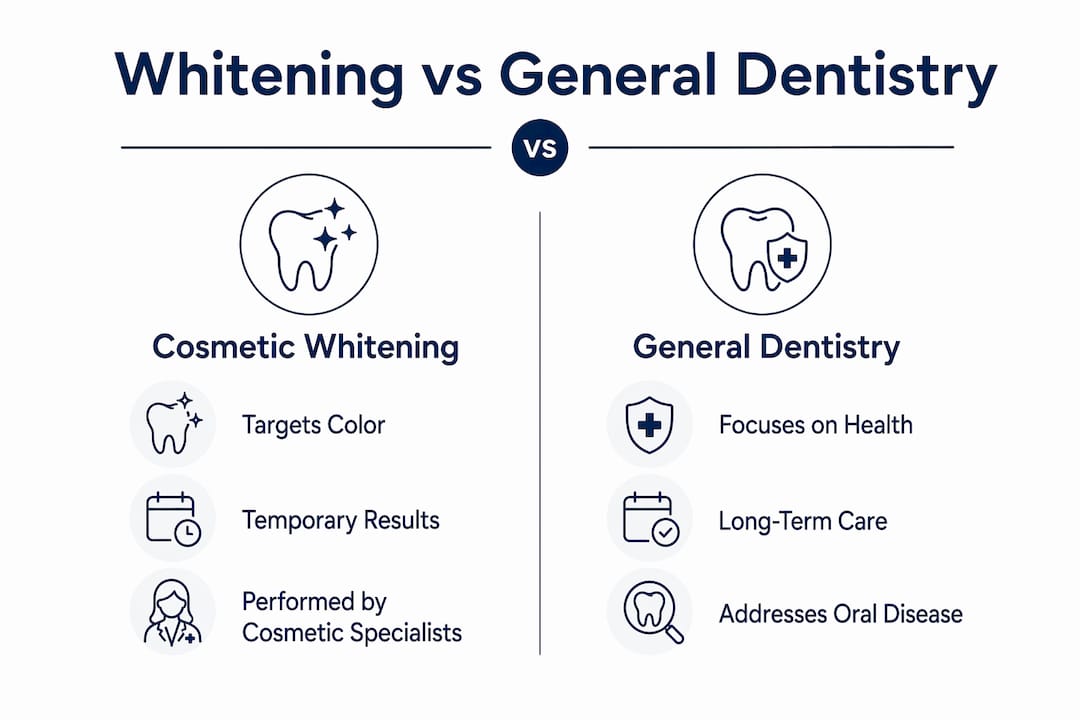
The core difference comes down to purpose. Cosmetic whitening is a single-goal procedure: lighten the natural color of your tooth enamel. General dentistry is a health discipline that diagnoses, prevents, and treats oral disease. A general dentist fills cavities, performs root canals, and checks for signs of oral cancer. A whitening procedure does none of that.
Here is where the two diverge most clearly:
- Treatment goal: Cosmetic whitening targets appearance; general dentistry targets oral health.
- Scope: Whitening applies only to natural tooth enamel. General dentistry covers teeth, gums, bone, and surrounding tissue.
- Urgency: Whitening is elective. General dental care is often medically necessary.
- Outcome measure: Cosmetic whitening is judged by shade improvement. General dentistry is judged by health outcomes.
- Who performs it: Both general dentists and cosmetic-focused dentists can whiten teeth, but only licensed dental professionals may legally perform clinical whitening in most U.S. states.
What separates cosmetic dentistry from general dentistry?
General dentistry is the foundation of oral health care. It covers prevention, diagnosis, and treatment of conditions affecting teeth, gums, and the jaw. Your annual checkup, X-rays, fillings, and periodontal cleanings all fall under this umbrella. The goal is keeping your mouth healthy and catching problems early.
Cosmetic dentistry, by contrast, focuses on how your teeth look. Procedures like veneers, bonding, contouring, and whitening all fall into this category. Importantly, the American Dental Association does not recognize “cosmetic dentist” as a formal specialty. Any licensed general dentist can offer cosmetic treatments, including whitening, without additional board certification.
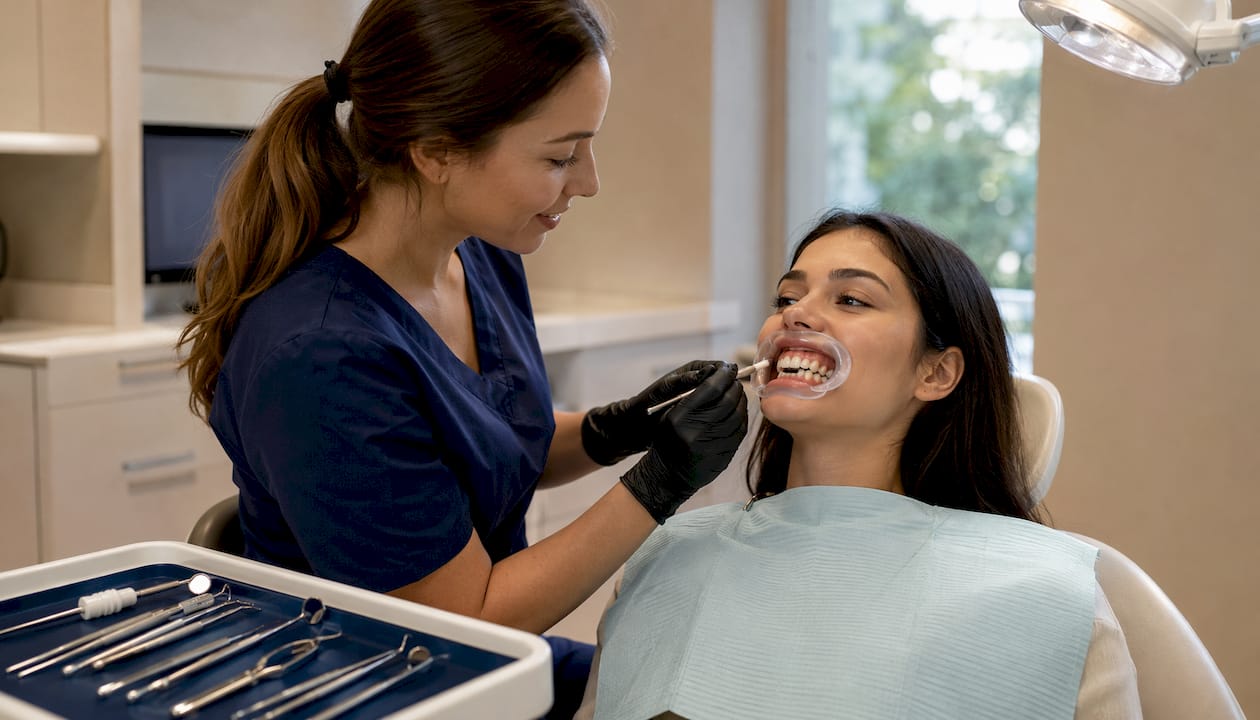
That said, some dentists pursue advanced training in aesthetic procedures through organizations like the American Academy of Cosmetic Dentistry. The depth of that training varies widely, so asking about a dentist’s experience with specific cosmetic procedures is always worth doing.
Key categories each field covers:
- General dentistry: Exams, cleanings, fillings, extractions, root canals, crowns for structural repair, gum disease treatment, oral cancer screening.
- Cosmetic dentistry: Teeth whitening, porcelain veneers, dental bonding, tooth contouring, cosmetic crowns placed for appearance rather than structural need.
What makes teeth whitening a cosmetic procedure?
Teeth whitening is one of the most requested cosmetic dental treatments in the United States. The American Academy of Cosmetic Dentistry found that whiter teeth top the list of what people most want to improve about their smiles. That demand has driven a wide range of whitening options, each with different concentrations of bleaching agents, delivery methods, and timelines.
The active ingredient in virtually every whitening product is hydrogen peroxide or carbamide peroxide. These compounds break stain molecules into smaller pieces, which makes the color less concentrated and the tooth surface appear brighter. The chemistry is the same across methods; what differs is the concentration and how it is applied.
The three main whitening methods, compared:
- In-office bleaching: A dentist applies a high-concentration peroxide gel directly to the teeth, often with a protective barrier on the gums. In-office treatments yield faster, more dramatic results and typically take one appointment of 60–90 minutes.
- Dentist-prescribed take-home trays: Custom-fitted trays with professional-strength gel, worn for a few hours daily or overnight over 1–2 weeks. This method balances effectiveness, cost, and safety, and suits people who prefer gradual improvement at home.
- Over-the-counter (OTC) kits: Strips, gels, and paint-on films available at drugstores. Bleaching agent concentrations in store-bought kits are legally and significantly lower than in professional treatments, which limits how much they can whiten.
Pro Tip: If you want fast results for an event, in-office bleaching is the right call. If you have mild staining and time to spare, a dentist-prescribed take-home kit often delivers comparable long-term results at a lower cost.
Who is qualified to perform whitening, and does it matter?
Every dentist who performs whitening in the U.S. holds a Doctor of Dental Surgery (DDS) or Doctor of Dental Medicine (DMD) degree and a state license. That baseline is the same whether they call themselves a general dentist or a cosmetic dentist. The difference lies in emphasis and additional training, not in a separate licensing category.
Dental professionals who specialize in cosmetic work typically have more experience with shade matching, aesthetic treatment planning, and managing the interaction between whitening and existing restorations. They also know when whitening alone will not achieve a patient’s goals, and when veneers or bonding would be more appropriate.
For whitening specifically, the qualification that matters most is whether the provider can assess your oral health before treatment. A dentist can spot active decay, gum disease, or exposed roots that would make whitening painful or risky. A beauty salon technician or an untrained online vendor cannot.
Roles and expertise, side by side:
- General dentist: Licensed to perform whitening; assesses oral health; treats underlying conditions before cosmetic work.
- Cosmetic-focused dentist: Same license; additional aesthetic training; more experienced with complex shade goals and restoration matching.
- OTC product user (self-administered): No professional oversight; limited bleaching concentration; no pre-treatment health screening.
Safety checks you need before any whitening treatment
The American Dental Association recommends consulting a dentist before whitening, particularly if you have sensitivity, enamel erosion, or existing restorations. That recommendation exists because whitening is not appropriate for everyone without preparation. Active cavities, gum disease, or cracked teeth can turn a routine cosmetic procedure into a painful experience.
Tooth sensitivity is the most common side effect of whitening. It happens when peroxide penetrates the enamel and reaches the dentin layer, irritating the nerve. The sensitivity is usually temporary, but the risk increases with higher peroxide concentrations and longer treatment times. Gingival irritation, where the gum tissue becomes inflamed from contact with bleaching gel, is the second most common complaint.
Research published in PMC confirms that teeth whitening is a regulated procedure requiring professional oversight for safe application, particularly when high-concentration agents are involved. Legal frameworks in some U.S. states restrict clinical-strength whitening to licensed dental professionals for exactly this reason.
Pro Tip: Never whiten continuously. Frequent whitening can increase sensitivity and harm enamel over time. Treat it as an occasional refresh, not a daily routine.
Safety checklist before starting whitening:
- Get a dental exam to rule out cavities, gum disease, and cracked enamel.
- Tell your dentist about any existing crowns, veneers, or implants.
- Disclose any history of tooth sensitivity or enamel erosion.
- Confirm you are not pregnant or breastfeeding (whitening is not recommended during either).
- Review the pre-whitening safety steps before purchasing any product.
- Ask your dentist whether your staining is extrinsic (surface) or intrinsic (internal), since only extrinsic stains respond well to bleaching.
What whitening can and cannot do compared to general dental care
Whitening has a clear ceiling. It works only on natural tooth enamel. Crowns, veneers, implants, and composite fillings do not respond to bleaching agents, which means whitening your natural teeth after having restorations placed can create a visible color mismatch. That is not a flaw in the whitening product; it is a physical limitation of how peroxide chemistry works.
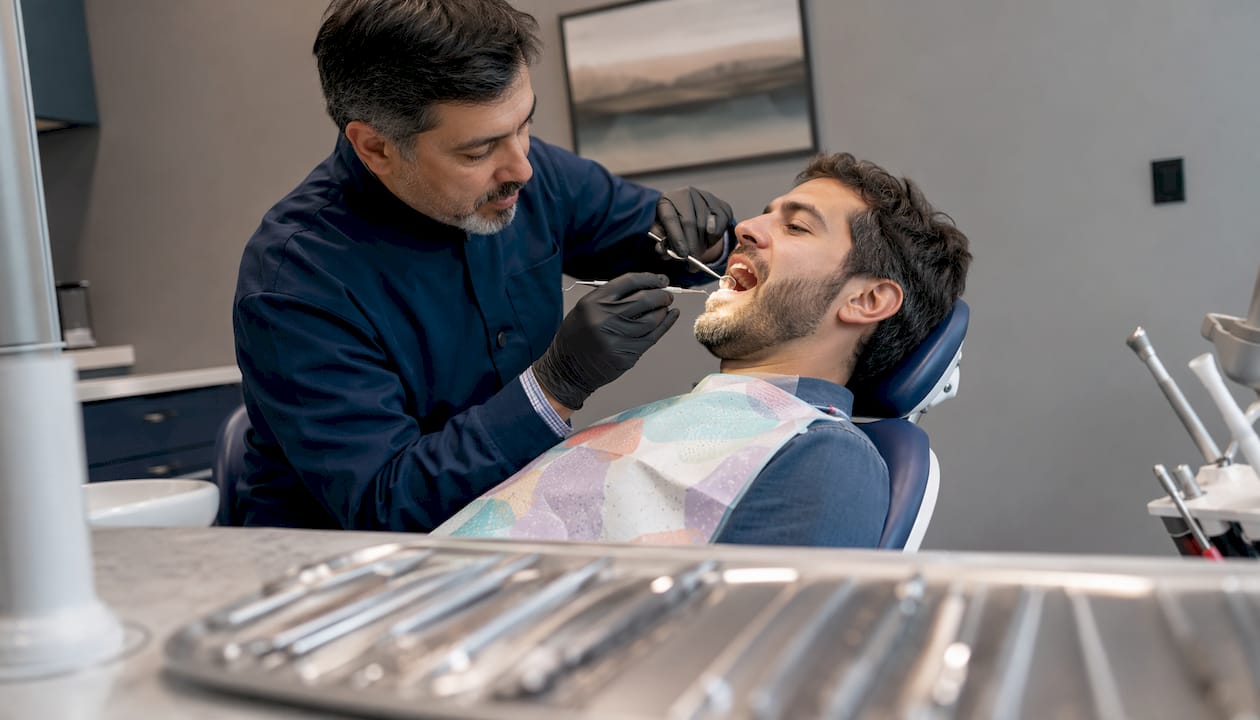
General dentistry treatments, by contrast, address structural and biological problems that whitening cannot touch. A filling repairs decay. A crown restores a fractured tooth. Periodontal treatment stops bone loss. None of those outcomes are cosmetic, and none of them can be substituted with a brighter shade.
Duration also differs. Whitening results are not permanent. The NHS notes that professional whitening effects can last around three years with proper care, though lifestyle factors like coffee, tea, red wine, and tobacco accelerate staining. General dental work like fillings and crowns lasts years to decades when maintained correctly.
Research comparing whitening methods found no statistically significant difference in long-term whitening outcomes between in-office and take-home approaches, though relapse rates and sensitivity risk vary. What that means practically: the method you choose affects your experience more than your final result.
Outcomes and limitations, summarized:
- Whitening brightens natural enamel only; restorations stay their original color.
- Intrinsic stains from antibiotics, fluorosis, or tooth injury respond poorly or not at all to bleaching.
- General dentistry treats disease and structural damage; whitening cannot substitute for that care.
- Whitening results fade over time, especially with staining foods and drinks.
- Overuse of whitening products tends to cause sensitivity rather than permanent enamel damage when used correctly, but periodic use is still the safer approach.
- For people who want to maintain brightness between professional sessions, a BLU Whitening Toothpaste formulated without harsh peroxide can support daily enamel care without the risks of repeated bleaching.
Getsmilefam’s BLU Teeth Whitening Kit uses enamel-safe ingredients and BLU Whitening Technology to deliver visible results at home, without hydrogen peroxide. It’s designed for people who want a brighter smile on their own schedule, with the kind of formula that works alongside, not against, good oral health habits.
Key Takeaways
Cosmetic whitening targets tooth color only, while general dentistry covers the full spectrum of oral health, making them complementary rather than interchangeable.
| Point | Details |
|---|---|
| Different goals entirely | Whitening improves tooth color; general dentistry prevents and treats oral disease. |
| Whitening has hard limits | Bleaching agents only work on natural enamel, not crowns, veneers, implants, or fillings. |
| Professional oversight matters | The ADA recommends a dental exam before whitening to rule out conditions that increase risk. |
| Method affects experience, not just results | In-office bleaching is faster; take-home trays offer gradual improvement with lower sensitivity risk. |
| Periodic use protects enamel | Frequent whitening increases sensitivity; occasional treatment is the safer long-term approach. |