

How whitening frequency affects safety comes down to a simple rule: give your teeth more recovery time than you think you need. In-office bleaching is safe roughly every 6 to 12 months. Dentist-prescribed take-home trays work as maintenance every 3 to 6 months. Over-the-counter strips and gels should stay capped at a short course every 3 to 4 months. Daily maintenance products, like low-concentration toothpastes, are built for daily use because they don’t carry the same peroxide load.
The reason interval matters so much comes down to biology, not marketing. Between 55% and 75% of people using at-home whitening report transient tooth sensitivity, and it happens because peroxide doesn’t stop at the enamel surface. The American Dental Association considers up to 10% carbamide peroxide (about 3.6% hydrogen peroxide) acceptable for unsupervised home use. Anything stronger belongs under a dentist’s watch. For daily upkeep without that risk, brands like SmileFam build non-peroxide formulas specifically so you’re not stacking bleaching exposure on top of bleaching exposure.
Before you whiten again, run through this:
- Read the manufacturer’s stated frequency limit and don’t exceed it, even if you don’t feel discomfort yet.
- Stop immediately if sensitivity lasts more than a few days after treatment.
- Talk to your dentist before repeating any high-concentration (20%+) peroxide session.
- Switch to a non-peroxide maintenance product between bleaching cycles instead of repeating the same treatment.
Key Takeaways
Whitening safety depends less on the product you choose and more on how much recovery time you give your enamel and pulp between sessions.
| Point | Details |
|---|---|
| In-office spacing | Limit high-concentration (20 to 40%) sessions to once every 6 to 12 months, per Singapore Dental Association guidance. |
| Sensitivity is common but temporary | 55 to 75% of at-home whitening users report transient sensitivity that resolves once treatment stops. |
| Match concentration to supervision | Stick to 10% carbamide peroxide or lower for unsupervised home use; go higher only under professional care. |
| Watch for red flags | Sensitivity lasting over 7 to 14 days or visible enamel erosion means stop and see a dentist. |
| Use non-peroxide maintenance between cycles | SmileFam’s BLU Whitening Toothpaste and Snow Serum™ Whitening Pen offer daily upkeep without repeated peroxide exposure. |
Table of Contents
- Common Whitening Methods and How They Differ
- Why Frequency Matters: The Chemistry Behind Whitening
- Recommended Whitening Frequency By Method
- What Overuse Looks Like: Sensitivity, Enamel, and Gum Effects
- Personal Factors That Change Your Safe Frequency
- How to Reduce Sensitivity and Whiten More Safely
- When to Pause Whitening and See a Dentist
- Where SmileFam Fits Into a Safety-First Routine
- A Conservative Stance on Whitening Frequency
- Gentler Maintenance Options for Between Treatments
- Frequently Asked Questions
- Sources
Common Whitening Methods and How They Differ
Not all whitening is chemically the same, and that difference is exactly why one blanket “whiten once a week” rule doesn’t exist. Professional in-office bleaching uses hydrogen peroxide in the 20% to 40% range, applied for 15 to 30 minutes under direct supervision, according to Singapore Dental Association guidance. That’s the strongest concentration you’ll encounter, and it’s also the one requiring the most spacing between visits.
Dentist-prescribed take-home trays sit a step down. They use custom-fitted trays with carbamide peroxide gels, worn for shorter daily stretches over one to two weeks, then used again only for periodic top-ups. Over-the-counter strips, gels, and paint-on pens generally use 2% to 6% hydrogen peroxide, or comparable carbamide peroxide equivalents, and a randomized controlled trial found that 3% strips produced significant whitening with only mild, self-limiting side effects. Whitening toothpastes and rinses fall into a different category entirely. Most rely on mild abrasives or low-level chemical agents meant for daily surface maintenance, not deep bleaching.
There are also non-peroxide options like SmileFam’s BLU Whitening Technology and the Snow Serum™ Whitening Pen, formulated to lighten surface stains without the same tissue penetration.
- In-office: fastest visible results, highest short-term sensitivity risk.
- Take-home trays: moderate speed, moderate risk, dentist-monitored.
- OTC strips/pens: slower, milder, self-managed.
- Toothpaste/rinses: gradual, low risk, daily use.
- Non-peroxide brand options: gentle, minimal risk, suited to frequent use.
Why Frequency Matters: The Chemistry Behind Whitening
Whitening works because hydrogen peroxide or carbamide peroxide breaks down into free radicals that oxidize the pigmented molecules, called chromophores, staining your enamel. That reaction doesn’t politely stop at the surface. It diffuses through enamel into dentin, and dentin sits right next to the nerve-rich pulp. That’s the entire reason repeated, closely spaced sessions raise your risk instead of just adding more whitening.
Enamel also goes through a temporary demineralization phase during bleaching, then rebuilds itself using minerals from saliva and fluoride. That rebuilding needs time. Whiten again before it finishes, and you’re bleaching enamel that hasn’t fully recovered its hardness yet. A meta-analytic review found that moderate concentrations, around 25% to 35%, whiten about as well as stronger formulas while cutting sensitivity risk, which tells you concentration and time aren’t independent variables. They trade off against each other.
- Higher concentration shortens the required treatment time but raises sensitivity odds.
- Lower concentration needs longer exposure but is gentler on pulp tissue.
Pro Tip: If a product promises whiter teeth in one fast session, assume it’s using a higher concentration, and plan for a longer rest period before your next treatment, not a shorter one.
Recommended Whitening Frequency By Method
Here’s where the general guidance turns into something you can actually schedule. Each method carries its own safe rhythm, and the right interval depends on concentration, exposure time, and how your tissue responded last time.
- In-office professional bleaching: once every 6 to 12 months. The Singapore Dental Association notes that 20% to 40% concentrations are safe when sessions are separated by weeks or months, never used daily or on consecutive days.
- Dentist-prescribed take-home trays: an initial course of 1 to 2 weeks, then top-ups every 3 to 6 months depending on how quickly your staining habits (coffee, tea, red wine, smoking) bring color back.
- OTC strips and gels: a short course, then a break of at least 3 to 4 months before repeating. Trial data on 3% strips showed good tolerance at that concentration, but tolerance at low concentration doesn’t excuse back-to-back cycles.
- Paint-on pens: treat these like a mini strip course. Spot-touch as needed, but respect the same 3 to 4 month spacing for full applications.
- Whitening toothpaste and rinses: safe for daily use exactly as labeled, since these formulas aren’t designed to reach dentin the way peroxide gels do.
- Non-peroxide brand options like SmileFam’s BLU technology: suited to more frequent use precisely because they skip the peroxide diffusion mechanism driving sensitivity in the other categories.
A realistic 12-month plan might look like one in-office visit, quarterly OTC strip touch-ups spaced apart, and daily non-peroxide toothpaste filling the gaps. You can justify a shorter interval when a dentist pre-treats with desensitizing agents or when you’re doing a mild, low-concentration top-up under supervision. Lengthen the interval, on the other hand, if you notice sensitivity, have visible restorations, or have any sign of active decay. Our frequency guidelines guide breaks this down further by treatment history.
What Overuse Looks Like: Sensitivity, Enamel, and Gum Effects
Tooth sensitivity is the most common consequence of whitening too often, showing up in 55% to 75% of at-home whitening users, with gingival irritation trailing at 25% to 40%. The good news: both are typically transient, resolving once you stop treatment.
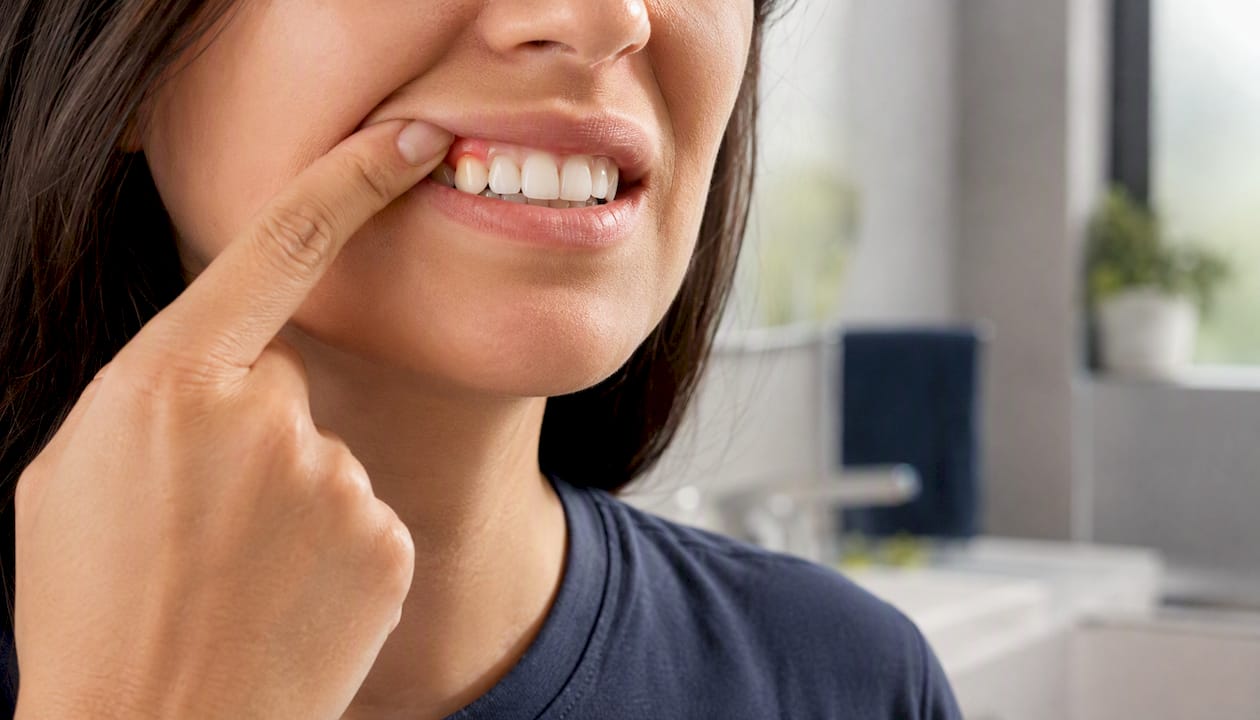
Push past that transient window, though, and the picture changes. Aggressive or repeated bleaching can alter enamel’s surface microhardness and increase its porosity, and Scientific American reports that chronic overuse can lead to longer-term sensitivity or enamel erosion rather than the short-lived kind. In rare, severe misuse cases, unmonitored high-frequency bleaching has been linked to pulpal inflammation.
Restorations complicate things further. Crowns, veneers, and fillings don’t respond to bleaching agents the way natural enamel does, so whitening around them too often can create visibly uneven shading or unwanted chemical interactions with the restorative material. If you’ve got any dental work, our guide on whitening with restorations is worth reading before your next session.
Most sensitivity and gum irritation cases resolve on their own once whitening stops, according to Cleveland Clinic, which is exactly why spacing out treatments, rather than pushing through discomfort, is the safer call.
- Tooth sensitivity: common, usually temporary, worsens with frequency.
- Gingival irritation: common, tied to gel contact time and tray fit.
- Enamel porosity changes: possible with chronic overuse, slower to reverse.
- Restoration shade mismatch: cosmetic issue, not a health risk, but permanent until corrected.
Personal Factors That Change Your Safe Frequency
Two people using the same product can face very different risk levels, because whitening safety isn’t just about the product. It’s about what you’re bringing to it.
Run through this list before deciding how often to whiten:
- Baseline tooth sensitivity or a history of sensitive teeth.
- Enamel thickness and any prior erosion.
- Existing crowns, veneers, or fillings near the treatment area.
- Pregnancy (most dentists recommend postponing whitening entirely).
- Active cavities or untreated gum disease.
- Heavy coffee, tea, red wine, or tobacco use, which speeds up restaining.
- Saliva flow and fluoride exposure, both of which support enamel recovery.
- The product’s concentration and how long it stays on your teeth.
Risk doesn’t add up in a simple line. It compounds. A high-concentration gel used by someone with thin enamel who also drinks acidic beverages daily is a very different risk profile than the same gel used by someone with none of those factors.
- If you have two or more risk factors, lengthen your interval beyond the standard recommendation.
- Swap to a lower-concentration or non-peroxide product rather than skipping maintenance entirely.
- Add a desensitizing step, like potassium nitrate toothpaste, before and after treatment.
How to Reduce Sensitivity and Whiten More Safely
Lowering your risk doesn’t mean giving up results. It means being deliberate about concentration, timing, and aftercare. Choosing moderate peroxide concentrations over the highest available option is one of the clearest wins here, since research shows 25% to 35% concentrations whiten nearly as well as 40% while causing less sensitivity. Routine light activation, despite being marketed as a booster, shows limited added benefit and can actually increase sensitivity, so skip it unless your dentist specifically recommends it.
A safer session looks like this:
- Confirm concentration and timing against the manufacturer’s label before you start.
- Apply a potassium nitrate or sodium fluoride desensitizing product beforehand if you’re prone to sensitivity.
- Keep exposure time within the labeled range, never extending it for “better” results.
- Use fluoride toothpaste or a fluoride varnish immediately after treatment.
- Avoid acidic foods and drinks for 48 hours post-treatment.
- Use a desensitizing toothpaste nightly for the following week.
If sensitivity is a chronic concern, our guide for sensitive gums walks through gentler regimens in more detail. For a broader look at safe routines, Stop Oral Care’s at-home whitening guide covers similar ground from a non-brand perspective.
Pro Tip: Reserve full peroxide treatments for occasional resets, and fill the gaps with a non-peroxide product like BLU Whitening Toothpaste or the Snow Serum™ Whitening Pen. You get consistent upkeep without repeatedly exposing dentin to oxidizing agents.
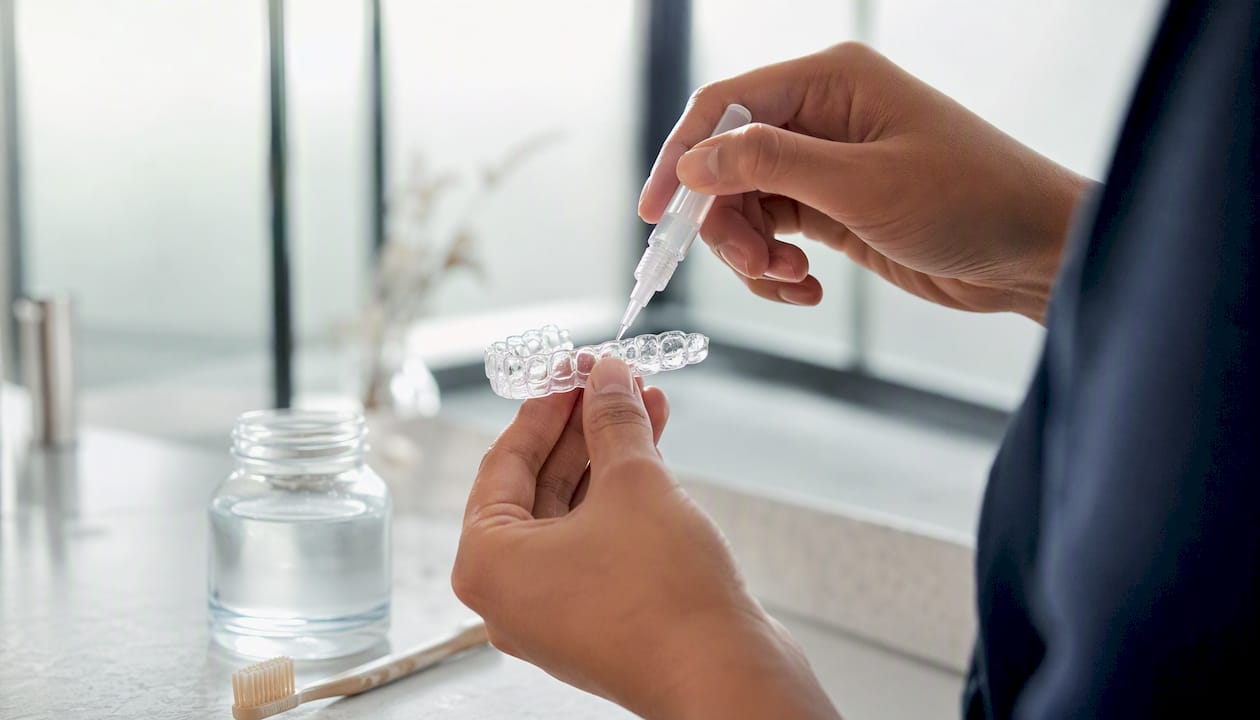
When to Pause Whitening and See a Dentist
Some symptoms mean stop, not “wait and see.” Sensitivity that persists beyond 7 to 14 days, visible enamel erosion, gum burns or ulcers that don’t heal quickly, prolonged pulp-type pain, or a sudden color mismatch around a restoration all warrant a professional visit before you touch a whitening product again.
Certain conditions rule out home whitening from the start: active cavities, untreated periodontal disease, pregnancy, and extensive restorations that may not respond evenly to bleaching. Clinical commentary on whitening risks points to a thorough dental history as the real safeguard here, since DIY habits that quietly extend frequency or duration limits are what tend to cause structural damage.
Before your appointment, jot down which product you used, how often, and when symptoms started. Expect an exam, possible desensitizing treatment, and a revised maintenance schedule.
Professional oversight and an honest medical history are what actually prevent structural damage, not the whitening product’s marketing claims.
Pro Tip: If you’ve had ongoing sensitivity for more than two weeks, don’t try switching products to “fix” it. See a dentist first.
Where SmileFam Fits Into a Safety-First Routine
Getsmilefam built BLU Whitening Technology and BLU Whitening Toothpaste, along with the Snow Serum™ Whitening Pen, around a specific idea: maintenance shouldn’t require repeated peroxide exposure. These formulas skip hydrogen peroxide entirely, which is why they’re positioned as enamel-friendly options for people managing sensitive gums or trying to space out stronger treatments.
The recommended pattern is straightforward:
- Use BLU Whitening Toothpaste daily or several times a week as directed, since it’s built for that cadence.
- Reserve peroxide-based sessions, whether in-office or take-home, for occasional boosts on a longer interval.
- Treat the Snow Serum™ Whitening Pen as a light touch-up tool between bigger treatments, not a replacement for professional care.
Pro Tip: If you’re whitening more than once every few months with a peroxide product, that’s your cue to lean harder on non-peroxide maintenance instead of increasing peroxide frequency.
These product claims apply at the individual product level. If you’re doing frequent peroxide-based retreatments alongside daily non-peroxide maintenance, a dental checkup is still the right move to confirm your enamel and gums are handling the combined load well.
A Conservative Stance on Whitening Frequency
The whitening industry sells speed. Faster results, shorter sessions, immediate confidence. What gets lost is that your dentin and pulp don’t care about your timeline. They need the recovery window the chemistry actually requires.
My stance, based on everything the evidence points to: use the lowest effective concentration, space treatments generously, and put anything above 10% carbamide peroxide under professional supervision rather than guessing at home. Conservative intervals aren’t a compromise. They’re what actually protects the result you’re chasing, since eroded enamel and chronic sensitivity undo the cosmetic gain far faster than patience ever costs you. Lean on gentler maintenance products between peroxide cycles, and when symptoms don’t add up, talk to a dentist before your next session, not after.
Gentler Maintenance Options for Between Treatments
If the safest whitening schedule leans conservative, the products filling the gaps between treatments matter just as much as the treatments themselves. Getsmilefam built its lineup specifically for that gap: BLU Whitening Toothpaste, the Snow Serum™ Whitening Pen, and the Premium Travel Kit all skip hydrogen peroxide, which means they’re designed for more frequent use without the recovery-window concerns that apply to peroxide gels.
BLU Whitening Toothpaste works into your normal brushing routine, daily or several times a week per the label, and it’s meant to maintain shade between bigger treatments rather than replace professional bleaching. The Snow Serum™ Whitening Pen handles quick touch-ups on the go, and the Premium Travel Kit bundles maintenance essentials for anyone splitting time between home and travel without wanting to skip their routine. None of these substitute for in-office peroxide work when you actually need a deeper reset. They’re built to reduce how often you need that reset in the first place.
If you’ve read this far and recognized your own habits in the “whitening too often” section, start with the BLU Whitening Toothpaste product page to see how it fits into a lower-risk routine, backed by SmileFam’s satisfaction guarantee.
Frequently Asked Questions
How often should you whiten your teeth without risking damage? It depends on the method. In-office bleaching is safe roughly every 6 to 12 months, take-home trays every 3 to 6 months for maintenance, and OTC strips or gels no more than every 3 to 4 months. Daily maintenance toothpaste is safe for daily use as labeled.
Does whitening frequency affect enamel safety more than concentration does? Both matter, but they interact. A lower concentration used too frequently can cause the same cumulative sensitivity as a higher concentration used occasionally, since it’s total peroxide exposure over time that drives enamel and dentin changes.
Is it normal to feel sensitivity after every whitening session? Some sensitivity is common, affecting 55% to 75% of at-home whitening users, and it typically resolves within a few days. Sensitivity that persists beyond two weeks isn’t normal and warrants a dentist visit.
Can you use whitening toothpaste every day safely? Yes. Whitening toothpastes and non-peroxide formulas like BLU Whitening Toothpaste are formulated for daily use because they don’t rely on the same deep-penetrating peroxide chemistry as gels and strips.
Should you stop whitening if you have veneers or crowns? Not necessarily, but restorations don’t lighten the way natural enamel does, which can create shade mismatches. Check our guide on whitening with restorations before scheduling another session.
This article is general information, not a substitute for advice from a qualified doctor. Consult a qualified healthcare professional about your own circumstances before acting on anything here.
Sources
- Tooth whitening/bleaching — Singapore Dental Association
- Is Teeth Whitening Safe (and Does It Work)? — Cleveland Clinic
- Randomized controlled trial of low-concentration whitening strips — Frontiers in Oral Health
- In-office tooth bleaching protocols: an umbrella review of systematic reviews and meta-analyses — The Saudi Dental Journal / Springer Nature