

For adults in humid tropical climates, the fastest way to get whiter teeth and keep them that way is a dentist-checked whitening plan paired with a climate-adapted daily routine. Skip the check-up and you risk whitening over a cavity. Skip the routine and iced coffee, curry, and dehydration will undo your progress in weeks.
Here’s the three-step version: get a quick dental check first, whiten with a safe at-home kit like SmileFam’s BLU Whitening Technology, then protect the result daily.
- Step 1: See a dentist to rule out decay or exposed dentin before whitening anything.
- Step 2: Use an enamel-safe at-home pen or kit rather than concentrated DIY peroxide.
- Step 3: Rinse after staining drinks, hydrate consistently, and store your whitening product away from heat.
A lab-tested, enamel-safe formula matters more in humid climates than most people realize, since heat and moisture can degrade poorly stored whitening gels before you even use them.
Key Takeaways
Lasting whitening in humid climates comes down to a dentist-checked start, an enamel-safe product, and daily habits that protect saliva flow and control staining exposure.
| Point | Details |
|---|---|
| Get checked first | See a dentist before whitening to catch cavities or exposed dentin early. |
| Humidity works indirectly | Heat and moisture don’t undo whitening directly, but dehydration and diet do. |
| Rinse, don’t brush immediately | Wait 30 to 60 minutes after acidic drinks or food before brushing. |
| Store products cool and dry | Heat degrades whitening gel and pen ingredients faster in tropical conditions. |
| Choose enamel-safe kits | SmileFam’s BLU Whitening Technology and Snow Serum™ Pen fit humid-climate routines without harsh chemicals. |
Table of Contents
- How Humid Climates Affect Teeth Whitening Results
- Which Whitening Methods Are Safe in Humid Weather?
- How Should You Prepare Your Teeth Before Whitening?
- How Do You Prevent and Manage Whitening Sensitivity?
- Building a Daily Routine That Protects Whiteness in Humidity
- Do Home Remedies Like Oil Pulling Actually Whiten Teeth?
- When Should You See a Dentist Instead of Whitening at Home?
- A Climate-Friendly At-Home Option Worth Knowing
- Sources
How Humid Climates Affect Teeth Whitening Results
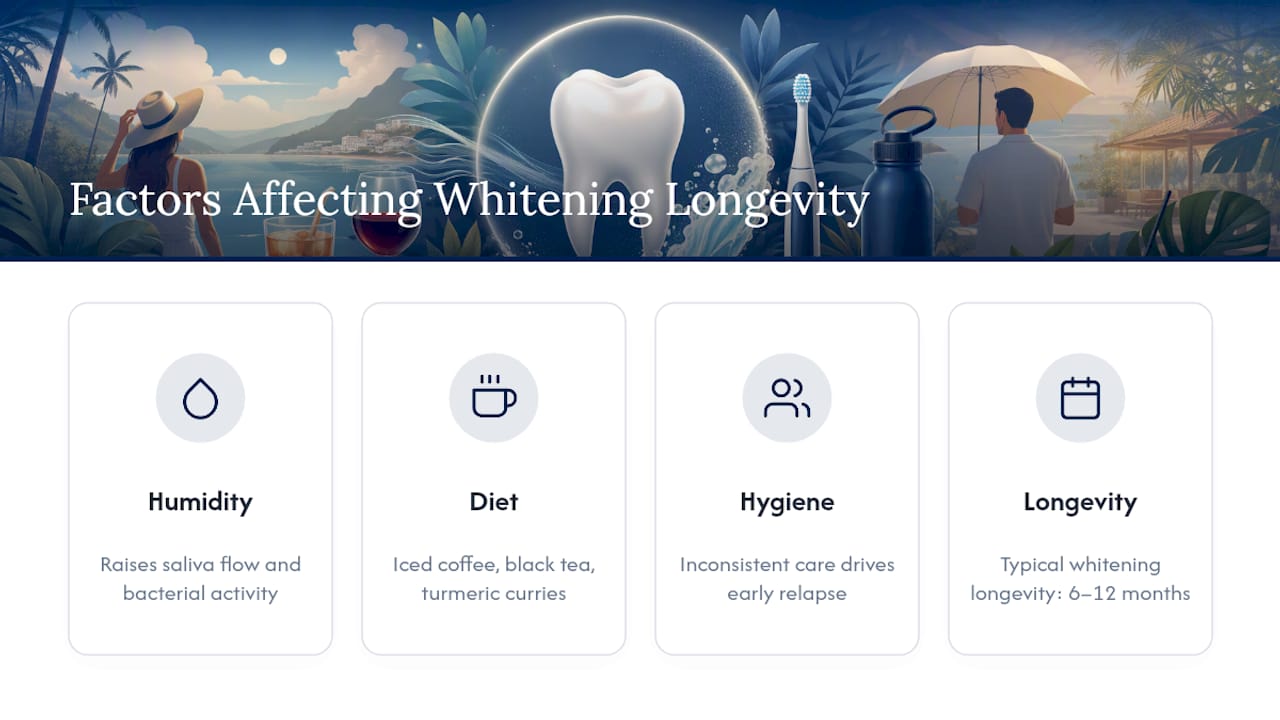
Humidity itself doesn’t chemically reverse a whitening treatment. What changes is your behavior. High humidity can affect saliva flow and raise bacterial activity in the mouth, which encourages plaque buildup and surface staining when hydration and brushing slip. Add tropical staples like iced coffee, black tea, and turmeric-heavy curries, and the stain-return clock runs faster than it would in a dry climate.
Clinical observations in humid cities put typical whitening longevity at roughly 6 to 12 months, with diet and inconsistent care, not the weather, driving early relapse.
Pro Tip: Rinse with plain water immediately after iced coffee or curry, then wait 30 to 60 minutes before brushing. Brushing too soon rubs acid straight into softened enamel.
Which Whitening Methods Are Safe in Humid Weather?
Not every whitening route holds up equally well once you factor in heat, humidity, and tropical diets. Here’s how the main options stack up:
- In-office bleaching: fastest, most dramatic shade change, done under professional supervision, but the priciest option and still requires humid-climate maintenance afterward.
- Dentist-supervised take-home trays: strong middle ground, custom-fitted, but require discipline with wear time and storage.
- Regulated at-home kits (pens, LED kits): convenient, budget-friendly, and easy to fit around humid-climate routines when the formula is enamel-safe.
- Natural surface-stain methods (baking soda, oil pulling, diluted peroxide): help with surface stains only, and typically produce modest results.
Natural approaches can lighten surface stains by about 1 to 3 shades over 4 to 8 weeks, while intrinsic stains, the kind that sit deeper in the tooth, usually need professional-grade whitening to shift meaningfully.
Whichever method you pick, the trust signals worth checking are the same: see a dentist first, confirm the formula is enamel-safe and lab-tested, and look for a sensitivity-safe schedule rather than a one-and-done blast of bleach.
How Should You Prepare Your Teeth Before Whitening?
Whitening over an untreated problem wastes money and risks pain. Run through this before you start:
- Get a dental exam and cleaning to catch cavities or exposed dentin early.
- Have any decay repaired and get a scale-and-polish if plaque or tartar has built up.
- Wait at least 30 to 60 minutes after acidic meals or drinks before whitening or brushing.
- Schedule your first whitening session on a day you’re well hydrated, not fresh off a heavy sweat session or a long flight.
How Do You Prevent and Manage Whitening Sensitivity?
Warm, humid conditions don’t cause sensitivity directly, but the habits that go with them, iced drinks, dehydration, spicy food, can make a sensitive mouth feel worse right after whitening.
- Use a sensitizing toothpaste or fluoride rinse for a few days before you start.
- Space whitening cycles out instead of stacking them back to back.
- Avoid extreme-temperature foods and drinks for 48 hours after treatment.
- Stay hydrated. Saliva buffers your mouth, and dehydration reduces that buffer.
Pro Tip: If sensitivity feels like sharp, lingering pain rather than a mild zing, stop and see a dentist rather than pushing through another cycle.
Persistent burning, throbbing pain, or gum irritation that doesn’t settle within a day or two is not normal. That’s a sign to book a dental visit, not to tough it out.
Building a Daily Routine That Protects Whiteness in Humidity
Consistency beats intensity here. A humid climate punishes sporadic care faster than a dry one does, because bacteria and staining agents both thrive in moisture and heat.
Daily habits:
- Brush twice a day for two minutes with an ADA-accepted whitening toothpaste.
- Floss once daily to clear the interdental spots stains love to settle into.
- Rinse with water after coffee, tea, or curry, and use a straw for iced drinks.
- Chew sugar-free gum between meals to keep saliva flowing.
Weekly and travel habits:
- Sip water regularly through the day rather than large amounts at once. It keeps saliva flow steadier.
- Cut back on alcohol and heavy salt, both of which work against hydration.
- Store whitening pens and kits in a cool, dry spot, never a hot car, a bathroom windowsill, or direct sun, since heat degrades active whitening ingredients.
- After a trip through hot, humid conditions or a stretch of travel food, run a light touch-up cycle and reset your rinse-after-drinks habit.
A travel kit built for humidity makes this far easier than trying to protect a loose tube of gel in a suitcase.
Do Home Remedies Like Oil Pulling Actually Whiten Teeth?
Short answer: they help with surface stains, not with real whitening, and overdoing them can hurt your enamel.
- Oil pulling may reduce surface bacteria but has no proven bleaching effect on tooth color.
- Turmeric and charcoal are popular online but lack strong evidence and can be abrasive.
- Baking soda works as a mild polish, but daily use wears down enamel over time.
- Concentrated hydrogen peroxide is not a DIY ingredient. Diluted 1.5% to 3% rinses used sparingly are the safe ceiling.
Used correctly, baking soda paste 2 to 3 times a week is the safer version of this myth, not daily brushing with it.
When Should You See a Dentist Instead of Whitening at Home?
Some situations call for professional judgment before you touch any whitening product:
- Stains that look grayish or come from inside the tooth (intrinsic stains), not surface discoloration.
- Sensitivity or pain that persists beyond a couple of days.
- Visible fillings, crowns, or veneers that won’t lighten and could end up mismatched.
- Signs of gum disease or untreated cavities.
Ask your dentist whether your enamel and gums are suitable for whitening, and whether a supervised kit fits your case better than an over-the-counter one. Get that check before starting any serious whitening plan.
A Climate-Friendly At-Home Option Worth Knowing
If you want a whitening method built with humid-climate realities in mind, SmileFam’s BLU Whitening Technology and the Snow Serum™ Whitening Pen are worth a look. Both are positioned as lab-tested, enamel-safe formulas designed for visible results without harsh chemicals like hydrogen peroxide.
Using it is simple:
- Apply the serum pen directly to clean, dry teeth.
- Let it set for the recommended time per the product instructions.
- Repeat on the suggested schedule rather than daily.
Enamel-safe formulas and a documented guarantee matter more once you’re whitening in a climate that also demands careful storage: keep the pen capped, cool, and out of direct sunlight.
A Realistic Take on Results and Commitment
Whitening in a humid climate isn’t a one-time fix. Expect a noticeable shade improvement, then ongoing upkeep, not permanent whiteness. The people who keep their results longest are the ones who treat hydration, rinsing, and product storage as part of the routine, not an afterthought. Adjust your expectations accordingly and the results hold up far better.
Get Whiter Teeth That Actually Hold Up in the Heat
Most whitening kits are built and tested for cooler, drier climates, then shipped without a second thought for what happens when they sit in a humid bathroom or a hot bag. SmileFam’s BLU Whitening Technology and the Snow Serum™ Whitening Pen are enamel-safe, lab-tested, and small enough to store properly wherever you live. For frequent travelers or anyone who wants a kit that survives humid transit without losing potency, the Premium Travel Kit is built exactly for that. See a dentist first if you have cavities, gum issues, or major dental work, then check out the BLU kit to start your whitening plan.
Sources
- How to whiten teeth naturally | Healthline
- How to Whiten Teeth Naturally — 9 Proven Methods (2026) | OralHealthHQ
This article is general information, not a substitute for advice from a qualified doctor. Consult a qualified healthcare professional about your own circumstances before acting on anything here.