

Maintaining white teeth after whitening is defined by three pillars: consistent oral hygiene, smart dietary choices, and scheduled professional care. Your results can last anywhere from six months to several years, depending entirely on your daily habits. The American Dental Association confirms that post-treatment behavior is the single biggest factor in how long whitening holds. Get those habits right, and your investment pays off for years.
Why maintaining white teeth after whitening starts with the first 48 hours
The first 48–72 hours after whitening are the most critical window for protecting your results. Whitening treatments temporarily open enamel pores, making teeth far more absorbent than usual. Pigments from food and drink penetrate those open pores and bond to the enamel before it has time to remineralize. What you eat during this window can undo results faster than anything else.
Dentists call this the “white diet,” and it is exactly what it sounds like. Stick to light-colored foods: chicken, white fish, rice, eggs, plain yogurt, bananas, and cauliflower. These foods carry minimal pigment and pose almost no staining risk while your enamel is vulnerable.
The foods to avoid after whitening during this window are equally specific. Coffee, tea, red wine, tomato sauces, berries, soy sauce, and dark sodas all carry concentrated pigments that absorb directly into open enamel pores. Even a single cup of black coffee in the first 24 hours can visibly dull your results.

Pro Tip: Rinse your mouth with plain water immediately after eating anything during the first 48 hours. It takes less than 30 seconds and significantly reduces pigment contact time with your enamel.
After the initial window closes, your enamel pores return to their normal state. That does not mean staining stops being a risk. It means the acute danger passes and you shift into long-term maintenance mode.
What does a daily oral hygiene routine look like for keeping teeth white?
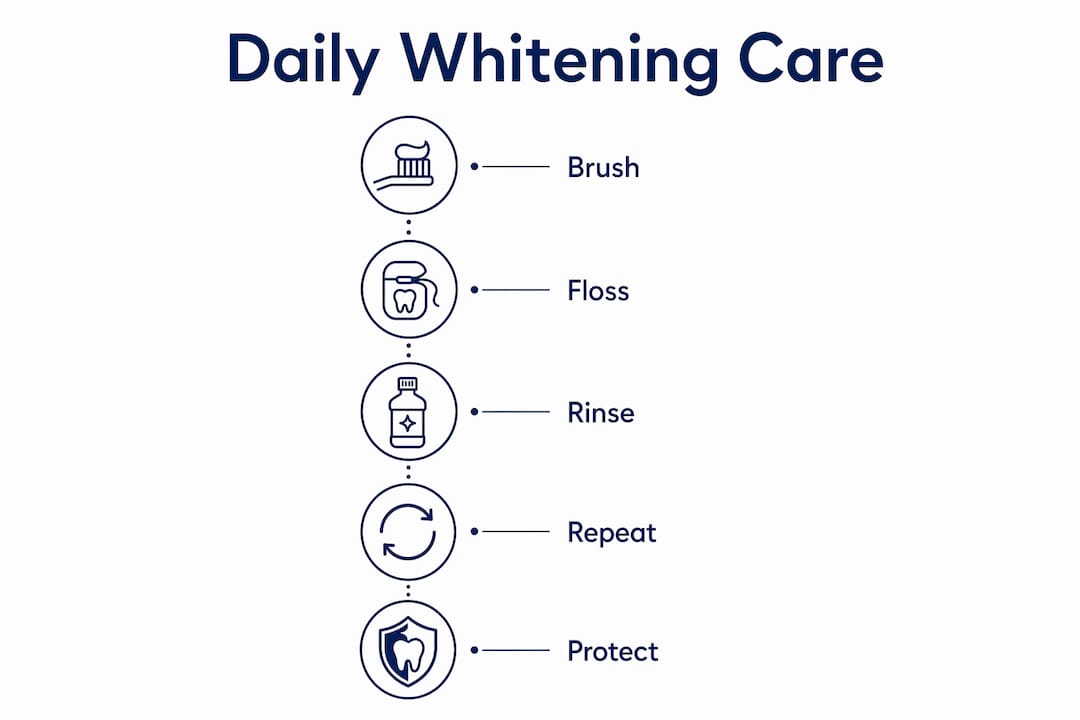
A consistent daily routine is the backbone of any white teeth maintenance plan. The steps are not complicated, but the order and technique matter more than most people realize.
- Brush twice daily for two minutes. Use a soft-bristled or electric toothbrush. Electric brushes remove plaque more effectively than manual ones, which directly reduces surface staining over time.
- Floss once every day. Staining between teeth, called interproximal staining, is one of the most common reasons whitening results look uneven after a few months. Flossing removes the plaque and food debris that cause it.
- Choose your toothpaste carefully. Avoid charcoal toothpastes and highly abrasive whitening pastes. Some charcoal toothpastes carry an RDA of 134–190, which scratches enamel and creates microscopic grooves that trap stains. That is the opposite of what you want.
- Replace your toothbrush every 2–3 months. Worn bristles clean less effectively and can irritate gums, which leads to inflammation that makes teeth look darker by contrast.
- Rinse with water after staining foods or drinks. A quick rinse after coffee or tea lifts surface pigments before they settle. Whitening pens work the same way for minor stains between professional treatments.
Pro Tip: If you use a whitening toothpaste, look for one with a low RDA score (under 70) and fluoride. It cleans without scratching, and fluoride helps remineralize enamel after whitening.
The biggest mistake people make is treating brushing as a checkbox rather than a technique. Rushing through 45 seconds of brushing leaves plaque on the gumline and between teeth, exactly where staining starts. Two full minutes, twice a day, changes the long-term outcome.
How do lifestyle habits and diet affect long-term whiteness?
Staining is cumulative. Every sip of dark liquid and every bite of pigment-rich food adds a thin layer of color to your enamel over time. The good news is that small behavioral changes compound just as fast in the other direction.
Drinks that cause the most damage
- Coffee and tea are the leading causes of tooth staining worldwide. Sipping them slowly throughout the morning is actually worse than drinking a full cup quickly, because prolonged contact time with enamel accelerates pigment absorption.
- Red wine contains tannins and chromogens that bond aggressively to enamel. White wine is acidic and softens enamel, making it more vulnerable to staining from other foods.
- Dark sodas combine acidity with dark pigments, a particularly damaging combination.
Habits and foods that protect your results
- Use a straw for dark beverages. It routes liquid past the front teeth and cuts contact time significantly. Minimizing pigment contact time is more effective for most people than complete avoidance.
- Eat crunchy vegetables like celery, carrots, and apples. Their texture gently scrubs tooth surfaces and stimulates saliva production.
- Stay hydrated. Saliva is your mouth’s natural defense against staining. It neutralizes acids and washes away food particles. Dry mouth accelerates staining.
- Quit tobacco. Nicotine and tar from cigarettes create some of the deepest, most stubborn stains possible. No whitening treatment fully compensates for continued tobacco use.
| Habit | Effect on whiteness | Better alternative |
|---|---|---|
| Sipping coffee slowly | Accelerates staining | Drink quickly, then rinse |
| Charcoal toothpaste | Scratches enamel, traps stains | Low-RDA fluoride toothpaste |
| Smoking or chewing tobacco | Deep, permanent staining | Cessation programs |
| Skipping water after meals | Allows pigments to settle | Rinse immediately after eating |
| Brushing right after acidic foods | Damages softened enamel | Wait 30 minutes, then brush |
For coffee drinkers specifically, a practical maintenance approach combines straws, immediate rinsing, and a low-abrasion whitening toothpaste. That combination keeps results intact without requiring you to give up coffee entirely.
How often should you schedule professional cleanings and touch-ups?
Professional care is not optional if you want results that last. Routine dental cleanings every 6–12 months remove tartar and surface stains that no toothbrush can reach. They also give your dentist a chance to catch early signs of enamel wear or gum issues before they affect your whitening results.
Touch-up whitening treatments serve a different purpose. They refresh your baseline shade when natural fading occurs. How often you need them depends on your habits. Heavy coffee or tea drinkers may need a touch-up every three to four months. People with low-staining diets and strong oral hygiene routines can often go a year or more between sessions.
The key factors that determine your maintenance frequency include:
- Diet and beverage choices. High-pigment diets require more frequent professional attention.
- Tobacco use. Smokers need more frequent cleanings and touch-ups to maintain any whitening result.
- Oral hygiene consistency. Daily brushing and flossing slow fading significantly.
- Enamel health. Thinner enamel fades faster and requires gentler, more frequent care.
Professional whitening results can last six months to several years with good upkeep. That range is wide because individual habits vary so dramatically. The best practices after whitening are the ones you actually follow consistently, not the most aggressive protocol you can find.
Key Takeaways
Maintaining white teeth after whitening requires consistent daily hygiene, smart dietary choices, and scheduled professional care working together over time.
| Point | Details |
|---|---|
| Protect the first 48–72 hours | Follow the white diet and avoid dark foods, coffee, and wine while enamel pores are open. |
| Brush and floss with technique | Use a soft or electric brush for two minutes twice daily; floss to prevent interproximal staining. |
| Avoid abrasive toothpastes | Charcoal and high-RDA pastes scratch enamel and create new sites for stains to settle. |
| Reduce pigment contact time | Use straws for dark drinks and rinse with water immediately after staining foods or beverages. |
| Schedule professional care | Cleanings every 6–12 months and periodic touch-ups extend results significantly. |
What I’ve learned about whitening that most guides won’t tell you
The advice most people get about whitening maintenance is too restrictive to stick with. “Never drink coffee” and “avoid all red wine” sound good in theory. In practice, they last about two weeks before people abandon the whole routine and wonder why their results faded.
What actually works is viewing whitening as ongoing management, not a one-time event. You are not trying to freeze your teeth in a single moment. You are building habits that slow fading to a pace you can manage.
The insight that changed how I think about this: sipping dark beverages slowly is worse than drinking them quickly. Most people assume slow sipping is gentler. It is not. Prolonged contact time is the real enemy, not the drink itself. Switching to a straw and finishing your coffee in one sitting does more for your whitening results than cutting your intake in half.
I also want to flag something that gets buried in most guides. Bruxism, or teeth grinding, wears down enamel and exposes the yellow dentin layer underneath. No whitening treatment can fix that if the grinding continues. If you wake up with jaw soreness or your dentist has mentioned enamel wear, address the bruxism first. A night guard is not glamorous, but it protects everything you are working to maintain.
Finally, resist the urge to overdo at-home whitening. Aggressive DIY protocols thin enamel over time and expose dentin, which makes teeth look more yellow, not less. The goal is enamel protection, not maximum whitening frequency.
— Lenney
Getsmilefam products built for daily whitening upkeep
Whitening results hold longest when your daily products are designed for maintenance, not just initial treatment.
Getsmilefam’s BLU Whitening Toothpaste is formulated for exactly this purpose. It uses an enamel-safe formula without harsh chemicals, making it suitable for daily use without the enamel scratching that undermines results over time. For periodic touch-ups at home, the BLU Teeth Whitening Kit uses Getsmilefam’s proprietary BLU Whitening Technology, developed in Singapore, to refresh your baseline shade between professional visits. Both products are designed to work together as part of a consistent maintenance routine, not as standalone fixes. For more guidance on building a complete aftercare plan, Getsmilefam’s whitening aftercare guide covers the full picture.
FAQ
How long do whitening results last with good maintenance?
Professional whitening results last six months to several years depending on diet, oral hygiene, and tobacco use. Consistent daily care and periodic touch-ups push results toward the longer end of that range.
What foods should you avoid right after whitening?
Avoid coffee, tea, red wine, berries, tomato sauces, and dark sodas for the first 48–72 hours after whitening. Enamel pores are open during this window and absorb pigments much faster than normal.
Is charcoal toothpaste safe for whitening maintenance?
Charcoal toothpaste is not recommended for whitening maintenance. Some formulas carry an RDA of 134–190, which scratches enamel and creates grooves that trap stains rather than removing them.
How often should you get professional cleanings after whitening?
Dental cleanings every 6–12 months remove tartar and surface stains that at-home brushing cannot reach. People with high-staining diets or tobacco use may benefit from more frequent visits.
Does using a straw really help keep teeth white?
Yes. Using a straw routes dark beverages past the front teeth, cutting direct contact time with enamel. Reducing contact time is one of the most practical and effective strategies for extending whitening results without eliminating drinks entirely.