

Uneven whitening is normal, not a sign your treatment failed, and in most cases it fixes itself. Wait 48 to 72 hours before judging your final shade since dehydrated enamel often looks blotchy right after treatment. If patchiness persists after several days, or if you notice pain, a single dark tooth, or restorations that no longer match, book a dental visit instead of reapplying whitener on your own.
TL;DR:
- Uneven whitening mainly results from natural differences in enamel thickness and underlying dentin, not from application errors.
- Restorations like crowns and veneers do not respond to bleaching, often standing out after treatment if surrounding teeth lighten.
- Post-whitening dehydration causes temporary patchiness that typically resolves within 48 to 72 hours as enamel rehydrates.
- Rehydration, avoiding staining foods, and using desensitizing products are simple at-home steps to prevent or reduce uneven results.
- Persistent unevenness after three days or signs of sensitivity and a dark tooth indicate the need for professional evaluation and targeted treatment.
Table of Contents
- Why Does Teeth Whitening Look Patchy or Uneven?
- How Do You Know If Uneven Whitening Is Temporary?
- What Are the Safe Ways to Fix Uneven Whitening Results?
- How Can You Prevent Uneven Whitening Next Time?
- When Should You See a Dentist About Uneven Whitening?
- What Does the Research Say About Fixing Patchy Whitening?
- Is an At-Home Whitening Pen Right for Your Uneven Results?
- A Realistic Take on Chasing the “Perfect” White
- Sources
Why Does Teeth Whitening Look Patchy or Uneven?
Most uneven results trace back to your teeth themselves, not a mistake you made. Every tooth has its own thickness of enamel, and the dentin underneath (the yellowish layer that gives teeth their base color) shows through unevenly depending on how thick that enamel is. A canine with thinner enamel might brighten faster than the flat surface of a molar right next to it, and for a few days that difference is visible.
Restorations complicate things further. Crowns, veneers, and composite fillings are made of materials that simply do not respond to bleaching agents the way natural enamel does. Restorations maintain their original shade regardless of whitening treatments, so a filling placed years ago can suddenly stand out once the teeth around it lighten.
Stain type matters too. Extrinsic stains, the surface discoloration from coffee, wine, or tobacco, respond well to most bleaching agents. Intrinsic stains are a different story. Tetracycline staining and fluorosis can be resistant to external bleaching because the discoloration sits inside the tooth structure, not on top of it.
Application technique plays a role as well, especially with over-the-counter trays. Common technical causes include:
- Trays that do not fit well may leave areas where gel does not make full contact with teeth
- Air bubbles trapped in the tray that block the whitening agent from reaching enamel evenly
- Inconsistent gel thickness across the tray, so some teeth get more active ingredient than others
- Rushed application that skips edges near the gumline or between teeth
And then there’s the factor almost nobody explains beforehand: dehydration. Whitening pulls moisture out of enamel temporarily, and dehydrated enamel scatters light differently than hydrated enamel does. That mismatch is what creates the chalky, spotty look right after treatment. It’s cosmetic and temporary, not a chemical burn or lasting damage.
How Do You Know If Uneven Whitening Is Temporary?
The single biggest factor is time. Enamel stays more porous for roughly 24 to 48 hours after whitening, which is part of why it looks patchy right afterward and why it’s also more vulnerable to new staining during that window.
Here’s a simple way to track what’s actually happening to your teeth:
- Take a photo in consistent natural light immediately after treatment, ideally the same lighting you’ll use for follow-up shots.
- Take a second photo at the 48 hour mark and compare the two side by side, not from memory.
- Take a third photo at 72 hours. Most dehydration-related patchiness resolves within this 48 to 72 hour window as saliva rehydrates the enamel.
- If the unevenness has visibly faded by day three, keep monitoring for another week before deciding you need corrective work.
- If the same spots look identical at 72 hours as they did on day one, that’s a signal the cause isn’t dehydration.
Blotchiness that fades gradually and evenly is almost always temporary. Unevenness that stays fixed in the exact same spots, especially around a single tooth, a filling, or a line near the gum, points toward a structural or intrinsic cause that whitening alone won’t solve.
What Are the Safe Ways to Fix Uneven Whitening Results?
Once you’re past the 48 to 72 hour mark and the patchiness hasn’t resolved, the smart move is to go from least invasive to most invasive, not straight to another full bleaching round.
Start here, at home:
- Rehydrate naturally. Drink water regularly and let saliva do its job instead of reaching for another whitening pen right away.
- Skip coffee, tea, red wine, and dark sauces for 24 to 48 hours after treatment, since enamel is temporarily more absorbent during that stretch.
- Use a desensitizing toothpaste or fluoride rinse if you’re dealing with sensitivity rather than just uneven color. Peroxide-based whitening commonly causes temporary sensitivity, and higher concentrations make it worse.
Pro Tip: Resist the urge to “even things out” by whitening the darker-looking teeth again right away. Reapplying too soon is one of the most common reasons people end up with sensitivity and an even patchier result than they started with.
If self-care doesn’t close the gap, professional options give you far more control:
- Custom tray touch-ups. Dentist-fitted trays create consistent gel contact across every tooth surface, correcting the exact unevenness that generic trays cause.
- In-office sessions. Faster and more concentrated, generally reserved for cases where you want quicker, more dramatic correction under supervision.
- Microabrasion or polishing. Removes superficial surface irregularities and stubborn surface stains, often combined with bleaching for a more uniform finish.
- Internal bleaching. Reserved for non-vital, root-treated teeth that have darkened from the inside. A dentist performs this from within the tooth to avoid damaging the pulp.
- Restorative replacement. When a crown or filling is the mismatched tooth, replacing or rematching it after your shade stabilizes is often the only real fix.
Timing varies. Custom-tray corrections usually take one to two weeks of nightly use, in-office sessions show results the same day, and restorative work depends entirely on your dentist’s schedule and the material involved.
How Can You Prevent Uneven Whitening Next Time?
Many uneven whitening results can be prevented by getting a dental exam and cleaning beforehand, which removes surface stains and identifies restorations that won’t respond to bleach.
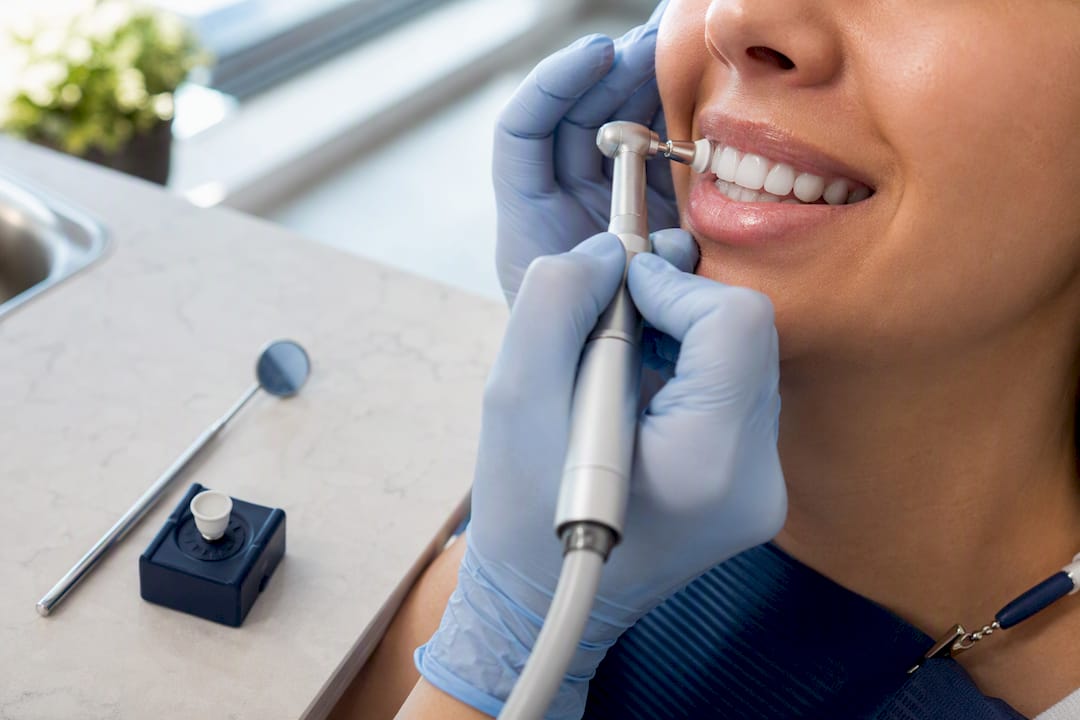
Delivery method matters more than most people expect. Dentist-provided custom trays and in-office treatments produce more predictable, even results than generic OTC trays, largely because they fit your teeth instead of a generic mold.
For your next round, build these habits in:
- Get a cleaning and exam within a few weeks of whitening, not months before.
- Choose a tray or applicator that actually matches your tooth shape, not a one-size-fits-all mold.
- Apply gel evenly across every tooth surface, including edges near the gumline, and check for air bubbles before wearing the tray.
- Avoid staining foods and drinks for the first 24 to 48 hours after each session.
- Stay hydrated and give your enamel time to recover between sessions instead of stacking treatments back to back.
When Should You See a Dentist About Uneven Whitening?
Certain signs mean you should stop self-treating and get a professional opinion rather than waiting it out.
- Patchiness that hasn’t budged after 72 hours. If your comparison photos look the same on day three as day one, dehydration isn’t the explanation anymore.
- Sensitivity that’s severe or doesn’t fade. Mild tingling for a day or two is normal; sharp or lasting pain is not.
- One tooth that’s noticeably darker than the rest. A single dark tooth, especially one that’s had trauma or a root canal, often signals a non-vital tooth that needs internal bleaching.
- Gum inflammation or visible restorations that stick out. Both point toward issues bleaching can’t solve on its own.
Expect your dentist to run shade mapping against a standardized guide, check any existing restorations, and possibly test the tooth’s pulp vitality if a single dark tooth is involved. Bring your comparison photos and ask directly what’s causing the mismatch and which option (touch-up, microabrasion, or restoration) fits your situation.
What Does the Research Say About Fixing Patchy Whitening?
The clinical guidance on this is consistent across sources: give it time before you act, and don’t expect bleach to fix everything.
Uneven whitening is rarely a sign of treatment failure. Natural variation in enamel thickness and dentin color is the biggest driver of patchy results, and most cases respond well to staged or combined approaches rather than repeated bleaching.
That’s the core finding echoed by dental professionals covering this exact complaint, and it lines up with Singapore Dental Association guidance on the rehydration timeline. It also reinforces something worth repeating: restorations will not change color with bleach, full stop, so if a crown or veneer is your mismatch, whitening more isn’t the answer.
Getsmilefam built its Snow Serum™ Whitening Pen around this reality. The pen uses BLU Whitening Technology, developed in Singapore, formulated without harsh chemicals like hydrogen peroxide and positioned as suitable for sensitive gums, for people who want a controlled at-home touch-up rather than a full clinical session.
Is an At-Home Whitening Pen Right for Your Uneven Results?
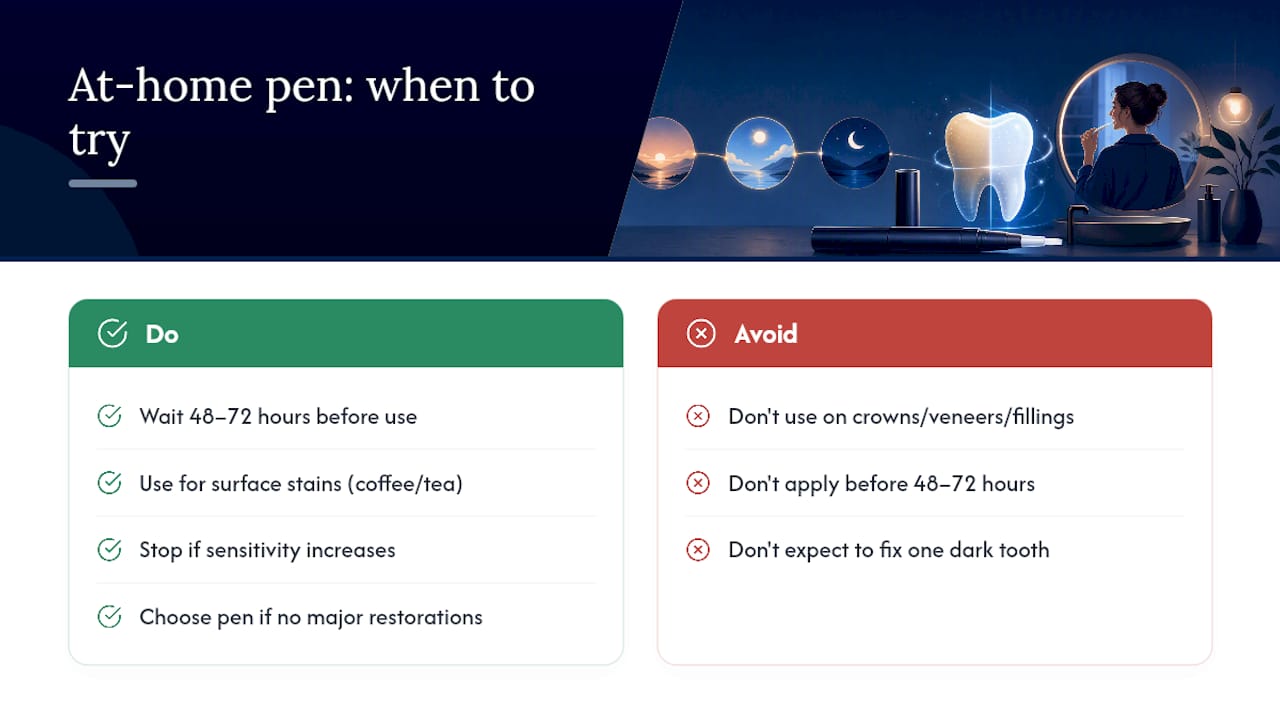
If your patchiness comes from dehydration or mild extrinsic staining rather than a crown, veneer, or intrinsic discoloration, an at-home touch-up can be a reasonable next step once you’ve cleared the 48 to 72 hour waiting window.
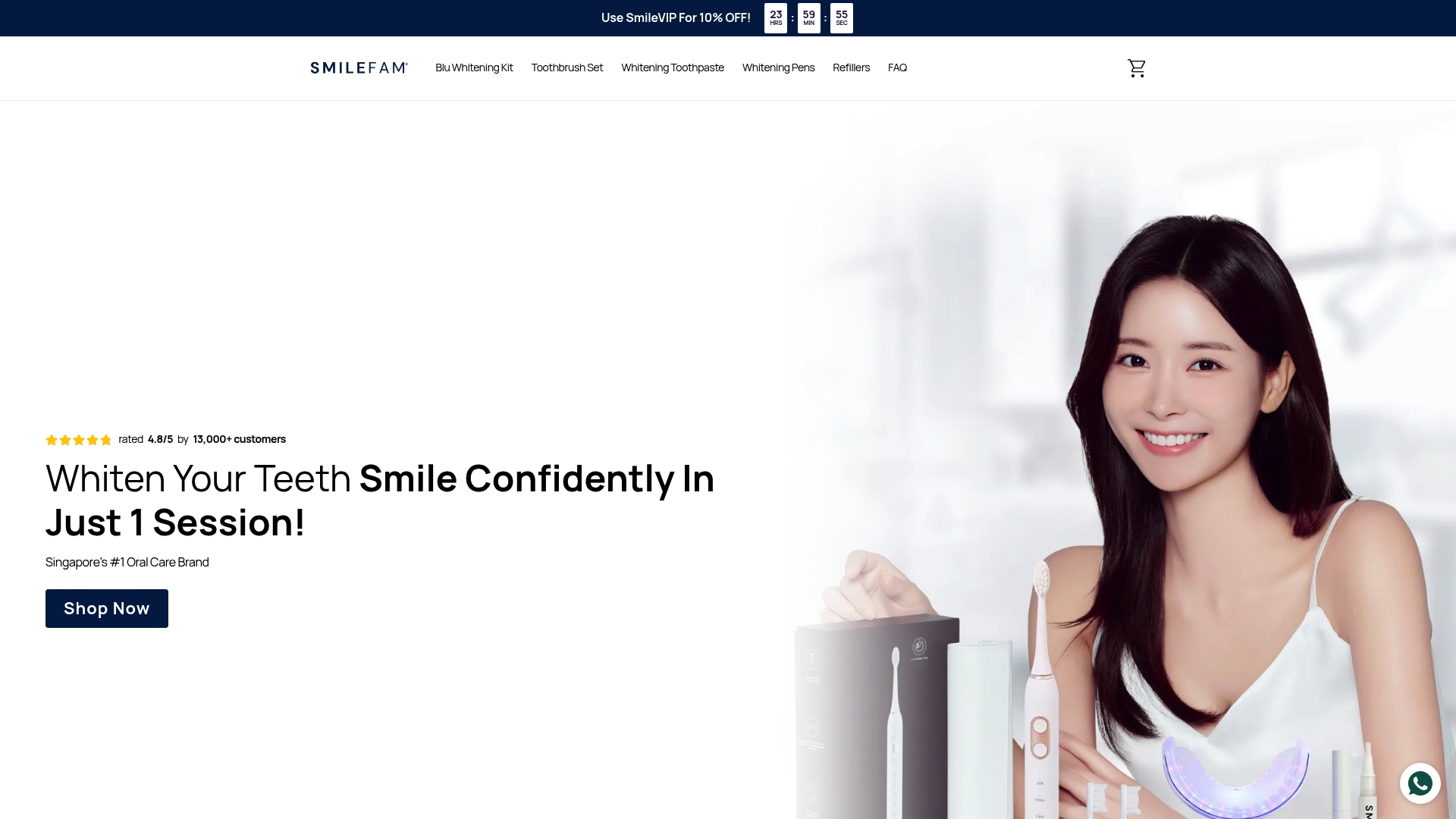
A whitening pen product is intended for that gap between “wait it out” and “book a dentist.” It’s formulated for sensitive gums and skips hydrogen peroxide, so it may suit people managing mild sensitivity from a previous session without adding to the irritation. It may fit those whose front teeth are free of major restorations and whose staining is mostly surface level, such as from coffee or tea, rather than the intrinsic kind that bleaching can’t touch.
Use it only after your rehydration window has passed, and stop if sensitivity increases rather than easing off. If your unevenness is tied to a filling, crown, or a single dark tooth, no pen is going to fix that. That’s a conversation for a dentist, not another round of gel. For readers who want a broader at-home routine, the premium travel kit pairs the pen with maintenance tools built for the same sensitive-gum use case.
A Realistic Take on Chasing the “Perfect” White
Most people panic the moment they see a streak or a spot right after whitening, and most of that panic is wasted energy. Your teeth aren’t uniform to begin with. Expecting a bleaching gel to erase every natural variation in your enamel overnight sets you up to see a “failure” where there isn’t one.
The bigger mistake I see people make isn’t waiting too long, it’s not waiting at all. Reapplying gel the same day you notice unevenness is how mild dehydration turns into real sensitivity. Give it the 48 to 72 hours. Take your comparison photos. If a dark tooth, a mismatched crown, or lingering pain shows up after that window, that’s your cue to see a dentist rather than experiment further on your own. If what’s left is just mild surface staining, a controlled at-home option can finish the job without the appointment.
— Lenney
This article is general information, not a substitute for advice from a qualified doctor. Consult a qualified healthcare professional about your own circumstances before acting on anything here.
Sources
- Singapore Dental Association — Tooth whitening/bleaching
- Legacy Dental — Uneven Teeth Whitening After Treatment
- TWC Dental — Teeth whitening Singapore: Dentists’ guide
- Johns Hopkins Medicine — Teeth whitening
- American Dental Association — Whitening