

If you’re searching for bluebackdental.com alternatives because you want whiter teeth without a clinic visit, the clearest answer is Getsmilefam’s BLU Whitening Technology kits. Blue Back Dental is a full-service practice in West Hartford and Avon, CT, offering in-office whitening alongside cleanings, Invisalign, and implants. That’s professional-grade care, but it comes with professional-grade pricing and scheduling. Getsmilefam delivers visible results in a single session using lab-approved, peroxide-free formulas that are safe for sensitive gums, and ships directly to your door anywhere in the U.S. Start with the BLU Whitening Toothpaste for daily maintenance, or go straight to the Snow Serum™ Whitening Pen for a faster touch-up.
One quick note before you shop: some searches for “blueback dental” surface results for blueDental, a B2B practice-management software with no consumer products. That’s a completely different category. This article covers at-home whitening products you can actually buy and use today.
Table of Contents
- What are the best bluebackdental.com alternatives for at-home whitening?
- How do at-home kits differ from in-office care like Blue Back Dental?
- How do you choose a safe, effective at-home whitening product?
- What ingredients are safe, and how do you avoid sensitivity?
- How do you use an at-home whitening kit safely?
- Why Getsmilefam is our recommended at-home alternative
- Key Takeaways
- The case for skipping the clinic for cosmetic whitening
- Getsmilefam: fast, safe whitening without the clinic visit
- Useful sources
What are the best bluebackdental.com alternatives for at-home whitening?
The at-home whitening market breaks into five practical categories. Here’s how they stack up on the dimensions that matter most to you.
| Category | Typical Price | Active Ingredient | Time to Results | Sensitivity Risk | U.S. Availability |
|---|---|---|---|---|---|
| BLU Tech kits (SmileFam) | $$ | Peroxide-free BLU tech | Single session | Low | DTC online |
| Whitening strips | $–$$ | Hydrogen peroxide (6–10%) | one to two weeks | Moderate | OTC + DTC |
| LED tray systems | $$–$$$ | Hydrogen peroxide or carbamide | several days to around two weeks | Moderate–High | DTC online |
| Whitening pens/serums | $ | Peroxide or peroxide-free | a few days | Low–Moderate | OTC + DTC |
| Whitening toothpaste | $ | Mild abrasives or peroxide-free | several weeks | Very low | OTC + DTC |
SmileFam (Getsmilefam): The Snow Serum™ Whitening Pen and BLU Whitening Toothpaste use proprietary BLU Whitening Technology, lab-approved ingredients, and enamel-safe formulas with no harsh peroxide. The brand backs purchases with a money-back guarantee and ships across the U.S. For anyone with sensitive gums, this is the category to start with.
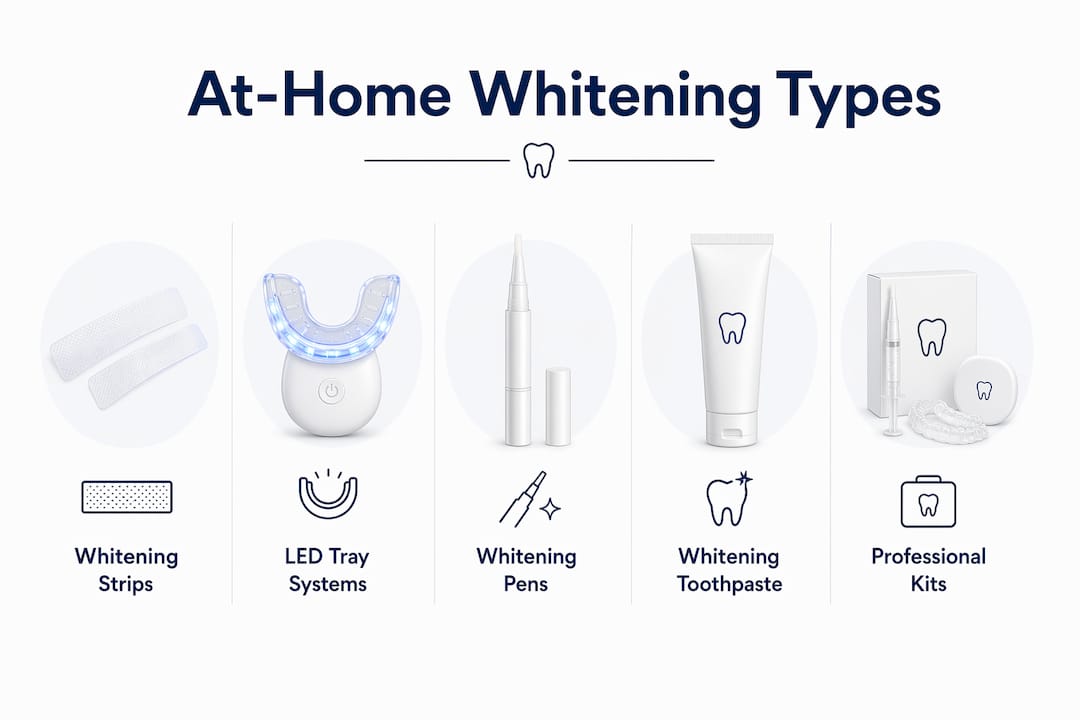
Whitening strips (e.g., Crest 3D Whitestrips by Procter & Gamble): Widely available at every drugstore and online. Hydrogen peroxide concentrations vary by product tier, and results typically take one to two weeks. Gum irritation is the most common complaint, especially with higher-concentration strips.
LED tray systems (e.g., Snow Teeth Whitening, AuraGlow): These pair a mouth tray with an LED light to accelerate peroxide activation. Results can be faster than strips, but the trays require a longer session time and the peroxide concentrations are higher, which raises sensitivity risk for some people.
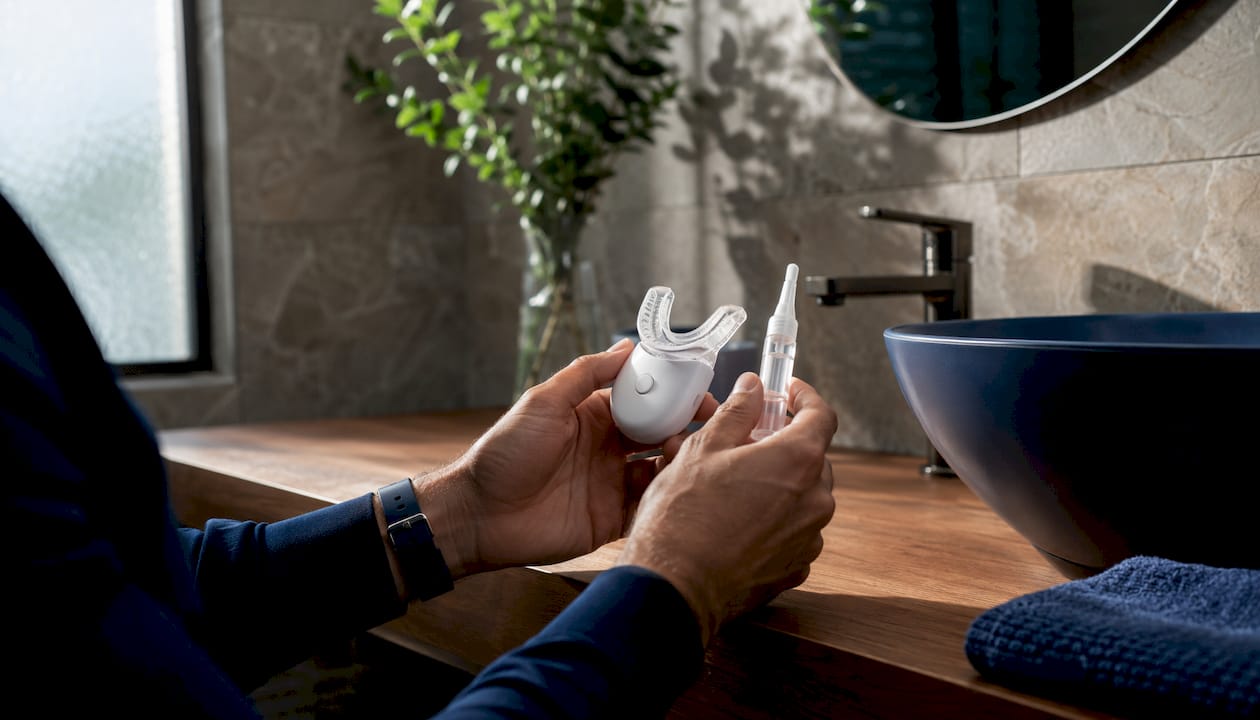
Whitening pens/serums: Portable and easy to use on the go. Peroxide-free versions are gentler; peroxide-based ones work faster. The Snow Serum™ Pen from Getsmilefam falls in this category with a peroxide-free formula.
Whitening toothpaste: The slowest route, but the safest for daily use. Philips Sonicare electric toothbrushes paired with a whitening toothpaste can accelerate surface stain removal. Getsmilefam’s BLU Whitening Toothpaste fits this slot for ongoing maintenance.
Ingredient transparency and verified clinical claims are stronger trust signals than marketing photography alone. Look for disclosed active ingredients and lab-tested formulas before you buy anything in any of these categories.
How do at-home kits differ from in-office care like Blue Back Dental?
The core tradeoff is simple: in-office treatment offers professional oversight and stronger chemistry; at-home kits offer lower cost, convenience, and the ability to repeat treatments on your own schedule.
Blue Back Dental’s in-house savings plan activates immediately, covers 12 months of services, and requires no insurance paperwork. That’s a genuine value for patients who need diagnostics, X-rays, or restorative work alongside whitening. In-office whitening also uses higher peroxide concentrations than any OTC product, which can produce faster single-session results under clinical supervision.
At-home kits, though, cost a fraction of a chairside appointment and let you whiten on your own timeline. For cosmetic maintenance, touch-ups between professional cleanings, or first-time whitening with no underlying dental issues, a well-formulated at-home kit covers most people’s needs. The benefits of at-home whitening include repeatability and the ability to build whitening into your daily routine rather than scheduling around clinic hours.
How do you choose a safe, effective at-home whitening product?
Prioritize ingredient transparency and clear usage instructions above everything else. A product that won’t tell you what’s in it isn’t worth the risk.
Before you buy, run through this checklist:
- Active ingredient disclosed? The label should name the whitening agent (hydrogen peroxide percentage, carbamide peroxide, or the specific peroxide-free technology) and its concentration.
- Clinical or lab claims backed up? Look for language like “lab-tested,” “clinically verified,” or specific testing references, not just “dentist-approved” with no supporting detail.
- Return policy in writing? A money-back guarantee with clear terms signals the brand stands behind the product.
- Sensitivity guidance included? Good products tell you what to do if irritation occurs, not just how to apply.
- Third-party testing or dentist recommendations? Independent validation matters more than in-house marketing claims.
- Available in the U.S. with clear shipping terms? Confirm the product ships domestically and that you understand delivery timelines.
Red flags: No ingredient list anywhere on the site or packaging; promises of overnight results with a single use; no return or refund policy; review sections with no verified purchase indicators. Modern design and transparent pricing are also signals that a brand takes its consumer relationships seriously.
What ingredients are safe, and how do you avoid sensitivity?
Choose products that disclose their active ingredients and concentrations. That single criterion filters out most of the low-quality options on the market.
Hydrogen peroxide is the most common whitening agent in OTC and professional products. It penetrates enamel to break up stain molecules, which is effective but can cause temporary sensitivity, especially at higher concentrations or with prolonged contact. Carbamide peroxide breaks down into hydrogen peroxide and urea, releasing the active agent more slowly, which some people tolerate better.
Peroxide-free technologies, like Getsmilefam’s BLU Whitening Technology, work differently. Rather than chemically bleaching the tooth, they target surface and near-surface stains using lab-approved compounds that don’t compromise enamel integrity. For anyone with existing sensitivity, thin enamel, or gum recession, this approach carries meaningfully lower risk. You can read more about safe whitening formulas and what the current ingredient standards look like.
Common sensitivity triggers include:
- Peroxide concentrations above 10% used without breaks
- Leaving strips or trays on longer than directed
- Whitening immediately after eating acidic foods
- Using whitening products on teeth with existing cracks or exposed roots
Pro Tip: Start with a whitening toothpaste or pen for the first week before committing to a full tray or strip kit. This lets your enamel adjust and helps you identify sensitivity before you’ve invested in a larger system.
See a dentist before whitening if you have uneven staining from restorations (crowns or veneers won’t whiten), severe sensitivity, active gum disease, or visible cracks. At-home products aren’t a substitute for a clinical evaluation in those cases.
How do you use an at-home whitening kit safely?
Follow the maker’s instructions exactly, but these steps apply across most kit types and reduce the chance of irritation.
- Brush and floss first. Clean teeth let the whitening agent contact the enamel directly rather than sitting on plaque.
- Do a patch check. Apply a small amount near the gumline and wait 10 minutes before a full session if you’re trying a new product.
- Stick to the recommended session length. Longer isn’t better. Most at-home kits are calibrated for 10–30 minute sessions.
- Space sessions out. Allow 48–72 hours between sessions if you notice any sensitivity, especially with peroxide-based products.
- Avoid staining foods and drinks for at least an hour after treatment. Coffee, red wine, and dark sauces can re-stain freshly treated enamel quickly.
- Use a desensitizing toothpaste on off days. Potassium nitrate-based formulas help calm nerve sensitivity between sessions.
Pro Tip: Stop immediately and contact a dental professional if you experience sharp, shooting pain or significant gum swelling. Mild tingling is common; sharp pain is not.
For a full step-by-step protocol, Getsmilefam’s guide to at-home whitening covers preparation, session timing, and post-care in detail.
Why Getsmilefam is our recommended at-home alternative
Getsmilefam earns the top recommendation here because BLU Whitening Technology is designed specifically for the two things most at-home buyers care about: speed and safety. The formula is peroxide-free, enamel-safe, and lab-approved, which means it’s accessible to people who’ve been turned away by sensitivity issues with strip or tray systems.
The product lineup covers both goals cleanly. For a fast, visible touch-up in a single session, the Snow Serum™ Whitening Pen is the starting point. For ongoing maintenance that builds results over time, the BLU Whitening Toothpaste fits into a daily brushing routine without any extra steps. Both ship to U.S. addresses, and the brand’s money-back guarantee removes the purchase risk.
If you’re comparing this to a clinic visit at Blue Back Dental or a similar practice, the honest answer is: they solve different problems. A clinic handles diagnostics, restorations, and clinical-grade bleaching. Getsmilefam handles cosmetic maintenance, touch-ups, and first-time whitening for people who want results without a waiting room.
Key Takeaways
At-home whitening with a peroxide-free, lab-approved kit like Getsmilefam’s BLU technology is the most practical alternative to in-office care for U.S. consumers focused on safety, speed, and cost.
| Point | Details |
|---|---|
| Best at-home pick | Getsmilefam’s BLU Whitening Technology kits are peroxide-free, enamel-safe, and ship across the U.S. |
| Top safety check | Confirm the active ingredient and concentration are disclosed before purchasing any whitening product. |
| Expected timeline | BLU tech targets visible results in a single session; peroxide strips typically take one to two weeks. |
| When to see a dentist | Stop at-home treatment and consult a professional if you have sharp pain, restorations, or active gum issues. |
| Getsmilefam starting point | Begin with the Snow Serum™ Whitening Pen or BLU Whitening Toothpaste, both backed by a money-back guarantee. |
The case for skipping the clinic for cosmetic whitening
Most people searching for dental alternatives aren’t avoiding dentists because they’re afraid. They’re avoiding them because a cosmetic touch-up doesn’t require a clinical appointment, and they know it.
The whitening industry spent years convincing consumers that professional-grade results required professional-grade access. That’s less true now than it’s ever been. Peroxide-free technologies like BLU Whitening have closed a meaningful part of the gap, and the ingredient transparency standards that serious DTC brands now follow make it easier to evaluate products the way you’d evaluate any other purchase.
What I’d push back on is the assumption that “more peroxide equals better results.” For most people with surface or near-surface staining, a well-formulated peroxide-free system used consistently outperforms a high-concentration strip used once and abandoned because of sensitivity. The approved whitening ingredients that hold up in 2026 aren’t necessarily the strongest ones. They’re the ones people actually finish using.
Getsmilefam: fast, safe whitening without the clinic visit
Getsmilefam offers something the clinic model can’t: whitening on your schedule, at a fraction of the cost, with no appointment required.
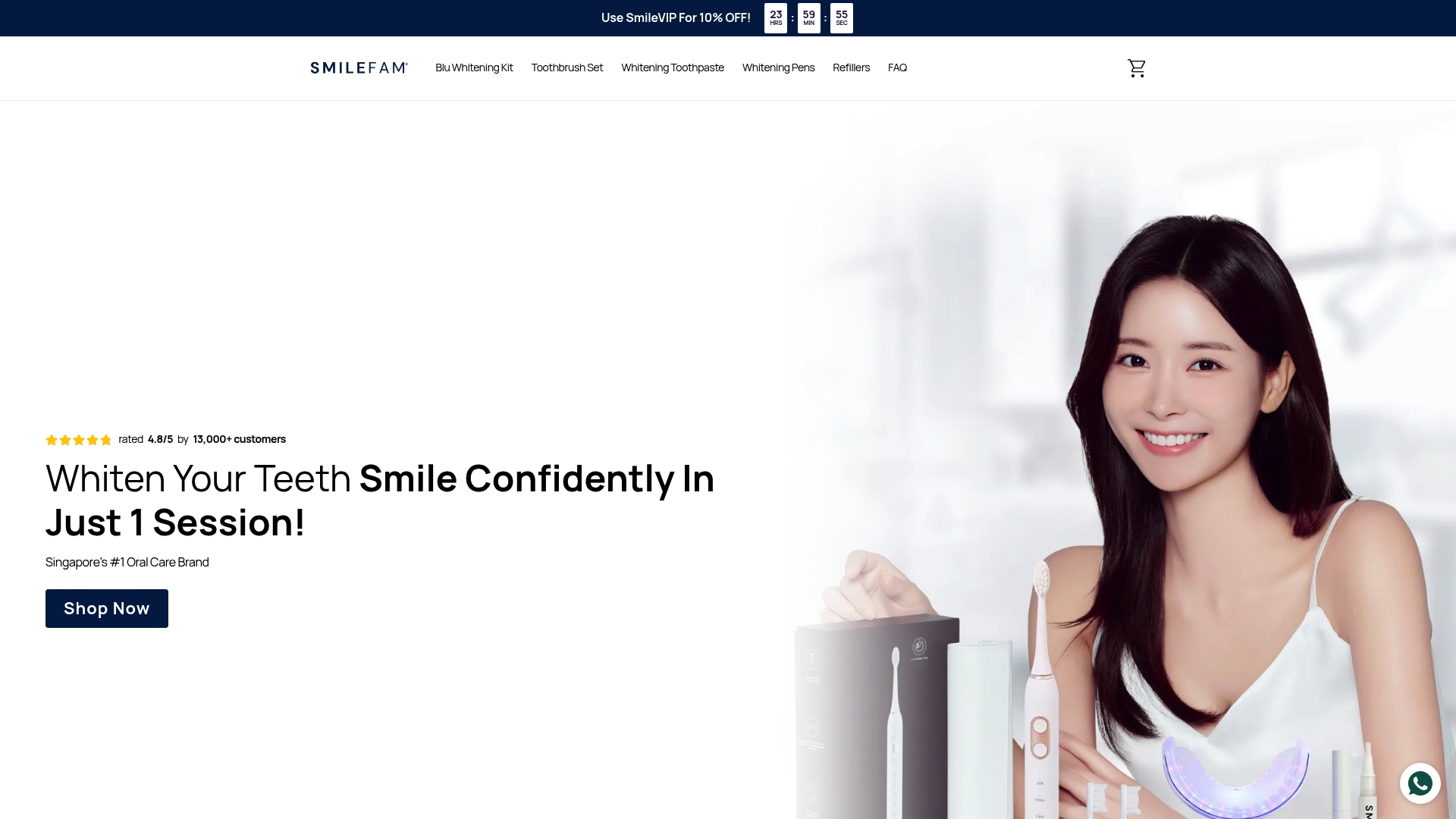
The BLU Whitening Technology behind every Getsmilefam product is lab-approved, peroxide-free, and formulated for sensitive gums. Results are designed to show in a single session, not after two weeks of strip applications. Every order ships to U.S. addresses, and the money-back guarantee means you’re not taking a risk.
Start with the BLU Whitening Toothpaste for a low-commitment entry point, or pick up the Snow Serum™ Whitening Pen if you want a faster, more targeted result. Visit getsmilefam.com to see the full product lineup and choose the option that fits your goals.
Useful sources
- Blue Back Dental — West Hartford & Avon, CT: The clinic’s own service pages, covering in-office whitening, general dentistry, and the in-house savings plan.
- Blue Back Dental In-House Savings Plan: Details on the membership structure, activation, and what’s covered versus excluded.
- SmileFam — Approved Whitening Ingredients: What’s Safe in 2026: Ingredient safety guidance and current standards for at-home whitening products.
- SmileFam — What Is a Safe Whitening Formula for Your Teeth?: Explains peroxide vs. peroxide-free technology and sensitivity mitigation strategies.
- LassoMD — Top Dental Websites 2026: Industry guidance on trust signals, transparent pricing, and what separates credible dental brands from low-quality ones.
- Clio Websites — Best Dental Websites: Covers ingredient transparency and verified clinical claims as consumer trust benchmarks.
- SaaSHub — blueDental Alternatives: Clarifies the distinction between B2B dental practice software and consumer oral care products.