

Clinically tested whitening refers to teeth whitening products that have been subjected to formal clinical studies evaluating their safety or effectiveness. The term sounds authoritative, but it carries a specific and often misunderstood meaning. Understanding what “clinically tested” actually guarantees, and what it does not, is the first step toward choosing a whitening product that delivers real results without harming your enamel. This guide breaks down the science, the marketing language, and the practical steps you need to make a confident, informed choice.
What does “clinically tested” really mean for whitening products?
“Clinically tested” and “clinically proven” are not the same thing. That distinction matters more than most people realize when they are standing in a store aisle or scrolling through product pages.
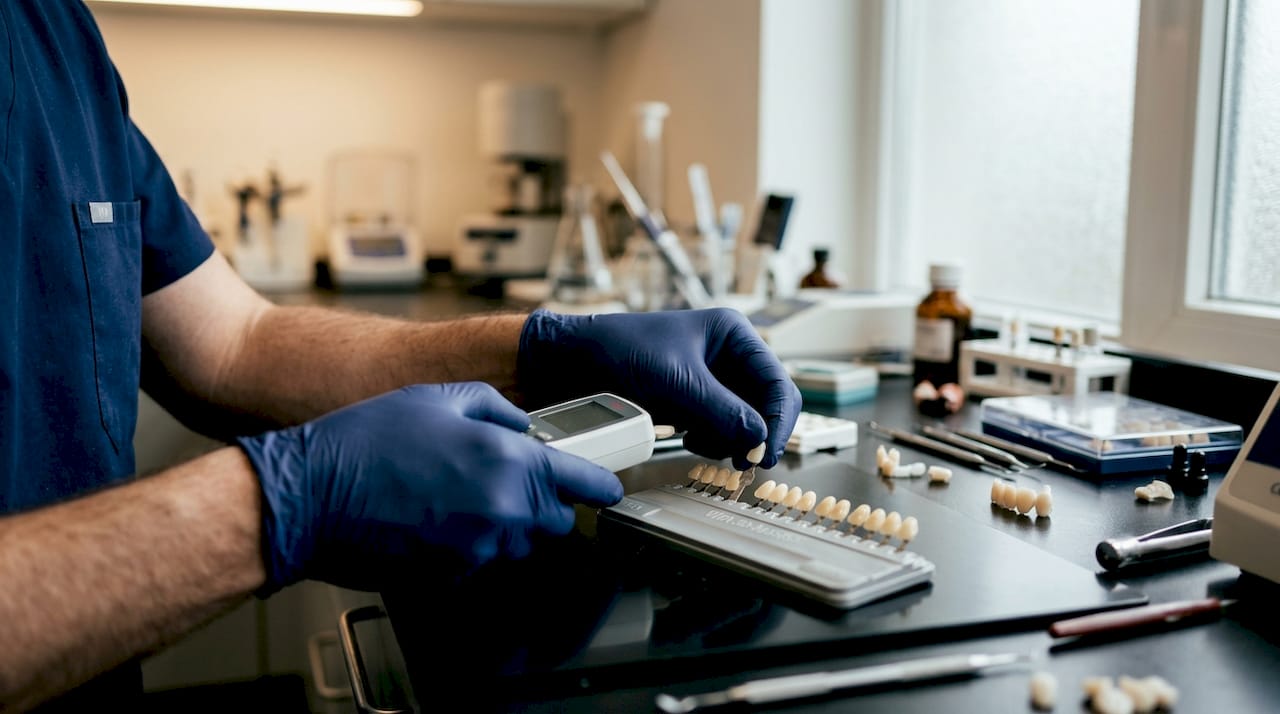
A product labeled “clinically tested” has participated in at least one clinical study. That study may have been small, unpublished, or focused only on safety rather than whitening results. The label does not confirm the product actually whitens teeth. “Clinically proven,” by contrast, requires demonstrated positive effectiveness supported by reliable, peer-reviewed evidence.
The Federal Trade Commission’s prior substantiation doctrine governs how brands make health and efficacy claims. Under this standard, a company must hold evidence supporting a claim before making it. Yet brands use “clinically tested” as a marketing tool to imply credibility, even when no efficacy data exists. Consumer misunderstanding of this gap is widespread. That misunderstanding benefits brands more than buyers.
Here is what clinical testing for whitening products typically assesses:
- Safety: Whether the formula causes enamel damage, gum irritation, or increased tooth sensitivity
- Tolerability: How participants rate discomfort during and after use
- Efficacy: Whether measurable color change occurs, and by how much
- Adverse events: Any unexpected reactions tracked across the study period
Pro Tip: When evaluating a whitening product, search for the phrase “peer-reviewed” or “published study” alongside the brand name. A study that appears in a dental journal carries far more weight than one cited only on the brand’s own website.
How do clinical tests for whitening products work?
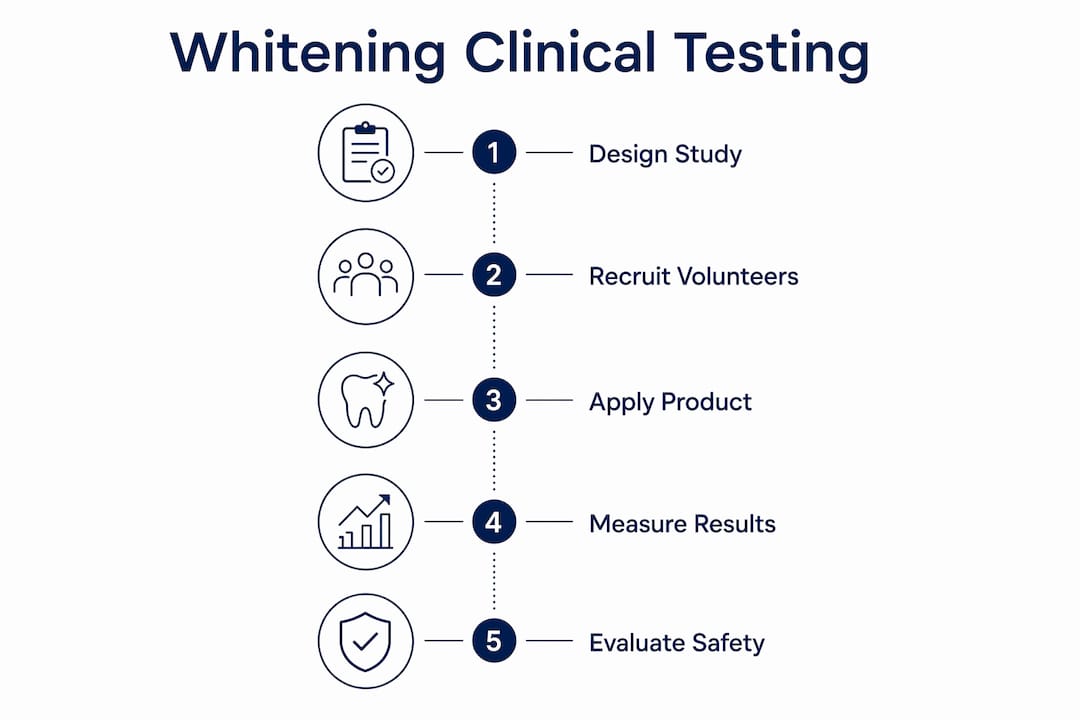
Clinical trials for whitening products follow a structured methodology designed to produce reliable, comparable results. Most well-designed trials use a randomized controlled format, where participants are assigned to either an active treatment or a placebo group without knowing which they received.
Common whitening agents tested
The two most studied active ingredients are hydrogen peroxide and carbamide peroxide. Hydrogen peroxide concentrations in at-home products typically range from 3% to 10%, while in-office treatments can reach 25% to 40%. Carbamide peroxide breaks down into hydrogen peroxide and urea in the mouth, releasing its active component more slowly.
How researchers measure color change
Shade improvement is measured using standardized tools:
- Vita shade guides: A physical scale ranking tooth color from lightest (A1) to darkest (D4), used by clinicians to record baseline and post-treatment shade
- Spectrophotometers: Digital devices that measure light reflected from the tooth surface and convert it into numerical color data
- Colorimetry metrics (ΔE00): A mathematical formula that calculates the total color difference between two measurements, giving researchers an objective, reproducible number
Safety monitoring in trials
Researchers track tooth sensitivity, gum irritation, and enamel surface changes throughout the study. Sensitivity is usually rated on a visual analog scale, and any adverse event is logged and compared against the placebo group. Trial duration for at-home products typically runs 10–21 days, with follow-up assessments at one, three, or six months to measure how long results last.
Pro Tip: Look for whitening products whose clinical data includes a six-month follow-up. Short-term shade gains that fade within weeks are common. Lasting results require a formula that penetrates the enamel structure, not just the surface.
| Measurement tool | What it measures | Why it matters |
|---|---|---|
| Vita shade guide | Visual tooth color ranking | Standardized baseline for comparison |
| Spectrophotometer | Reflected light from tooth surface | Objective, numerical color data |
| ΔE00 colorimetry | Total color difference between readings | Reproducible across different studies |
| Visual analog scale | Patient-reported sensitivity level | Tracks tolerability alongside efficacy |
What does the evidence say about efficacy and safety?
Recent clinical research gives a clear picture of what clinically validated whitening methods can and cannot deliver. The findings challenge several common assumptions about concentration, light activation, and sensitivity.
Efficacy findings from recent trials
A 2026 randomized controlled trial tested 3% hydrogen peroxide whitestrips on 70 adults over 14 days. Digital shade meter values improved from 72.86 to 78.73, with adverse events minimal and comparable to placebo. That result confirms low-concentration formulas can produce measurable whitening without significant risk.
A separate 2025 clinical assessment of low-concentration hydrogen peroxide gels found a mean color change of 5.3 after two weeks of at-home use. Sensitivity was mild and manageable across participants. Researchers also noted positive psychosocial impacts, meaning people felt more confident about their appearance after treatment.
A third study on take-home kits combining hydrogen peroxide with amorphous calcium phosphate (ACP) reported average 8.9 shades whiter teeth after 14 days, with 100% of participants reporting little-to-no sensitivity and good shade maintenance at six months. ACP acts as a desensitizer and may help remineralize enamel during the whitening process.
The concentration myth
Higher peroxide concentration does not equal better results. A randomized controlled trial comparing low, medium, and high concentrations of hydrogen peroxide (18%, 25%, and 40%) found no significant differences in whitening efficacy or sensitivity between groups. All three concentrations improved participants’ oral health-related quality of life equally. Choosing a stronger formula exposes you to more risk without delivering more whitening.
Light activation: the evidence gap
LED and laser light activation systems are marketed as whitening accelerators. The clinical evidence does not support that claim. Meta-analyses confirm that light activation provides no clinically meaningful improvement in bleaching outcomes and may increase sensitivity. Violet-light activation with carbamide peroxide shows some preliminary promise, but the evidence remains limited and requires further study. A product that skips light activation is not cutting corners. It is simply following the evidence.
Pro Tip: If a whitening product’s main selling point is its LED light, ask what published clinical data supports that specific light’s efficacy. Marketing images of glowing lights are not clinical evidence.
How to choose safe and effective clinically tested whitening products
Applying clinical knowledge to product selection protects your enamel and your wallet. The goal is to find a product with published evidence behind it, not just a label that sounds scientific.
Use these criteria when evaluating any clinically effective whitening solution:
- Look for peer-reviewed data. Published studies in dental journals like the Journal of Dentistry or Clinical Oral Investigations carry more weight than brand-funded white papers. Check whether the study measured both efficacy and safety.
- Check the active ingredient and concentration. Products in the 3%–10% hydrogen peroxide range have the strongest safety record for at-home use. Higher concentrations require professional supervision.
- Read the sensitivity disclosure. Reputable products disclose sensitivity rates from their clinical data. If a brand makes no mention of sensitivity, that is a red flag, not a reassurance.
- Assess enamel safety claims. Look for formulas that include remineralizing agents like ACP, fluoride, or potassium nitrate. These ingredients support enamel health during the whitening process. A guide on enamel protection while whitening can help you understand what to look for on a product label.
- Consult a dental professional before starting. People with existing sensitivity, crowns, veneers, or gum disease need personalized guidance. A dentist can confirm whether a specific product is appropriate for your situation.
- Follow the instructions exactly. Overuse is the most common cause of sensitivity and enamel damage in at-home whitening. Longer is not better.
Pro Tip: Before starting any whitening treatment, review a whitening safety checklist to confirm your teeth and gums are ready. Starting on compromised enamel or irritated gums amplifies every risk.
Experts consistently emphasize prioritizing published clinical data over labeling alone. A product that has been tested and published its results is making a verifiable claim. A product that only says “clinically tested” on its packaging is making a marketing claim.
Key Takeaways
Clinically tested whitening means a product was studied in a clinical setting, but only “clinically proven” confirms that the product actually delivers measurable whitening results backed by peer-reviewed evidence.
| Point | Details |
|---|---|
| “Tested” vs. “proven” | “Clinically tested” confirms a study occurred; “clinically proven” confirms positive results were published. |
| Low concentrations work | Studies show 3%–10% hydrogen peroxide delivers measurable whitening with minimal sensitivity. |
| Concentration does not drive results | Trials show 18%, 25%, and 40% peroxide produce equivalent whitening outcomes. |
| Light activation lacks evidence | Meta-analyses find LED and laser systems add no meaningful whitening benefit and may increase sensitivity. |
| Enamel-safe ingredients matter | Formulas with ACP, fluoride, or potassium nitrate protect enamel and reduce sensitivity during treatment. |
Why “clinically tested” deserves more skepticism than you give it
I have spent years reading dental research and watching the whitening market evolve. The single most persistent problem I see is not dangerous ingredients. It is the gap between what a label says and what the science actually shows.
The phrase “clinically tested” has become almost meaningless in consumer products. A brand can run a study on 12 people, never publish the results, and still print those two words on the box. That is not fraud in most jurisdictions. It is just marketing. The FTC’s prior substantiation standard requires evidence before a claim is made, but “clinically tested” is so vague that almost any study qualifies.
What I find genuinely encouraging is the quality of recent research on low-concentration formulas. The 2026 trial data on 3% hydrogen peroxide whitestrips, and the 2025 gel studies, show that you do not need aggressive chemistry to get real results. Moderate protocols balance efficacy, comfort, and long-term oral health better than high-concentration alternatives. That is not a compromise. That is the evidence-based answer.
My advice: treat “clinically tested” as a starting point for your research, not a conclusion. Ask for the study. Ask whether it was published. Ask what it measured. The brands with real evidence will point you to it. The ones without it will redirect you to testimonials.
— Lenney
Getsmilefam’s approach to safe, evidence-informed whitening
Choosing a whitening product backed by real science should not require a dental degree. Getsmilefam builds its whitening line around lab-approved ingredients, enamel-safe formulas, and technology developed to deliver visible results without the sensitivity risks that come with high-concentration peroxide products.
The BLU Teeth Whitening Kit uses Getsmilefam’s proprietary BLU Whitening Technology, developed in Singapore, to deliver results in a single session. The Snow Serum™ Whitening Pen offers a portable, daily-use option formulated for sensitive gums and enamel safety. Both products reflect Getsmilefam’s commitment to whitening that is grounded in safety standards, not just marketing language. If you want results you can trust, that is where to start.
FAQ
What is clinically tested whitening, exactly?
Clinically tested whitening means a product was used in a formal clinical study to assess safety or effectiveness. The label does not confirm the product actually whitens teeth, since the study may have been small, unpublished, or focused only on tolerability.
Is clinically tested whitening safe for sensitive teeth?
Products with low peroxide concentrations (3%–10%) and added desensitizing agents like ACP or potassium nitrate show strong safety profiles in clinical trials. Sensitivity is typically mild and manageable when instructions are followed correctly.
How many shades whiter can I expect from a clinically tested product?
Results vary by formula and individual tooth color. Clinical studies on low-concentration at-home gels report mean color changes around 5.3 shade units after two weeks, while ACP-enhanced kits report up to 8.9 shades of improvement.
Does a higher peroxide concentration whiten teeth faster?
No. A randomized controlled trial found no significant difference in whitening outcomes between 18%, 25%, and 40% hydrogen peroxide concentrations. Higher concentrations increase sensitivity risk without improving results.
Do LED lights make whitening treatments more effective?
Clinical meta-analyses show LED and laser light activation provides no meaningful improvement in whitening efficacy. Light-activated systems may actually increase tooth sensitivity compared to gel-only protocols.