

Professional-grade whitening is a dentist-supervised bleaching treatment that uses high-concentration hydrogen peroxide or carbamide peroxide to lighten teeth significantly faster and more dramatically than any over-the-counter product. Where a standard whitening strip delivers 2-3 shades of improvement over two to four weeks, in-office whitening achieves 6-10 shades in a single 60 to 90-minute session. The industry term for this category is “professional tooth whitening” or “chairside bleaching,” and understanding the distinction matters before you spend money on any whitening method. Brands like Zoom, Opalescence, and Pola Office represent the clinical standard, while the broader category also includes dentist-dispensed take-home kits with custom trays.
What is professional-grade whitening and how does it work?
Professional whitening works through a straightforward chemical reaction. Hydrogen peroxide or carbamide peroxide penetrates the porous outer layer of enamel and breaks apart the carbon-based molecular chains responsible for tooth discoloration. Those chains, called chromogens, accumulate from coffee, tea, red wine, tobacco, and aging. Once the peroxide molecules reach them, oxidation fragments the chromogens into smaller, colorless compounds.
The distinction between extrinsic and intrinsic stains matters here. Extrinsic stains sit on the enamel surface and respond quickly to bleaching. Intrinsic stains are embedded deeper within the dentin layer and require longer contact time or higher peroxide concentrations to address. Professional protocols are designed to handle both, which is why pre-treatment oral exams are standard practice. A dentist assesses enamel thickness, gum health, and stain type before selecting a protocol.
One detail most people miss: teeth dehydration during whitening causes an immediate brightening effect that looks more dramatic right after treatment than it will a few days later. As the teeth rehydrate, the shade settles slightly. This is normal and expected, not a sign the treatment failed.
- Hydrogen peroxide concentrations in professional settings range from 25% to 40%, compared to 3% to 10% in most OTC products.
- Carbamide peroxide breaks down into hydrogen peroxide and urea, releasing bleaching action more slowly and making it better suited for take-home tray protocols.
- Light or laser activation (used in systems like Zoom) accelerates the peroxide reaction but does not change the final shade outcome compared to peroxide alone.
- Gum barriers and desensitizing agents are applied before treatment to protect soft tissue and reduce post-treatment discomfort.
Pro Tip: Ask your dentist to apply a potassium nitrate desensitizing gel before and after your session. Studies show sensitivity lasts 24-48 hours post-treatment, and this single step significantly reduces that window.
What are the main types of professional whitening treatments?
Professional whitening treatments fall into three main categories, each with a distinct protocol, peroxide concentration, and time commitment. Knowing the difference helps you choose the right fit for your schedule, budget, and sensitivity threshold.
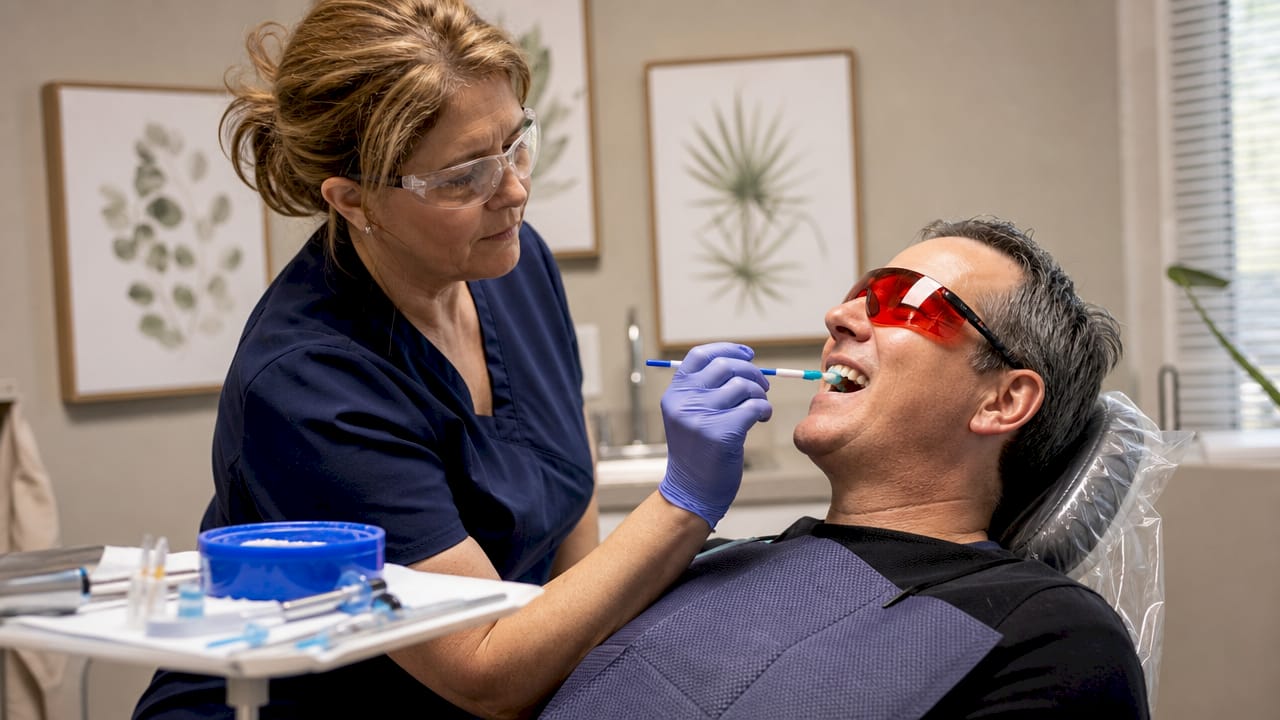
In-office whitening is the fastest option. A dentist applies a high-concentration gel (25% to 40% hydrogen peroxide) directly to the teeth, often activating it with a curing light. The session runs 60 to 90 minutes and delivers the most dramatic single-visit results. Zoom WhiteSpeed and Opalescence Boost are two of the most widely used in-office systems in the United States.
Dentist-supervised take-home kits use custom-fitted trays and a moderate-strength gel (10% to 22% carbamide peroxide or 6% to 10% hydrogen peroxide). You wear the trays for 30 to 60 minutes daily over one to two weeks. The results are comparable to in-office treatment but arrive more gradually, with less sensitivity for most patients.
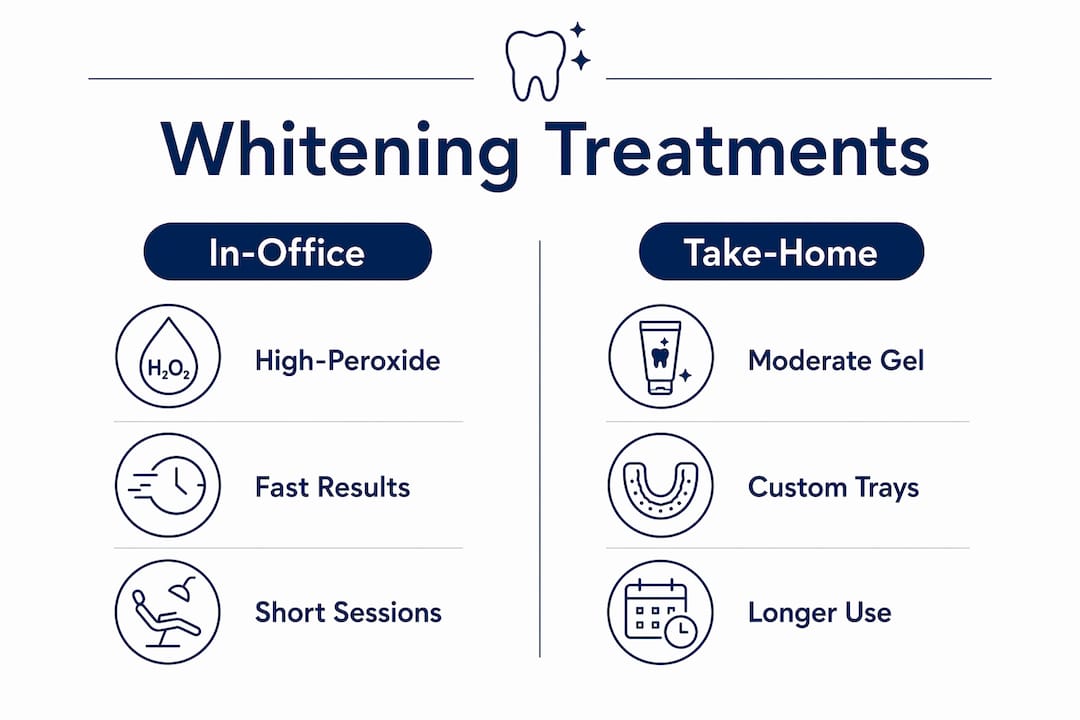
Combination protocols are the most effective whitening strategies for patients who want rapid initial results and long-term retention. An in-office session jumpstarts the whitening, and the take-home kit maintains the result over the following months.
| Treatment type | Peroxide concentration | Session duration | Expected improvement |
|---|---|---|---|
| In-office (chairside) | 25%–40% hydrogen peroxide | 60–90 minutes | 6–10 shades |
| Dentist take-home kit | 10%–22% carbamide peroxide | 30–60 min/day for 1–2 weeks | 4–8 shades |
| Combination protocol | Both (in-office + take-home) | Multi-session | 8–10+ shades, longer lasting |
| OTC strips/gels | 3%–10% hydrogen peroxide | 30 min/day for 14–30 days | 2–3 shades |
Pro Tip: If you have a specific event in two weeks, the combination approach gives you the best of both worlds. Start with an in-office session for the immediate lift, then use your custom trays nightly until the event.
What are the benefits of professional whitening over OTC products?
The benefits of professional whitening go beyond shade improvement. Professional whitening is a controlled, customized medical intervention that avoids the patchy results and chemical burns that OTC products can cause when misapplied. That distinction is not marketing language. It reflects a structural difference in how the treatment is designed and delivered.
- Speed and magnitude of results. No OTC product matches the 6-10 shade improvement achievable in a single professional session. For someone with moderate to severe staining, this difference is visible to others, not just in photographs.
- Customization for your anatomy. Custom trays fit your exact dental arch, so the gel contacts every surface evenly. Strip-based products leave gaps at the edges of teeth, producing uneven whitening that is especially noticeable on canines.
- Enamel and gum protection. Dentists apply protective barriers to gum tissue before treatment. OTC products offer no such safeguard, and improper use can cause chemical burns and enamel damage.
- Stain-type matching. A dentist identifies whether your discoloration is extrinsic, intrinsic, or caused by tetracycline antibiotics. Each type responds differently to bleaching, and a professional protocol is adjusted accordingly. Tetracycline staining, for example, requires extended treatment and may only partially respond.
- Longer-lasting results. Professional whitening combined with take-home maintenance sustains results for six to twelve months or longer, compared to four to eight weeks for most OTC products.
You can explore the full breakdown of safe vs. harsh whitening methods to understand what separates enamel-protective protocols from those that trade short-term brightness for long-term damage.
Is professional whitening safe? Side effects and who qualifies
Professional whitening is safe for most healthy adults when performed or supervised by a licensed dentist. That said, side effects are common and worth understanding before you commit to treatment.
- Tooth sensitivity is the most frequent side effect, affecting 60-80% of patients undergoing professional whitening. It typically peaks within 24 hours of treatment and resolves within one to two days. Desensitizing agents containing potassium nitrate or fluoride are applied before and after treatment to manage it.
- Gingival irritation occurs in 5-10% of cases, usually from gel contact with soft tissue. Dentists use rubber dams or liquid barriers to minimize this risk. When irritation does occur, it resolves within a few days without intervention.
- Age restrictions. Legal regulations prohibit cosmetic whitening under age 18 in many jurisdictions, and most dental associations recommend waiting until the permanent dentition is fully erupted. This is a clinical and legal standard, not just a guideline.
- Contraindications. Pregnant or breastfeeding individuals should postpone treatment. Patients with active cavities, cracked enamel, exposed roots, or severe gum disease are not candidates until those conditions are treated first.
- Cost and insurance. Professional whitening costs $300 to $800 per session and is rarely covered by dental insurance since it is classified as cosmetic. Health Savings Accounts (HSA) or Flexible Spending Accounts (FSA) may cover the cost with medical necessity documentation, so it is worth asking your provider.
If sensitivity is your primary concern, the Getsmilefam guide on avoiding teeth sensitivity during whitening covers both clinical and at-home strategies in detail.
What results can you realistically expect from professional whitening?
Most patients achieve between 6 and 10 shades of improvement from a single in-office session, though the actual result depends on baseline tooth color, stain type, and enamel porosity. Patients with yellow-toned staining from coffee or tea tend to respond best. Gray or brown discoloration from fluorosis or tetracycline responds more slowly and less completely.
One result that surprises many patients: dental restorations do not whiten. Crowns, veneers, bonding, and composite fillings remain their original shade after treatment. If you have visible restorations on front teeth, you may need to replace them after whitening to match your new tooth color. This is a real cost consideration that dentists should discuss during the pre-treatment exam.
Results from professional whitening typically last six to twelve months with proper maintenance. The factors that shorten longevity are predictable: daily coffee or tea consumption, red wine, tobacco use, and skipping maintenance treatments. The hybrid treatment approach of an in-office session followed by periodic at-home tray use is the most reliable strategy for keeping results beyond that window.
| Maintenance strategy | Frequency | Expected benefit |
|---|---|---|
| Custom tray touch-up | Every 3–6 months | Prevents shade regression |
| Whitening toothpaste | Daily | Removes surface stains before they set |
| Dietary modification | Ongoing | Reduces chromogen exposure |
| Professional cleaning | Every 6 months | Removes tartar that traps stains |
For a deeper look at what affects your whitening results longevity, Getsmilefam breaks down the variables that determine how long your results actually hold.
Key takeaways
Professional-grade whitening delivers 6-10 shades of improvement in a single session through dentist-supervised, high-concentration bleaching that no OTC product can replicate safely or at that speed.
| Point | Details |
|---|---|
| Speed and magnitude | In-office whitening achieves 6-10 shades in 60-90 minutes versus 2-3 shades from OTC strips over weeks. |
| Safety through supervision | Dentists apply gum barriers and desensitizing agents that OTC products do not include, preventing chemical burns. |
| Restorations don’t whiten | Crowns, veneers, and fillings stay their original shade, so replacement may be needed for uniform results. |
| Sensitivity is temporary | 60-80% of patients experience sensitivity, but it resolves within 24-48 hours with proper desensitizing protocols. |
| Maintenance extends results | A combination of in-office treatment and custom tray touch-ups sustains whitening for 6-12 months or longer. |
Why I think most people underestimate what professional whitening actually involves
People walk into a whitening consultation expecting a cosmetic service and walk out realizing it is closer to a medical procedure. That gap in expectations is where most disappointment happens, and I think it is worth being direct about it.
The biggest misconception I see is that professional whitening is just a stronger version of what you buy at the drugstore. It is not. The chemistry is similar, but the protocol is entirely different. A dentist examines your enamel thickness, maps your stain type, protects your gums, and adjusts concentration based on your sensitivity history. None of that happens when you apply a strip at home. The personalized supervision is not a luxury add-on. It is the mechanism that makes the result safe and predictable.
The second thing people get wrong is expecting uniform results regardless of their dental history. If you have bonding on your front teeth or a crown on a lateral incisor, those will not whiten. Your dentist should tell you this before treatment, not after. If they do not bring it up, ask directly.
My honest advice: do not skip the consultation to save time. That 20-minute exam is where you find out whether your expectations are realistic and whether your mouth is ready for treatment. Rushing past it is how people end up disappointed with results that were actually clinically normal.
— Lenney
Brighten your smile with Getsmilefam’s whitening solutions
Professional whitening gets you to your goal fast, but maintaining those results at home is where the real work happens. Getsmilefam’s BLU Teeth Whitening Kit uses proprietary BLU Whitening Technology developed in Singapore to deliver visible results without hydrogen peroxide, making it a strong maintenance option for anyone who has completed a professional treatment or wants a gentler starting point. The formula is enamel-safe and designed for sensitive gums, so it fits into your daily routine without the discomfort that high-peroxide products can cause. Pair it with the BLU Whitening Toothpaste to keep surface stains from resetting between sessions.
FAQ
What is professional-grade whitening exactly?
Professional-grade whitening is a dentist-supervised bleaching treatment using 25% to 40% hydrogen peroxide or carbamide peroxide to lighten teeth by 6-10 shades. It differs from OTC products in concentration, customization, and the protective protocols applied during treatment.
How long does professional whitening last?
Results from professional whitening typically last six to twelve months. Longevity depends on diet, tobacco use, and whether you follow up with a dentist-dispensed take-home maintenance kit.
Is professional whitening safe for sensitive teeth?
Professional whitening is safe for most patients with sensitivity when desensitizing agents are used before and after treatment. Sensitivity affects 60-80% of patients but resolves within 24-48 hours in most cases.
Will professional whitening work on crowns or veneers?
No. Dental restorations including crowns, veneers, and composite fillings do not respond to bleaching agents and remain their original shade after treatment. Patients with visible restorations may need replacement work to match their whitened natural teeth.
How much does professional whitening cost in 2026?
Professional in-office whitening costs between $300 and $800 per session and is rarely covered by dental insurance. HSA or FSA funds may apply with proper medical necessity documentation from your dentist.