

Elective teeth whitening is not proven to harm a developing baby, but the professional consensus still leans toward waiting. The ADA and similar bodies classify it as a cosmetic, non-essential procedure. Pregnancy brings enough gum sensitivity and uncertainty that most dentists recommend postponing it until after delivery.
TL;DR:
- Dentists generally advise postponing teeth whitening during pregnancy due to hormonal gum sensitivity and enamel softening from acid exposure.
- Most whitening products contain peroxide, which can cause increased gum irritation and sensitivity during pregnancy, especially at higher concentrations used in professional treatments.
- Safer alternatives include routine dental cleanings, whitening toothpaste, and lifestyle adjustments like reducing stain-causing foods or rinsing after vomiting.
- Breastfeeding allows for bleaching treatments since peroxide breakdown products are naturally present in breast milk at low levels, but waiting until after weaning is an option for complete certainty.
- Always consult your dentist or OB/GYN before whitening during pregnancy or postpartum to confirm timing, ingredient safety, and appropriate protective measures.
Table of Contents
- What dental and health organizations advise about teeth whitening during pregnancy
- How teeth whitening works and why the ingredients matter
- Pregnancy-specific oral changes that make whitening riskier
- Safer ways to brighten your smile while pregnant
- Breastfeeding and postpartum: when whitening is usually fine
- Questions to ask your dentist or OB/GYN before whitening
- What SmileFam’s approach means for safe at-home whitening
- Weighing the desire for a brighter smile against pregnancy caution
- A safer next step once your dentist gives the green light
- Sources
What dental and health organizations advise about teeth whitening during pregnancy
Professional guidance on this question is remarkably consistent. Because whitening does nothing for your health and everything for your appearance, dentists treat it the same way they’d treat any optional procedure with unproven fetal safety data: better to wait than to guess.
The ADA frames whitening as elective and generally discourages it during pregnancy, while consumer health resources echo the same caution. This is the precautionary principle in action: when solid clinical data doesn’t exist, and the procedure isn’t medically necessary, the default is to defer rather than risk it.
Here’s how the major voices line up:
- ADA: Considers whitening cosmetic and non-urgent; advises postponing elective dental work during pregnancy when possible.
- Colgate and other clinical resources: Recommend deferring bleaching treatments and sticking to routine dental care instead.
- MotherToBaby: Notes the caution stems from a lack of pregnancy-specific trial data, not evidence of actual harm.
None of these organizations claim whitening definitely hurts a fetus. They simply have no reason to recommend it now when it can safely happen later.
How teeth whitening works and why the ingredients matter
Most whitening products rely on hydrogen peroxide or carbamide peroxide, which breaks down into hydrogen peroxide once applied. These compounds oxidize the stain molecules trapped in your enamel, lightening them without physically scrubbing anything away. That’s the whole mechanism: chemistry, not abrasion.
Concentration is where things diverge sharply between settings:
- In-office treatments often use relatively high peroxide concentrations, applied under professional supervision with gum protection.
- At-home kits and strips typically use much lower peroxide concentrations for shorter contact times.
- Toothpaste-based whitening uses no peroxide bleaching at all, relying instead on mild abrasives to lift surface stains.
Topical peroxide breaks down largely at the site of contact, so systemic absorption is minimal. Even so, clinicians stay cautious with pregnant patients because gum tissue is more permeable and irritable during pregnancy, and higher concentrations increase the odds of a gum burn or sensitivity flare that’s simply not worth risking for a cosmetic outcome.
Pregnancy-specific oral changes that make whitening riskier
Pregnancy changes your mouth in ways that have nothing to do with whitening but everything to do with how your mouth might react to it. Three shifts matter most:
- Hormonal gum sensitivity. Rising progesterone and relaxin loosen and inflame gum tissue, which is why pregnancy gingivitis affects a large share of expectant patients. Inflamed gums bleed more easily and absorb irritants more readily, exactly the tissue you don’t want exposed to bleaching gel.
- Morning sickness and acid exposure. Frequent vomiting bathes teeth in stomach acid, softening enamel temporarily. Whitening on top of acid-softened enamel can worsen sensitivity and, in theory, make stain removal less predictable.
- Heightened whitening side effects. Even outside pregnancy, whitening commonly causes temporary tooth sensitivity and gum irritation. Layer that onto already-tender pregnancy gums, and a normally mild side effect can feel a lot more uncomfortable.
None of this proves whitening is dangerous. It just stacks several small risk factors on top of a procedure you don’t strictly need right now.
Safer ways to brighten your smile while pregnant
You don’t have to choose between a dull smile and a risk you’re not comfortable with. Several lower-risk options can genuinely improve your smile’s appearance without touching peroxide chemistry at all.
- Professional cleaning and polishing. A dental hygienist can remove surface stains and plaque buildup safely at any point in pregnancy, and it often makes teeth look noticeably brighter on its own.
- ADA-accepted whitening toothpaste. These lift surface stains through gentle abrasion rather than bleaching. Skip anything marketed as activated charcoal, since overly abrasive formulas can wear down enamel with regular use.
- Cut back on staining culprits. Coffee, tea, red wine, and dark berries are the usual offenders; drinking through a straw limits contact with your front teeth.
- Rinse after vomiting. Swish with water rather than brushing immediately, since brushing right after a vomiting episode can grind softened enamel.
- Upgrade your daily routine. An electric toothbrush, consistent flossing, and sugar-free gum after meals all help teeth look their cleanest between dental visits.
Pro Tip: Book a cleaning early in your second trimester if you can. Morning sickness has usually eased by then, and it’s often the most comfortable window for a longer dental appointment.
Breastfeeding and postpartum: when whitening is usually fine
Breastfeeding changes the calculus considerably. The LactMed database notes that peroxide breakdown products already exist naturally in breast milk at low levels, and topical whitening doesn’t meaningfully raise that exposure. That’s a very different risk profile from pregnancy.
- Chemically, there’s little reason to avoid whitening while nursing. Absorption through gum tissue is limited, and what little enters circulation breaks down into compounds your body already handles.
- Practically, some people still wait. If you’d rather remove any uncertainty, holding off until you’ve weaned is a reasonable, low-stress choice.
- Either way, loop in your dentist first, especially if you’re also managing sensitive gums from pregnancy that haven’t fully settled yet.
Questions to ask your dentist or OB/GYN before whitening
A short conversation before you commit to any timeline saves guesswork later. Bring these questions to your next appointment:
- Can this wait? Ask whether your gum health and stain severity make now a bad time, or whether it’s simply preference either way.
- What’s actually in the product? Get the specific peroxide concentration, contact time, and whether gum barriers or lower-strength gels will be used.
- What protective steps will you take? Confirm gum shields, limited application windows, and monitoring for irritation during treatment.
- Can you put the plan in writing? A quick note on recommended timing and alternatives gives you something concrete to reference later, especially if you see a different provider postpartum.
What SmileFam’s approach means for safe at-home whitening
Getsmilefam builds its at-home products, including the Snow Serum Whitening Pen, around BLU Whitening Technology, a formula designed to skip hydrogen peroxide entirely in favor of enamel-friendly ingredients aimed at sensitive gums. That peroxide-free positioning is exactly the kind of detail worth verifying yourself rather than taking on faith.
Before using any at-home kit, whether it’s ours or anyone else’s, ask for the specifics: third-party lab results, a full ingredient list, and clear sensitivity guidance. A pre-use checklist helps you compare claims against what’s actually documented.
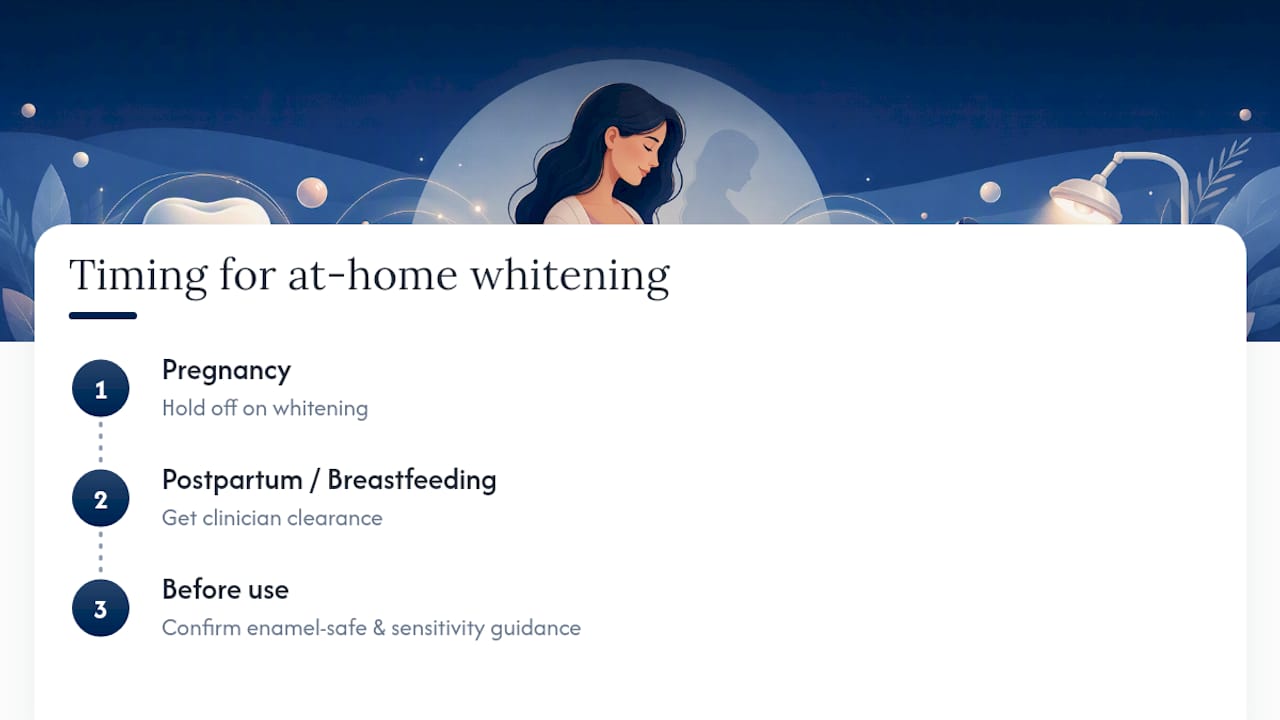
If you’re pregnant, the safest move is still to hold off on any whitening product, peroxide-free or not, until your dentist gives the go-ahead. If you’re postpartum or breastfeeding and cleared to proceed, look specifically for enamel-safe claims and sensitivity guidance before you buy, and confirm your clinician is comfortable with the timing.
Weighing the desire for a brighter smile against pregnancy caution
Wanting a whiter smile while you’re pregnant isn’t vanity. It’s a normal response to a body that’s changing in a hundred ways you didn’t fully choose. Postponing whitening doesn’t mean giving up on that goal. It means sequencing it correctly.
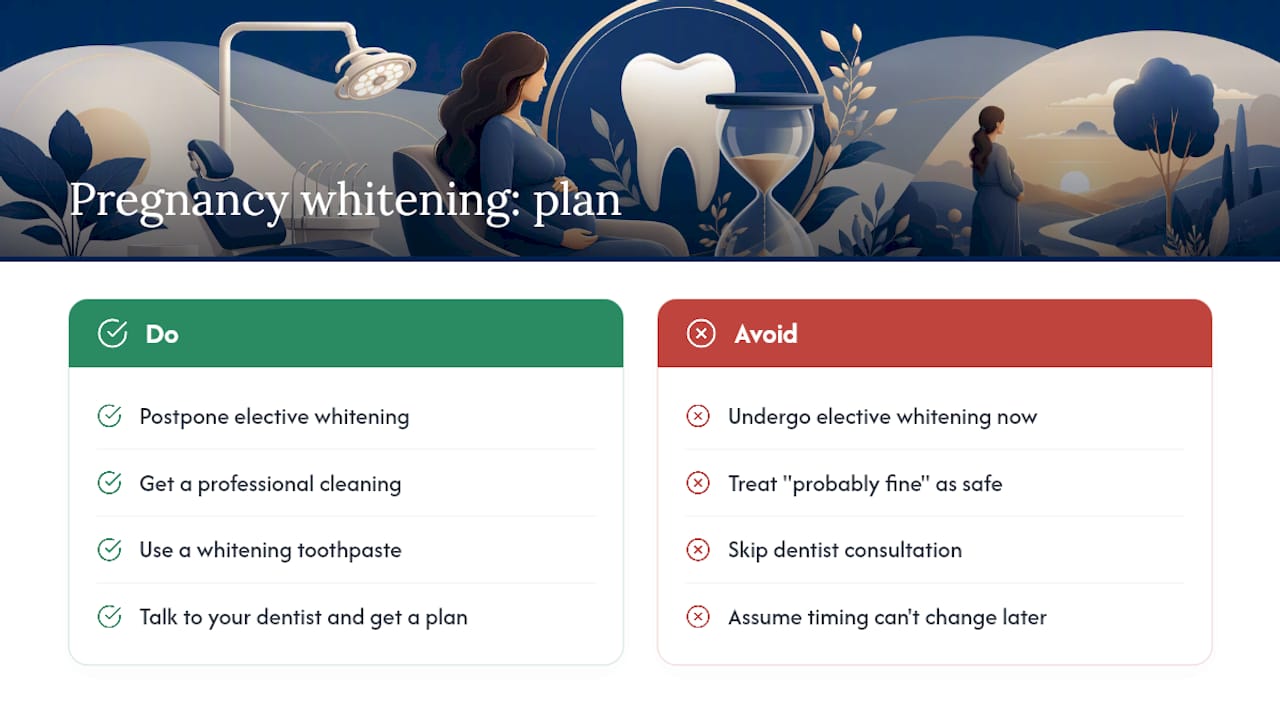
The honest reading of the evidence is that whitening probably isn’t dangerous in the way some warnings imply, but “probably fine” isn’t the same standard doctors use for anything elective during pregnancy. When there’s no urgency and no proven necessity, waiting costs you nothing but a few months.
In the meantime, a cleaning, a decent whitening toothpaste, and a few habit tweaks will do more for your smile than most people expect. Talk to your dentist, get a plan in writing, and revisit whitening when the timing actually works in your favor.
— Lenney
A safer next step once your dentist gives the green light
If you’ve already talked to your dentist and you’re past pregnancy or cleared to whiten while breastfeeding, Getsmilefam’s whitening pens are built specifically for people who want results without harsh chemical exposure. BLU Whitening Technology skips hydrogen peroxide altogether, which matters most for anyone still nursing a sensitive-gum issue left over from pregnancy.
The Premium Travel Kit comes with a 1 year warranty so you’re not stuck guessing whether it’s worth the cost. Check the ingredient list, confirm your dentist is comfortable with the timing, and if everything lines up, order a kit and start once you’re actually cleared to.
This article is general information, not a substitute for advice from a qualified doctor. Consult a qualified healthcare professional about your own circumstances before acting on anything here.
Sources
- ADA: Whitening (oral health topic)
- LactMed / NCBI: Drug and Lactation Database entries (overview)
- MotherToBaby blog: Whitening teeth during pregnancy or breastfeeding
- Colgate: Teeth whitening when pregnant: Is it safe?