

Yes, genetics can set your baseline tooth color. The shade of your dentin and the thickness of your enamel are largely inherited, which is why some families run “yellower” than others. But genes rarely act alone. Aging, staining habits, and childhood exposures layer on top of that inherited baseline, which is why two siblings with the same DNA can still end up with noticeably different smiles.
TL;DR:
- Enamel thickness and dentin color, both inherited traits, largely determine natural tooth shade and vary significantly among individuals.
- Environmental factors like diet, smoking, medication, and aging largely influence tooth discoloration, often more than hygiene habits.
- Structural hereditary conditions such as amelogenesis imperfecta and dentinogenesis imperfecta can cause different oral health issues that require specialized treatment.
- Whitening treatments are most effective on surface stains or mild intrinsic discoloration, but may be less predictable when dentin exposure is the primary cause.
- A dental exam and diagnostic tools should precede any whitening to identify structural issues and prevent ineffective or damaging treatments.
Table of Contents
- Why Teeth Look Yellow: Enamel, Dentin, and Everyday Staining
- The Biology Behind Inherited Tooth Color
- When Yellow Teeth Signal a Real Hereditary Disorder
- Real Fixes for Yellow Teeth, From Whitening to Veneers
- Checklist: Is Your Yellow Tint Genetic or Acquired?
- Red Flags That Mean You Should See a Dentist Now
- What Dentists Wish More Patients Understood First
- Genes Are the Starting Point, Not the Whole Story
- A Safe At-Home Option Once Your Dentist Gives the Go-Ahead
- Sources
Why Teeth Look Yellow: Enamel, Dentin, and Everyday Staining
Every tooth is a two-layer system, and that layering is the whole story behind yellow teeth. The outer layer, enamel, is naturally translucent, almost like frosted glass. Underneath sits dentin, which is naturally yellow. When enamel is thick and opaque, it masks the dentin. When enamel is thin or worn, more of that yellow dentin shows through. Enamel thickness and translucency directly determine how much yellow dentin becomes visible, and that alone explains a lot of what people assume is “bad” tooth color.
On top of that structural baseline, everyday life adds its own layer of discoloration. Common culprits include:
- Coffee, tea, red wine, and dark berries, which stain enamel from the outside
- Tobacco use, one of the fastest ways to deepen surface staining — see this stop smoking glow up guide for tips to look better and feel better
- Tetracycline antibiotics taken during tooth development, which cause intrinsic gray or yellow banding
- Excess fluoride exposure in early childhood, which can cause fluorosis mottling
- Physical trauma to a tooth, which sometimes darkens it from the inside out
- Normal aging, since enamel thins and dentin darkens over decades
Here’s the part worth sitting with: a lot of tooth discoloration is purely environmental, tied to diet, smoking, medication, or age rather than hygiene. A yellow smile is not automatically a poorly brushed one.
The Biology Behind Inherited Tooth Color
Your baseline shade gets decided before you ever pick up a toothbrush. Two structural traits are passed down through families: how thick your enamel grows and how much natural pigment sits in your dentin. Thinner enamel with denser yellow dentin underneath reads as a warmer, more yellow smile, even on a perfectly healthy tooth. This isn’t guesswork. It comes down to specific genes.
Researchers have linked enamel formation to genes like AMELX and ENAM, which guide how enamel mineralizes as teeth develop, while DSPP plays a central role in dentin structure. But treat this as a partial map, not a prediction engine. Oral health traits generally reflect complex gene-environment interactions, and candidate genes like these influence structure without offering reliable, testable predictions about someone’s future tooth color. Nobody is ordering a genetic panel to figure out if their teeth will look yellow.
What actually happens is more layered than a simple inheritance chart. Fluoride exposure in early childhood, antibiotic use during tooth formation, and even nutrition during the years enamel is mineralizing can all interact with a person’s genetic starting point. Two people with similar genes but different childhoods can end up with visibly different shades. Dental researchers and clinicians frame genetic contributions as multifactorial, meaning they need to be read alongside environmental exposures like fluoride and daily oral hygiene, not as a standalone verdict. Genetics loads the dice. Life rolls them.
When Yellow Teeth Signal a Real Hereditary Disorder
Most genetically influenced yellow teeth are just normal variation, the kind that runs in families without ever being a medical problem. But a small number of inherited conditions go further, changing the tooth’s actual structure and not just its shade. Two are worth knowing by name.
- Amelogenesis imperfecta: a group of inherited disorders that disrupt enamel formation, leaving teeth thin, pitted, or discolored, often with noticeable sensitivity to temperature.
- Dentinogenesis imperfecta: caused by mutations, including in the DSPP gene, that leave teeth looking opalescent, amber, or gray-yellow. Affected teeth are also structurally weaker, prone to wear and fracture, not just discolored.
The distinction matters for treatment, not just diagnosis. A tooth with normal enamel that happens to look yellow can usually handle cosmetic whitening without issue. A tooth weakened by dentinogenesis imperfecta cannot always tolerate the same approach, and pushing cosmetic treatment onto a structurally compromised tooth risks uneven results or damage. This is exactly why a dental exam, not a mirror, is the right starting point before choosing any whitening path.
Real Fixes for Yellow Teeth, From Whitening to Veneers
The right fix depends entirely on what’s causing the color, and that split runs along one line: is the yellow sitting on the surface, or is it baked into the dentin? Surface stains from coffee, tea, or tobacco respond well to whitening because you’re bleaching the outer layer. Yellow that comes from thin enamel exposing dentin underneath responds less predictably, because there’s no stain to lift, just biology to work around.
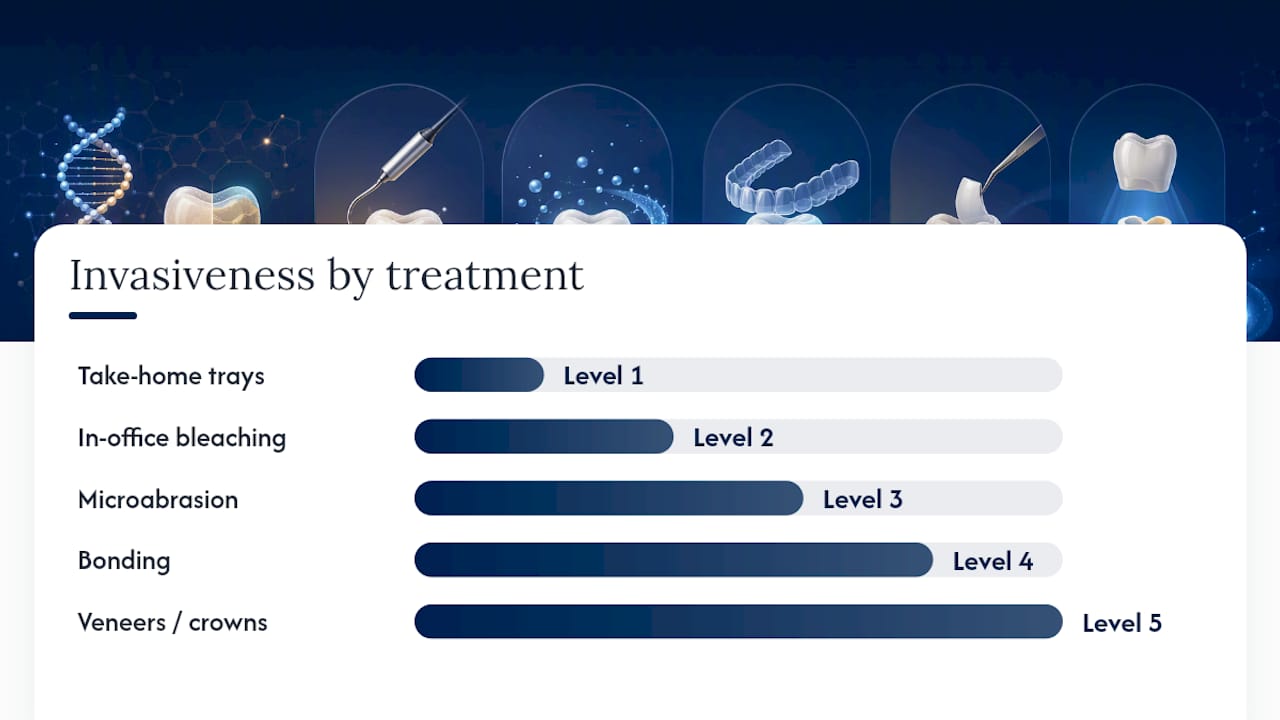
- Professional in-office bleaching works fastest for surface and mild intrinsic staining, using higher-concentration agents under a dentist’s supervision.
- Custom take-home trays offer a slower but often gentler route to the same result, useful for people with sensitivity concerns.
- Microabrasion targets superficial enamel discoloration, like faint fluorosis mottling, by lightly polishing away the outer layer.
- Bonding covers deeper discoloration with a tooth-colored resin, a good middle option when whitening alone won’t move the shade enough.
- Veneers or crowns are the answer when enamel is thin, uneven, or structurally compromised, since they replace the visible surface rather than trying to bleach through it.
Pro Tip: Ask your dentist to name the actual cause before you commit to a treatment. Whitening a dentinogenesis imperfecta tooth or a heavily worn enamel surface can produce blotchy, disappointing results, while the same treatment on ordinary staining works beautifully.
Cost, sensitivity, and longevity all scale with how invasive the option is. Whitening is cheapest and reversible if you stop. Veneers cost more and last years, but they’re permanent changes to the tooth. A dentist’s exam, not personal preference, should decide which lane you’re in. For more on where whitening realistically helps, see what really works for yellow teeth.
Checklist: Is Your Yellow Tint Genetic or Acquired?
A few quick signals can point you toward heredity before you ever sit in a dental chair.
- Your teeth have looked yellow since childhood, not just the last few years.
- Parents or siblings show a similar, even yellow tone rather than isolated stains.
- The color is uniform across most teeth, not spotty or concentrated on a few surfaces.
- You notice the enamel looks thin, glassy, or slightly translucent at the edges.
Bring old family photos and a rundown of any childhood antibiotics or fluoride exposure to your appointment. A dentist may also want X-rays to check enamel thickness and dentin structure, or a referral if a structural disorder is suspected. Diagnostic tools like these separate ordinary genetic variation from something that needs a different treatment plan entirely.
Red Flags That Mean You Should See a Dentist Now
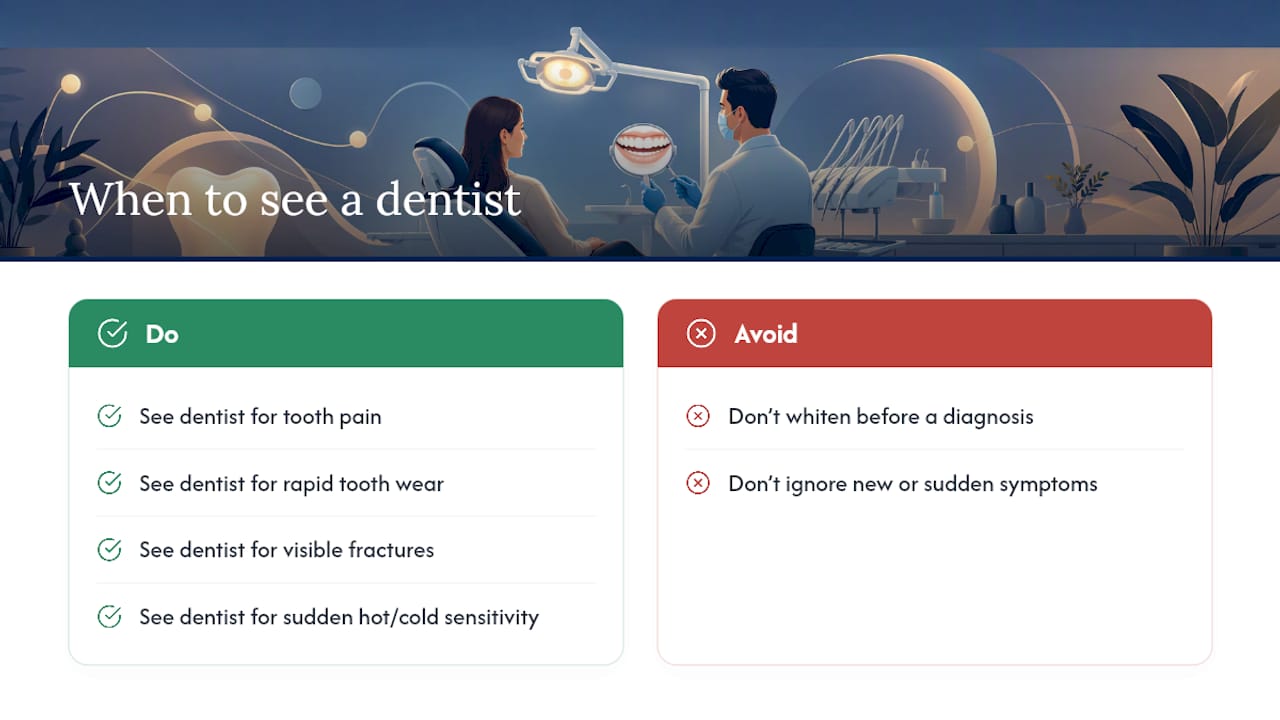
Some signs shouldn’t wait for a routine cleaning. Pain, rapid tooth wear, visible fractures, or sudden sensitivity to hot and cold all point to something beyond cosmetic discoloration, and in children, unusual enamel texture alongside yellow or gray teeth can flag a developmental disorder worth catching early. If your concern is purely cosmetic and your teeth have looked the same color since childhood, there’s no emergency, but diagnosis should still come before whitening. A general dentist can often handle the workup, though structural cases sometimes call for a pediatric dentist or, in syndromic presentations, a geneticist.
What Dentists Wish More Patients Understood First
Dentists tend to stage treatment for a reason: diagnose first, treat any disease or sensitivity second, and only then discuss cosmetic goals. Skipping straight to whitening on a tooth with an undiagnosed structural issue can backfire, producing uneven color or heightened sensitivity when enamel or dentin defects are already present. If your dentist orders X-rays before recommending a shade change, that’s not overcaution. It’s the sequence working as intended.
Genes Are the Starting Point, Not the Whole Story
Healthy teeth are allowed to be yellow. That’s a fact worth internalizing before chasing an artificially white shade that was never your natural baseline. Cosmetic whitening is a legitimate choice, but it works best after a dentist has confirmed there’s nothing structural underneath the color. Skip that step and you’re guessing.
— Lenney
A Safe At-Home Option Once Your Dentist Gives the Go-Ahead
If a dental exam has confirmed your yellowing is surface-level or mild intrinsic staining rather than a structural issue, an at-home option can make sense as the next step. Getsmilefam’s Snow Serum™ Whitening Pen uses BLU Whitening Technology built around enamel-safe, peroxide-free ingredients, formulated for people with sensitive gums who still want a visible result without an in-office bill.
It’s not a fix for teeth weakened by conditions like dentinogenesis imperfecta or amelogenesis imperfecta. Those cases need restorative care, not a whitening pen, and Getsmilefam is upfront about that limit. For readers who travel often or want a maintenance routine after their first whitening session, the Premium Travel Kit bundles refills for ongoing touch-ups. If your dentist has cleared you and you’re dealing with garden-variety extrinsic staining, start with the Snow Serum Whitening Pen and see the difference after a single session.
This article is general information, not a substitute for advice from a qualified doctor. Consult a qualified healthcare professional about your own circumstances before acting on anything here.
Sources
- Tooth Discoloration: Causes & Treatment — Cleveland Clinic
- Dentinogenesis imperfecta — MedlinePlus Genetics
- Genetics and oral health (review) — NCBI PMC
- Tooth Discoloration — WebMD
- Genetics and oral health — ADA