

The fastest safe path to a whiter smile is professional in-office whitening, which uses 35–40% hydrogen peroxide with gum protection and delivers visible results in a single 45–90 minute appointment. That said, most people don’t need to sit in a dental chair to see real improvement. Dentist-supervised take-home kits, LED-accelerated at-home systems, and ADA-accepted whitening strips all offer meaningful acceleration when used correctly.
Here’s what actually moves the needle:
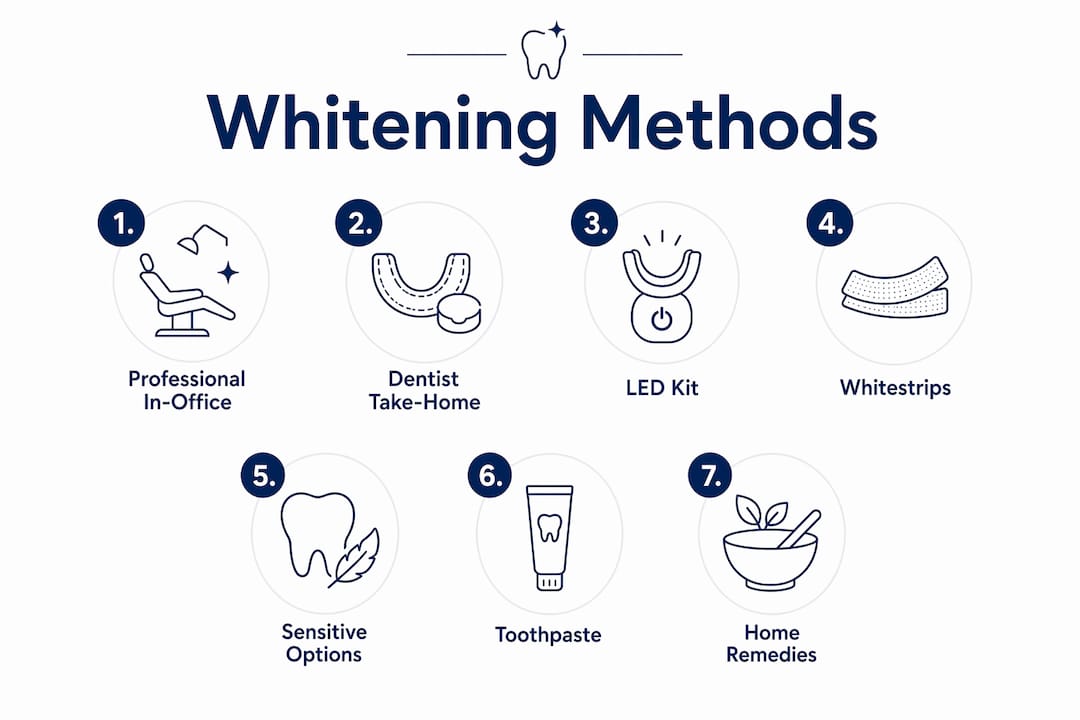
- Professional in-office whitening: Fastest results, single session, requires dental supervision
- Dentist-supervised take-home kits: Custom trays with 6–15% peroxide gels, 4–8 shade improvements over 1–2 weeks
- OTC LED kits and whitening strips: Moderate acceleration, accessible, best for maintenance or mild staining
- Whitening toothpastes: Surface-level only, 2–6 weeks for visible change, no deep bleaching
- Home remedies (baking soda, charcoal, oil pulling): Not recommended. These are abrasive, not bleaching agents, and can damage enamel
- Sensitivity management: Use desensitizing toothpaste with potassium nitrate before and after every whitening session to stay comfortable
Peroxide-based bleaching is the only method the American Dental Association recognizes as genuinely effective. Everything else is either a surface polish or a marketing claim.
The fastest safe whitening methods, ranked and explained
Speed and safety don’t have to trade off against each other. The key is matching the method to your baseline shade, your sensitivity level, and how quickly you need results.
1. Professional in-office whitening
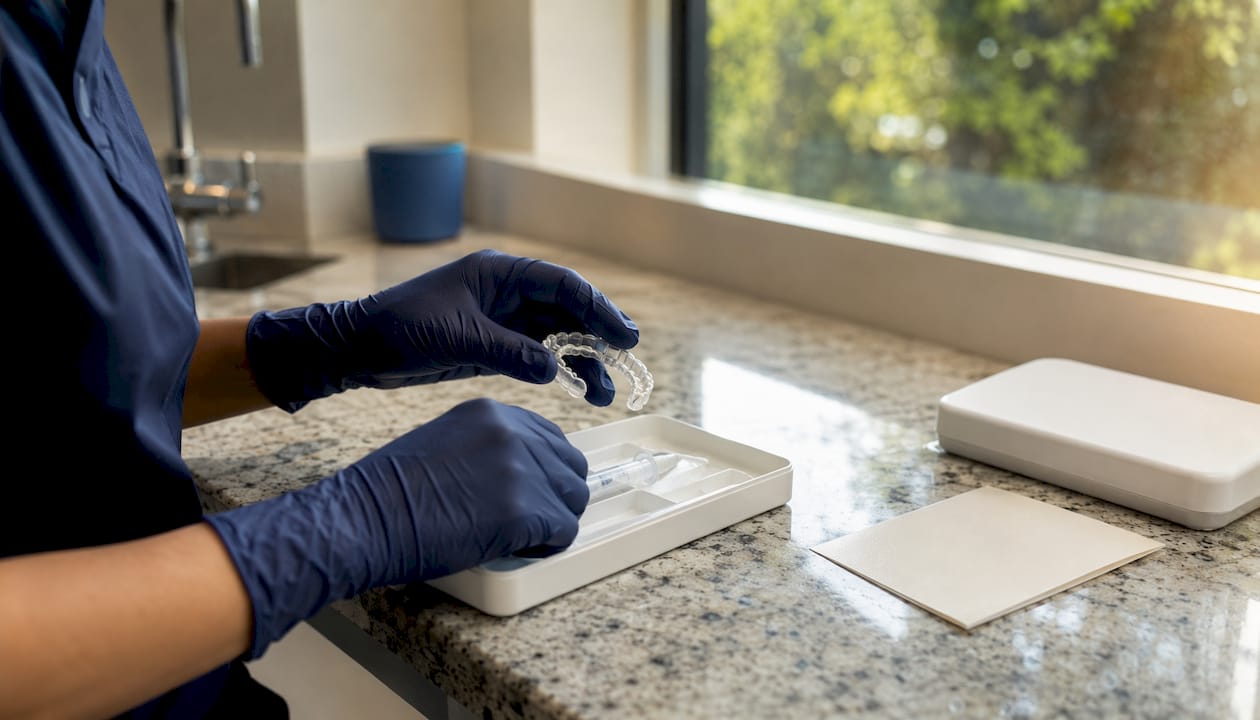
In-office whitening is the gold standard for speed. A dentist applies a high-concentration peroxide gel, typically 35–40% hydrogen peroxide, directly to the teeth while protecting your gums with a soft-tissue barrier or paste. Many offices pair this with a calibrated LED or laser light to accelerate the chemical reaction. The whole appointment runs 45–90 minutes, and you leave with teeth that are measurably whiter.
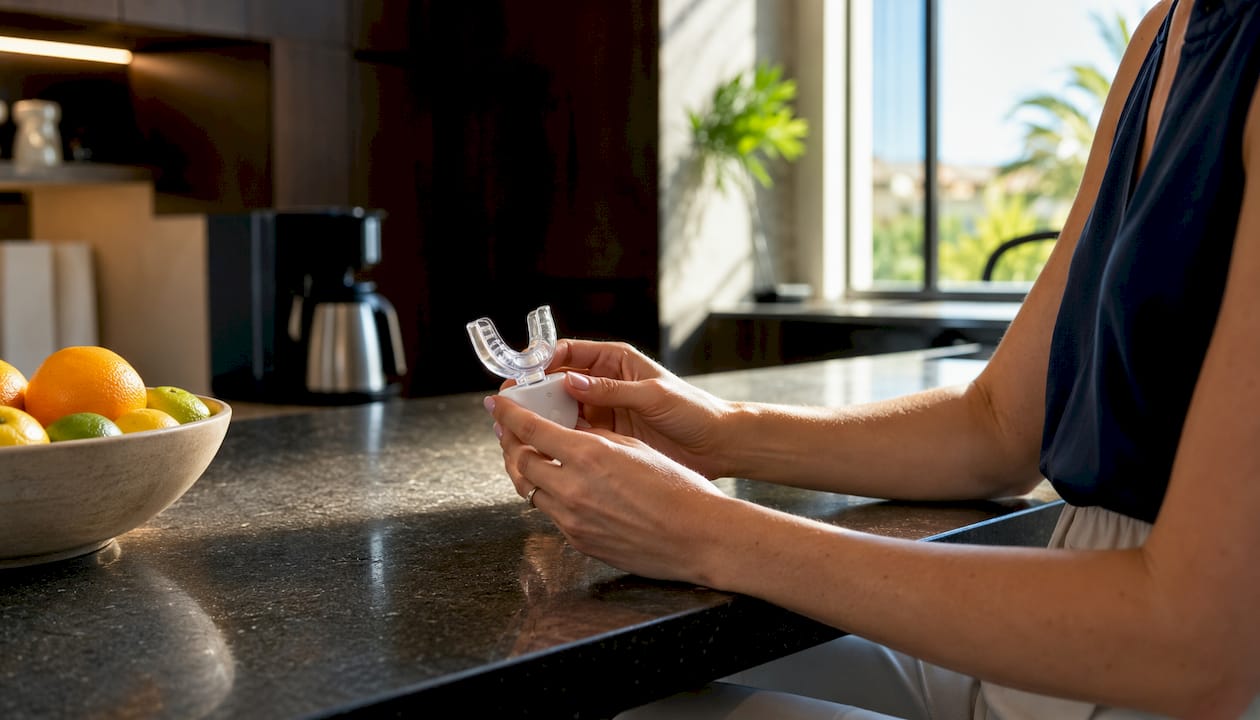
The LED light raises tooth temperature by 2–5°C, which speeds up peroxide breakdown without crossing the nerve-damage threshold. That thermal boost is what separates light-activated in-office treatments from everything you can do at home. One important caveat: pushing beyond a visible 6-unit shade gain risks enamel softening with diminishing perceptible return, so a good dentist will stop at the right point rather than chase maximum whiteness.
2. Dentist-supervised take-home kits
Custom tray kits sit just below in-office treatment in terms of speed and effectiveness. Your dentist takes an impression of your teeth and fabricates trays that fit precisely, minimizing gel contact with your gums. You fill the trays with a professional-grade carbamide peroxide gel and wear them nightly for one to two weeks or as recommended.
The precision fit matters more than most people realize. Ill-fitting trays let gel seep onto soft tissue, causing irritation that forces you to stop treatment early. With custom trays, you can run the full protocol and see 4–8 shade improvements without the discomfort that derails OTC tray users. The NHS confirms that wearing dentist-supplied trays for 2–6 weeks produces gradual but reliable whitening.
3. Colgate Optic White ComfortFit LED Teeth Whitening Kit
The Colgate Optic White ComfortFit LED kit combines a hydrogen peroxide whitening gel with an LED mouthpiece designed for at-home use. The LED component accelerates the peroxide reaction, similar in principle to in-office light activation, though at lower intensity and concentration. It’s one of the more accessible LED options on the market, with a flexible tray design intended to improve comfort during the treatment period.
Results are more modest than professional options, which is expected given the lower peroxide concentration. For someone with mild to moderate staining who wants to accelerate results beyond what strips alone can deliver, it’s a reasonable starting point.
4. Crest 3D Whitestrips Professional White and LED Accelerator Light
Crest 3D Whitestrips Professional White strips use a concentrated peroxide gel held against the tooth surface for longer than a rinse or toothpaste can manage. The companion LED Accelerator Light is designed to boost the whitening effect during each session. Whitening strips in this category can produce visible lightening within days, according to Cleveland Clinic, making them one of the faster OTC options available.
The strips work because contact time matters. A rinse swishes peroxide past your teeth for seconds. A strip holds it there for 30 minutes. That sustained exposure is what drives the bleaching reaction deeper into the enamel surface.
5. Novashine Professional Teeth Whitening Kit
The Novashine Professional Teeth Whitening Kit uses an LED mouthpiece paired with a whitening gel formula. It follows the same light-plus-peroxide principle as other LED-accelerated kits and is positioned as a professional-style at-home treatment. Like other OTC LED systems, its results depend heavily on your starting shade and consistent use across the recommended treatment period.
6. Auraglow Teeth Whitening Kit
Auraglow’s kit uses a 35% carbamide peroxide gel with an LED light accelerator, putting it at a higher gel concentration than many consumer kits. The tray-and-light format mirrors the structure of dentist-supervised take-home systems, though without the custom-fitted tray. For people who want a stronger OTC option and are comfortable managing their own application, Auraglow sits near the top of the at-home category.
Pro Tip: Before starting any LED kit, brush with a desensitizing toothpaste for two weeks. It pre-loads potassium nitrate into the dentinal tubules, which noticeably reduces the zinging sensitivity that catches most people off guard on day one.
7. Whitening toothpastes
Whitening toothpastes remove surface stains through mild abrasives and, in some formulas, low-level peroxide. They cannot change your tooth’s natural color or lift deep discoloration. Some contain blue covarine, a pigment that creates an immediate optical brightening effect by making teeth appear less yellow on contact.
Used twice daily, whitening toothpastes take 2–6 weeks to produce a visible difference. They work best as a maintenance tool after a bleaching treatment rather than as a standalone whitening method.
8. Baking soda, activated charcoal, and oil pulling
These are the methods that look appealing on social media and underdeliver in practice. Baking soda and activated charcoal are abrasive, not bleaching agents. They scour surface stains off enamel rather than chemically lightening it, and repeated use accelerates enamel wear. The ADA notes there is no documented whitening benefit from oil pulling, and it has been associated with adverse events including lipoid pneumonia.
If you want to accelerate whitening results, none of these methods get you there. They create the illusion of progress while potentially making future bleaching harder by roughening the enamel surface.
| Method | Speed | Peroxide Level | Best For |
|---|---|---|---|
| In-office professional | 45–90 min | 35–40% HP | Maximum speed, supervised |
| Dentist take-home kit | 1–2 weeks | 6–15% CP | Gradual, controlled results |
| OTC LED kits | 1–3 weeks | Low to moderate | Accessible acceleration |
| Whitening strips | Days to weeks | Low | Mild staining, maintenance |
| Whitening toothpaste | 2–6 weeks | Very low or none | Surface stains only |
| Home remedies | No bleaching | None | Not recommended |
HP = hydrogen peroxide; CP = carbamide peroxide
How to manage side effects when you’re pushing for faster results
Tooth sensitivity is the most common reason people abandon a whitening regimen early. Sensitivity affects 15–65% of users but is typically mild and temporary. The good news is that it’s largely preventable with the right preparation.
Managing sensitivity:
- Use a desensitizing toothpaste containing potassium nitrate or calcium phosphate for at least two weeks before starting treatment
- Apply the toothpaste directly into your whitening tray for 10–15 minutes after each session as a post-treatment soak
- Take a day off between whitening sessions if sensitivity spikes rather than pushing through
- Sensitivity that develops with strip or tray treatments usually resolves by the fourth day after stopping, per ADA guidance
Avoiding gum irritation:
- Gum irritation almost always traces back to gel contact with soft tissue, which is why custom trays outperform generic ones
- If you’re using OTC strips, trim them to fit your gum line rather than pressing them up against the gum margin
- Never use local anesthesia during in-office bleaching. You need to feel any burning sensation so you can alert your dentist immediately if the barrier is compromised
Protecting your enamel:
- Overuse of whitening products can cause permanent enamel thinning and a condition sometimes called bleachorexia, where people compulsively re-whiten past the point of safe or visible improvement
- Follow the usage frequency on the label. More sessions per week does not mean faster results; it means more enamel stress
- Avoid acidic foods and drinks for at least an hour before and after whitening, since acid temporarily softens enamel and makes it more vulnerable during treatment
Pro Tip: If you have dental restorations like crowns, veneers, or bonding, whiten your natural teeth first and then discuss shade matching with your dentist before any new restorative work. Restorations do not respond to bleaching agents, so the sequence matters.
Consult your dentist before accelerating any whitening protocol, especially if you have existing restorations, gum recession, or a history of sensitivity. Knowing your oral health baseline before you start is the single most effective way to avoid setbacks that slow you down.
For people who already experience sensitivity, there are whitening methods designed for sensitive teeth that can still deliver real results without the discomfort.
How long does whitening actually take, and how do you keep the results?
The timeline depends almost entirely on which method you choose and how consistently you use it.
Typical results by method:
- In-office professional whitening: Visible results immediately after a single 45–90 minute session
- Dentist-supervised take-home kits: Meaningful improvement within 1–2 weeks of nightly use; significant whitening after about two weeks for most people
- OTC LED kits and strips: Visible lightening within days for strips; 1–3 weeks for full LED kit results
- Whitening toothpastes: 2–6 weeks for surface-level improvement; no deep bleaching regardless of duration
Whitening is cumulative, not permanent. Enamel pores stay open and more prone to re-staining for 48 hours after bleaching, which is the window where coffee, tea, red wine, and tobacco do the most damage. Avoiding those during and immediately after treatment is one of the highest-leverage things you can do to protect your results.
Maintaining your results:
- Avoid coffee, tea, red wine, and tobacco for at least 48 hours post-treatment
- Brush twice daily and floss consistently. Plaque buildup accelerates re-staining
- Schedule periodic touch-up sessions, either with strips or a whitening pen, every few months
- Consistent mild whitening over time is safer and more sustainable than sporadic intense bleaching sessions
- If you have tetracycline staining or fluorosis, expect a longer treatment window. The ADA notes that tetracycline stains may require three to four months of nightly treatment to see meaningful improvement
One thing that trips people up: dental restorations won’t whiten. If you have a crown or veneer on a front tooth, bleaching the surrounding natural teeth can create a visible shade mismatch. The right move is to whiten first, then have any new restorations color-matched to your post-whitening shade.
Getsmilefam’s Snow Serum™ Whitening Pen: fast, enamel-safe whitening at home
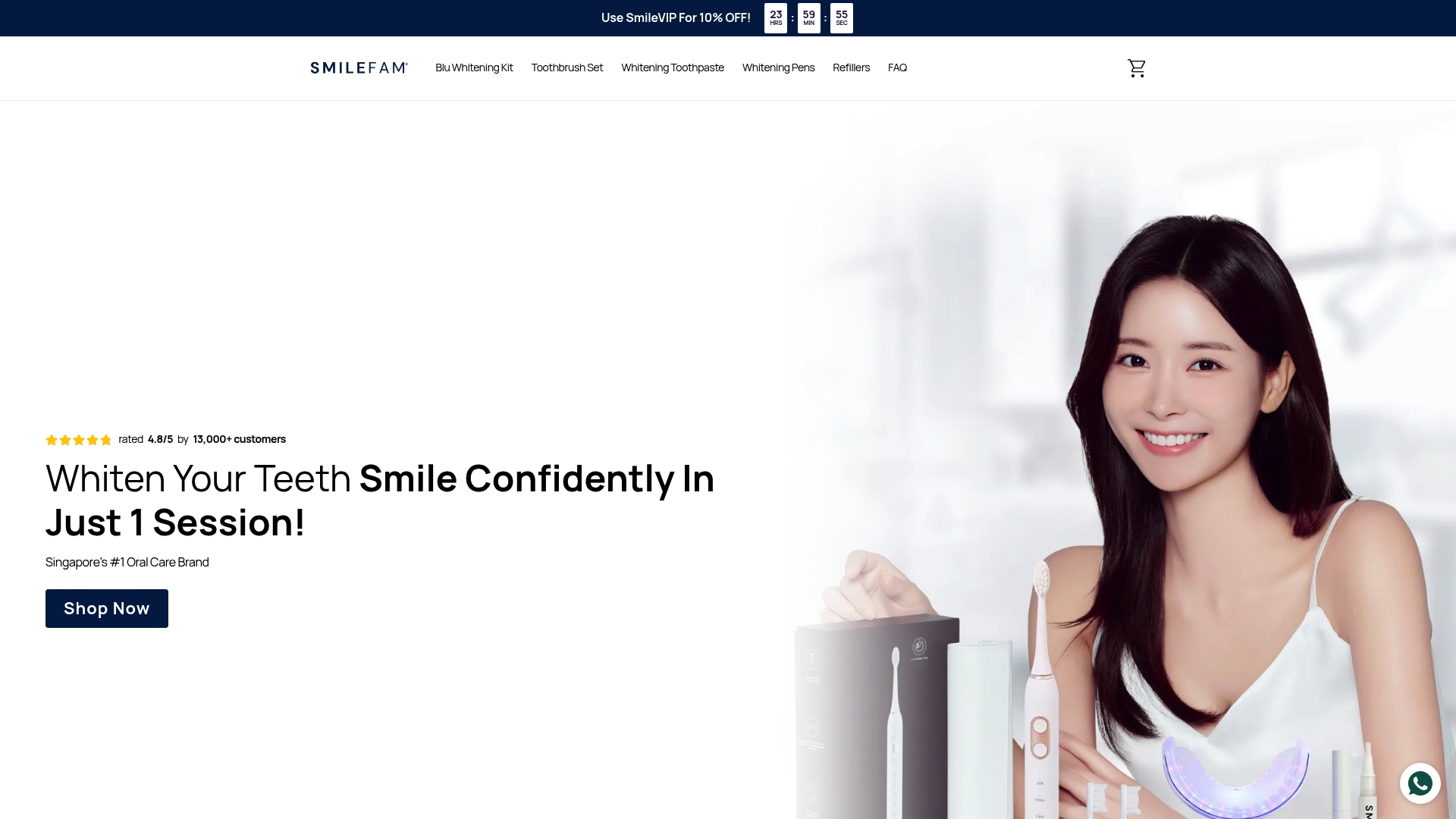
Getsmilefam’s Snow Serum™ Whitening Pen is built around BLU Whitening Technology, a proprietary formula developed in Singapore that delivers immediate whitening without hydrogen peroxide. The formula uses lab-approved, enamel-safe ingredients designed for people with sensitive gums who want real results without the chemical burn risk that comes with high-peroxide products.
The pen format makes it easy to apply precisely, which means less gel on soft tissue and more on the tooth surface where it belongs. For people who want to maintain or accelerate whitening results between professional sessions, or who are looking for a gentler daily-use option, it fits cleanly into any whitening routine.
Getsmilefam also offers a Premium Travel Kit for consistent whitening on the go, because skipping sessions is the fastest way to slow your results down.
Key Takeaways
Consistent, peroxide-based whitening with professional guidance is the most effective and safe way to accelerate results while protecting enamel and managing sensitivity.
| Point | Details |
|---|---|
| Fastest method | Professional in-office whitening delivers visible results in a single 45–90 minute session. |
| At-home speed | Dentist-supervised take-home kits produce 4–8 shade improvements over 1–2 weeks of nightly use. |
| Sensitivity prevention | Use desensitizing toothpaste with potassium nitrate before and after every whitening session. |
| Post-treatment window | Enamel pores stay open for 48 hours after bleaching, making that the highest-risk period for re-staining. |
| Restorations don’t bleach | Whiten natural teeth before new dental work so restorations can be color-matched to your post-whitening shade. |