

Quick-result whitening is a teeth whitening process that produces visible lightening in as little as 30 minutes to a few days by applying high-concentration bleaching agents, either professionally supervised or through regulated at-home products. Unlike gradual whitening routines, fast whitening treatments use stronger peroxide formulas to break down stain molecules quickly. Professional systems like Zoom and at-home options like Auraglow represent the two ends of this spectrum. Understanding what is quick-result whitening, and which method fits your lifestyle, is the difference between a safe outcome and a painful one.
What is quick-result whitening and which methods deliver it?
Quick-result whitening covers any treatment that produces a noticeable shade change within hours to a few days. The industry term for the fastest version is chairside or in-office bleaching. Three main categories exist: professional in-office treatment, at-home whitening strips, and custom-fitted trays.
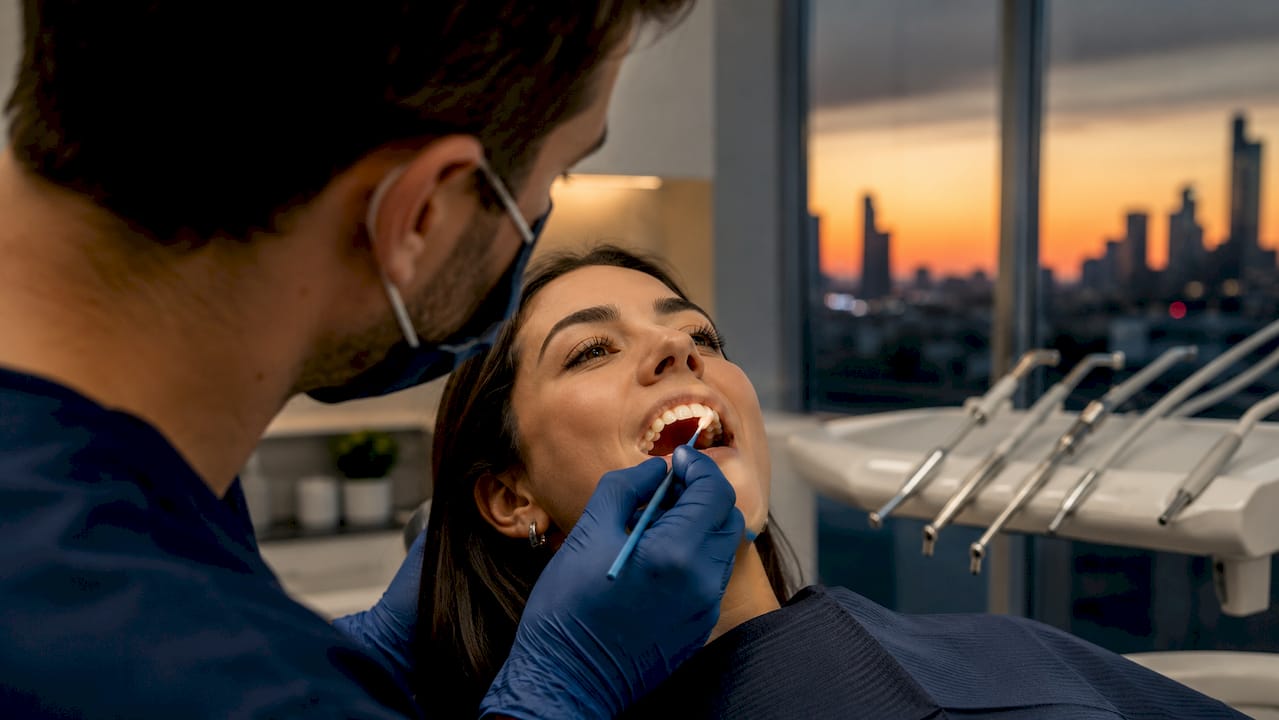
Professional in-office whitening uses 35–40% hydrogen peroxide gel applied directly to teeth by a dental professional. Light or laser activation is often added to the process. Professional sessions achieve 6–8 shades lighter results in a single 30–90 minute appointment. That speed comes at a cost: sessions run between $200 and $1,000 depending on the provider and location.
At-home whitening strips use 6–10% hydrogen peroxide and are regulated by the American Dental Association (ADA). ADA-regulated strips show visible lightening within 3–5 days of daily 30-minute uses. They are the most accessible fast whitening option for most people.
Custom-fitted trays sit between the two. A dentist provides a mold of your teeth and a carbamide peroxide gel, typically at 16–35% concentration. Custom trays offer longer-lasting results and less sensitivity than single rapid in-office treatments. Results appear gradually over 1–2 weeks.
| Method | Peroxide Concentration | Treatment Time | Typical Cost | Speed of Results | Sensitivity Risk |
|---|---|---|---|---|---|
| Professional in-office | 35–40% hydrogen peroxide | 30–90 minutes | $200–$1,000 | Same day | Higher |
| At-home strips | 6–10% hydrogen peroxide | 30 min/day for 5–14 days | $20–$60 | 3–5 days | Moderate |
| Custom trays (dentist) | 16–35% carbamide peroxide | 1–2 hours/day for 1–2 weeks | $100–$400 | 1–2 weeks | Lower |
| Whitening pen | 3–10% hydrogen peroxide | 1–2 min application | $15–$50 | 3–7 days | Low |
Pro Tip: If you need results before a specific event, book a professional session at least 48 hours in advance. That window lets any post-treatment sensitivity settle before you are in the spotlight.
How quickly can you expect results from whitening?
Result timelines vary by method, but they also vary by biology. Not every person whitens at the same rate, even with identical products and concentrations.
Enamel permeability varies between individuals, causing faster or slower whitening regardless of product strength. People classified as “fast bleachers” can see 8–10 shades of improvement, while “slow bleachers” achieve roughly 4–6 shades. That biological reality is something no product label will tell you upfront.
Stain type also determines speed. Whitening is most effective on extrinsic stains caused by food, coffee, and aging. Intrinsic stains, which originate inside the tooth structure, are far less responsive and may require professional diagnosis before any whitening is attempted.
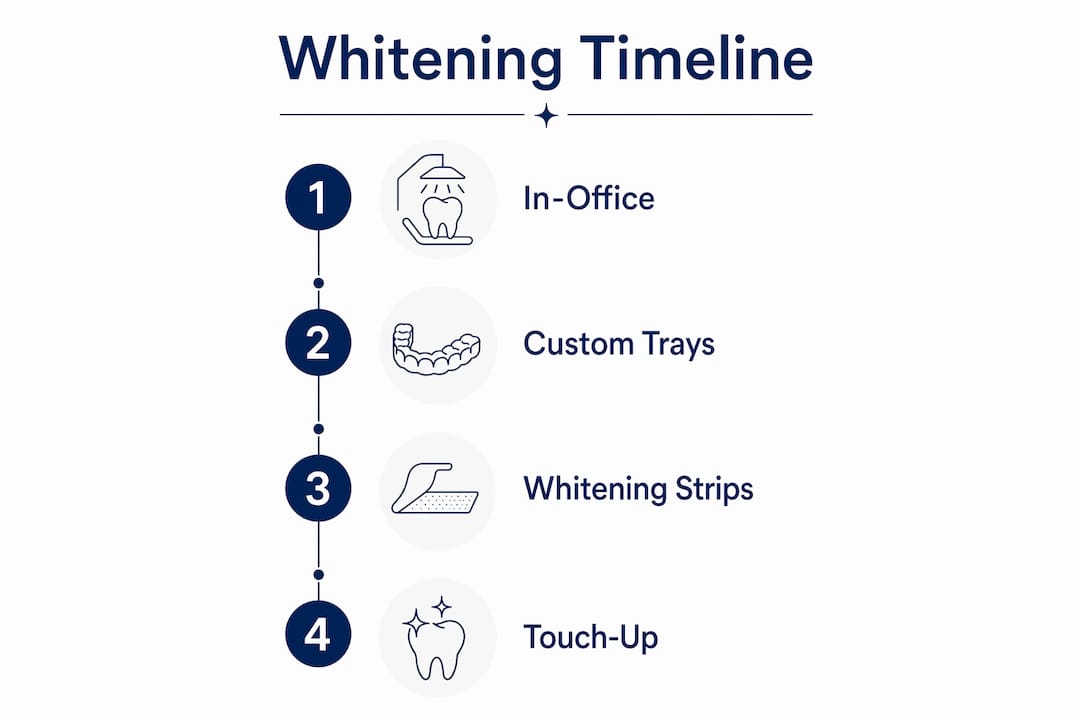
Here is what a realistic timeline looks like across methods:
- In-office professional treatment: Visible results within 30–90 minutes of a single session
- At-home whitening strips: Noticeable lightening after 3–5 days of consistent daily use
- Custom dentist trays: Gradual brightening over 1–2 weeks of nightly wear
- Whitening pens: Subtle improvement visible after 3–7 days of regular application
Pro Tip: Take a photo of your teeth under natural light before starting any treatment. Comparing that photo after one week gives you an objective measure of progress, which is far more reliable than memory.
For a detailed breakdown of how each method progresses day by day, the whitening timeline guide from Getsmilefam walks through what to expect at each stage.
Is quick whitening safe? what you need to know
Speed and safety are not opposites in teeth whitening, but they require careful management. The risks are real and specific.
Safety with quick whitening depends on professional supervision of peroxide concentration at 35–40% to avoid enamel and gum damage. Non-regulated products carry the risk of irreversible tissue damage. That is not a theoretical concern. Unregulated kits sold online frequently exceed safe concentration limits without any guidance on application time or protective barriers for gum tissue.
One common misconception is that light or laser technology is what does the whitening work. Light or laser activates the bleaching gel but does not whiten alone. The peroxide gel concentration drives the actual whitening. Light may reduce treatment time slightly, but its primary role is activation, not bleaching. This matters because products marketed heavily on LED technology without adequate peroxide concentration will underdeliver.
“DIY whitening hacks like lemon juice and activated charcoal are not safe alternatives. Unregulated DIY methods risk enamel erosion and gum damage and should be avoided entirely.”
Follow these safety guidelines before and during any fast whitening treatment:
- Consult a dentist before using any product above 10% hydrogen peroxide
- Never exceed the recommended application time on any product label
- Use a gum barrier or protective gel if provided with professional kits
- Stop treatment immediately if you experience sharp or prolonged tooth pain
- Avoid whitening if you have untreated cavities, cracked enamel, or active gum disease
- Choose products with ADA approval or dentist-formulated credentials
For readers with existing sensitivity, the safe options for sensitive teeth guide from Getsmilefam covers gentler approaches that still deliver visible results.
How to maintain your whitening results long-term
Getting fast results is only half the work. Keeping them requires consistent habits, especially in the first 48 hours after treatment.
Enamel is more porous and prone to staining during the first 48 hours after whitening. Avoiding dark foods and drinks during this window is the single most impactful thing you can do to preserve brightness. Coffee, tea, red wine, tomato sauce, and dark berries are the main offenders. A dietary guide for post-whitening care covers the full list of foods to avoid and for how long.
Most patients retain 50–75% of whitening brightness at six months with proper maintenance and diet. Results typically last 6–12 months depending on habits. That retention rate drops significantly for people who drink coffee daily without rinsing afterward or who skip whitening toothpaste between treatments.
Remineralizing agents like hydroxyapatite also play a role. Hydroxyapatite strengthens enamel after bleaching and reduces the porosity that makes teeth vulnerable to restaining. Many dentist-recommended post-whitening kits include it for this reason.
| Do | Don’t |
|---|---|
| Rinse with water immediately after staining drinks | Drink coffee or tea in the first 48 hours post-treatment |
| Use an ADA-approved whitening toothpaste daily | Use abrasive toothpastes that scratch enamel |
| Schedule touch-up treatments every 6–12 months | Overuse whitening strips beyond the recommended cycle |
| Apply remineralizing gel or hydroxyapatite after whitening | Ignore tooth sensitivity as a warning sign |
| Brush twice daily and floss consistently | Smoke or use tobacco products after whitening |
Touch-up treatments every 6–12 months are the standard recommendation for maintaining professional-level brightness. A whitening pen is a practical tool for spot maintenance between full treatment cycles.
Key takeaways
Quick-result whitening delivers the fastest and most lasting outcomes when you match the method to your biology, budget, and maintenance commitment.
| Point | Details |
|---|---|
| Fastest method is in-office treatment | Professional chairside whitening achieves 6–8 shades lighter in a single 30–90 minute session. |
| Biology affects your results | Enamel permeability determines whether you are a fast or slow bleacher, regardless of product strength. |
| Light alone does not whiten | LED and laser activate peroxide gel; the gel concentration is what actually removes stains. |
| First 48 hours are critical | Enamel is most porous right after treatment, making diet discipline in this window essential. |
| Touch-ups extend results significantly | Most patients retain 50–75% brightness at six months with proper maintenance and scheduled touch-ups. |
The part nobody talks about before you buy a whitening kit
I have reviewed a lot of whitening products and spoken with enough people post-treatment to know that the biggest problem is not the product. It is the expectation gap.
Most people walk into quick whitening expecting a uniform, dramatic transformation in one session. What they get is real improvement, but it is rarely uniform on the first try. Teeth have different enamel thicknesses across their surface. Some areas respond faster. That unevenness is normal and typically self-corrects with a second session or continued at-home maintenance. Professional whitening protocols minimize uneven whitening by ensuring even gel contact, which is a genuine advantage of supervised treatment over self-applied strips.
My honest observation is this: the people most satisfied with fast whitening results are those who combine one professional session with a consistent at-home maintenance routine. They get the dramatic initial shift from in-office treatment, then use a whitening pen or strips to keep the result stable. That combination outperforms either approach alone.
Fast whitening does not always mean better. Gradual dentist-supervised treatments often yield more sustainable long-term brightness. Speed is valuable, but it should not come at the cost of enamel health or realistic expectations. If a product promises 10 shades whiter overnight with no sensitivity and no professional involvement, that promise is not grounded in how bleaching chemistry actually works.
Prioritize your oral health first. A bright smile built on healthy enamel lasts far longer than one achieved through overuse of unregulated products.
— Lenney
How Getsmilefam supports your whitening journey
Getsmilefam builds its products around the principle that fast results and enamel safety are not mutually exclusive. The Snow Serum™ Whitening Pen is designed for at-home touch-ups between treatment cycles, using a formula that avoids harsh hydrogen peroxide while still delivering visible brightening. It is the kind of maintenance tool that keeps professional results lasting longer.
For those who want a complete on-the-go oral care solution, the Premium Travel Kit covers whitening maintenance wherever you are. Getsmilefam also offers a 1 Year Warranty on its products, which reflects genuine confidence in long-term performance. For older adults managing sensitivity alongside whitening goals, the SmileFam for Seniors program offers gentle, clinically considered care options.
FAQ
What is quick-result whitening, exactly?
Quick-result whitening is any teeth whitening treatment that produces a visible shade change within 30 minutes to a few days by using higher concentrations of bleaching agents. Professional in-office treatments and ADA-regulated at-home strips are the two most common forms.
How many shades whiter can i realistically get?
Professional in-office whitening achieves 6–8 shades lighter in a single session, while at-home strips typically deliver 2–4 shades over several days. Individual results vary based on enamel permeability and the type of staining present.
Does LED light actually speed up whitening?
LED and laser light activates the peroxide gel applied to teeth but does not whiten on its own. The concentration of the bleaching gel is the primary driver of whitening speed and depth.
How long do quick whitening results last?
Most patients retain 50–75% of their whitening brightness at six months with proper diet and oral hygiene. Scheduling touch-up treatments every 6–12 months maintains results closer to the original outcome.
Are at-home whitening kits safe to use without a dentist?
ADA-regulated products at 6–10% hydrogen peroxide are considered safe for unsupervised at-home use. Any product above 10% concentration should be used under dental supervision to avoid enamel erosion or gum irritation.