

You can get salon-level white teeth at home. The key is using the right bleaching agents at the right concentrations, staying consistent, and protecting your enamel throughout the process. Here is what actually works:
- Use peroxide-based bleaching agents. Carbamide peroxide and hydrogen peroxide are the two dentist-approved whitening agents for home use. Everything else is a distant second.
- Consistency beats intensity. A single treatment will not get you there. Repeated sessions followed by monthly maintenance are what separate salon-level results from a one-week experiment.
- Skip harsh abrasives. Lemon juice, charcoal, and aggressive baking soda use can strip enamel. The American Dental Association explicitly warns against these methods.
- Protect your results daily. Avoid coffee, red wine, and dark sauces during active treatment. Brush twice a day and floss consistently.
- Get a dental check first. Cavities, gum disease, or existing restorations can complicate whitening. A quick consultation before you start saves you from uneven results or unnecessary sensitivity.
What whitening agents and methods actually work at home
Two ingredients do the real work: hydrogen peroxide and carbamide peroxide. Both break down into oxygen radicals that penetrate enamel and lift intrinsic stains. Carbamide peroxide releases its active component more slowly, which is why 35% carbamide peroxide is commonly used in slow-release LED kits, especially for people with sensitive teeth. Hydrogen peroxide acts faster but requires more careful handling.
Common delivery methods and what to expect from each:
- Whitening strips: Thin, flexible strips coated in peroxide gel. Easy to use, widely available, and effective for surface and light intrinsic stains. Results typically appear within one to two weeks of daily use.
- Prefilled or custom trays with gel: Custom trays from a dentist fit your teeth precisely, reducing gel contact with gums and improving coverage. Over-the-counter prefilled trays work but are less precise.
- LED-accelerated kits: The LED light is claimed to speed up the peroxide reaction. Results vary, but these kits tend to use carbamide peroxide formulas suited for at-home use.
- Whitening toothpastes: Useful for maintenance, not transformation. They remove surface stains but cannot lift deep discoloration on their own.
- Baking soda: Mildly abrasive and slightly alkaline. It can reduce surface staining when used occasionally, but daily use risks enamel wear. The ADA guidelines do not endorse it as a primary whitening method.
- Oil pulling with coconut oil: A traditional practice with some evidence for reducing surface bacteria and mild staining. It does not remove intrinsic stains, and scientific support for deep whitening is limited.
- Activated charcoal paste: Popular on social media, but the evidence for whitening effectiveness is thin. Its abrasive texture poses a real enamel erosion risk with regular use.
OTC products often take longer to match results from dentist-supervised trays. Research suggests OTC bleaching can take up to 16 days to match what a 7-day dental-supervised tray regimen achieves.
How to use at-home whitening products safely and effectively
Start with a dental check. If you have untreated cavities or gum inflammation, whitening gel can cause sharp pain and worsen existing damage. Once your mouth is healthy, you are ready to begin.
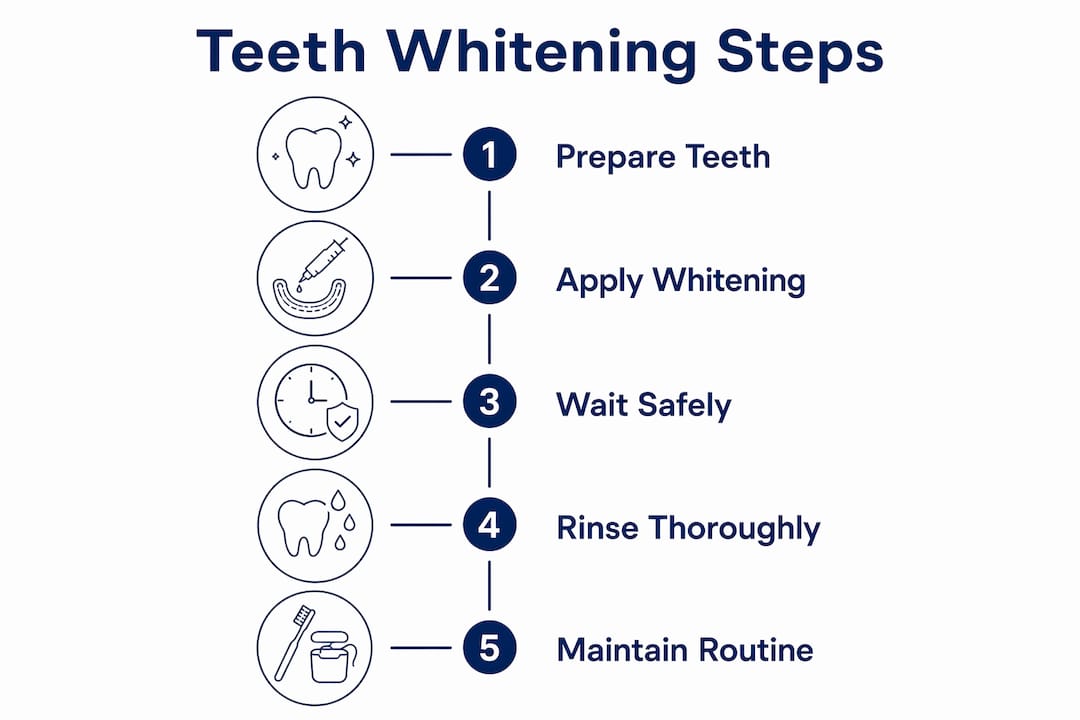
Safe usage steps for peroxide-based products:
- Brush and floss before each whitening session to remove plaque that would otherwise block the gel from reaching enamel.
- Apply the product exactly as directed. More gel or longer wear time does not speed results; it increases sensitivity.
- Wear trays or strips for the recommended duration only, typically 30 minutes to two hours depending on concentration.
- Rinse thoroughly after each session and avoid staining foods and drinks for at least one hour.
- Follow the whitening frequency guidelines for your specific product. Most at-home kits are designed for daily use over one to two weeks, then monthly maintenance.
Sensitivity is the most common side effect. Using a toothpaste containing potassium nitrate or nanohydroxyapatite before and after sessions manages sensitivity effectively for most people. If sharp pain persists beyond 24 hours after a session, stop and consult a dentist.
Lifestyle choices during treatment matter too. Coffee, tea, red wine, and tomato-based sauces all re-stain enamel while it is temporarily more porous from bleaching. Cutting back during your active treatment phase protects your investment. For long-term habits that support whiter teeth, the lifestyle changes guide covers what to add and what to drop.
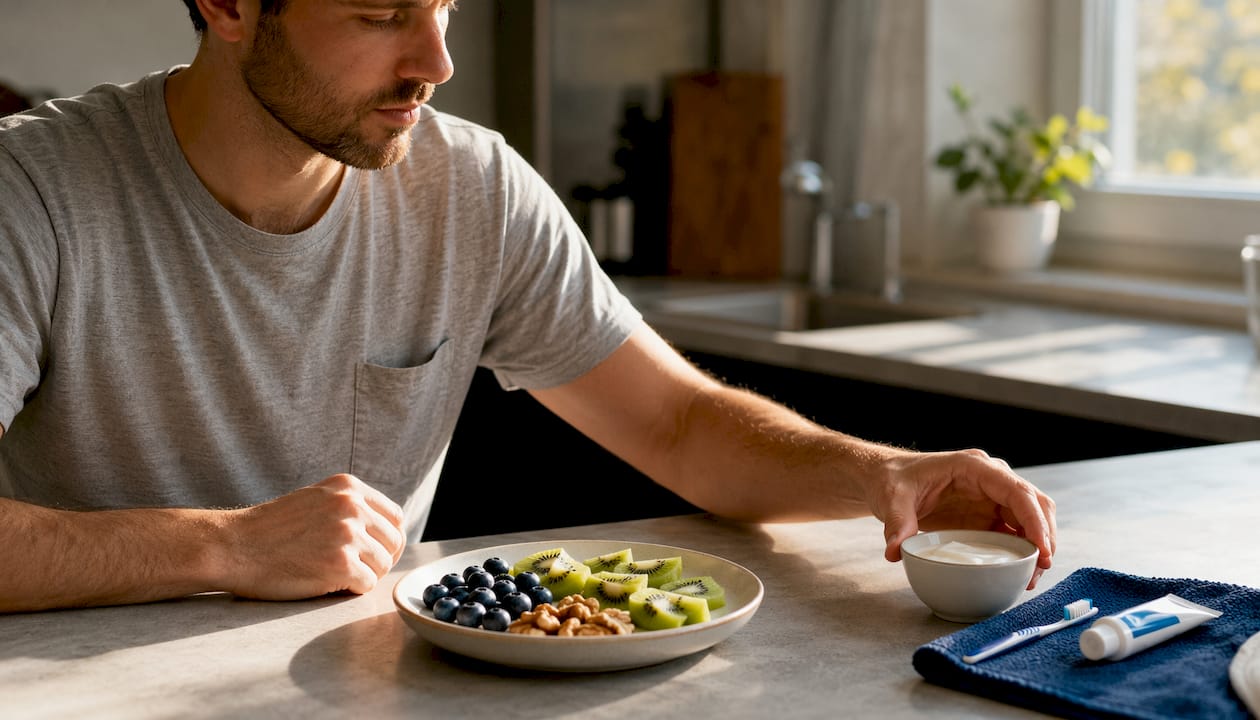
Pro Tip: Treat whitening like a skincare routine. Run an intensive phase of daily sessions for one to two weeks, then shift to a monthly touch-up. That rhythm is what keeps results looking fresh rather than fading within a month.
What dental experts and the ADA actually recommend
The ADA’s position is clear: peroxide-based gels are the safe and effective standard for whitening. Natural abrasives like lemon juice and aggressive baking soda use risk enamel erosion and are not endorsed as whitening methods. The Cleveland Clinic echoes this, pointing people toward peroxide formulas and away from DIY acid-based approaches.
“Consistency is the single biggest differentiator between people who achieve salon-level results at home and those who don’t. Whitening is cumulative. One session does nothing. A structured routine with monthly maintenance is what actually moves the needle.” — Expert whitening guidance, GQ
One limitation that surprises many people: whitening only works on natural tooth enamel. Crowns, veneers, and composite fillings do not change color during treatment. If you have visible restorations on front teeth, whitening your natural teeth around them can create a noticeable mismatch. Plan for that before you start, not after.
Dental-supervised kits reduce uneven whitening and control sensitivity better than generic over-the-counter options, according to NHS guidance. Custom-fit trays hold the gel evenly against every tooth surface and keep it away from gum tissue, which is where most irritation originates with ill-fitting generic trays.
For anyone dealing with sensitivity during treatment, the guide to avoiding sensitivity walks through the specific steps that reduce discomfort without sacrificing results.
Key Takeaways
Peroxide-based bleaching agents used consistently, with proper maintenance, are the most reliable way to achieve salon-level white teeth at home.
| Point | Details |
|---|---|
| Use approved bleaching agents | Carbamide peroxide and hydrogen peroxide are the dentist-approved standards for safe at-home whitening. |
| Consistency drives results | An intensive phase followed by monthly maintenance separates lasting brightness from short-lived results. |
| Manage sensitivity proactively | Toothpastes with potassium nitrate or nanohydroxyapatite reduce sensitivity before and after sessions. |
| Restorations do not whiten | Crowns, veneers, and fillings stay their original color, so plan for potential color mismatches in advance. |
| Getsmilefam BLU Whitening Kit | Getsmilefam’s BLU Teeth Whitening Kit uses lab-approved, enamel-safe formulas for quick at-home results. |
Getsmilefam gives you professional-grade whitening without the dental bill
Most at-home kits make you choose between speed and safety. Getsmilefam’s BLU Teeth Whitening Kit skips that tradeoff. It uses lab-approved, enamel-safe formulas built around the proprietary BLU Whitening Technology developed in Singapore, designed to deliver visible results in a single session without harsh chemicals.
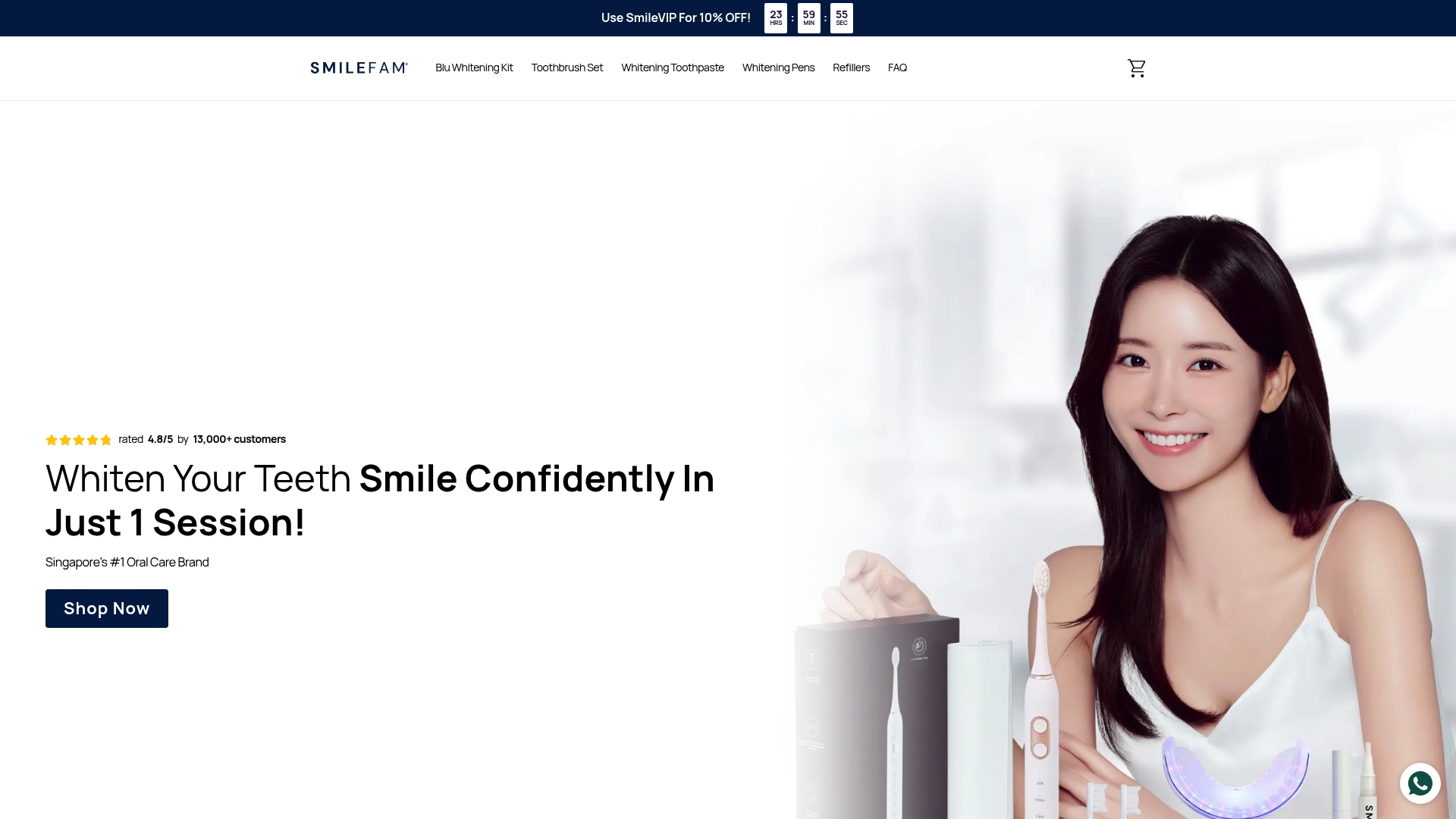
The formula is gentle enough for sensitive gums, which is the sticking point for a lot of people who have tried strips or generic trays and ended up with two days of sharp sensitivity for modest results. Getsmilefam also offers the BLU Whitening Toothpaste for daily maintenance between treatment sessions, so your results do not quietly fade within a few weeks.
If you are ready to stop cycling through products that underdeliver, browse the full Getsmilefam whitening range at getsmilefam.com and find the kit that fits your routine.