

Whitening kits are defined as at-home bleaching systems that deliver noticeable tooth color improvement at a fraction of professional treatment costs. The core reason why whitening kits are economical comes down to three factors: lower ingredient concentrations, self-administration, and no clinic overhead. At-home kits typically cost $20–$60, while professional in-office sessions run $300–$1,000 or more. That price gap is not a quality accident. It reflects a deliberate trade: you invest more time, and the kit costs less money. For budget-conscious consumers, that trade is often the right one.
Why whitening kits are economical: the ingredient and cost equation
The affordability of at-home whitening kits comes directly from their ingredient concentrations. Professional formulas use high concentrations of hydrogen peroxide, sometimes 25–40%, applied by a trained clinician. OTC kits use lower ingredient concentrations, typically 3–10% hydrogen peroxide or equivalent carbamide peroxide levels. That reduction in strength is the single biggest reason kits cost less.
Lower concentration does not mean ineffective. It means slower. The whitening chemistry still works. You simply apply it over more sessions to reach a comparable result. Most reputable at-home strips and kits deliver a 2–5 shade improvement within 14–20 days. That is a meaningful cosmetic change for most people with mild to moderate staining.
The two most common active ingredients in OTC kits are carbamide peroxide and hydrogen peroxide. Carbamide peroxide breaks down into hydrogen peroxide once applied, releasing oxygen that penetrates enamel and oxidizes stain molecules. Both are proven bleaching agents. The difference between a $40 kit and a $400 in-office session is not the chemistry. It is the concentration, the equipment, and who applies it.
- Carbamide peroxide: Releases hydrogen peroxide slowly, making it gentler and well-suited for overnight or extended wear trays.
- Hydrogen peroxide: Works faster but can increase sensitivity at higher concentrations. OTC versions stay within safe limits.
- Potassium nitrate and xylitol: Desensitizing additives found in many kits that reduce discomfort without adding cost.
- LED light attachments: Some kits include LED lights, but experts generally advise against relying on them for faster results. The light adds cost without meaningful whitening acceleration.
Pro Tip: Read the ingredient label before buying. A kit listing carbamide peroxide at 10–16% or hydrogen peroxide at 3–6% sits in the effective and safe range for home use. Anything significantly lower may not produce visible results.
The real economic insight here is that you pay with time instead of money. A 14-day treatment schedule costs you consistency, not cash. For anyone with a tight budget and a flexible schedule, that is a genuinely good deal.
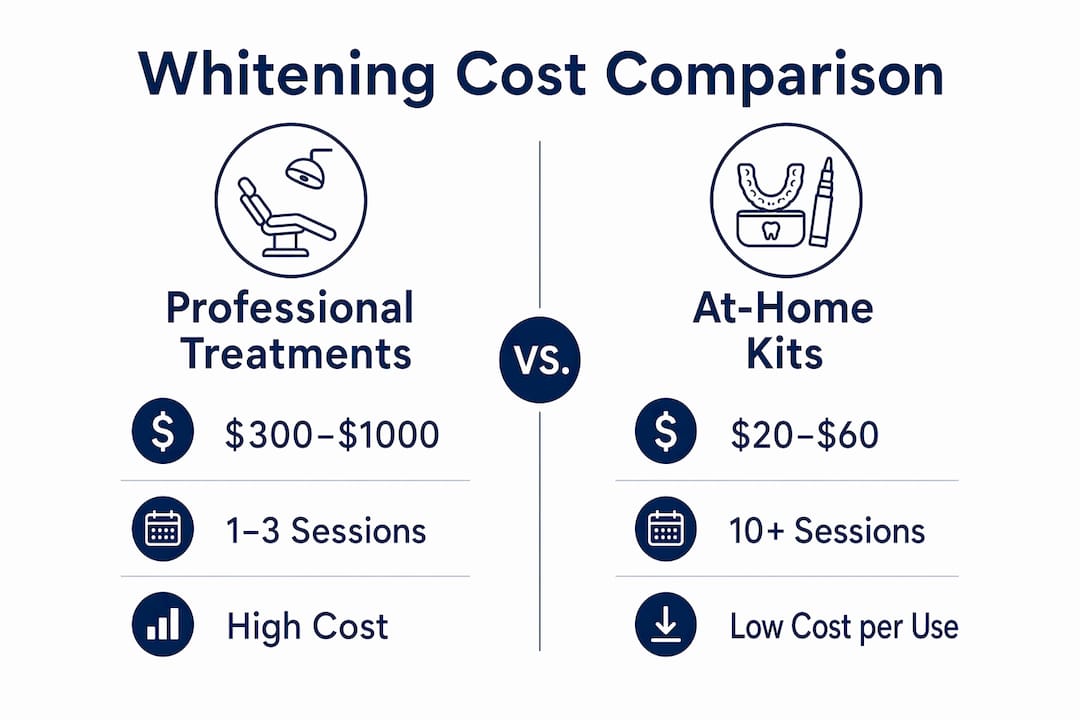
How do whitening kit costs compare to professional treatments?
Professional whitening costs range from $300 to over $1,000 per treatment session. OTC kits generally price between $20 and $60. That is not a minor difference. It is a 10x to 20x price gap for a single treatment cycle.
Professional treatments carry costs beyond the bleaching agent itself. You pay for the dentist’s time, the clinical staff, the specialized equipment, the office lease, and the liability insurance built into every appointment. None of those costs exist when you whiten at home. The kit price reflects only the product.
The smarter comparison, though, is cost per session rather than sticker price. A $25 kit with 10 sessions costs $2.50 per use. A $60 kit with 20 sessions costs $3.00 per use. But the $60 kit may offer better value because it covers more treatments, produces longer-lasting results, and reduces how often you need to repurchase. Buying cheap and buying often is rarely the most economical path.
| Treatment type | Typical cost | Sessions included | Cost per session |
|---|---|---|---|
| In-office professional | $300–$1,000 | 1 | $300–$1,000 |
| Dentist custom tray kit | $100–$400 | 10–20 | $10–$40 |
| OTC whitening strips | $20–$50 | 10–20 | $1–$5 |
| OTC whitening pen | $15–$40 | 20–30 | $0.50–$2 |
The table shows a clear pattern. Professional treatments cost more per session by a wide margin. For people managing mild to moderate staining, gradual whitening results from OTC kits are satisfactory and far more affordable over time.
Pro Tip: Calculate cost per session before buying any kit. Divide the price by the number of included applications. A higher upfront price often means a lower cost per use and better long-term savings.
One honest caveat: cheaper kits sometimes cut corners on fit or formula. Strips with poor adhesion can cause uneven whitening due to inconsistent contact with tooth surfaces. Spending a few dollars more on a well-reviewed kit with good fit protects both your results and your money.
Does safety affect the economic value of whitening kits?
Safety directly determines whether a whitening kit saves you money or costs you more in the long run. Using a kit on unhealthy teeth can cause severe pain and trigger expensive dental interventions. Whitening on cavities or exposed dentin forces bleaching agents into unprotected nerve tissue, which can lead to root canals or other costly procedures. A $30 kit that causes a $1,500 dental emergency is not economical by any measure.
A dental checkup before whitening is the most cost-effective step you can take. It confirms your teeth are healthy enough to bleach and prevents complications that would wipe out any savings. Think of it as protecting your investment before you make it.
Here are the key safety factors that affect the real cost of whitening:
- Existing cavities or cracks: Bleaching agents penetrate damaged enamel and irritate nerves. Treat decay first.
- Gum recession or exposed dentin: These areas lack enamel protection and react painfully to peroxide.
- Crowns, veneers, or bonding: Whitening agents do not change the color of dental restorations. Whitening natural teeth around them creates visible mismatches.
- Sensitivity history: People with naturally sensitive teeth should choose kits with desensitizing agents like potassium nitrate. Many OTC kits include these additives specifically to reduce discomfort.
- Overuse: Using kits more frequently than directed does not speed results. It increases sensitivity and enamel wear, both of which require professional attention.
The economic logic is simple. Safe use preserves your dental health, which is far more expensive to repair than to maintain. Kits that include desensitizing ingredients add value without adding cost. Getsmilefam’s BLU Whitening Technology uses enamel-safe formulas without harsh peroxide concentrations, which addresses sensitivity concerns directly. Choosing a kit built with safety in mind is not a luxury. It is the economical choice.
How to get the most value from your whitening kit
Getting full value from a whitening kit requires more than opening the box and following the instructions once. Consistency, timing, and maintenance all affect how long your results last and how much you spend over time.
-
Choose kits with a strong cost-per-session ratio. Count the number of applications included before buying. A kit with 20 sessions at $50 beats a kit with 5 sessions at $20 every time you plan to whiten regularly.
-
Follow the instructions exactly. Skipping sessions or shortening wear time reduces results. Extending wear time beyond instructions increases sensitivity. Neither outcome is economical. Sticking to the schedule produces the whitening the formula was designed to deliver.
-
Whiten consistently over the full treatment cycle. Most kits work best when used daily or every other day for the full recommended period. Stopping early and restarting wastes product and time.
-
Maintain results with affordable daily products. A whitening toothpaste used after the treatment cycle extends results without the cost of another full kit. Getsmilefam’s BLU Whitening Toothpaste is designed as a maintenance product that supports results between whitening sessions.
-
Limit staining foods and drinks during treatment. Coffee, red wine, and dark berries re-stain teeth faster than whitening agents can work. Cutting back during the treatment window stretches your results further.
-
Know when to upgrade. Deep intrinsic staining from antibiotics like tetracycline or fluorosis does not respond well to OTC kits. If two full treatment cycles produce no visible change, a professional consultation is the more economical next step. Spending $50 twice on a product that cannot work is not saving money.
Pro Tip: A hybrid approach works well for many people. Start with a professional session to achieve a strong baseline, then use kit-based maintenance to hold results at a fraction of the ongoing cost. This balances results and economy better than either option alone.
For a broader look at money-saving whitening strategies, Getsmilefam covers practical approaches that work across different budgets and goals. You can also explore affordable whitening options from oral care brands that prioritize daily accessibility.
Key Takeaways
Whitening kits are economical because they deliver proven bleaching results through self-administration, lower ingredient concentrations, and zero clinic overhead, making them the strongest cost-per-session value in dental cosmetics.
| Point | Details |
|---|---|
| Cost gap is significant | OTC kits cost $20–$60 versus $300–$1,000 for professional in-office treatments. |
| Calculate cost per session | Divide kit price by number of applications to find true value, not just sticker price. |
| Safety protects your savings | Whitening on unhealthy teeth can cause expensive complications that erase all cost benefits. |
| Maintenance extends results | A whitening toothpaste used after treatment reduces how often you need a full kit cycle. |
| Hybrid approach maximizes value | One professional session followed by kit maintenance delivers strong results at lower long-term cost. |
Why I think most people underestimate the value of at-home whitening
People consistently overestimate what professional whitening delivers and underestimate what a good kit can do. I have seen this pattern repeatedly. Someone spends $600 on an in-office treatment, gets a dramatic result, and then watches it fade within six months because they did nothing to maintain it. Meanwhile, someone else spends $45 on a quality kit, uses it correctly, and maintains results with a whitening toothpaste. After a year, the second person has a comparable smile and $500 more in their pocket.
The misconception driving this is that price signals quality in a direct, linear way. In teeth whitening, it does not. The chemistry is the same. The difference is concentration and who applies it. For mild to moderate staining, which covers the majority of people who want whiter teeth, a well-chosen OTC kit is genuinely sufficient.
The one thing I would caution against is buying the cheapest option available without checking the ingredient concentration or session count. A $10 kit with 5 sessions and 1% peroxide is not a bargain. It is a waste. Spend a little more, get a kit with real concentration and enough sessions to complete a full cycle, and you will get real results.
At-home whitening is not a compromise. For most people, it is the right call. The return on investment is strong when you choose well and use it consistently.
— Lenney
Getsmilefam’s BLU Kit: effective whitening without the high cost
Getsmilefam built the BLU Teeth Whitening Kit specifically for people who want real results without paying clinic prices. The kit uses BLU Whitening Technology, developed in Singapore, with an enamel-safe formula that skips harsh peroxide concentrations. It is designed for sensitive gums and delivers visible results within a single session.
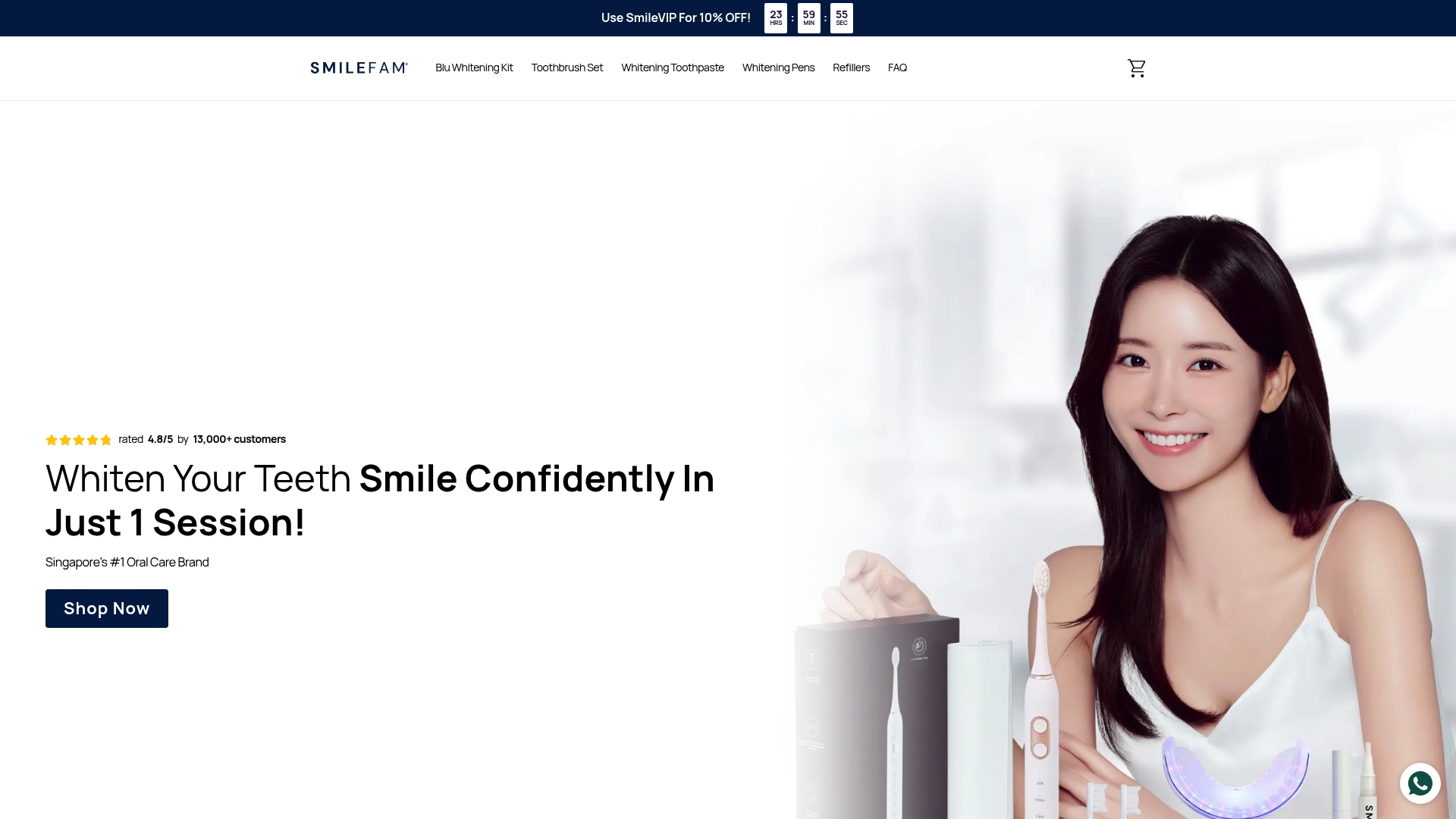
The BLU Kit covers multiple sessions per purchase, which keeps the cost-per-use low. Lab-approved ingredients and a gentle formula mean you are not trading safety for savings. For anyone building an affordable whitening routine, Getsmilefam also offers the BLU Whitening Toothpaste as a daily maintenance option that keeps results going between full kit cycles. Both products reflect the same principle: effective dental care does not have to be expensive.
FAQ
Why are whitening kits so much cheaper than professional treatments?
OTC kits cost less because they use lower ingredient concentrations and require no clinical staff, equipment, or office overhead. Professional treatments bundle all those costs into the session price.
Is teeth whitening worth it if I use an at-home kit?
Yes, for mild to moderate staining, at-home kits deliver a 2–5 shade improvement within 14–20 days at a fraction of professional costs. The value is strong when you choose a kit with adequate ingredient concentration and enough sessions.
How do I calculate the real cost of a whitening kit?
Divide the kit price by the number of included applications to get cost per session. A cost-per-use calculation reveals that a higher-priced kit with more sessions often costs less per use than a cheaper kit with fewer sessions.
Can whitening kits cause expensive dental problems?
Using a kit on unhealthy teeth, such as those with cavities or exposed dentin, can cause severe pain and lead to costly treatments. A dental checkup before whitening is the most economical way to avoid that risk.
What is the most cost-effective whitening strategy long-term?
A hybrid approach works best: one professional session to establish a strong baseline, followed by regular kit-based maintenance to hold results. This delivers strong cosmetic outcomes at a significantly lower ongoing cost than repeated professional treatments.