

Yes, baking soda teeth whitening works on surface stains but does nothing for discoloration inside the tooth. It lifts coffee, tea, and tobacco stains through mild abrasion and by neutralizing the acids that let stains cling to enamel. What it won’t do is bleach a tooth that’s gray or yellow from the inside out, and it should never replace your fluoride toothpaste.
- Removes surface stains through gentle scrubbing and pH balancing, not bleaching
- Works on extrinsic (surface) discoloration from coffee, tea, wine, and smoking
- Cannot lighten intrinsic stains caused by aging, medication, or trauma
- Use occasionally, not daily, and keep fluoride toothpaste in your regular routine
Key Takeaways
Baking soda lifts surface stains through mild abrasion and pH buffering, but it can’t bleach intrinsic discoloration and shouldn’t replace fluoride toothpaste.
| Point | Details |
|---|---|
| Surface stains only | Baking soda removes extrinsic stains from coffee, tea, and tobacco, not internal tooth discoloration. |
| Stick to twice weekly | Overuse wears down enamel faster than it can recover, raising sensitivity risk. |
| Skip acidic DIY mixes | Never combine baking soda with lemon juice or vinegar, since acids erode enamel permanently. |
| Expect two to six weeks | Visible surface change from consistent, moderate use typically takes several weeks, not days. |
| Consider a tested formula | Getsmilefam’s Snow Serum™ Whitening Pen offers a peroxide-free, enamel-safe option for faster results without DIY guesswork. |
This article is general information, not a substitute for advice from a qualified doctor. Consult a qualified healthcare professional about your own circumstances before acting on anything here.
Table of Contents
- How Baking Soda Teeth Whitening Actually Works
- How to Use Baking Soda for Whitening Safely
- Mixing Baking Soda With Peroxide: What’s Safe and What’s Risky
- Risks, Warning Signs, and When to See a Dentist
- When to Choose Something Other Than a DIY Paste
- What Credible Whitening Advice Should Look Like
- Potential Effects of Baking Soda on Gum Health
- Getting Better Whitening Results Without Extra Risk
- Sources
How Baking Soda Teeth Whitening Actually Works
Sodium bicarbonate is a mild abrasive. Dentists measure abrasiveness with a scale called relative dentin abrasivity (RDA), and baking soda sits toward the lower end of that scale compared with many whitening toothpastes on the market. That’s the whole mechanism, really: tiny particles physically buff away the surface layer where stains have settled, while the alkaline pH counteracts the acidic environment that lets plaque and stain molecules stick around.
The research backs this up. A peer-reviewed review published in JADA found that toothpastes formulated with baking soda carry low intrinsic abrasivity and perform safely and effectively when they stay within regulatory RDA limits. That last part matters. The safety data applies to tested, regulated formulations, not to whatever ratio you eyeball at your bathroom sink.
A few things the science makes clear:
- Baking soda cleans mechanically and chemically, but it isn’t a bleaching agent
- It targets extrinsic stains sitting on enamel, not intrinsic color trapped in dentin
- Clinical safety findings apply specifically to tested toothpaste formulations, not loose DIY pastes
- Abrasivity depends heavily on particle size and how much pressure you apply while brushing
If your teeth look yellow because of coffee habits, baking soda has a real shot at helping. If they look gray or streaked from an old antibiotic or a childhood fall, no amount of scrubbing will change that.
How to Use Baking Soda for Whitening Safely
Keep it simple and keep it occasional. Here’s a method that lines up with what dental sources actually recommend, rather than the exaggerated versions you’ll find on social media.
- Mix a mild paste. Combine one part baking soda with one part water until it forms a loose, spreadable paste. Skip the recipes calling for straight baking soda with no water; that concentration is unnecessarily harsh.
- Or sprinkle it on your toothpaste. Wet your toothbrush, dab on your normal fluoride toothpaste, then sprinkle a light pinch of baking soda over it. This softens the abrasive load compared to a standalone paste.
- Brush gently in small circles. Skip the back-and-forth scrubbing motion. Total brushing time with the abrasive mix should stay around 60 to 90 seconds.
- Rinse and follow with fluoride toothpaste if you used a standalone baking soda paste, since baking soda alone won’t protect against cavities the way fluoride does.
- Limit this to twice a week. More frequent use raises your risk of wearing down enamel faster than it can recover.
Watch for a gritty, squeaky feeling on your teeth after rinsing. That’s normal in small amounts, but if it lingers for hours or you notice sensitivity to cold drinks, ease off immediately.
As for results, don’t expect an overnight transformation. Colgate notes that baking soda based products typically take two to six weeks of consistent, moderate use before you notice a visible difference. Some short clinical trials have shown faster surface changes within days when people brushed twice daily, but those studies were small and results vary a lot from person to person.
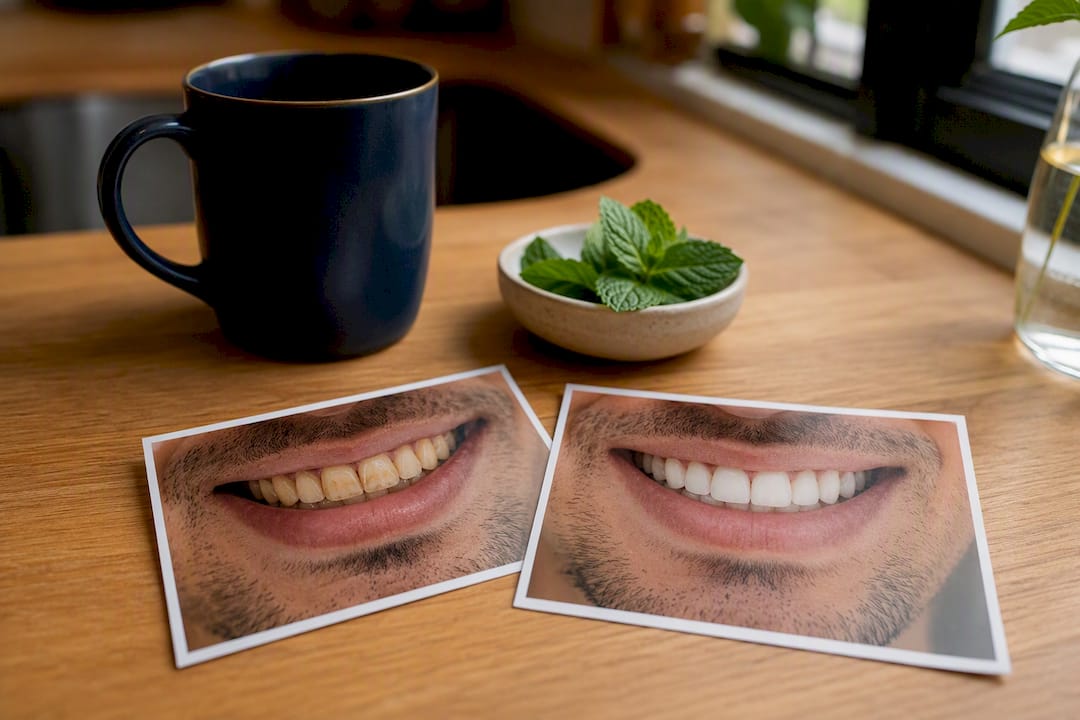
Pro Tip: Take a photo of your smile in the same lighting before you start. Two weeks of baking soda use produces subtle change, and side-by-side photos catch progress your eyes will miss day to day.
Mixing Baking Soda With Peroxide: What’s Safe and What’s Risky
Adding hydrogen peroxide to baking soda does boost whitening power because peroxide is an actual bleaching agent, not just an abrasive. But household hydrogen peroxide varies wildly in concentration, and pharmacy bottles are often stronger than what’s appropriate for direct gum contact. A commercial product with peroxide dosed and tested for oral use is the safer route if you want that extra lift.
- Peroxide chemically breaks down stain compounds; baking soda only scrubs and buffers
- Home mixing risks uneven concentration, which can burn gum tissue or spike sensitivity
- Never mix baking soda with lemon juice or vinegar. Acids erode enamel permanently, and dental researchers at the University of Rochester Medical Center warn that this kind of DIY acid trend causes damage that whitening alone can’t undo.
Risks, Warning Signs, and When to See a Dentist
Overuse is where baking soda whitening goes wrong. Brush too often or too hard, and you wear down enamel faster than your mouth can compensate, exposing the dentin layer underneath, which is more porous and far more sensitive to heat and cold.
Watch for these warning signs:
- Sharp or lingering sensitivity to hot, cold, or sweet foods
- Teeth that look more translucent or yellow at the edges (a sign of thinning enamel, since dentin shows through)
- Gum redness, soreness, or bleeding after brushing
- Uneven whitening, where some teeth lighten and others don’t
If you notice any of these, stop and see a dentist rather than pushing through. One additional detail worth knowing: swallowing large amounts of baking soda can disrupt your body’s normal blood pH, a condition called metabolic alkalosis, though Verywell Health notes the tiny amount you might swallow while brushing is generally not a concern. Still, spit, don’t swallow.
Baking soda also contains no fluoride, so it can’t protect against cavities. Using it as a full-time toothpaste substitute leaves your teeth without that daily defense.
When to Choose Something Other Than a DIY Paste
Baking soda earns its place as an occasional touch-up, not a whitening system. When stains run deeper or your timeline is shorter, other options make more sense.
- Commercial baking-soda toothpastes blend the same mild abrasive with fluoride and a regulated RDA rating, giving you cleaning and cavity protection in one step. Healthline recommends these over homemade pastes for exactly that reason.
- OTC peroxide whitening kits work faster than baking soda alone since peroxide bleaches rather than just scrubs, though they carry a higher sensitivity risk if overused.
- Professional in-office bleaching gives you the most control and the fastest visible change, ideal for intrinsic stains or anyone with veneers, crowns, or chronic sensitivity that makes DIY methods risky.
If your stains have been building for years, or you’ve got any dental restorations in your mouth, a conversation with your dentist beats another round of guesswork.
What Credible Whitening Advice Should Look Like
Good advice on this topic points to actual research, not just anecdote. A JADA review of dentifrice abrasivity is the kind of source that should back any claim about whether a whitening method is safe for daily use, and it’s worth asking any brand you’re considering whether their formulations have been tested against that same RDA standard.
Getsmilefam’s own product claims, including its BLU Whitening Technology and the Snow Serum™ Whitening Pen, are built around staying peroxide-free and enamel-safe. Readers evaluating any whitening product, from a $5 tube of toothpaste to a specialty pen, should ask the same three questions:
- Has the formulation been tested for RDA or abrasivity limits?
- Does the brand disclose its ingredient list in full?
- Are there independent reviews or dental commentary beyond the company’s own marketing?
The gap between a DIY paste and a lab-formulated product isn’t marketing spin. It’s the difference between an untested ratio you mix at home and a formulation that’s been checked against abrasivity and safety standards before it ever reaches your mouth.
If you have a specific dental condition or existing restoration, a dentist’s answer to these questions carries more weight than any product page.
Potential Effects of Baking Soda on Gum Health
Baking soda’s effect on gums is mostly a story of tolerance versus irritation. Its alkaline nature and mild antibacterial action can actually reduce the acidic environment that lets plaque bacteria thrive along the gumline, which is part of why some people notice their gums feel cleaner after using it short term.
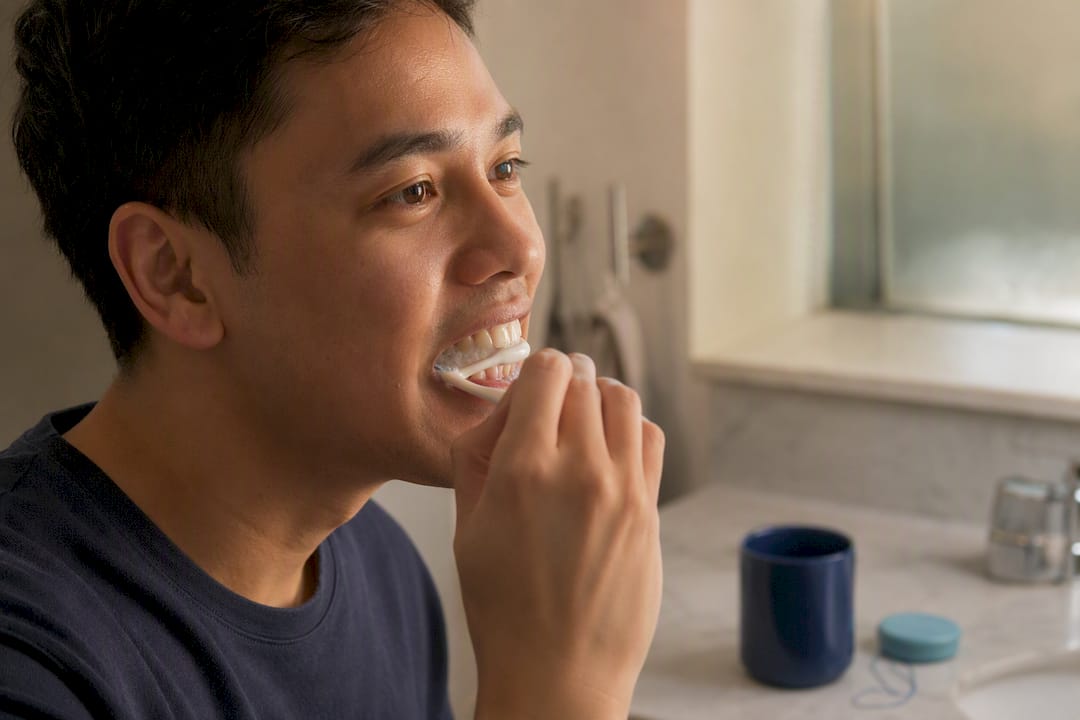
The flip side shows up with pressure and frequency. Brushing too hard with a gritty paste irritates soft gum tissue the same way it wears down enamel, leading to redness, tenderness, or minor recession over time. People with already sensitive or thin gums, including anyone dealing with early gum recession, should be more cautious since abrasive brushing accelerates tissue wear in areas that have less protection to begin with.
There’s also a practical detail people miss: baking soda’s gritty texture makes it easy to scrub harder than you realize, especially if you’re used to a smooth commercial toothpaste. If you switch to a baking soda paste, pay attention to how much pressure you’re applying, not just how long you brush. A soft-bristled brush and a genuinely light touch make the difference between a paste that helps and one that quietly damages gum tissue over months of use.
Anyone with diagnosed gum disease should treat baking soda as an added variable to discuss with a dentist rather than a standalone home remedy.
Getting Better Whitening Results Without Extra Risk
Baking soda alone can only do so much, but a few habits around it stretch its effectiveness without adding wear to your enamel. Diet plays the biggest role here. Coffee, red wine, dark tea, and tobacco are the main culprits behind the surface stains baking soda targets, so cutting back on frequency, or rinsing with water right after, reduces how much new staining you’re fighting against.
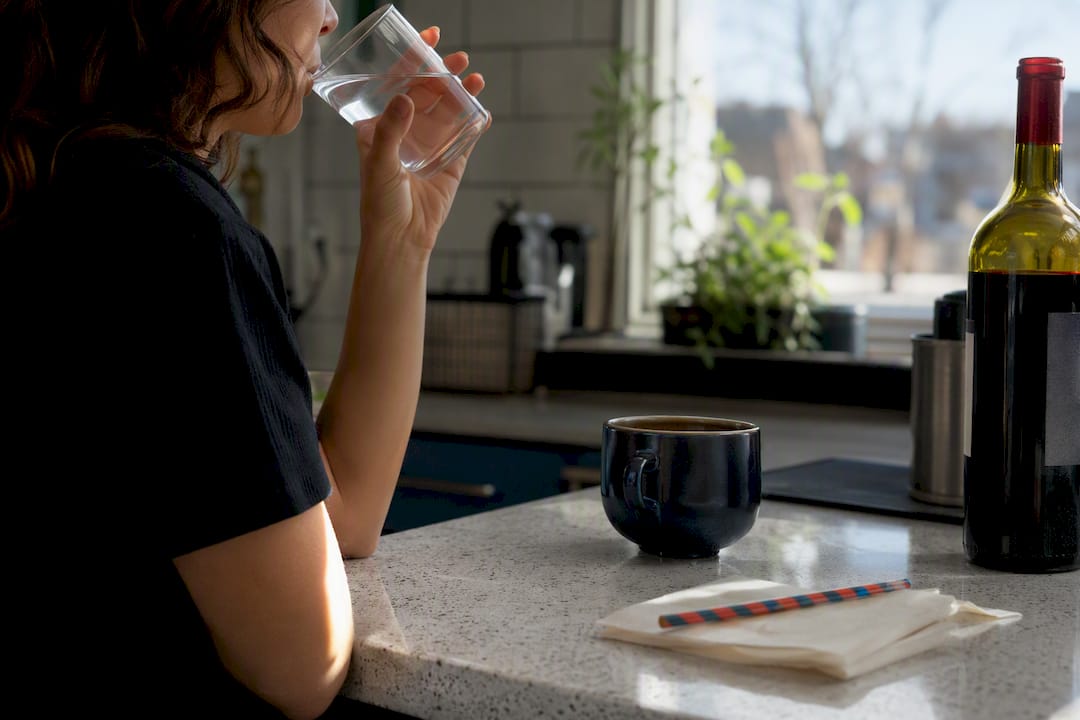
Hydration matters more than people expect. Saliva naturally buffers acids in your mouth and helps prevent new stains from setting, so drinking water throughout the day supports whatever whitening progress you’re making. Using a straw for staining drinks limits contact between the liquid and your front teeth entirely.
Timing also counts. Brushing right after acidic foods or drinks (citrus, soda, wine) can actually accelerate enamel wear because the acid has already softened the surface. Waiting 30 minutes before brushing, even with a mild baking soda mix, protects enamel that’s temporarily more vulnerable. Pair occasional baking soda use with a consistent fluoride toothpaste routine and regular dental cleanings, and you’ll hold onto results longer than any single method can deliver on its own.
A Straightforward Take on DIY Whitening
Baking soda has earned its reputation honestly. It’s cheap, it works on the stains it can actually reach, and the research backs its safety within reason. What frustrates me is watching people layer risk onto it, mixing in lemon juice or brushing daily, chasing faster results than the method was ever built to deliver. When I want something faster or gentler on sensitive teeth, I reach for a lab-tested, enamel-safe product instead of pushing a home recipe past its limits. Pair the basics, occasional baking soda and real fluoride toothpaste, with actual dental checkups, and you’ll get further than any trend promises.
— Lenney
An Enamel-Safe Shortcut When DIY Isn’t Enough
If you’ve read this far, you already know the tradeoffs: baking soda is cheap and safe in moderation, but it’s slow, and pushing it harder than twice a week risks the enamel wear this whole guide just warned you about. Getsmilefam built the Snow Serum™ Whitening Pen and its BLU Whitening Technology specifically for people who want visible results without gambling on a DIY ratio or waiting six weeks to see a difference.
The formula skips hydrogen peroxide entirely and relies on lab-approved, enamel-safe ingredients designed for sensitive gums, which matters if you’ve already experienced the sting that comes with overdoing an acidic or abrasive home mix. Every ingredient is listed openly, so you can check exactly what’s going into your mouth before you commit. If you want a closer look at what makes a whitening ingredient genuinely enamel-safe, Getsmilefam’s ingredient guide breaks down what to check for in any product, not just this one. When you’re ready to move past the mixing bowl, the Premium Travel Kit is a straightforward place to start, and if anything about your teeth or gums feels off, loop in your dentist before adding any new product to your routine.
Sources
- Baking soda as an abrasive in toothpastes: Mechanism of action and safety and effectiveness considerations — PubMed (JADA review)
- Brushing teeth with baking soda: Safety and effectiveness — Verywell Health
- Baking soda as toothpaste and for whitening — Healthline