

LED beats UV for nearly every at-home or in-office whitening scenario, mainly because it runs cooler and skips UV radiation entirely. But the bigger truth researchers keep confirming is that neither light does the actual bleaching. Peroxide breaks down stains; light just tries to speed that reaction along. Choose enamel-safe formulas and professional guidance over chasing the light source itself.
TL;DR:
- Peroxide concentration and application technique determine whitening results more than whether a light is used, regardless of light type.
- LED lights emit visible blue light and generate less heat, making them safer and more common than UV in professional and home whitening kits.
- Evidence shows light activation does not reliably improve long-term whitening outcomes and may increase tooth sensitivity risk.
- High-strength gels require professional supervision to minimize enamel damage and sensitivity, especially when used with stronger light sources.
- Choosing enamel-safe formulations and verifying peroxide levels are more important for safety and efficacy than the presence of a UV or LED light attachment.
Table of Contents
- LED vs UV Whitening: What Actually Happens Chemically
- How LED Whitening Works and Where It Fits
- UV Whitening’s History and Why It Fell Out of Favor
- Does the Light Actually Improve Whitening Results?
- Enamel, Sensitivity, and Eye Safety: What to Watch For
- How to Choose Between LED, UV, or No-Light Whitening
- Where Getsmilefam Fits the Safety-First Checklist
- A Straight Answer on Light Versus Chemistry
- Try an Enamel-Safe At-Home Option Built Around This Same Logic
- Sources
LED vs UV Whitening: What Actually Happens Chemically
Whitening gels work because peroxide, whether hydrogen peroxide or carbamide peroxide, breaks down into free radicals that oxidize the pigmented molecules staining your enamel. Light is supposed to speed that oxidation, not create it. That distinction gets lost in a lot of marketing copy.
- Peroxide does the bleaching. No gel, no whitening, regardless of what light you shine on it.
- Light types differ in energy and heat. Visible blue LED light and ultraviolet light interact with peroxide differently, and UV runs considerably hotter.
- Application matters more than illumination. Concentration, exposure time, and enamel condition tend to drive the final result more than whether a light was involved at all.
How LED Whitening Works and Where It Fits
LED devices used in whitening typically emit visible blue light in the 480 to 520 nanometer range, and they generate far less heat than older UV lamps. That lower heat output is the whole reason LED has become the default in most clinics and OTC kits. Colgate’s own guidance notes that LED devices don’t emit UV radiation at all, which makes them a safer alternative when used correctly.
- Minimal soft-tissue heating compared with UV lamps
- No UV exposure, which lowers eye and skin risk with proper use
- Widely available in both professional and consumer kits
The catch: LED light alone doesn’t bleach anything. Effectiveness still comes down to the strength of the gel and how well you follow the instructions. Most OTC LED kits pair with lower peroxide concentrations than what a dentist uses in-office, which is part of why at-home results tend to build gradually rather than transforming your smile in one sitting.
Pro Tip: Check the peroxide percentage on the label before you check the light specs. A weak gel under a strong light still gives weak results.
UV Whitening’s History and Why It Fell Out of Favor
UV light carries higher energy than visible blue light, and that extra energy can generate more heat, which in theory accelerates the peroxide reaction faster than LED does. That speed came with real trade-offs. Higher heat and UV exposure raise the risk to soft tissue and eyes, which is exactly why UV-based systems have largely disappeared from modern practice.
- In-office UV use, where it still exists, happens under professional supervision with protective shielding
- At-home UV kits are essentially unregulated, and the risk profile is harder to control outside a clinic
- Clinics have shifted toward LED because it delivers comparable outcomes with a much lower risk profile
A Dental Designs Clinic review of the two technologies puts it plainly: LED has largely replaced UV in professional settings because it avoids the radiation and heat that drove sensitivity complaints. If you see an at-home kit marketed with a UV lamp, treat that as a warning sign rather than a selling point.
Does the Light Actually Improve Whitening Results?
The evidence is more mixed than most marketing pages let on. A systematic review published in PMC examining tooth whitening research found no consistent evidence that light activation improves long-term whitening outcomes, and light exposure was associated with an increased risk of tooth sensitivity during in-office bleaching.
The trade-off in one line: Light may speed up short-term color change in some protocols, but it doesn’t reliably improve the final result, and it can raise your sensitivity risk in the process.
Why the conflicting claims, then? Study design varies enormously. Peroxide concentration, gel formulation, application time, and how well the gums are protected during treatment all swing outcomes independently of whether a light was used. Industry commentary from Ultradent echoes this, pointing to repeated studies that found no added whitening benefit from light activation at all. The practical read: don’t pay a premium for a light claiming dramatic extra whitening power. Pay attention to the gel.
Enamel, Sensitivity, and Eye Safety: What to Watch For
The real risk in whitening isn’t the light. It’s the peroxide, and light activation doesn’t cancel that risk out. Research cited in the same PMC review found that 35% hydrogen peroxide can reduce enamel crystallinity on its own, while cold-light activation added no measurable extra effect on that demineralization. Sensitivity and soft-tissue exposure are the two things worth managing closely.
- Use enamel-safe formulations rather than maximum-strength gels whenever possible.
- Ask about gel barriers or gum shields if you’re getting a professional treatment with high-concentration peroxide.
- Follow labeled exposure times exactly, especially for OTC LED kits, since overuse raises sensitivity risk.
- Get high-strength gels fitted and monitored by a dental professional rather than self-administering them.
- If a device markets itself with a stronger lamp, ask what eye protection or shielding comes with it.
Pro Tip: If your teeth already feel sensitive to cold drinks, that’s your body flagging thinner enamel. Start with a lower-concentration, enamel-safe option before jumping to anything marketed as “maximum strength.”
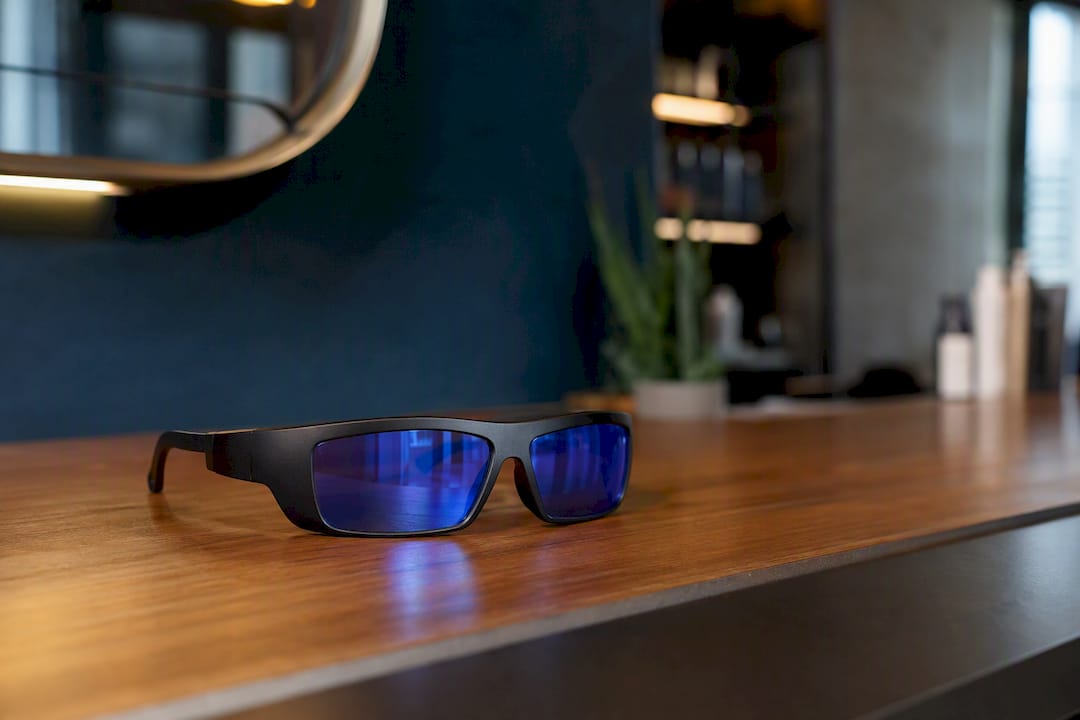
Some professional-grade lamps can exceed recommended blue-light exposure limits, which is one more reason shielding and proper protective eyewear matter whenever a stronger light source is involved.
How to Choose Between LED, UV, or No-Light Whitening
Skip the marketing copy and check the fundamentals instead. A whitening product’s peroxide disclosure tells you more than its light source ever will.
- Look for enamel-safe ingredient labeling, not just “whitening” on the box
- Confirm the peroxide concentration is disclosed, not hidden behind vague terms like “professional strength”
- Check that recommended exposure times are listed clearly
- Verify that stronger gels come with professional oversight, not just a mail-order kit
- Walk away from any at-home kit built around a UV lamp
| Priority | What to look for | Why it matters |
|—|—|—| | Ingredient safety | Enamel-safe formula, no harsh peroxide overload | Prevents demineralization and long-term sensitivity | | Concentration disclosure | Clear peroxide percentage on packaging | Lets you judge real strength versus marketing claims | | Exposure guidance | Stated time limits per session | Overuse is a leading cause of sensitivity complaints | | Oversight | Professional fitting for high-strength gels | Reduces soft-tissue and enamel risk |
In-office treatment makes more sense than an at-home kit if you already deal with sensitivity, have visible restorations like crowns or veneers, or have uneven staining that needs targeted attention. For straightforward, mild to moderate staining, a well-formulated at-home LED option is usually enough. For more on spotting a genuinely enamel-safe formulation, the ingredient list matters more than the accessory kit.
Where Getsmilefam Fits the Safety-First Checklist
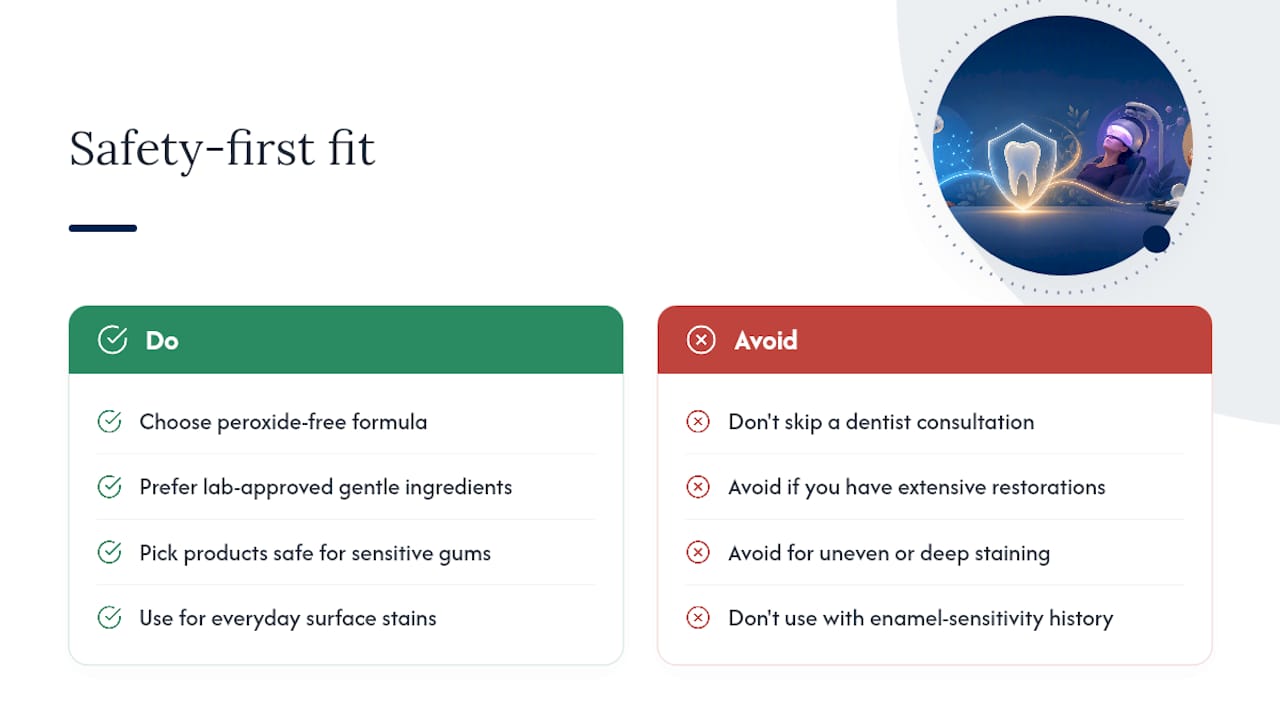
Getsmilefam builds its whitening line around the checklist above rather than around light-source hype. The proprietary BLU Whitening Technology, developed in Singapore, is formulated to work without hydrogen peroxide, using lab-approved ingredients designed to be gentle on sensitive gums. That directly answers the enamel-safety and sensitivity concerns raised throughout the research on light-activated whitening.
None of that replaces a dentist. If you have extensive restorations, uneven staining, or a history of enamel sensitivity, get a professional opinion before choosing any product, including this one. For most people dealing with everyday staining, an enamel-safe whitening pen built on that philosophy is a reasonable place to start.
A Straight Answer on Light Versus Chemistry
The whitening industry sells light like it’s the star of the show, and that’s backwards. Peroxide chemistry does the work; light is a supporting actor that sometimes speeds the scene along and sometimes just adds risk without adding results. The PMC review makes that case as clearly as any source I’ve read on this topic.
If you want a stronger in-office gel because of deep staining or a specific dental history, talk to a dentist first. Strong peroxide deserves professional oversight regardless of what light sits next to it. For everyday maintenance and mild staining, starting with an enamel-safe, LED-based at-home option is the lower-risk path, and it’s where most readers should begin before considering anything stronger.
— Lenney
Try an Enamel-Safe At-Home Option Built Around This Same Logic
If everything above tells you to prioritize the gel over the gimmick, that’s exactly what Getsmilefam’s Snow Serum™ Whitening Pen is built on. It skips hydrogen peroxide entirely, relies on lab-approved, enamel-safe ingredients, and is formulated to be comfortable for sensitive gums, without the demineralization concerns tied to high-strength peroxide gels.
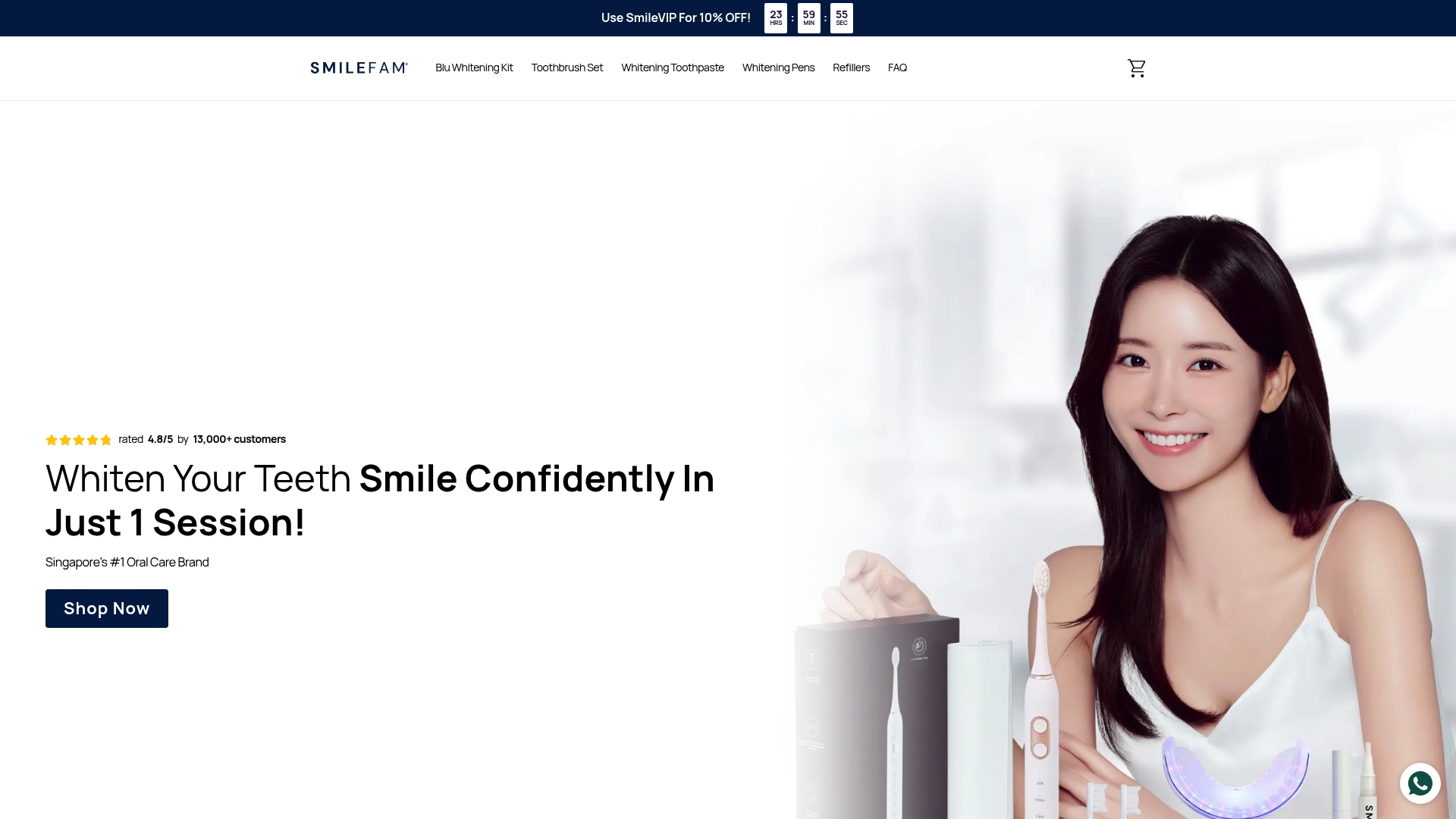
The pen is designed to deliver visible results after a single session, backed by a guarantee and a track record of customer reviews on the site. It’s a practical middle ground for anyone who wants a lower-risk, at-home alternative to salon bleaching without gambling on an unregulated UV kit. Check out the Premium Travel Kit if you want a version built for life on the move, or start with the standard formulation if you’re whitening from home.
This article is general information, not a substitute for advice from a qualified doctor. Consult a qualified healthcare professional about your own circumstances before acting on anything here.
Sources
- Tooth Whitening: What We Now Know - PMC
- Why LED Lights Are Unnecessary for Effective Teeth Whitening: Debunking the hype behind a modern dental procedure
- UV vs LED Teeth Whitening Lights: Which is safer for your smile? - Dental Designs Clinic