

No, you shouldn’t whiten your teeth during active gum disease. Get a periodontal assessment first. Bleeding gums, deep pockets, or active infection mean whitening gel can reach inflamed tissue and cause real damage. The American Dental Association and Mayo Clinic both point toward the same standard: treat the gums, confirm stability, then whiten under supervision.
TL;DR:
- Whitening should only be undertaken after a dental professional confirms gum stability, including pocket depth, bleeding, and absence of active infection, which can take months depending on severity.
- In-office whitening with a gum barrier or custom trays with lower peroxide concentrations are safer options once gums are stable, unlike OTC products that lack protection.
- Preparing gums with a professional cleaning and a desensitizing phase helps reduce sensitivity and minimizes damage when whitening, especially for receded or inflamed tissue.
- Avoid whitening products that contact unprotected gum tissue directly, such as strips, high-concentration peroxide kits, or improperly fitted trays, to prevent burns and severe irritation.
- Low-peroxide, enamel-safe whitening products from trusted brands like SmileFam are suitable for those with stable gums and can be integrated into a dentist-approved routine.
Table of Contents
- Why Whitening Can Harm Inflamed Gums
- How Dentists Decide If You’re Cleared to Whiten
- Safer Whitening Options Once Gum Disease Is Controlled
- Preparing Your Gums Before Whitening
- Products and Methods to Avoid
- A Publisher’s View on Fitting At-Home Whitening Into Clinical Care
- Where SmileFam’s Gum-Safe Options Fit After Clearance
- Sources
Why Whitening Can Harm Inflamed Gums
Whitening gels work because peroxide molecules are small enough to pass through enamel and dentin to reach the stain compounds underneath. That same quality is the problem. When gums are inflamed, swollen, or receding, there’s more exposed root surface and more broken tissue for that peroxide to touch directly instead of just passing through tooth structure.
Dentin near an exposed root has open tubules leading straight to the nerve. Peroxide sitting against that surface, or against an already-irritated gum margin, doesn’t behave like it does on healthy enamel. The American Dental Association notes that gingival irritation and temporary sensitivity are the most common side effects of peroxide-based whitening, and both get worse at higher concentrations.
The practical risks stack up fast when gum disease is already in the picture:
- Chemical burns where gel pools against inflamed or ulcerated tissue
- Sharp, “electric” sensitivity from open dentin tubules on exposed roots
- Uneven color results, since root surfaces don’t bleach the same way enamel does
- Worsened recession if irritation delays healing
A systematic review of whitening adverse effects found that sensitivity and gingival irritation are usually mild and temporary, but the risk climbs with peroxide strength. That’s a manageable trade-off for someone with healthy gums. For someone with active periodontal disease, it’s a different calculation entirely. Documented case reports have even linked bleaching agents contacting inflamed or ulcerated gum tissue to chemical burns and severe localized pain, the kind of outcome that’s entirely avoidable with the right sequencing.
How Dentists Decide If You’re Cleared to Whiten
Your dentist isn’t just eyeballing your smile before saying yes. Clearance for cosmetic whitening after gum disease usually comes down to a specific checklist:
- Pocket depths measured around each tooth, checked for stability rather than active deepening
- Bleeding on probing, which signals ongoing inflammation even if your gums look fine to you
- Active infection, including any abscess or unresolved periodontal pocket
- Tissue thickness and recession, since thin or receded gums expose more sensitive root surface
- Existing restorations, since fillings and crowns don’t lighten and can end up mismatched after whitening
Timelines vary a lot depending on how severe the disease was. Mild gingivitis often resolves within a few weeks of a professional cleaning. Treated periodontitis is a longer road: clinical literature on periodontal healing points to months of maintenance therapy before tissue is considered stable enough for cosmetic procedures.
Pro Tip: Walk into your dental visit with specific questions instead of a general “am I okay to whiten” ask. Try: “Are my pocket depths stable at my last two checkups?” and “How long after my scaling and root planing should I wait before whitening?” Specific questions get you specific, useful answers.
Safer Whitening Options Once Gum Disease Is Controlled
Once your dentist confirms stability, the method you choose matters almost as much as the timing did.
- In-office whitening with a gingival barrier: a dentist applies a protective resin or rubber dam over the gum line before the whitening agent goes on, which keeps peroxide off soft tissue while still delivering fast results.
- Dentist-prescribed custom trays for home use: trays molded to your exact teeth limit gel spillover onto gums, and the concentration is typically lower than in-office formulas. Mayo Clinic specifically recommends this route for patients with sensitivity or a periodontal history over generic strips.
- Non-peroxide, low-sensitivity formulas: PAP+ (phthalimidoperoxycaproic acid) and other desensitizing blends work through a different mechanism than hydrogen or carbamide peroxide, and tend to be gentler on already-compromised tissue.
What doesn’t belong on this list: anything bought off a shelf and applied without dental guidance, particularly if your gum disease history is recent. Custom trays and barrier-protected in-office treatment reduce gel contact with tissue in a way that generic OTC kits simply can’t match, because they’re built around your specific gum line instead of a one-size-fits-most mold.
Preparing Your Gums Before Whitening
A little prep work before you ever touch a whitening product, such as using an organic pulling oil, cuts down on both sensitivity and risk. Most dentists build this into a short pre-whitening window rather than skipping straight to treatment.
- Get a professional cleaning first. This clears plaque and tartar that could trap whitening gel against the gum line.
- Run a 1 to 2 week desensitizing phase. Potassium nitrate toothpaste, in-office fluoride varnish, or hydroxyapatite products help pre-seal exposed dentin tubules before you introduce any bleaching agent.
- Test tolerance gradually. A short trial session tells you and your dentist whether sensitivity is manageable before committing to a full course.
- Confirm clearance with a follow-up check. Stable pocket depths and no bleeding on probing at that visit are what most clinicians consider the green light.
Pro Tip: If your gums have already receded, treat the desensitizing phase as non-negotiable, not optional. Open dentin tubules on exposed roots are exactly where that “electric shock” sensitivity comes from, and a couple of weeks of remineralizing prep makes a real difference. Our preconditioning protocol for gum recession walks through the timing in more detail.
Products and Methods to Avoid
Skip anything that puts whitening agent directly against unprotected gum tissue while your gums are still healing or inflamed.
- Whitening strips and paint-on gels, which contact the gum margin with no barrier at all
- High-concentration peroxide kits used without dental supervision, especially repeated or extended applications
- Any tray that doesn’t fit your mouth precisely, since gaps let gel pool against soft tissue
Stop immediately and call your dentist if you notice burning, white patches on the gums, unusual bleeding, or sensitivity that spikes rather than fades. Those are signs the tissue is reacting badly, not just adjusting.
A Publisher’s View on Fitting At-Home Whitening Into Clinical Care
Once periodontal health is genuinely stable, an enamel-safe, low-irritant at-home option can reasonably slot into a dentist-approved plan. SmileFam’s product line, including its BLU Whitening Technology and the Snow Serum™ Whitening Pen, is built around peroxide-free formulation, which matters for anyone whose gums have already been through inflammation once. That doesn’t replace clinical judgment. The sequence that makes sense is periodontal treatment, then maintenance cleaning, then a desensitizing prep period, then either supervised in-office whitening or a gentler approved at-home regimen. Bring that sequence to your next dental visit and ask where your gums currently sit on it.
— Lenney
Where SmileFam’s Gum-Safe Options Fit After Clearance
Getsmilefam is the practical alternative to guesswork once your dentist has cleared you: an enamel-safe formula built to skip harsh peroxide altogether, positioned for people whose gums can’t tolerate the standard kit off a drugstore shelf.
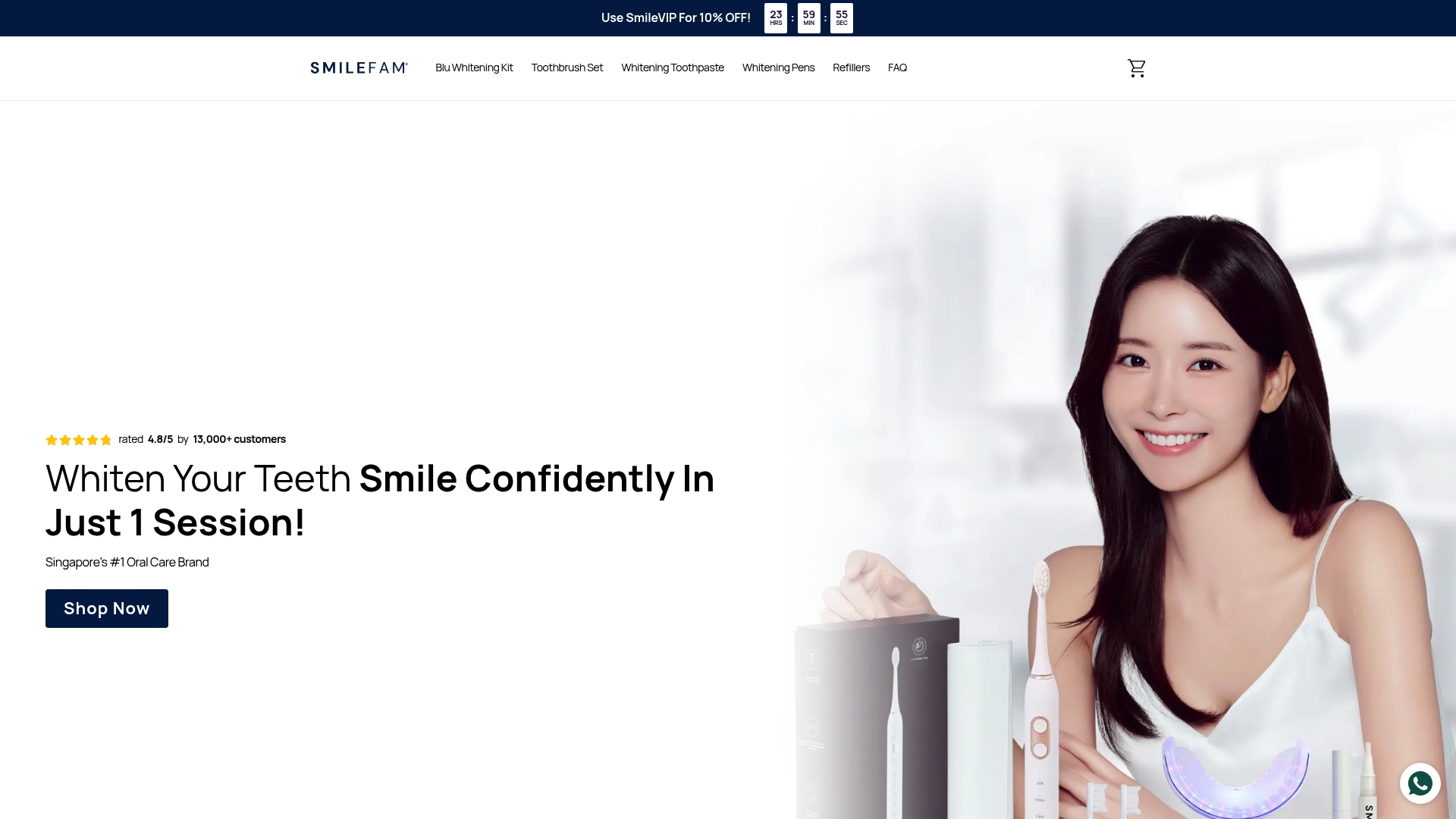
SmileFam offers whitening products built around lab-approved, enamel-safe ingredients without hydrogen peroxide, aimed at people who need a gentler whitening option. That’s exactly the profile of someone recovering from gum disease. None of that replaces your dentist’s sign-off. Use these products only after periodontal clearance, and raise them directly in conversation with your dentist so they know what’s going into your routine. If you’re already stable and looking for a gum-conscious next step, check the SmileFam sensitive-use options built for exactly this kind of case.
Sources
- American Dental Association — Whitening
- Mayo Clinic Q&A — Many safe choices available to help whiten teeth
- PMC review on tooth whitening adverse effects
This article is general information, not a substitute for advice from a qualified doctor. Consult a qualified healthcare professional about your own circumstances before acting on anything here.