

A straw can cut down how much a pigmented drink touches your front teeth, but it will not stop staining outright. Positioning is everything: aimed too far forward, a straw does almost nothing, while your back teeth and gum line stay exposed either way. Read on for the actual mechanics, the technique that makes a straw worth using, and the habits that matter more than the straw itself.
TL;DR:
- Using a straw properly positioned toward the back of the mouth can modestly reduce front tooth staining from pigmented drinks.
- The protective effect depends on how far back the straw is placed, with most people not achieving optimal positioning.
- Straws do little to prevent staining of back teeth, acid erosion, or pigment spread after swallowing, so they are only a supplementary measure.
- Rinsing with water immediately after drinking and waiting 30-60 minutes before brushing are more effective habits for stain prevention.
- Regular dental cleanings, fluoride use, and limiting drink frequency outperform straw use as primary strategies for maintaining teeth whiteness.
Table of Contents
- How Using a Straw to Prevent Stains Actually Works
- How to Position a Straw for Maximum Stain Protection
- Where the Straw Trick Falls Short
- Habits That Beat a Straw for Preventing Stains
- When Prevention Isn’t Enough: Time to See a Dentist
- Where Enamel-Safe Maintenance Fits Into the Picture
- A Practical Take on Straws and Staining
- A Simple Way to Maintain Your Results at Home
- Sources
How Using a Straw to Prevent Stains Actually Works
A straw only helps if it physically redirects liquid past the teeth that show when you smile. Aim the tip toward the back of your mouth, closer to your molars, and coffee, tea, or wine slides over less enamel surface area than it would from a regular sip. That is the entire mechanism. There’s no chemical protection involved, just reduced contact time.
Consumer-health reporting backs this up but with a real asterisk: drinking through a straw reduces contact between pigmented drinks and front teeth, yet it does not prevent staining entirely, because your back teeth still get exposed and saliva spreads pigment around after you swallow. Dental reviews describe the same pattern. Straws provide modest protection for front-tooth staining when placed correctly, but professionals treat the technique as a backup measure rather than a real defense.
Not every drink responds the same way:
- Tannin-heavy drinks (red wine, black tea, dark coffee) benefit the most from straw redirection because the staining pigments sit on the enamel surface.
- Acidic drinks (citrus juice, soda, some wines) get little benefit. A straw skips the enamel but does nothing about the acid softening it once it mixes with saliva.
- Highly pigmented sports and energy drinks fall somewhere in between, since they combine dye-based color with moderate acidity.
Quick fact: the protective effect of a straw depends almost entirely on how far back it sits in your mouth. Front-loaded sipping barely changes your exposure at all.
How to Position a Straw for Maximum Stain Protection
Getting real benefit from a straw takes more attention than most people assume.
- Push the straw past your front teeth, aiming the tip toward your molars before you sip. Most people stop too early and let the drink pool right against the teeth they’re trying to protect.
- Test your placement. Take one sip, then run your tongue across your front teeth. If you feel warmth or residue from the drink, the straw isn’t bypassing the area, and you need to reposition it.
- Choose a longer, rigid straw. Reusable metal or glass straws tend to hold their angle better than flexible plastic ones, which bend forward as you sip.
- Sip directly and briefly. Short, deliberate pulls beat swishing the drink around or holding it in your mouth before swallowing.
Pro Tip: If your drink touches your lips before it touches the straw tip, you’re sipping too shallow. Push the straw in until it clears your front teeth by at least half an inch.
Where the Straw Trick Falls Short
Straws solve one narrow problem and leave several others untouched.
- Back teeth still get exposed. Nobody drinks with a straw wedged directly against a molar, so pigment reaches those surfaces regardless.
- Saliva mixes pigment around after swallowing, spreading color across teeth the straw never touched in the first place.
- Acidic erosion continues unaffected. A straw changes where liquid lands, not its pH, so citrus and soda still soften enamel on contact.
- Habitual use carries its own downsides. Frequent straw use has been linked to lip lines from repeated pursing and to swallowing extra air, both worth weighing against the modest cosmetic upside.
- It can create false confidence. Treating a straw as full stain insurance often means skipping the habits that actually make a bigger difference, like rinsing or brushing routines.
Straws are a supporting habit, not a stand-in for brushing, flossing, or fluoride.
Habits That Beat a Straw for Preventing Stains
If you only adopt one change from this article, skip the straw and start rinsing. Plain water swished around your mouth right after coffee, tea, or wine washes away pigment before it has time to settle into enamel.

Brushing timing matters just as much. Wait 30 to 60 minutes after acidic or pigmented drinks before you brush, since acid softens enamel temporarily and brushing too soon can wear it down instead of cleaning it.
A few other adjustments outperform straw use on their own:
- Add milk to coffee or tea when you can. It dilutes the tannins that cause much of the visible staining.
- Drink pigmented beverages in one sitting rather than sipping across a few hours, which limits total exposure time.
- Keep fluoride toothpaste and regular flossing as your baseline. Reduced frequency, rinsing, fluoride, and professional cleaning together do more for your smile than a straw ever will.
- Book routine cleanings to remove surface buildup that home care alone won’t touch.
| Habit | What it targets | Effort level |
|---|---|---|
| Rinse with water after drinking | Surface pigment before it sets | Low |
| Wait before brushing | Enamel softened by acid | Low |
| Fluoride toothpaste, daily brushing | Overall enamel strength | Low |
| Reduce drink frequency/duration | Total exposure time | Medium |
| Professional cleanings | Buildup home care misses | Medium (cost/time) |
Small lifestyle adjustments around timing and drink habits tend to move the needle more than any single trick, straws included.
When Prevention Isn’t Enough: Time to See a Dentist
Extrinsic stains sit on the enamel surface and usually respond to rinsing, whitening toothpaste, or a professional clean. Intrinsic stains form inside the tooth structure, often from aging, certain medications, or old trauma, and no amount of rinsing or straw discipline touches them.
Watch for these signs that home habits have hit their ceiling:
- Staining that looks yellow or gray rather than surface brown, especially if it hasn’t budged in months.
- Discoloration on teeth that don’t get much direct beverage contact, a sign the cause may be internal.
- Sensitivity alongside the discoloration, which needs a dentist’s evaluation before any whitening attempt.
Before booking a whitening appointment, ask your dentist three things: what results are realistic for your stain type, how much sensitivity to expect, and what maintenance routine will keep the results once you’re done. A quick guide to tea-stain removal can help if you’re dealing specifically with tannin buildup rather than deeper discoloration.
Where Enamel-Safe Maintenance Fits Into the Picture
None of this replaces the basics: straw positioning, rinsing, fluoride, and regular dental visits still do the heavy lifting. Where a maintenance product earns its place is after those habits are already in motion, touching up stains that build back up between cleanings.
The approach centers on enamel-safe formulas that skip hydrogen peroxide, built for people who want visible upkeep without harsh chemicals or added sensitivity.
That positioning matters for anyone managing daily coffee or tea habits alongside sensitive gums. A maintenance routine built around rinsing, fluoride, and periodic touch-ups tends to outperform any single trick, straws included, because it stacks several small protections instead of relying on one.
A Practical Take on Straws and Staining
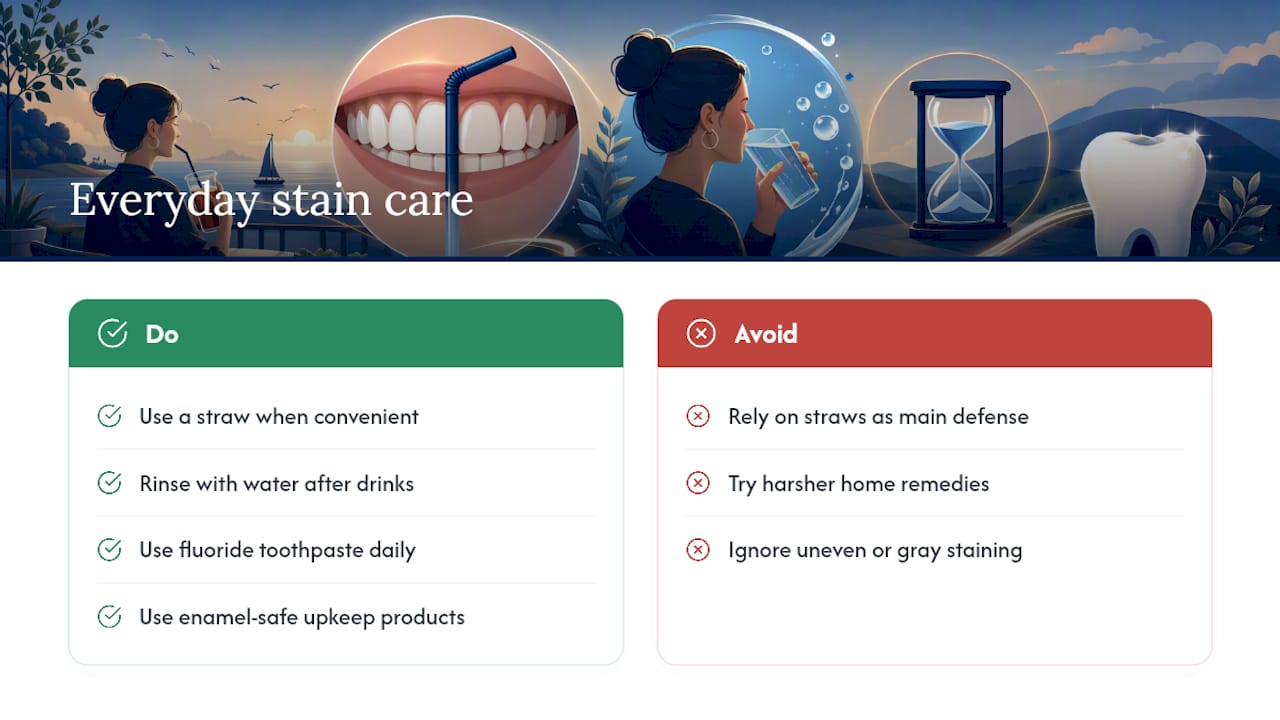
Use a straw when it’s convenient, especially with iced coffee or wine at a restaurant, but don’t treat it as your main defense. Rinsing with water and sticking to fluoride toothpaste will do more for your smile over a year than perfect straw technique ever could.
If staining persists despite good habits, or if it looks uneven or gray rather than surface brown, that’s worth a conversation with your dentist rather than another home remedy. For everyday upkeep between checkups, an enamel-safe option gives you a low-risk way to stay ahead of new staining without guessing at harsher treatments.
— Lenney
A Simple Way to Maintain Your Results at Home
Once you’ve got the rinsing, fluoride, and straw habits down, the gap that’s left is what happens to stains that sneak through anyway. That’s where a spot-maintenance product earns its keep, not as a replacement for prevention, but as the touch-up step after it.

The BLU Whitening Toothpaste is built for exactly that gap: an enamel-safe, peroxide-free formula designed for people managing sensitive gums who still want daily upkeep against coffee and tea buildup. It’s not a clinical whitening treatment, and it won’t fix intrinsic discoloration. It’s meant to slot into the same daily brushing routine you already have, catching the surface staining that habits alone don’t fully clear. If your gums flag easily with harsher whitening products, this is the lower-friction way to keep results steady between dentist visits. Add it to your routine and see how it fits your maintenance plan.
Sources
- Is Drinking Through a Straw Better or Worse for Your Health? - Healthline
- Does Drinking Through a Straw Protect Your Teeth? Myth vs. Reality — Dentist Decoded
This article is general information, not a substitute for advice from a qualified doctor. Consult a qualified healthcare professional about your own circumstances before acting on anything here.