

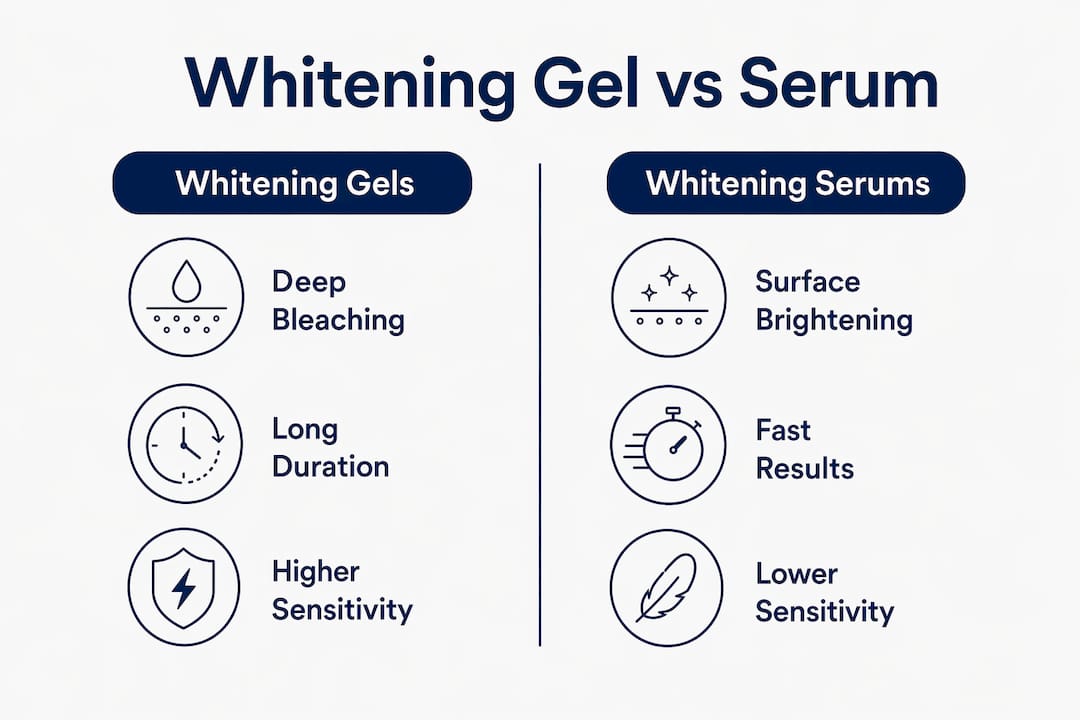
Whitening gels are peroxide-based bleaches that break down stain molecules inside enamel for deeper, longer-lasting results. Whitening serums are lower-dose or optical formulas designed for quick surface brightening with less sensitivity risk. The right pick depends entirely on what you’re trying to accomplish.
Quick scenarios:
- Fast one-time boost before an event: A serum or whitening pen (like the Snow Serum™ Whitening Pen from Getsmilefam) delivers visible brightening in minutes with minimal irritation.
- Long-term, multi-shade whitening: A carbamide peroxide or hydrogen peroxide gel used in trays over one to two weeks produces the most dramatic, lasting change.
- Sensitive teeth: Start with a low-concentration gel (3% HP or 8% CP) or a PAP-based serum. Both can whiten effectively while keeping sensitivity mild.
Table of Contents
- How do whitening gels and serums actually remove stains?
- What’s actually in whitening gels and serums?
- How much whitening can you realistically expect, and how fast?
- Are whitening gels and serums safe? What about sensitivity?
- How to apply whitening gels and serums correctly
- Which product should you choose for your goal?
- Real products that show how each category works
- When does Getsmilefam recommend a serum vs. a gel?
- Key Takeaways
- The gap between what whitening products promise and what actually matters
- The Snow Serum™ Whitening Pen delivers fast results without the tray hassle
- Useful sources
How do whitening gels and serums actually remove stains?
Gels work by chemistry. Hydrogen peroxide or carbamide peroxide penetrates the enamel surface and releases oxygen radicals that break apart the chromogen molecules responsible for yellow and brown discoloration. The stain doesn’t get scraped away — it gets oxidized into colorless compounds. That’s why gels can address stains that sit deeper in the tooth structure, not just on the surface.
Serums take a different approach. Many use low concentrations of peroxide for mild oxidation, while others rely on optical toners or blue-tinted pigments that counteract yellow tones visually. The result looks brighter immediately, but it’s partly an optical effect rather than a structural change to the tooth. Whitening pens fall into this category: brush-on, short contact time, great for maintenance or a quick touch-up.
Delivery method comparison:
- Gel in a tray or strip: Holds the active agent against the tooth surface for 30 minutes to overnight, maximizing contact time and penetration depth.
- Brush-on serum or pen: Applied directly to teeth in seconds, dries quickly, and works best for spot use or short-duration brightening.
- Professional in-office gel: Higher peroxide concentration applied by a dentist, often with light activation, for the fastest dramatic results.
Contact time and concentration together drive how much whitening actually happens. A gel sitting in a tray for 45 minutes delivers far more cumulative peroxide exposure than a serum that dries in two minutes — and that difference shows up in your results.
What’s actually in whitening gels and serums?
The active ingredient determines both how well a product whitens and how much sensitivity you’ll feel. There are three main categories.
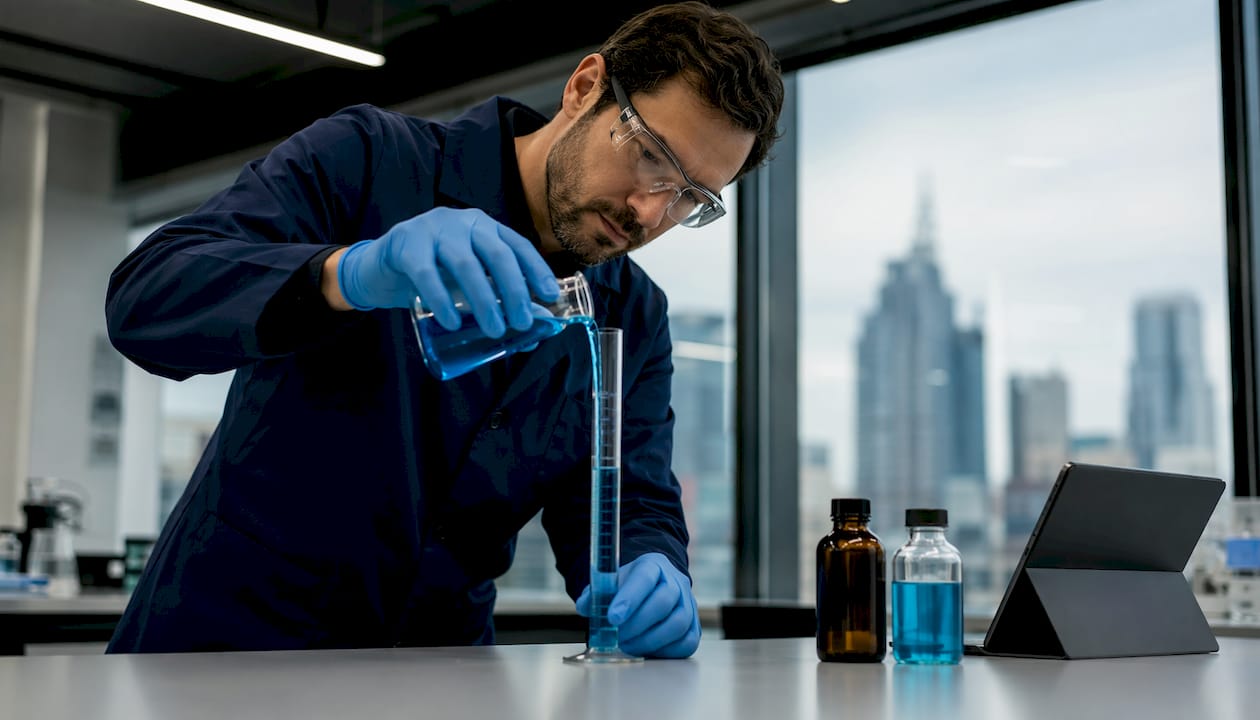
Hydrogen peroxide (HP) is the most direct bleaching agent. At-home gels typically run between 3% and 10% HP; professional formulas can reach 35–40%. It works fast but generates free radicals that can temporarily irritate the nerve inside the tooth, which is why higher concentrations carry a higher sensitivity risk.
Carbamide peroxide (CP) breaks down into hydrogen peroxide and urea in the mouth. It releases peroxide more slowly, which makes it gentler for overnight wear. OTC gels are available in 10%, 15%, 20%, and 35% CP concentrations, with wear times ranging from 30 minutes to overnight depending on strength. A 10% CP formula releases roughly 3.3% HP equivalent, putting it in the low-sensitivity zone.
PAP (phthalimidoperoxycaproic acid) is a newer non-radical oxidizing agent. Unlike peroxides, it doesn’t generate free radicals during the whitening process, which is why PAP-based formulas report less enamel microhardness change and lower sensitivity scores in marketed studies. An 18% PAP formula can deliver whitening comparable to standard peroxide products while avoiding the nerve irritation pathway entirely.
Optical toners and pigments don’t bleach at all. They deposit blue or violet pigment on the tooth surface to neutralize yellow tones. The effect is immediate but washes off within hours to days.
| Ingredient | Type | Typical at-home range | Sensitivity risk |
|---|---|---|---|
| Hydrogen peroxide | Chemical bleach | 3–10% | Moderate to high |
| Carbamide peroxide | Chemical bleach | 10–35% CP | Low to moderate |
| PAP | Non-radical bleach | Up to 18% | Low |
| Optical toners | Color-correcting | N/A | None |
One important nuance: formulation and pH matter as much as the percentage on the label. Two products at the same HP concentration can produce different sensitivity outcomes depending on their pH and the stabilizing agents used. Lower pH formulas tend to cause more enamel surface changes. For a deeper look at which ingredients are genuinely enamel-safe, Getsmilefam’s guide to enamel-safe whitening ingredients breaks this down by formula type.
How much whitening can you realistically expect, and how fast?
The honest answer: gels win on depth and durability; serums win on speed and convenience.
A clinical trial published in BMC Oral Health found that both 3% HP and 8% CP gels produced ΔE00 values above the clinical acceptability threshold after two weeks of at-home use, with only mild sensitivity reported. That’s meaningful whitening from low-concentration formulas. Higher-concentration gels and professional treatments push further and faster. Professional in-office whitening can deliver noticeable results in a single 30-minute session using stronger peroxide concentrations.
Timeline by product type:
- Whitening serum or pen: Optical brightening within minutes; peroxide-based brightening visible in 3–7 days with consistent use.
- Low-concentration gel (3% HP / 10% CP): Clinically meaningful whitening in 10–14 days.
- Mid-concentration gel (15–20% CP): Visible results in 5–10 days.
- Professional in-office treatment: Dramatic change in a single session.
| Product type | Effectiveness | Speed to visible results | Duration of results |
|---|---|---|---|
| Whitening serum / pen | Subtle to moderate | Minutes to days | Days to weeks |
| Low-concentration gel | Clinically meaningful | 10–14 days | Months with maintenance |
| Mid-high concentration gel | Significant shade change | 5–10 days | Several months |
| Professional in-office | Maximum | Single session | — |
Results also depend on the original cause of staining. Surface stains from coffee, tea, and wine respond well to both gels and serums. Intrinsic stains from antibiotics or fluorosis are much harder to shift with any at-home product and usually require professional intervention.
Are whitening gels and serums safe? What about sensitivity?
The primary risk with peroxide-based products is tooth sensitivity and gum irritation, both of which are dose-dependent. Higher active ingredient concentrations increase whitening strength and the chance of side effects. Dentists consistently recommend starting at the lowest effective concentration, especially if you’ve experienced sensitivity before.
The BMC Oral Health trial confirmed that low-concentration gels (3% HP and 8% CP) produced clinically acceptable whitening with only mild sensitivity. That’s a meaningful finding: you don’t need a high-strength formula to get real results. Gum irritation usually comes from gel leaking out of an ill-fitting tray and contacting soft tissue. Custom trays from a dentist reduce this risk significantly compared to generic OTC trays.
Risk by product type:
- High-concentration gel (20%+ CP or 10%+ HP): Higher sensitivity and gum irritation risk; not recommended for daily use or sensitive teeth.
- Low-concentration gel (3% HP / 10% CP): Mild sensitivity; clinically effective with proper wear time.
- PAP serum: Lowest sensitivity risk among bleaching agents; no free-radical pathway.
- Optical serum/toner: No chemical risk; temporary effect only.
For a complete breakdown of which methods protect enamel and gum tissue, Getsmilefam’s guide on safe vs. harsh whitening covers the ingredient-level differences clearly.
Pro Tip: If you experience sensitivity during a gel treatment, skip a day rather than stopping entirely. Using a potassium nitrate or fluoride toothpaste in the 30 minutes before application can also reduce nerve response significantly.
Sensitivity from whitening is almost always temporary and tied to concentration and exposure time. Reducing either one — or switching to a PAP-based formula — typically resolves the issue without sacrificing meaningful whitening results.
How to apply whitening gels and serums correctly
The application method matters as much as the formula. Gel left on too long or applied unevenly can cause patchy results and unnecessary irritation.
For gel in a tray:
- Brush and dry your teeth thoroughly before applying — moisture dilutes the gel.
- Place a small dot of gel (roughly the size of a grain of rice) in each tooth compartment of the tray. Overfilling causes gum contact.
- Seat the tray and wear for the time specified on the label (typically 30 minutes for higher concentrations, up to overnight for 10% CP).
- Remove the tray, rinse your mouth, and rinse the tray with cold water.
- Avoid coffee, tea, red wine, and dark sauces for at least one hour after treatment.
For a serum or whitening pen:
- Brush your teeth and let them air-dry for 30 seconds.
- Twist or click the pen to dispense a small amount of serum onto the brush tip.
- Apply a thin, even layer to the front surface of each tooth. Avoid the gumline.
- Keep your lips open for 30–60 seconds to let the formula set.
- Avoid eating or drinking for 20–30 minutes after application.
Pre-treatment checklist:
- Dental restorations (crowns, veneers, bonding) won’t whiten with peroxide — expect uneven results if you have them.
- Active cavities or cracked enamel should be treated by a dentist before any whitening.
- If you’ve had sensitivity in the past, start with the lowest available concentration.
- Post-care: avoid staining beverages for at least one hour after gel use; longer (two to three hours) after higher-concentration treatments.
For more on protecting enamel during treatment, Getsmilefam’s guide on how to protect enamel while whitening covers pre- and post-care in practical detail.
Which product should you choose for your goal?
The decision comes down to four variables: how much whitening you want, how fast you need it, how sensitive your teeth are, and your budget.
Choose a whitening serum or pen if:
- You want a quick brightness boost before a meeting, date, or event.
- Your teeth are sensitive and you want to avoid peroxide-related nerve irritation.
- You’re maintaining results from a previous whitening treatment.
- You want a portable, no-mess option for travel or daily touch-ups.
Choose a whitening gel if:
- You want a meaningful, multi-shade color change over one to two weeks.
- You’re dealing with moderate surface staining from coffee, tea, or wine.
- You’re comfortable with a tray-based routine and can commit to consistent use.
- You want results that last several months rather than days.
Decision flow:
- Want fast, dramatic whitening with no dentist visit? Start with a mid-concentration CP gel (15–20%).
- Want whitening but have sensitive teeth? Use a low-concentration gel (10% CP) or a PAP-based serum.
- Want a quick optical boost with zero sensitivity risk? Use a serum or whitening pen.
- Have intrinsic stains, restorations, or want maximum shade change? See a dentist. At-home products won’t get you there.
Budget-wise, whitening pens and serums are typically the most affordable entry point, often under $30. Tray-based gel kits run $30–$80 for OTC options. Professional whitening costs significantly more but delivers results no at-home product can match for severe discoloration.
Real products that show how each category works
Seeing how specific products map to the categories makes the choice more concrete.
Snow Serum™ Whitening Pen (Getsmilefam) This is a brush-on whitening pen built around Getsmilefam’s proprietary BLU Whitening Technology, formulated without hydrogen peroxide and designed for sensitive gums. It’s the right tool when you want immediate brightening without tray setup, sensitivity risk, or a complicated routine. Best for: daily maintenance, pre-event touch-ups, and anyone who finds tray-based gels too harsh. The pen format means you can use it anywhere, and the formula is lab-approved for enamel safety.
Professional-style carbamide peroxide gel (generic category) A dentist-dispensed or OTC tray gel containing 10–35% carbamide peroxide is the standard choice for users who want a real, measurable shade change. Opalescence Teeth Whitening Gel (Ultradent) is a well-known example in this category, available in multiple CP concentrations with different recommended wear times. Best for: users committed to a two-week whitening protocol who want results that last months. Typically purchased through a dental office or authorized retailer; price varies by concentration and kit size.
| Feature | Snow Serum™ Whitening Pen | Carbamide peroxide gel |
|---|---|---|
| Active ingredient | Proprietary BLU formula (no HP) | Carbamide peroxide (10–35%) |
| Application | Brush-on pen | Tray-based |
| Best for | Touch-ups, sensitive teeth | Multi-shade whitening |
| Sensitivity risk | Low | Low to moderate |
| Typical cost | Affordable, direct-to-consumer | $30–$80+ OTC; higher in-office |
| Where to buy | Getsmilefam.com | Dental offices, authorized retailers |
When does Getsmilefam recommend a serum vs. a gel?
The Snow Serum™ Whitening Pen is the right starting point for most people: it’s convenient, low-sensitivity, and delivers visible brightening without the commitment of a tray routine. If your goal is quick maintenance or a gentle daily boost, a serum-style pen covers it well.
A peroxide gel becomes the better call when you’re targeting a significant shade change and you’re willing to follow a structured protocol over one to two weeks. The same applies if you’ve already used a serum for maintenance and want to reset your baseline with a deeper whitening phase.
For anyone with intrinsic stains from tetracycline or fluorosis, or with crowns, veneers, or bonding on visible teeth, professional dental whitening is the only route that produces predictable results. At-home products — gel or serum — won’t correct those cases reliably.
When to see a dentist before whitening:
- Visible cracks, chips, or active cavities in any tooth.
- Crowns, veneers, or bonding on front teeth (whitening won’t match them).
- Staining that hasn’t responded to two weeks of consistent at-home gel use.
- Significant gum recession exposing root surfaces (roots don’t whiten the same way enamel does).
- Pregnancy or breastfeeding (consult your provider before any whitening treatment).
This article is general information, not professional dental advice. Confirm the right approach for your specific situation with a licensed dentist, particularly if you have existing restorations or a history of sensitivity.
Key Takeaways
Whitening gels bleach deeper for lasting results; serums brighten the surface fast with less sensitivity risk — matching the product to your goal is the only decision that matters.
| Point | Details |
|---|---|
| Gels bleach; serums brighten | Peroxide gels oxidize stain molecules inside enamel; serums use low-dose peroxide or optical agents for surface brightening. |
| Low-concentration gels still work | A BMC Oral Health trial found 3% HP and 8% CP gels produced clinically meaningful whitening in two weeks with mild sensitivity. |
| PAP reduces sensitivity risk | PAP-based formulas deliver whitening comparable to peroxide without the free-radical pathway that causes nerve irritation. |
| Intrinsic stains need a dentist | Surface stains respond to at-home products; intrinsic stains from antibiotics or fluorosis require professional-grade treatment. |
| Snow Serum™ Whitening Pen | Getsmilefam’s pen is built for quick, low-sensitivity touch-ups using a hydrogen-peroxide-free BLU formula. |
The gap between what whitening products promise and what actually matters
Most whitening marketing focuses on concentration numbers and shade-change claims. What it rarely addresses is the relationship between your specific staining history and the product you’re choosing.
Here’s the thing most people miss: the biggest predictor of whitening success isn’t the product — it’s the type of stain. Extrinsic stains from coffee and wine respond quickly to almost any peroxide product used consistently. Intrinsic stains, age-related yellowing from dentin darkening, and tetracycline staining are a different problem entirely. No serum fixes those. A gel helps, but slowly. A dentist with a higher-concentration protocol gets you further.
The other underappreciated variable is maintenance. Whitening pens and serums are genuinely useful, but they’re best treated as tools for preserving results after a stronger whitening phase, not as a primary solution for major color correction. Using a serum alone when you actually need a gel is the most common reason people conclude “whitening doesn’t work for me.”
Getsmilefam built the Snow Serum™ Whitening Pen for the maintenance use case: after you’ve done the work with a gel or professional treatment, the pen keeps your results from sliding back. That’s the honest framing. Use the right tool for the right phase.
The Snow Serum™ Whitening Pen delivers fast results without the tray hassle
If you want brighter teeth without sensitivity, tray prep, or a complicated routine, the Snow Serum™ Whitening Pen from Getsmilefam is the direct answer. It uses a hydrogen-peroxide-free BLU formula designed for sensitive gums, applies in under a minute, and is built for the kind of daily or pre-event use that tray gels simply aren’t practical for.
Pair it with the BLU Whitening Toothpaste for a complete maintenance routine that keeps your results consistent between treatments. Both are available direct-to-consumer at Getsmilefam.com, with no subscription required. If you’re traveling or want everything in one place, the Premium Travel Kit bundles the essentials in a compact format. Getsmilefam backs its products with a satisfaction guarantee — check the product page for current terms and customer reviews.
Useful sources
The claims in this article are drawn from the following sources. Each is listed with a note on why it’s credible.
- Is Teeth Whitening Safe (and Does It Work?) — Cleveland Clinic: Medical institution review covering safety, mechanism, and professional vs. at-home whitening options.
- Effect of low-concentration at-home bleaching gels on whitening and tooth sensitivity — BMC Oral Health (Springer): Peer-reviewed split-mouth randomized clinical trial comparing 3% HP and 8% CP gels; primary source for efficacy and sensitivity data.
- Best OTC Teeth Whitening Products — NBC News: Journalist-reviewed roundup with dentist input covering concentration ranges, product formats, and safety guidance.
- issa™ advanced teeth whitening gel — FOREO: Manufacturer technical page for an 18% PAP formula; used for PAP ingredient and sensitivity claims.
- Teeth whitening gel: How it works and best options — The Avenue Dental: Dental practice explainer on peroxide mechanism and gel formats.
- Frequently Asked Questions About Teeth Whitening — Healthy Smile Dental Hygiene: Dental hygiene practice FAQ covering professional whitening procedures and safety.
- Snow Serum™ Whitening Pen — Getsmilefam: Product page for Getsmilefam’s primary serum offering.
- Guide to Enamel-Safe Whitening Ingredients — Getsmilefam: Ingredient-level guidance on formulations that protect enamel during whitening.