

Teeth whitening is defined as a chemical process that breaks apart pigmented molecules trapped inside tooth enamel and dentin, making them colorless and reflective. This is why whitening removes stains rather than simply scrubbing them away. The active agents, hydrogen peroxide and carbamide peroxide, diffuse through the porous enamel and release reactive oxygen species that fragment large chromogen molecules into smaller, colorless pieces. Those fragments reflect more light, and the tooth appears brighter. Results typically range from 2 to 10 shades brighter depending on treatment intensity, stain type, and peroxide concentration.
Why whitening removes stains at the molecular level
Whitening changes the optical properties of teeth by fragmenting stain molecules rather than coating the surface. That distinction matters because no amount of scrubbing reaches the chromogens embedded inside the enamel matrix. Peroxide-based agents are small enough to diffuse through enamel and dentin, oxidizing the organic compounds responsible for discoloration.
The process works because chromogens are large, conjugated molecules with long chains of alternating single and double bonds. Those bonds absorb specific wavelengths of visible light, which is what makes a stain look yellow, brown, or gray. When reactive oxygen species break those bonds, the resulting fragments are too small to absorb visible light. The tooth stops trapping color and starts reflecting it.
Carbamide peroxide is the most common agent in at-home products. It breaks down into hydrogen peroxide and urea, releasing the active oxidizing compound gradually. That slow release is what makes it safe for extended contact with enamel in trays or pens. The whitening chemistry is the same whether the product is professional-grade or at-home. What differs is the peroxide concentration and the time the agent stays in contact with the tooth.
What types of stains respond to whitening?
Not every stain responds the same way, and understanding the difference saves you from frustration and wasted effort.
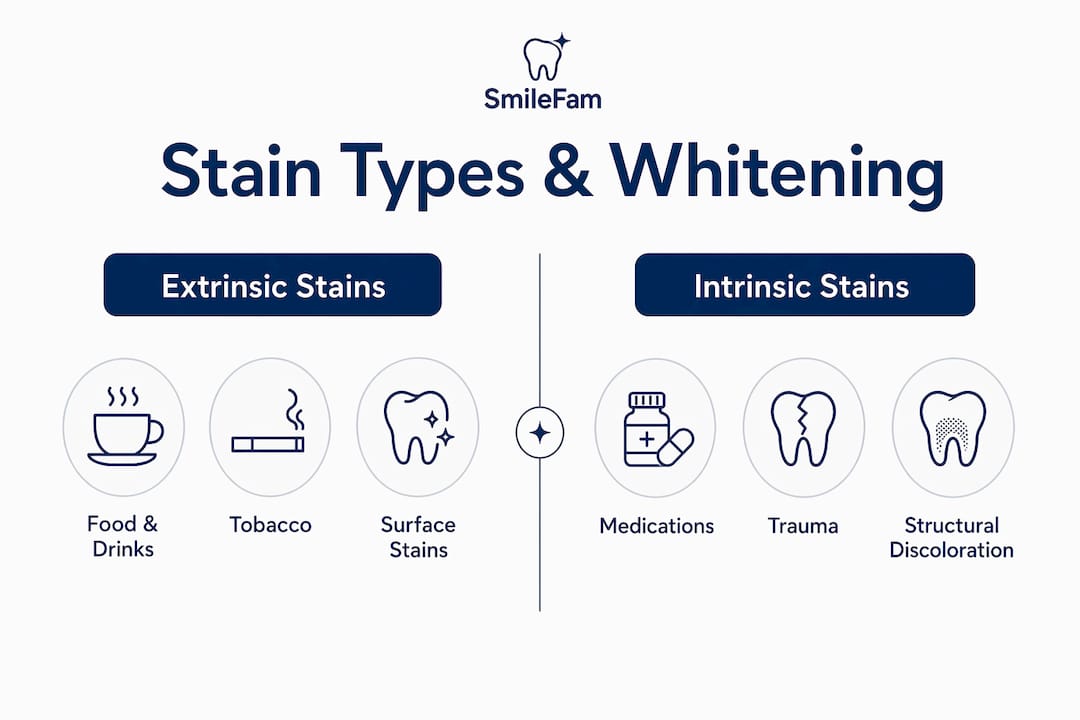
Extrinsic stains sit on or just below the enamel surface. They come from coffee, tea, red wine, tobacco, and certain foods. These stains are the most responsive to whitening because the peroxide reaches them quickly and oxidizes the chromogens with minimal resistance.
Intrinsic stains are embedded within the dentin layer, the tissue beneath enamel. They form from:
- Aging, which thins enamel and exposes darker dentin underneath
- Certain antibiotics, particularly tetracycline taken during tooth development
- Trauma that causes internal bleeding within the tooth
- Fluorosis from excessive fluoride exposure during childhood
Intrinsic discoloration from medications or trauma is structural and far less responsive to conventional whitening. Standard whitening works well on yellowing from age, food, and drinks, but gray or brown intrinsic tints often resist even professional-strength treatments.
The practical takeaway is direct: if your stains are extrinsic, whitening will likely deliver visible results. If they are intrinsic and severe, you may need restorative options like veneers or bonding rather than bleaching alone. Knowing which type you have before you start is the single most important step in choosing the right approach.
Pro Tip: Ask your dentist to identify your stain type before purchasing any whitening product. A five-minute assessment can prevent weeks of ineffective treatment.
How peroxide agents chemically break down stain molecules
The chemistry behind whitening follows a clear sequence. Understanding each step helps you choose the right product and use it correctly.
-
Peroxide diffuses into the tooth. Hydrogen peroxide molecules are small enough to pass through the enamel’s porous crystalline structure. Carbamide peroxide first breaks down into hydrogen peroxide, then that compound penetrates the enamel and reaches the dentin where most chromogens accumulate.
-
Reactive oxygen species form. Once inside the tooth, hydrogen peroxide decomposes and releases hydroxyl radicals. These are highly reactive molecules that attack the chemical bonds holding chromogen structures together.
-
Chromogen bonds break. The hydroxyl radicals target the carbon double bonds in chromogen chains. Breaking these bonds fragments the large pigmented molecule into smaller, colorless compounds. This is oxidation at the molecular level.
-
Optical properties change. The smaller fragments no longer absorb visible light in the same way. The tooth reflects more light across the visible spectrum, which the eye perceives as whiter and brighter.
-
Results accumulate over time. A single session oxidizes some chromogens, but repeated applications reach deeper layers and more embedded stains. This is why peroxide concentration and contact duration determine how effective a treatment is.
Carbamide peroxide is particularly useful in at-home products because it releases hydrogen peroxide slowly over 30 minutes to several hours. That controlled release reduces the risk of gum irritation while still delivering enough oxidizing power to fragment stain molecules. For a deeper look at how this applies to at-home use, the guide on professional-grade whitening at home covers product selection and application technique in practical terms.
Pro Tip: Leave whitening products on for the full recommended time. Cutting sessions short reduces the number of chromogen bonds broken and limits your results.
Limitations of whitening: when stains don’t respond
Whitening is not a universal solution, and knowing its limits protects both your expectations and your enamel.
The most common limitations include:
- Restorations do not change color. Crowns, veneers, and composite fillings do not respond to peroxide because they are made from ceramic or resin, not natural tooth structure. Whitening your natural teeth without accounting for existing restorations can create a visible color mismatch.
- Severe intrinsic stains resist bleaching. Tetracycline staining, for example, involves chromogens bound deep within the dentin matrix. Even high-concentration professional treatments may produce only modest improvement.
- Sensitivity is temporary but real. Peroxide temporarily opens dentinal tubules, the microscopic channels that run from the enamel surface to the nerve. This causes the brief sensitivity many people feel during or after treatment. This sensitivity resolves post-treatment when guidelines are followed and is not a sign of permanent damage.
- Repeated whitening without guidance can cause harm. Overusing whitening products does not produce proportionally better results. It can cause chronic sensitivity and, in extreme cases, surface changes to the enamel.
Pre-whitening assessment is the most reliable way to avoid these problems. Identifying the cause of your stains before treatment determines whether whitening is the right tool or whether a different approach will serve you better.
Pro Tip: If you have crowns or veneers on visible front teeth, whiten your natural teeth to match the restoration shade rather than going as bright as possible. A professional can help you calibrate the target.
Stain removal vs. whitening bleaching: what’s the difference?
Surface stain removal and chemical whitening are two distinct processes that people often confuse. Both improve the appearance of teeth, but they work through completely different mechanisms.
| Method | How it works | What it affects | Limitations |
|---|---|---|---|
| Whitening toothpaste | Mild abrasives polish surface stains | Extrinsic stains on enamel surface | Does not bleach intrinsic discoloration |
| Baking soda | Physical abrasion removes surface deposits | Superficial extrinsic stains | Excessive use may erode enamel |
| Peroxide whitening | Oxidizes chromogens inside enamel and dentin | Both extrinsic and mild intrinsic stains | Ineffective on restorations; may cause sensitivity |
| Professional polishing | Mechanical removal of plaque and tartar | Surface deposits and extrinsic stains | No effect on intrinsic color |
Whitening toothpaste and baking soda remove surface stains but do not bleach intrinsic discoloration. They work by physically abrading the enamel surface, which lifts deposits without altering the chemistry of the stain molecules inside the tooth. That is useful for maintenance but not for meaningful color change.
Baking soda is mildly abrasive and safe for occasional use, but excessive use can damage enamel over time. The distinction matters because enamel does not regenerate. Once it erodes, the damage is permanent.
Chemical whitening through peroxide is the only method that changes the color of the tooth itself. Cleaning removes what sits on top. Whitening changes what is inside. The best results come from combining both: clean the surface first, then apply a peroxide treatment to address the deeper discoloration. For a practical breakdown of fast stain removal techniques, Getsmilefam’s guide covers the sequencing in detail. You can also explore professional cosmetic whitening options for a broader view of clinical approaches.
Key Takeaways
Whitening removes stains by oxidizing chromogen molecules inside the tooth, turning large pigmented compounds into small, colorless fragments that reflect more light.
| Point | Details |
|---|---|
| Chemical, not physical | Peroxide whitening breaks stain molecules inside enamel, not just on the surface. |
| Stain type determines outcome | Extrinsic stains respond well; severe intrinsic stains may need restorative treatment. |
| Peroxide concentration matters | Higher concentration and longer contact time produce more oxidation and brighter results. |
| Restorations don’t whiten | Crowns, veneers, and fillings do not respond to peroxide and may cause color mismatches. |
| Clean before you whiten | Surface cleaning removes deposits so peroxide can penetrate enamel more effectively. |
What I’ve learned from watching people whiten the wrong way
Most people approach whitening backwards. They buy the strongest product they can find, skip the pre-treatment cleaning, and then wonder why the results are uneven or why their teeth ache. The chemistry does not care about urgency. It cares about contact time, stain type, and a clean surface for the peroxide to work through.
The biggest mistake I see is treating whitening as a substitute for cleaning. Teeth whitening oxidizes chromogens within the enamel matrix without removing plaque or tartar. If you apply a whitening agent over a layer of biofilm, you are wasting product and reducing penetration. Clean first. Always.
The second mistake is chasing speed. Faster whitening is often less safe. Professional treatments control peroxide concentration and duration for a reason. At-home products that promise dramatic results in minutes often rely on concentrations that irritate gum tissue or cause sensitivity without delivering proportionally better color change.
Realistic expectations matter more than most people admit. Whitening brightens natural tooth structure. It does not erase decades of tetracycline staining in a week, and it does not touch your crowns. If you go in with accurate expectations and the right product for your stain type, whitening delivers real, visible results. If you go in expecting a miracle, you will be disappointed regardless of what you use.
My honest recommendation: get a quick assessment of your stain type, clean your teeth thoroughly, then use a peroxide-based product with a safe concentration and the patience to let it work. That sequence produces results. Shortcuts do not.
— Lenney
Getsmilefam’s approach to safe, effective whitening
Understanding the chemistry behind stain removal makes it easier to choose a product that actually fits your needs.
Getsmilefam builds its whitening products around the principle that safety and effectiveness are not trade-offs. The Snow Serum™ Whitening Pen uses BLU Whitening Technology, developed in Singapore, with lab-approved, enamel-safe ingredients designed for people who want real results without harsh chemicals. The formula is suited for sensitive gums, which matters when peroxide concentration and contact time are calibrated for daily use. For older adults with specific sensitivity concerns, the SmileFam for Seniors line offers a gentler approach without sacrificing brightness. If you want to maintain results between sessions, the Premium Travel Kit keeps your whitening routine consistent wherever you are.
FAQ
How does whitening actually remove tooth stains?
Whitening agents release reactive oxygen species that break the chemical bonds of large, pigmented chromogen molecules inside the enamel and dentin. The resulting fragments are colorless and reflect more light, making the tooth appear whiter.
Can whitening remove all types of stains?
Whitening works best on extrinsic stains from food, drinks, and tobacco, and on mild intrinsic yellowing from aging. Deep intrinsic stains from tetracycline or trauma are far less responsive and may require restorative treatment.
Does whitening damage enamel?
Peroxide-based whitening does not damage enamel when used as directed. Temporary sensitivity occurs because peroxide opens dentinal tubules, but this resolves after treatment. Abrasive methods like excessive baking soda use pose a greater risk of permanent enamel erosion.
Why don’t crowns or veneers whiten?
Crowns, veneers, and composite fillings are made from ceramic or resin materials that do not react to peroxide. Only natural tooth structure contains the organic chromogens that oxidation can fragment and lighten.
How long does it take to see whitening results?
Results depend on stain type, peroxide concentration, and contact time. Most people see visible improvement within a few sessions, with full results typically appearing after consistent use over one to two weeks.