

Teeth whitening is safe for people with Asian skin tones when you confirm oral health first and protect soft tissues throughout the process. Your skin pigmentation has no effect on how your enamel responds to whitening agents. What actually matters is your tooth biology, any existing dental conditions, and whether you take steps to keep peroxide gel away from your gums and the skin around your mouth. The ADA recommends a dental exam before any bleaching begins. For readers with higher baseline skin pigmentation who want to minimize soft-tissue risk, peroxide-free options like Getsmilefam’s Snow Serum™ Whitening Pen are worth considering alongside traditional kits.
Quick safety checklist before you start:
- Get a dental exam to rule out cavities, gum disease, or exposed roots
- Patch-test the perioral skin (the skin around your mouth) before full application
- Skip activated charcoal, lemon juice, and abrasive “natural” powders
- Choose products with desensitizing agents (potassium nitrate, fluoride)
- Follow application times exactly and never leave gel on longer than directed
Table of Contents
- Does skin pigmentation change how teeth whitening works?
- What are the real risks for people with more pigmented skin?
- How do you choose a safe whitening product for sensitive mouths?
- At-home kits vs in-office whitening: which is safer for sensitive skin?
- A step-by-step safe at-home whitening routine
- When should you stop whitening and see a professional?
- Myths vs facts about whitening and skin tone
- Oral hygiene practices that support safe whitening
- Can your skincare products interact with whitening agents?
- Long-term effects of repeated whitening on gum and perioral skin pigmentation
- Key Takeaways
- The gap between cosmetic goals and tissue health
- Getsmilefam’s peroxide-free whitening for sensitive mouths
- Where this guidance comes from
Does skin pigmentation change how teeth whitening works?
It does not. Enamel chemistry determines how your teeth respond to whitening agents, not your skin tone. Peroxide-based whiteners work by releasing oxygen radicals that break apart chromogen molecules trapped in the enamel matrix. That reaction is the same whether your skin is light, medium, or deeply pigmented.
What does vary is the soft-tissue picture. People with more melanin in their skin can develop post-inflammatory hyperpigmentation (PIH) more visibly when perioral skin is irritated. That is the real concern for Asian skin tones, not the whitening chemistry itself.
Pro Tip: Before any whitening treatment, ask your dentist to check enamel thickness, existing restorations, and baseline sensitivity. Crowns, veneers, and composite fillings will not whiten alongside natural teeth, which can create a color mismatch after bleaching.
What are the real risks for people with more pigmented skin?
The most common adverse effects of tooth whitening are tooth sensitivity and gingival irritation. For people with Asian or darker skin tones, there is an additional layer: perioral skin is more prone to visible PIH if it comes into contact with peroxide gel.
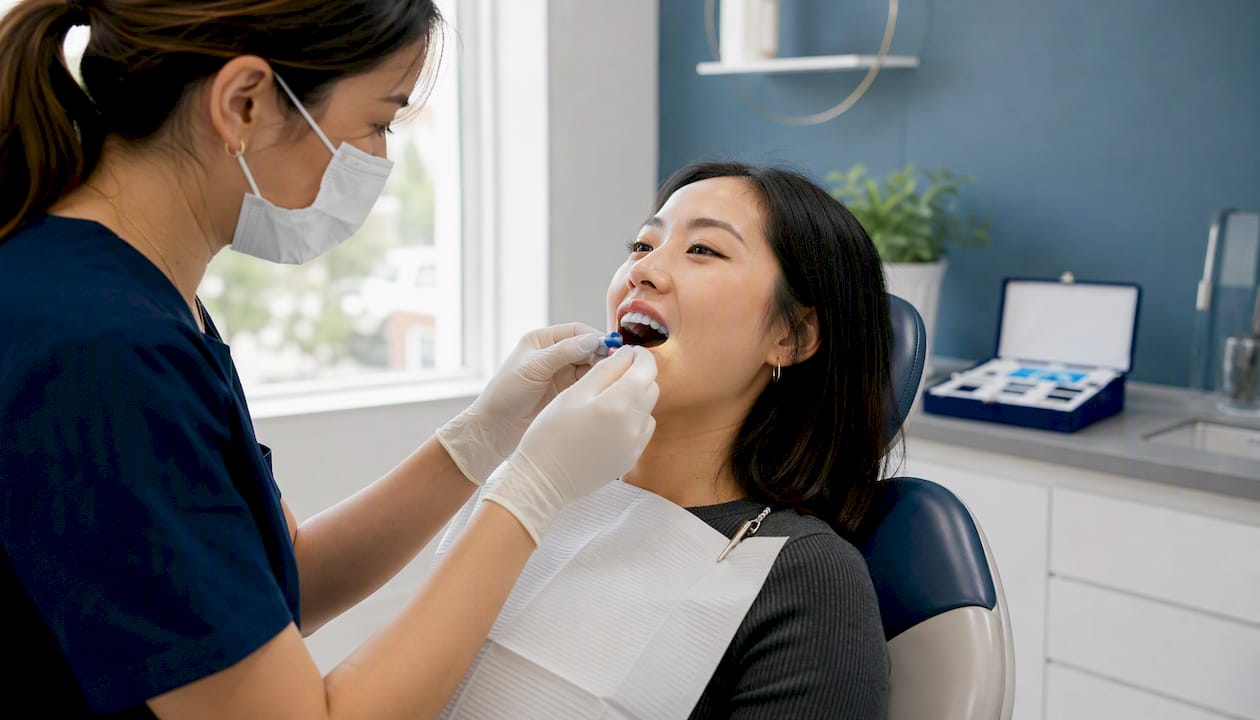
PIH happens when skin inflammation triggers excess melanin production. Even brief exposure to a leaking tray or a misapplied strip can cause redness that, on more pigmented skin, resolves into a darker patch lasting weeks or months. Chemical irritation from peroxide is a known trigger. Regulatory safety guidance specifically recommends avoiding direct contact between whitening products and skin.
Risks to watch for:
- Gingival irritation or swelling along the gum line
- Contact dermatitis on lips or perioral skin
- PIH: darkening of the skin around the mouth after irritation resolves
- Transient tooth sensitivity to cold or pressure
- Blistering if gel contacts soft tissue for extended periods
Pro Tip: Apply a thin layer of petroleum jelly or a dental barrier wax to your gums and lip edges before using any tray or strip system. This is one of the highest-value steps for protecting perioral skin from accidental gel contact.
How do you choose a safe whitening product for sensitive mouths?
Start with a dental exam. That single step catches cavities, gum disease, and exposed roots that would make whitening painful or harmful. From there, evaluate products on these criteria:
| Criterion | What to look for | What to avoid |
|---|---|---|
| Active agent | Low-concentration peroxide or peroxide-free optical/enzymatic formula | Unspecified “bleaching blend” with no listed concentration |
| Desensitizing agents | Potassium nitrate, fluoride, calcium | Products with none of these |
| Abrasive content | Low RDA rating; no charcoal, no baking soda blends | Activated charcoal, harsh abrasive powders |
| Applicator fit | Custom tray or precise pen tip; minimal gel overflow | Ill-fitting universal trays that let gel pool on gums |
| Instructions | Clear timing, clear stop signs | Vague “use as needed” with no max duration |
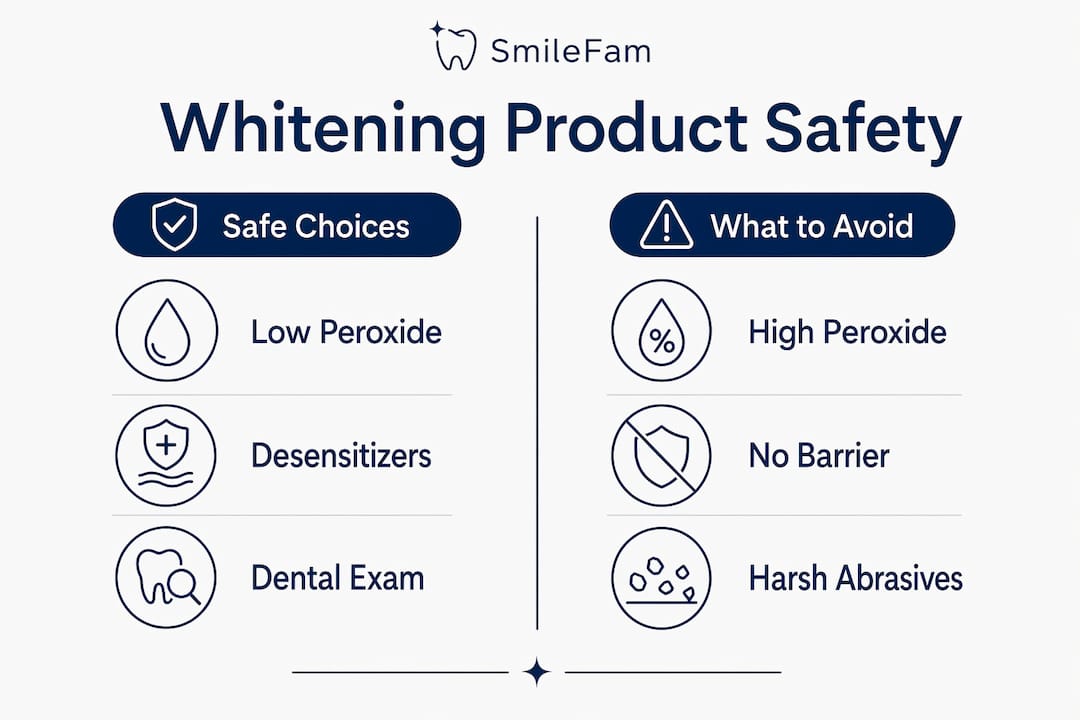
Potassium nitrate and fluoride are the two most clinically supported desensitizing agents. If you have had PIH before or your gums are chronically sensitive, a peroxide-free formulation is a lower-risk starting point. Getsmilefam’s BLU Whitening Technology and Snow Serum™ Whitening Pen are built on exactly that premise: no hydrogen peroxide, lab-approved ingredients, and a formula designed for enamel-safe whitening.
At-home kits vs in-office whitening: which is safer for sensitive skin?
| Factor | At-home kits | In-office treatment |
|---|---|---|
| Soft-tissue safety | Lower risk when trays fit well and instructions are followed | Higher peroxide concentration; dentist applies gum barriers |
| Speed of results | Gradual over 1–2 weeks | Visible in one session |
| Dental supervision | Recommended but not always required | Always supervised |
| Soft-tissue irritation risk | Lower with correct use | Higher concentration = higher risk if barriers fail | | Cost | Lower | Higher |
At-home kits and light-accelerated devices are safe and effective when users follow application times and have dental clearance. In-office treatments work faster, but the higher peroxide concentrations mean the dentist must carefully protect your gums throughout the procedure. For readers with sensitive gums or a history of PIH, the gradual pace of a well-chosen at-home kit often produces less irritation overall.
Pro Tip: Lower-concentration peroxide protocols produce less sensitivity while still achieving meaningful shade change over paced treatments. Spacing sessions out by a day or two is smarter than pushing through discomfort.
A step-by-step safe at-home whitening routine
- Get a dental check. Confirm no untreated decay, gum disease, or cracked enamel before you start.
- Choose the right product. Select a low-concentration or peroxide-free kit with potassium nitrate or fluoride listed in the ingredients.
- Patch-test your perioral skin. Apply a small amount of the product to the skin just below your lip. Wait 24 hours and check for redness, itching, or darkening before proceeding.
- Wait at least one hour after brushing. Brushing opens enamel pores and increases penetration risk; applying a whitening product immediately after brushing raises sensitivity.
- Apply a barrier. Coat gum edges and lips with petroleum jelly or barrier wax before placing any tray or strip.
- Set a timer. Follow the product’s maximum application time exactly. More time does not mean better results past the recommended duration.
- Rinse thoroughly. Remove all gel residue from teeth and gum line.
- Use a desensitizing toothpaste. Brush with a potassium nitrate toothpaste after each session to reduce whitening sensitivity.
Stop immediately if you notice:
- Burning or sharp stinging that does not subside within a few minutes
- Visible redness or swelling on the gums or lips
- White patches on gum tissue (chemical burn sign)
- Skin darkening around the mouth that appears within 24–48 hours
If blistering occurs or perioral skin darkening persists beyond a week, contact a dentist or dermatologist.
When should you stop whitening and see a professional?
Transient tooth sensitivity lasting a day or two after a session is normal. Everything beyond that warrants attention.
Red flags that need professional care:
- Severe tooth pain during or after application
- Gum ulceration or white patches on soft tissue
- Blistering on lips or inside the mouth
- Perioral skin darkening that worsens or does not fade within 7–10 days
- New or worsening sensitivity that persists beyond 72 hours after stopping
For oral signs (pain, ulcers, blistering), see your dentist within 24–72 hours. For persistent perioral PIH that does not resolve on its own, a dermatologist can recommend topical treatments appropriate for darker skin tones. Do not resume whitening until both issues are fully resolved.
Myths vs facts about whitening and skin tone
- Myth: Activated charcoal is a gentler, safer alternative. False. Charcoal’s abrasive index often exceeds 200, well above what daily use tolerates. The ADA does not recommend it due to insufficient evidence of safety and real enamel abrasion risk.
- Myth: Asian or darker skin tones react differently to whitening chemistry. False. Enamel response depends on tooth biology, not skin pigmentation. The soft-tissue PIH risk is real, but it is a skin response to irritation, not a whitening chemistry difference.
- Myth: Peroxide-free means ineffective. Nuanced. Some peroxide-free products work through optical agents like blue covarine (which makes teeth appear less yellow immediately) or enzymatic action. They may not produce the same depth of shade change as peroxide, but they carry a lower soft-tissue risk profile and are a legitimate starting point for sensitive users.
The practical takeaway: favor clinically tested products with desensitizing ingredients, and treat any “natural” remedy that lacks an RDA rating or clinical backing with skepticism.
Oral hygiene practices that support safe whitening
Pairing whitening with the right daily routine makes a measurable difference in both comfort and results. A fluoride toothpaste used morning and night helps remineralize enamel between sessions. An alcohol-free mouthwash reduces gingival inflammation without the drying effect that alcohol-based rinses cause, which matters when gum tissue is already mildly irritated from whitening.
For Asian skin tones specifically, a whitening toothpaste with blue covarine (rather than high-abrasive formulas) maintains surface brightness between sessions without the enamel wear risk. Getsmilefam’s BLU Whitening Toothpaste is formulated without harsh abrasives and is designed for daily use alongside a whitening regimen. Avoid mouthwashes with high alcohol content or acidic pH during active whitening weeks, as both can temporarily increase dentinal sensitivity.
Can your skincare products interact with whitening agents?
This is an underappreciated concern. Many skincare products popular among people with Asian skin tones contain active ingredients that can interact with whitening agents if they migrate to the perioral area.
Retinoids (retinol, tretinoin) thin the skin barrier and increase photosensitivity. Applying them close to the mouth on the same evening as a whitening treatment raises the risk of irritation and PIH. AHAs and BHAs (glycolic acid, salicylic acid) lower skin pH and weaken the barrier temporarily. Niacinamide is generally safe and actually helps regulate melanin production, making it a reasonable choice during a whitening period. Hydroquinone-based brighteners, used by some people to manage existing hyperpigmentation, should not be applied to perioral skin on the same day as whitening treatments without dermatologist guidance.
The practical rule: keep active skincare ingredients away from the lip and perioral zone on whitening days, and apply any whitening product before your skincare routine so barriers are in place first.
Long-term effects of repeated whitening on gum and perioral skin pigmentation
Repeated whitening cycles do not permanently alter gum pigmentation in the way some readers fear. Gingival melanin is produced by melanocytes in the gum tissue, and occasional peroxide exposure does not destroy those cells. What repeated exposure can do is cause cumulative gingival irritation, which over time may lead to gum recession or persistent sensitivity if sessions are too frequent or concentrations too high.
For perioral skin, the concern is cumulative micro-irritation. Each episode of mild chemical contact that goes unnoticed in the short term can, over months of repeated whitening, contribute to low-grade inflammation. On more pigmented skin, that inflammation can gradually shift baseline pigmentation around the mouth. Spacing whitening cycles appropriately (most clinicians suggest no more than two to four times per year for maintenance), using barriers consistently, and choosing lower-concentration or peroxide-free formulas for touch-up sessions all reduce this cumulative load.
Key Takeaways
Teeth whitening is safe for Asian skin tones when you protect soft tissues, choose the right formulation, and pace your sessions.
| Point | Details |
|---|---|
| Dental exam first | Confirm no cavities, gum disease, or exposed roots before any whitening begins. |
| Patch-test perioral skin | Apply product to skin near the lip 24 hours before full use to catch PIH risk early. |
| Prefer desensitizing agents | Choose products with potassium nitrate and fluoride to manage sensitivity throughout treatment. |
| Protect gums and skin | Use a barrier wax or petroleum jelly on gum edges and lips before every session. |
| Getsmilefam peroxide-free option | The Snow Serum™ Whitening Pen and BLU Whitening Toothpaste offer a lower soft-tissue risk path for sensitive users. |
The gap between cosmetic goals and tissue health
Most whitening guides focus entirely on shade results. The conversation that actually matters for people with Asian or darker skin tones is about the tissue around the teeth, not just the teeth themselves.
PIH is not a rare edge case. It is a predictable biological response to inflammation on pigmented skin, and the perioral area is one of the more vulnerable zones because whitening products are applied there repeatedly. The readers who end up with a darker patch around their mouth after whitening were not unlucky. They were not warned.
The conservative approach is not about being timid. It is about recognizing that a two-shade improvement achieved without any soft-tissue damage is a better outcome than a four-shade improvement that leaves you managing a pigmentation issue for the next three months. Peroxide-free formulations, barriers, patch tests, and paced sessions are not optional extras for sensitive people. They are the baseline for anyone with higher melanin density in their skin.
If you have existing PIH from a previous whitening attempt, see a dermatologist before starting again. Topical treatments for PIH on Asian skin (azelaic acid, niacinamide, vitamin C serums) can help resolve existing discoloration, but they need time to work before you introduce another potential irritant.
Getsmilefam’s peroxide-free whitening for sensitive mouths
Readers with sensitive gums or a history of perioral irritation have a concrete alternative to peroxide-based kits. Getsmilefam’s BLU Whitening Technology skips hydrogen peroxide entirely, using lab-approved ingredients designed to be enamel-safe and gentle on soft tissue. The Snow Serum™ Whitening Pen delivers targeted application with no tray overflow, which is exactly what you want when you are trying to keep whitening agents away from gum edges and perioral skin.
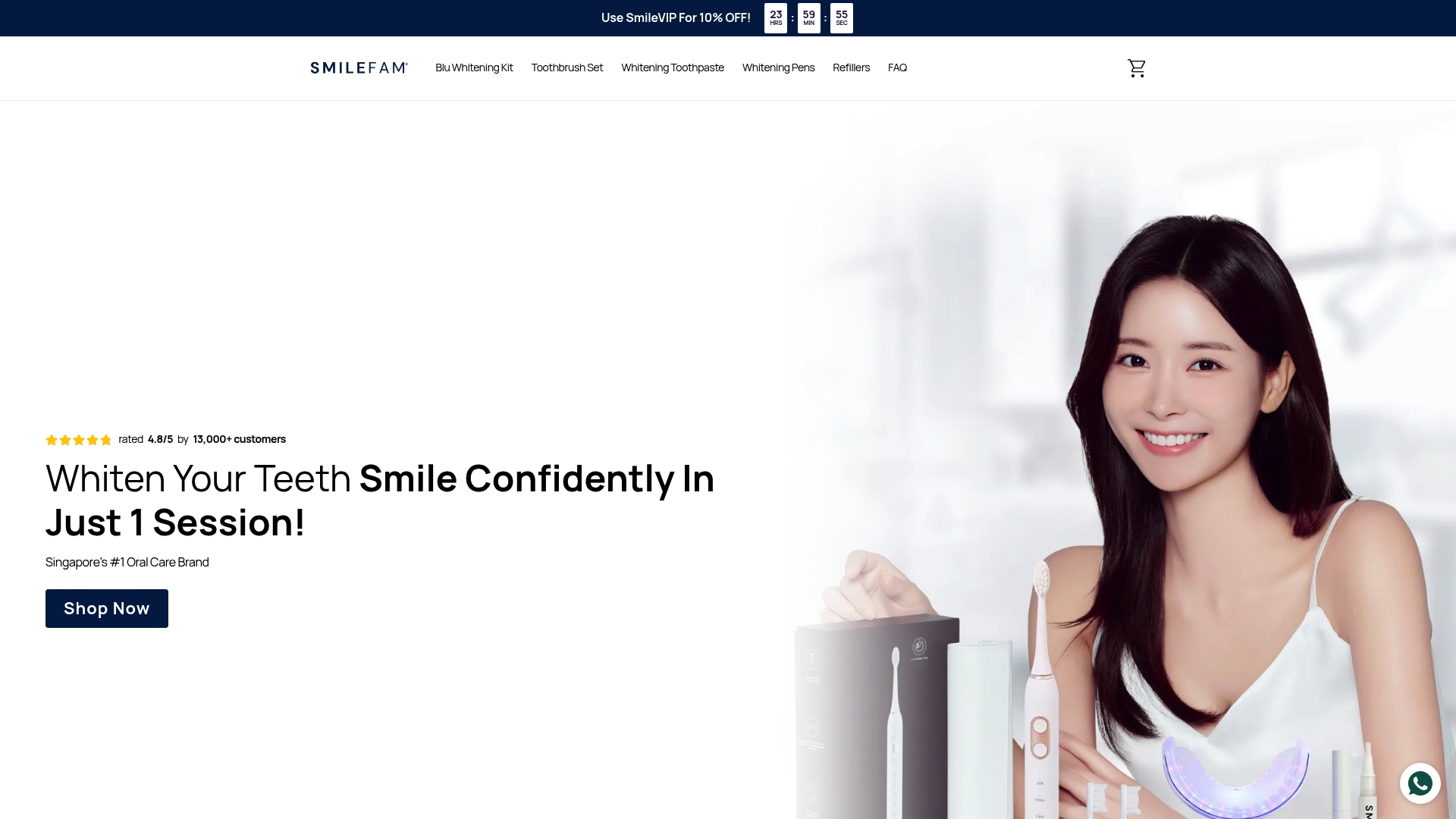
The BLU Whitening Toothpaste works as a daily maintenance step, keeping surface stains from rebuilding between sessions without the abrasive risk of charcoal or high-RDA formulas. Customer reviews and a satisfaction guarantee back the safety claims. For anyone who has read this guide and wants to start with the lowest soft-tissue risk option available, the Snow Serum™ Pen and BLU Toothpaste are a practical first step. Visit Getsmilefam to see the full product range and find the right kit for your situation.
Where this guidance comes from
- American Dental Association: Core safety guidance on adverse effects, dental exam requirements, and restoration color mismatch. Referenced throughout the safety checklist and product-selection sections.
- PMC systematic review: Peer-reviewed analysis of whitening gel strengths and weaknesses, including sensitivity data and the role of peroxide concentration. Used in the how-it-works, product-selection, and pacing sections.
- MDPI polymer review: Evidence on abrasive alternatives (charcoal, baking soda) and polymer-based carriers. Referenced in myths vs facts and ingredient guidance.
- Cleveland Clinic: Practical at-home safety guidance and dental clearance recommendations. Used in the at-home vs in-office comparison.
- DailyMed FDA safety instructions: Regulatory guidance on patch testing, skin contact avoidance, and the one-hour post-brushing wait. Used in the step-by-step routine and perioral protection sections.
- Health.com sensitive-teeth roundup: Product testing and clinical recommendations for potassium nitrate and fluoride as desensitizing agents. Referenced in product-selection and post-treatment care.
- Getsmilefam (getsmilefam.com): Product information for BLU Whitening Technology, Snow Serum™ Whitening Pen, and BLU Whitening Toothpaste. Referenced in product-selection and promo sections.
This article is general information, not professional dental or medical advice. Confirm current recommendations with your dentist or a qualified healthcare provider before starting any whitening treatment.