

Red wine stains teeth primarily because of anthocyanins (the deep pigments that give red wine its color), tannins that act like a molecular adhesive, and acidity that opens up enamel pores so those pigments sink in. The fastest thing you can do at the table right now: sip water between glasses. It dilutes the pigments before they bind.
Pro Tip: If you do brush after wine, wait an appropriate time first. Wine’s acidity temporarily softens enamel, and brushing while it’s in that state grinds the surface rather than cleaning it.
Key Takeaways
Most red wine stains are extrinsic, caused by anthocyanins and tannins, and fully reversible with the right timing and tools.
| Point | Details |
|---|---|
| Rinse immediately | Swish water after your last sip to remove loose pigment before it binds to enamel. |
| Wait 30–60 minutes to brush | Wine’s acidity softens enamel; brushing too soon causes abrasion, not cleaning. |
| Eat cheese and drink water | Both buffer mouth pH and stimulate saliva, reducing how much pigment adheres. |
| See a dentist for persistent stains | Stains that survive two professional cleanings may signal enamel erosion, not just surface pigment. |
| Getsmilefam for surface stain removal | The Snow Serum™ Whitening Pen and BLU Whitening Toothpaste offer enamel-safe at-home whitening for wine-related surface stains. |
This article is general information, not a substitute for advice from a qualified doctor. Consult a qualified healthcare professional about your own circumstances before acting on anything here.
Table of Contents
- 1. Why red wine stains teeth: the science behind it
- 2. Practical prevention you can use at the table tonight
- 3. When and how to care for your teeth after drinking wine
- 4. How to remove red wine stains from teeth
- 5. Are red wine stains on teeth permanent?
- 6. What dental experts actually recommend
- 7. A realistic wine-night routine that actually works
- Enamel-safe at-home whitening from Getsmilefam
- Sources
1. Why red wine stains teeth: the science behind it
Three things work together to create that telltale purple tinge, and understanding each one explains why the prevention steps below actually work.
Rutgers Health dental experts describe it as a “triple threat”: pigments, tannins, and acidity hitting the tooth at the same time.
The main culprits:
- Chromogens/anthocyanins: Intensely pigmented molecules that give red wine its deep color. They’re drawn to the protein film (called the acquired pellicle) that naturally coats your enamel.
- Tannins: Polyphenols that act as a binding agent. They help chromogens grip the pellicle and resist rinsing. Research published in PMC identifies chromogens and tannins together as the core drivers of persistent surface staining.
- Acidity: Wine’s low pH temporarily etches enamel, widening microscopic pores so pigments penetrate more deeply. Sustained exposure increases the risk of erosion and deeper discoloration.
- The acquired pellicle: A thin protein film on every tooth surface. Chromogens and tannins adhere to it first before working into the enamel itself.
- Enamel porosity: Thinner or more porous enamel (from prior erosion, age, or genetics) stains faster and more deeply than dense, intact enamel.
Extrinsic vs. intrinsic stains are a distinction worth knowing. Extrinsic stains sit on the outer enamel surface and pellicle. They respond well to professional cleaning and whitening. Intrinsic stains are embedded inside the tooth structure, often from years of cumulative exposure or enamel erosion, and require more intensive professional treatment. Most red wine discoloration from a single evening is extrinsic. The trouble starts when surface staining is left untreated over months and years.
One more thing worth noting: switching to white wine isn’t the simple fix it sounds like. Dentist Decoded explains that white wine is typically more acidic than red, meaning it can erode enamel and make teeth more receptive to staining from other foods and drinks, even without contributing pigment itself.
2. Practical prevention you can use at the table tonight
Prioritize immediate rinsing, saliva stimulation, and enamel protection. In that order.
During a wine occasion, do these in sequence:
- Drink water between every glass. This is the single highest-impact step. Water dilutes pigments and lowers the acidity in your mouth before either can do much damage.
- Eat cheese or fibrous vegetables. Cheese raises mouth pH and stimulates saliva. Fibrous foods like celery and carrots physically scrub the tooth surface. Dental experts cited by CNET confirm that eating foods that stimulate saliva significantly reduces acidity exposure between sips.
- Use a wide straw if you’re drinking at home. It reduces direct contact between wine and your front teeth. Not practical at a formal dinner, but useful for casual occasions.
- Rinse with water after finishing. Swish for 30 seconds. This removes loose pigment before it has time to bind.
- Chew sugar-free gum. Gum boosts saliva flow, which buffers mouth pH and helps remineralize enamel after acid exposure.
Routine habits that compound over time:
- Brush before drinking, not after. A clean tooth surface with less plaque gives tannins fewer places to grip.
- Use a whitening toothpaste with a mild abrasive for daily maintenance, not as a post-wine emergency measure.
- Keep up with professional cleanings every six months. Surface stains that haven’t penetrated deeply come off easily at a cleaning; the same stains left for a year become much harder to shift.
What not to do:
- Don’t brush immediately after drinking. The acidity softens enamel, and brushing in that window causes abrasion.
- Avoid abrasive DIY scrubs (baking soda pastes used aggressively, for example). They can strip enamel over time, making future staining worse.
Pro Tip: Pair your wine with a cheese board rather than crackers alone. Cheese’s calcium content and fat coating help buffer acid and coat the tooth surface, giving pigments less bare enamel to bind to. It’s one of the few food pairings that’s genuinely protective, not just pleasant.
For longer-term lifestyle changes that reduce staining risk, a consistent pre-drinking brush and regular professional cleanings do more cumulative work than any single-night fix.
3. When and how to care for your teeth after drinking wine
Wait 30–60 minutes before brushing. In the meantime, rinse with water or chew sugar-free gum.
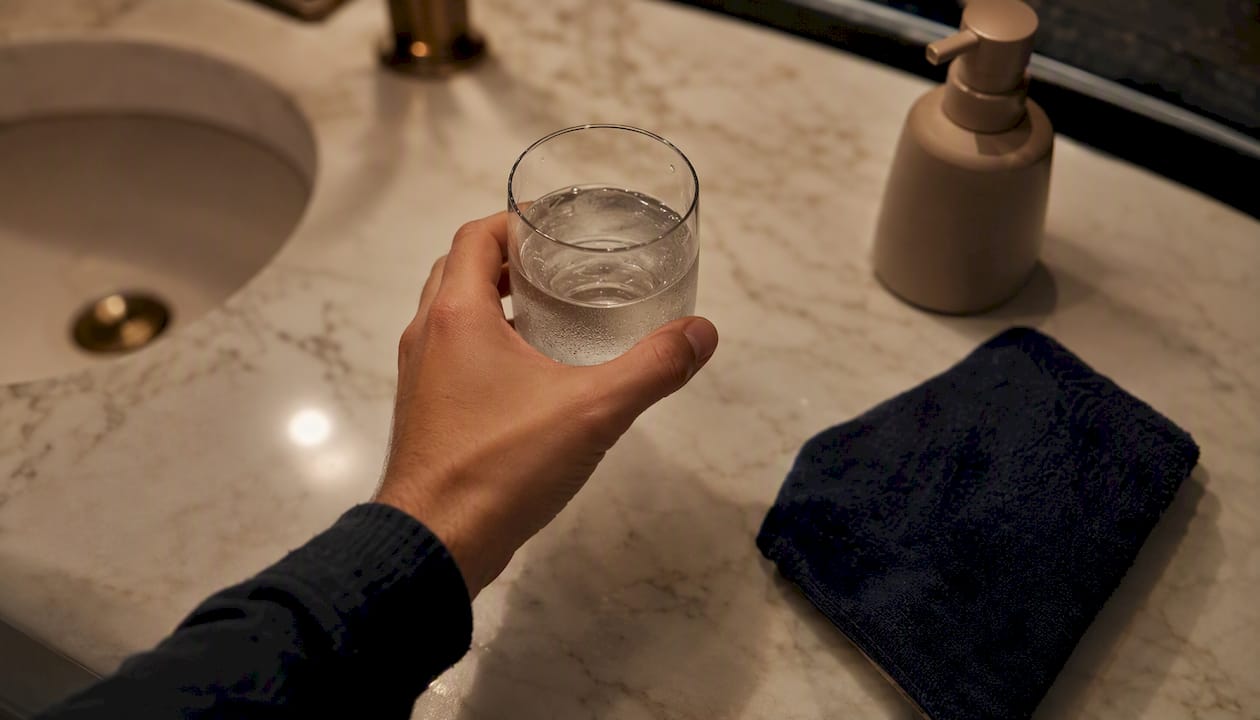
The reasoning is straightforward. Wine’s acidity temporarily softens the mineral structure of enamel. Brushing while enamel is in that softened state doesn’t just clean it; it abrades it. Mayo Clinic guidance supports delaying brushing after acidic exposures specifically to reduce this abrasion risk, noting that saliva naturally begins to reharden enamel within that 30–60 minute window.
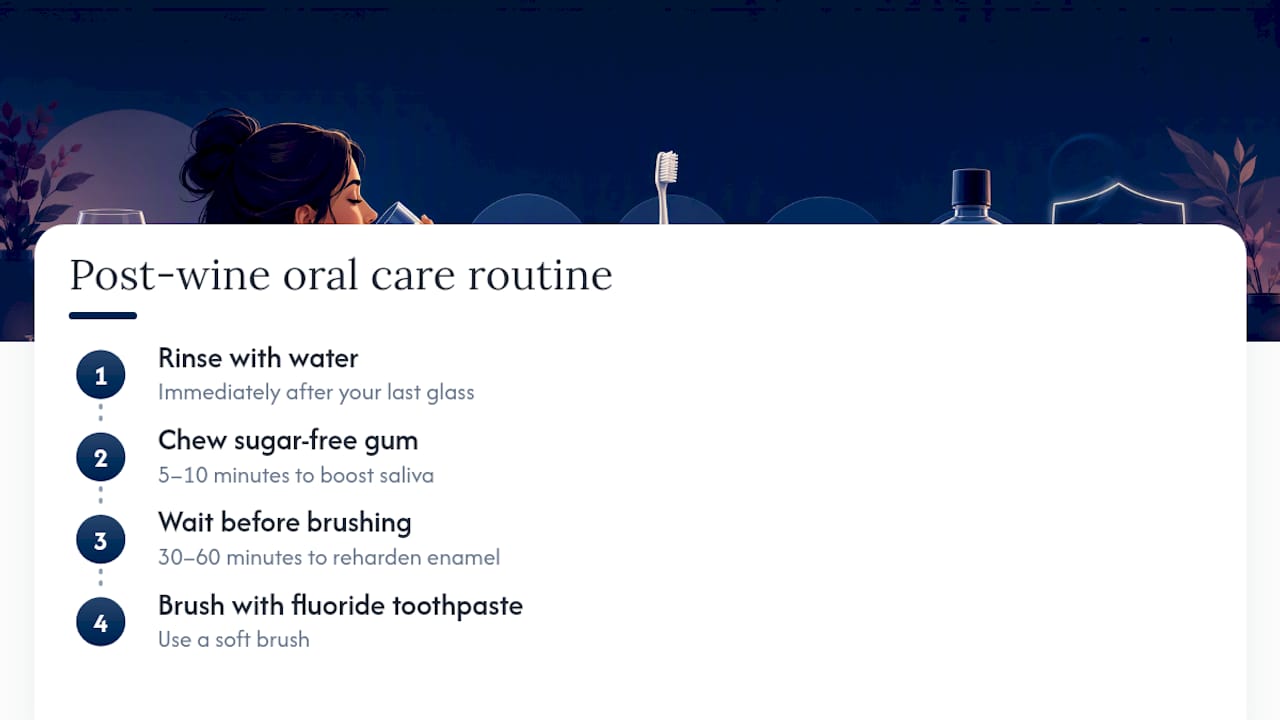
A practical post-wine routine looks like this: rinse with water immediately after your last glass, chew a piece of sugar-free gum for five to ten minutes to boost saliva, then wait the full 30–60 minutes before brushing with a fluoride toothpaste. That sequence protects enamel while still clearing most of the residual pigment.
4. How to remove red wine stains from teeth
For fresh surface stains, a professional cleaning is the most reliable first step. For mild-to-moderate staining, over-the-counter whitening products work well. For embedded or persistent stains, professional whitening or a dental assessment is the right call.
Comparing your options:
- Professional dental cleaning: Removes extrinsic stains that have built up on the pellicle and enamel surface. Effective for stains from regular wine drinking that haven’t penetrated deeply. This should be the baseline before trying any whitening product.
- Whitening toothpaste: Mild abrasives and low-concentration whitening agents address surface discoloration with daily use. Slower results, but safe for ongoing use.
- Whitening strips and pens: OTC options with peroxide or peroxide-free formulas that lift surface stains over days to weeks. Useful for moderate staining.
- In-office professional whitening: The strongest option for stubborn or deeper staining. Dentists use higher-concentration agents under controlled conditions.
- Home remedies (activated charcoal, oil pulling, baking soda scrubs): The American Dental Association cautions against abrasive home remedies. Activated charcoal, in particular, lacks solid evidence for wine stain removal and carries real risk of enamel abrasion with repeated use. Acidic rinses (like undiluted apple cider vinegar) are similarly risky.
One important note: methods that work well on fabric stains, like salt scrubs or club soda, have no safe application on teeth. CNN Underscored’s fabric-care guidance is useful for your tablecloth, not your enamel. Treat teeth with dental-safe approaches only.
See a dentist when:
- Staining persists after two or more professional cleanings.
- You notice increased tooth sensitivity alongside discoloration.
- You can see visible enamel thinning or translucency at the edges of teeth.
- Stains appear yellow-brown rather than purple-gray (which may indicate deeper or intrinsic discoloration).
For a deeper look at safe surface stain removal, the approach matters as much as the product.
5. Are red wine stains on teeth permanent?
Most red wine stains are extrinsic and fully reversible with cleaning or whitening. The word “permanent” only applies when enamel has eroded significantly or when intrinsic staining has developed from years of cumulative exposure.
Here’s how to think about it:
- Fresh or recent stains (days to weeks): Respond well to professional cleaning and OTC whitening. These are purely surface-level.
- Moderate staining (months of regular drinking without cleaning): Usually still extrinsic, but may require a professional cleaning followed by a whitening treatment to fully clear.
- Long-term or deep staining: If enamel has thinned from sustained acid exposure, the underlying dentin (which is naturally more yellow) becomes visible. Whitening can brighten the enamel layer, but it can’t restore lost enamel. Restorative options like veneers may be relevant at this stage.
The decision path is simple: try a professional cleaning first. If staining remains after that, add an OTC whitening product. If staining still persists or sensitivity increases, see a dentist for an in-office assessment. Persistent discoloration that doesn’t respond to cleaning is a signal worth taking seriously, because it may reflect enamel erosion rather than surface pigment.
Pro tip: Keeping teeth white after whitening is easier than reversing deep staining. Prevention compounds.
6. What dental experts actually recommend
The top three rules from dental professionals, backed by research: rinse immediately, wait before brushing, and get regular professional cleanings.
The evidence-backed rules:
- Rinse with water right after drinking. Rutgers Health dental experts specifically recommend rinsing after sipping wine and waiting 30–60 minutes before brushing. This is the single most cited piece of practical advice across dental sources.
- Delay brushing after acidic exposure. Peer-reviewed dental literature confirms that sustained acid exposure increases enamel erosion risk. Brushing during that window compounds the damage rather than reversing it.
- Choose ADA-recognized whitening products over DIY remedies. The American Dental Association outlines safer whitening options and flags abrasive home remedies as a real risk to enamel integrity. Look for the ADA Seal of Acceptance on any whitening product you use regularly.
Pro Tip: Brush your teeth before a wine event, not after. A clean surface with minimal plaque gives tannins less to grip. This one habit shift, recommended by Rutgers dental experts, does more preventive work than any post-wine scramble.
7. A realistic wine-night routine that actually works
The core rule: rinse first, eat something, wait, then brush later. Everything else is detail.
Here’s what a practical evening looks like, applied to a dinner party or tasting:
Before: Brush and floss before you leave. You’re starting with the cleanest possible surface, which reduces how much tannin and pigment can adhere during the evening.
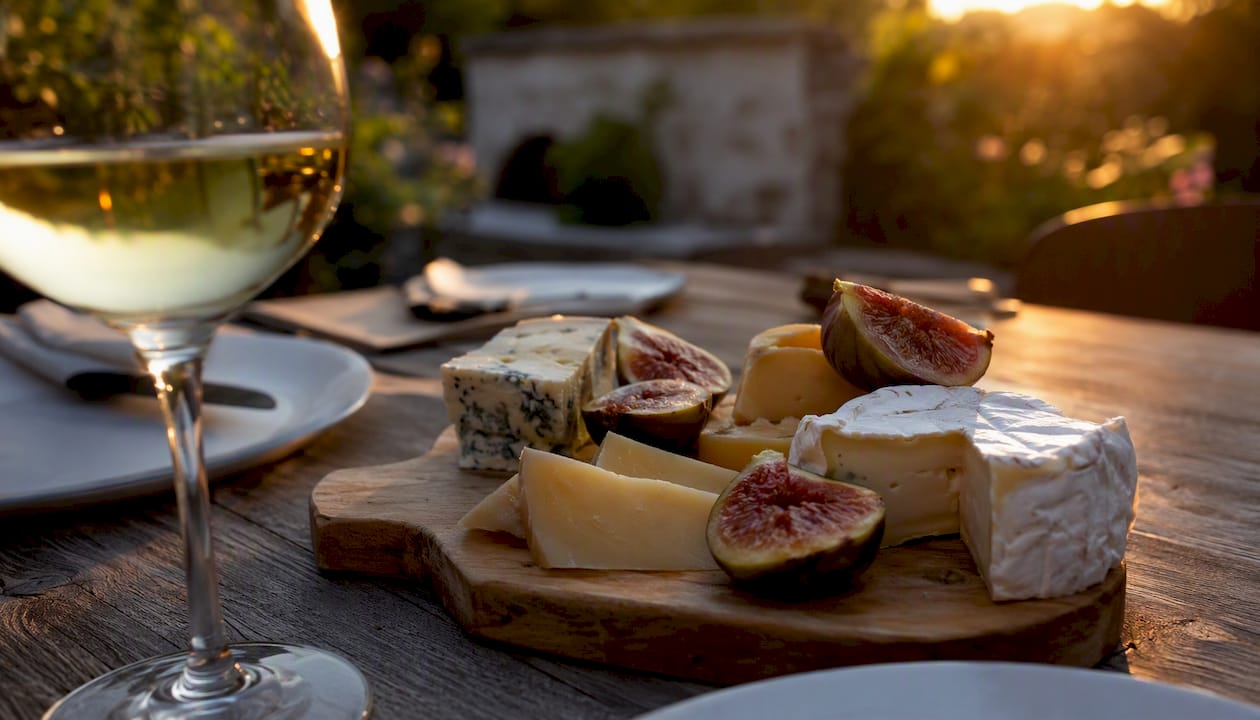
During: Alternate wine with water. Keep a glass of water at the table and sip it between pours. If there’s a cheese board, use it. Skip the crackers-only option. Chew slowly; saliva is your best in-the-moment buffer.
After: The moment you’re done drinking, rinse your mouth with water for 30 seconds. If you have gum, chew a piece. Then wait. Thirty to sixty minutes minimum before you pick up a toothbrush. When you do brush, use a fluoride toothpaste and a soft-bristle brush. That’s the whole routine.
It’s not complicated. The part most people get wrong is the timing. Brushing immediately feels responsible but causes more damage than skipping it entirely.
Enamel-safe at-home whitening from Getsmilefam
Red wine stains that have already settled onto the enamel surface need more than rinsing. That’s where a targeted at-home whitening tool earns its place.
Getsmilefam’s Snow Serum™ Whitening Pen is built for exactly this situation: a compact, precise applicator that delivers the brand’s BLU Whitening Technology directly to stained surfaces without harsh hydrogen peroxide. It’s enamel-safe, formulated for sensitive gums, and designed to show visible results in a single session. For wine drinkers who want a quick touch-up after a dinner out, it fits in a bag and takes under two minutes to use.
The BLU Whitening Toothpaste works as the daily layer underneath that, gently lifting surface pigment with each brush while maintaining enamel integrity. Together, they address both the maintenance problem (daily staining from regular wine drinking) and the correction problem (visible discoloration that’s already there).
One honest note: if you suspect enamel erosion or have significant intrinsic staining, see a dentist before starting any whitening routine. At-home tools work best on extrinsic surface stains. For everything else, professional evaluation comes first.
Sources
- How to Prevent “Wine Teeth” This Holiday | Rutgers Health
- PMC article (peer-reviewed dental literature)
- Brushing your teeth: Mayo Clinic expert answers
- Whitening | American Dental Association
- Red Wine, White Wine, and Your Teeth: Staining, Erosion, and Smart Drinking — Dentist Decoded