

What is a local whitening solution, exactly?
A local whitening solution is a topical at-home product that applies bleaching agents directly to tooth enamel to reduce discoloration. The term “local” refers to the localized application on teeth, not a geographic location. Many people assume it means only in-office treatment, but it broadly covers any whitening agent applied directly to the teeth, whether at a dental office or at home.
The most common forms include:
- Whitening pens for targeted spot application
- Gel trays worn over the teeth for broader coverage
- Whitening strips that adhere to enamel surfaces
The active ingredients driving these products are carbamide peroxide and hydrogen peroxide. According to the American Dental Association, at-home peroxide gels contain carbamide peroxide at concentrations intended for safe use. Products carrying the ADA Seal of Acceptance have met verified safety and effectiveness standards when used as directed.
Table of Contents
- How local whitening solutions actually work on your teeth
- Is local whitening safe? Side effects and what to watch for
- Professional whitening vs. at-home local whitening: what actually differs
- Natural whitening remedies vs. peroxide-based products: myths vs. reality
- Getsmilefam’s BLU Whitening Technology and Snow Serum™ Whitening Pen
- How to use an effective at-home whitening product
- Whitening and dental restorations: what you need to know first
- Brighter teeth at home, without the dental bill
- Key Takeaways
How local whitening solutions actually work on your teeth
Peroxide is the engine behind every effective whitening product. When it contacts enamel, it breaks down into reactive oxygen molecules that penetrate the tooth surface and oxidize the chromophore molecules responsible for staining. Those altered pigments reflect light differently, and the result is a visibly lighter shade.
Here is what happens step by step:
- Peroxide contacts enamel and begins breaking down into water, oxygen, and reactive oxygen molecules
- Reactive oxygen diffuses through the enamel layer and reaches stain bonds
- Stain molecules are oxidized and broken into smaller, more diffusible forms
- The altered pigments scatter light differently, producing the whitening effect
One detail worth knowing: because reactive oxygen molecules permeate the entire tooth, even partial gel contact can produce overall whitening. That said, consistent and correct application still matters for uniform results.
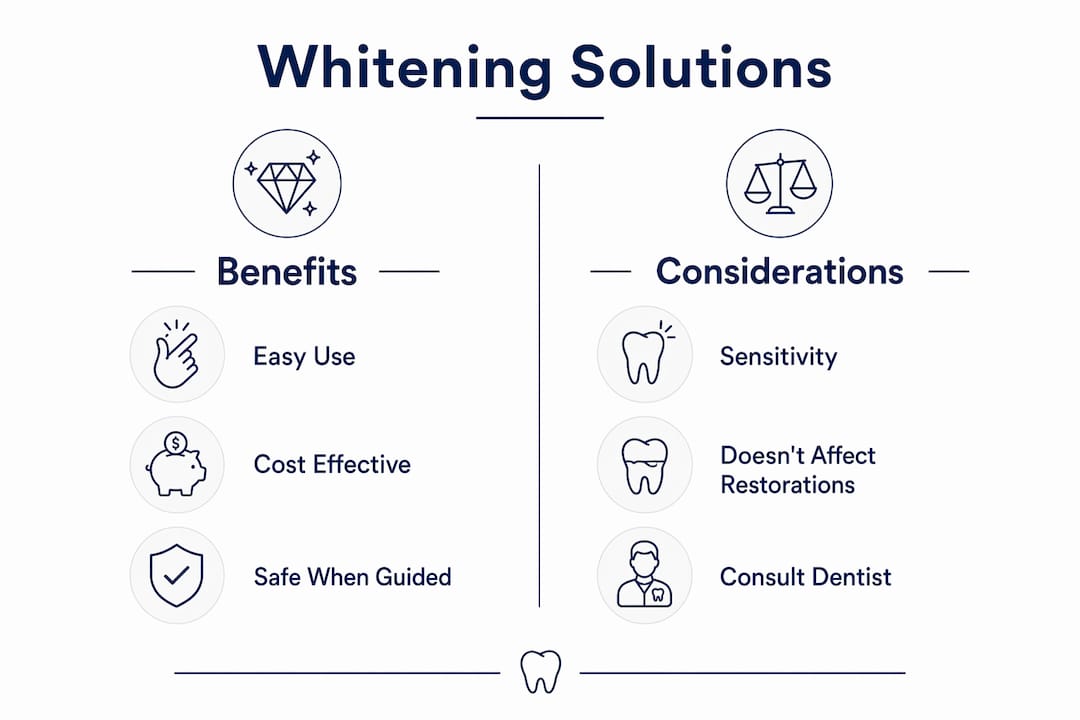
Whitening only affects natural enamel. Crowns, veneers, and bonding do not respond to peroxide, which can create a color mismatch if restorations are present.
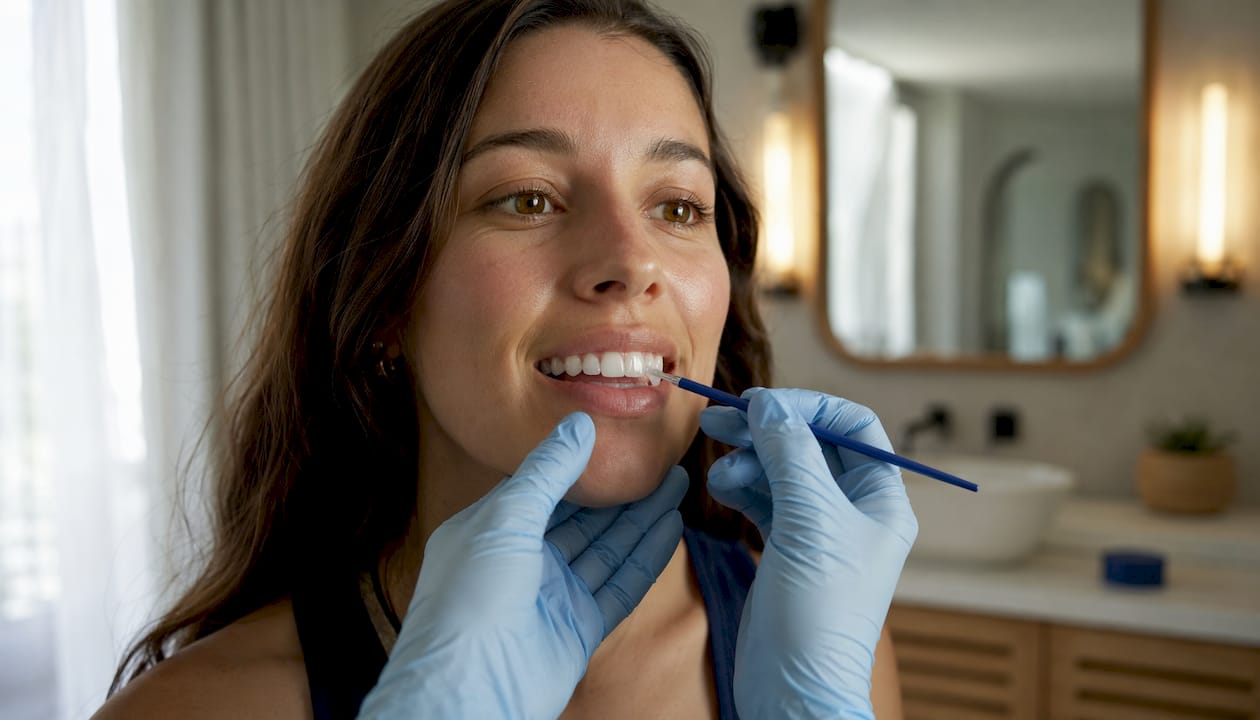
Pro Tip: Space out your sessions. Using a whitening pen or gel more frequently than directed does not accelerate results. It raises the risk of enamel erosion and prolonged sensitivity.
Is local whitening safe? Side effects and what to watch for
Tooth sensitivity is the most frequently reported side effect of whitening treatments. It is usually temporary, resolving within a day or two after each session. Mild gum irritation can also occur, especially when gel contacts soft tissue.
Managing side effects comes down to a few practical steps:
- Use a fluoride toothpaste or a potassium nitrate gel before and after sessions to reduce nerve sensitivity
- Stick to the recommended application time; longer is not better
- Take a day off between sessions if sensitivity becomes uncomfortable
- Avoid very hot or cold foods for 24 hours after treatment
The ADA recommends consulting a dentist before starting any whitening regimen, particularly if you have existing restorations, gum disease, or enamel erosion. For guidance on managing whitening sensitivity at home, Getsmilefam’s blog covers practical approaches in detail.
Fluoride and potassium nitrate are the two ingredients most supported by dental experts for post-treatment sensitivity relief. Look for them in any at-home whitening system you choose.
Professional whitening vs. at-home local whitening: what actually differs
The core difference is concentration and supervision. Professional in-office treatments can use up to 40% hydrogen peroxide, delivered via custom trays or direct application under a dentist’s watch. At-home products use lower concentrations, which is precisely why they are considered safe for unsupervised use.
Professional whitening:
- Higher peroxide concentrations for faster, more dramatic results
- Dentist monitors for adverse reactions and adjusts protocol
- Custom trays minimize gum contact and reduce irritation
- Results often visible after a single session
- Significantly higher cost
At-home local whitening:
- Lower peroxide concentrations, designed for safe self-use
- Standardized trays or pens; less customization
- Results build gradually over days to weeks
- Affordable and convenient
- No professional oversight unless you seek it
Speed and cost are the clearest trade-offs. Professional treatments deliver faster, more dramatic results, but a quality at-home regimen used consistently can close much of that gap over two to three weeks.
Natural whitening remedies vs. peroxide-based products: myths vs. reality
Baking soda, oil pulling, and activated charcoal show up constantly in whitening content. The clinical reality is more sobering.
- Baking soda has mild abrasive properties that can remove surface stains, but it does not bleach enamel or reverse deeper discoloration
- Oil pulling has no credible clinical evidence supporting whitening efficacy
- Activated charcoal is abrasive enough to damage enamel with repeated use; experts caution that it does not safely reverse significant discoloration
The myth is that “natural” equals safer. Abrasive DIY methods can thin enamel over time, making teeth more sensitive and more vulnerable to staining. Lab-approved, peroxide-based formulations with defined concentration limits are the approach dental professionals consistently recommend.
Good oral hygiene is the non-negotiable foundation. Whitening works best on clean, healthy teeth. Brush twice daily, floss, and address any active decay or gum issues before starting a whitening regimen.
Getsmilefam’s BLU Whitening Technology and Snow Serum™ Whitening Pen
Getsmilefam takes a different approach to at-home whitening. The proprietary BLU Whitening Technology, developed in Singapore, delivers immediate brightening results without hydrogen peroxide, making it suitable for people with sensitive gums who have struggled with traditional peroxide-based products.
The Snow Serum™ Whitening Pen is Getsmilefam’s flagship product. It is compact, easy to use, and designed for targeted application. The formula is lab-approved and enamel-safe, built around ingredients that whiten without the harsh chemical load that causes post-treatment discomfort.
Key features of Getsmilefam’s approach:
- Peroxide-free formula that avoids the primary driver of sensitivity
- Lab-approved ingredients verified for enamel safety
- Immediate visible results within a single session, per brand claims
- Suitable for sensitive gums, unlike many conventional whitening products
- Compact pen design for precise, on-the-go application
“The Snow Serum™ Whitening Pen gave me noticeably whiter teeth after the first use, and I didn’t experience any of the sensitivity I’d had with other whitening products.” — Getsmilefam customer review
Pro Tip: For best results with any whitening pen, prep your teeth before application. Clean, dry enamel absorbs the whitening serum more effectively.
How to use an effective at-home whitening product
Consistency and correct technique separate people who see results from those who do not.
- Brush and floss before applying any whitening product. Residue and plaque block the whitening agent from reaching enamel.
- Apply the gel or serum evenly across the tooth surface. With a pen, use slow, deliberate strokes to coat each tooth.
- Follow the product’s recommended contact time exactly. Do not extend it hoping for faster results.
- Rinse thoroughly after the session and avoid staining foods and drinks for at least an hour. Getsmilefam’s guide on what to avoid after whitening covers the full post-session protocol.
- Use the product on the schedule specified. Most at-home treatments are designed for daily or every-other-day use over one to two weeks.
Whitening is not permanent. Maintenance sessions and avoiding heavy staining foods like coffee, red wine, and tobacco extend results considerably.
Whitening and dental restorations: what you need to know first
If you have crowns, veneers, bonded teeth, or tooth-colored fillings, whitening products will not change their color. Natural enamel will lighten while restorations stay the same shade, creating a visible mismatch. This is not a product flaw; it is a fundamental limitation of how peroxide chemistry works.
Before starting any local whitening treatment, check with your dentist if you have restorations in visible areas. You may need to replace them after whitening to match your new shade. Active gum disease, untreated cavities, or cracked enamel also require attention before whitening, since peroxide can penetrate compromised areas and cause pain or damage.
Brighter teeth at home, without the dental bill
Getsmilefam offers a straightforward path to a whiter smile without the cost or scheduling friction of professional treatments. The BLU Teeth Whitening Kit and the BLU Whitening Toothpaste bring the same BLU Whitening Technology into a daily routine that fits around real life.
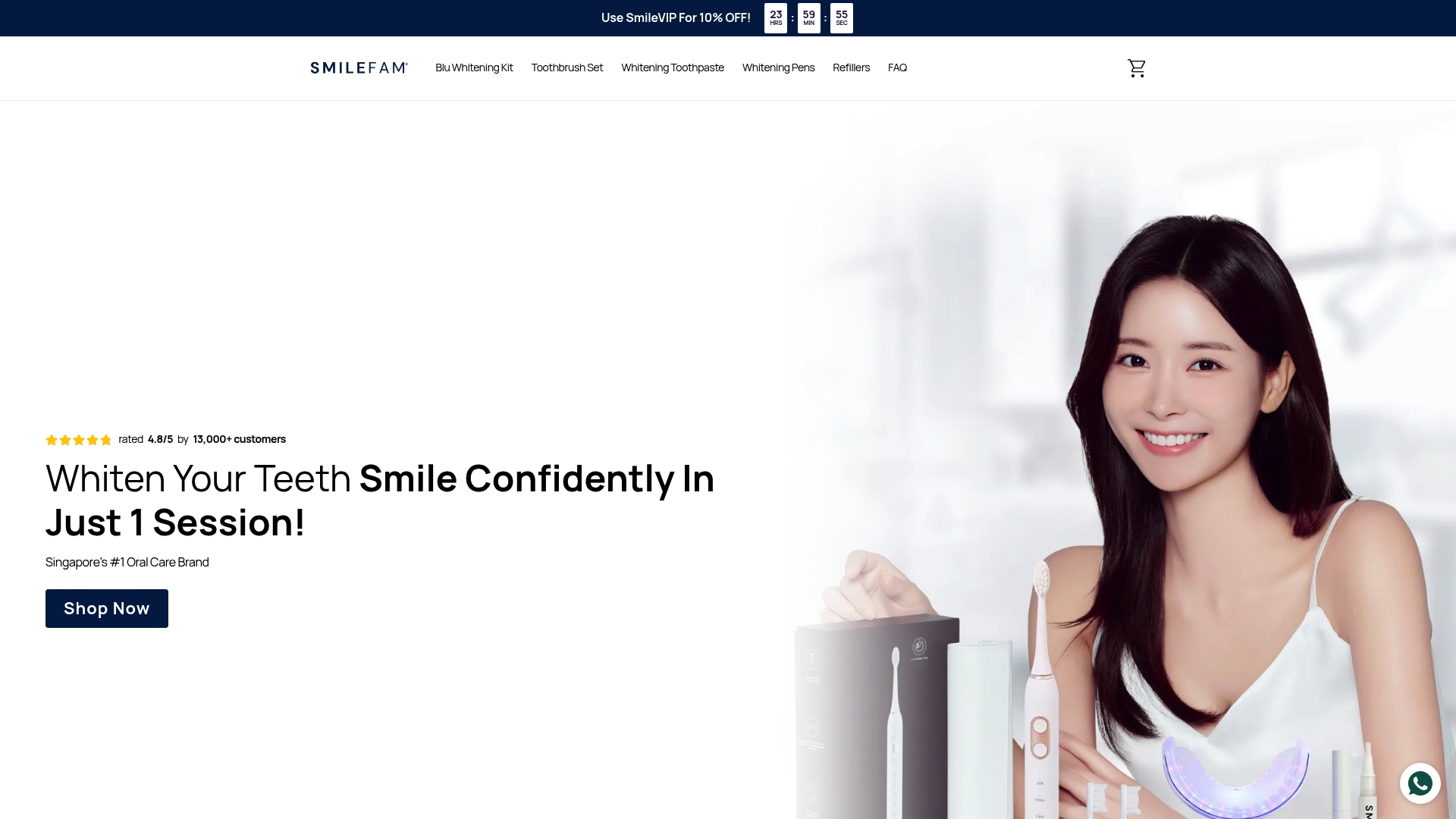
The Snow Serum™ Whitening Pen is the right starting point if you want targeted, immediate brightening without sensitivity. The full kit is the better choice for anyone who wants a complete at-home whitening system. Both are built on lab-approved, enamel-safe formulations designed for people who want results they can see without compromising their oral health. Visit getsmilefam.com to find the option that fits your situation and get started today.
Key Takeaways
A local whitening solution is a topical, peroxide-based at-home product that lightens tooth enamel through reactive oxygen chemistry at controlled, safe concentrations.
| Point | Details |
|---|---|
| Active ingredient range | At-home peroxide gels typically contain carbamide peroxide at concentrations ranging from 10% to 38%. |
| Sensitivity is manageable | Fluoride and potassium nitrate applied post-treatment are the most supported options for reducing discomfort. |
| Restorations don’t whiten | Crowns, veneers, and bonding stay their original shade, so check with a dentist before whitening if restorations are visible. |
| Natural remedies fall short | Baking soda, oil pulling, and activated charcoal lack clinical evidence and can risk enamel abrasion with repeated use. |
| Getsmilefam’s approach | The Snow Serum™ Whitening Pen and BLU Teeth Whitening Kit use peroxide-free, lab-approved BLU Whitening Technology for sensitive-friendly at-home results. |