

Non-abrasive whitening is defined as any teeth whitening method that removes surface stains through chemical or specialized mechanical means without physically grinding or scraping enamel. This approach preserves the hard outer layer of your teeth while still delivering a noticeably brighter smile. Unlike conventional whitening toothpastes that rely on abrasive particles to buff away discoloration, non-abrasive methods use agents like PAP (Phthalimidoperoxycaproic Acid) or piezoelectric technology to break down stains at the molecular level. For anyone with sensitive teeth, thinning enamel, or a history of gum irritation, understanding what non-abrasive whitening means is the first step toward a safer cosmetic dental routine.
What is non-abrasive whitening and how does it remove stains?
Non-abrasive whitening works through two primary mechanisms: chemical stain breakdown and piezoelectric particle activation. Neither method relies on scrubbing enamel surfaces with hard particles, which is what separates them from traditional whitening pastes.
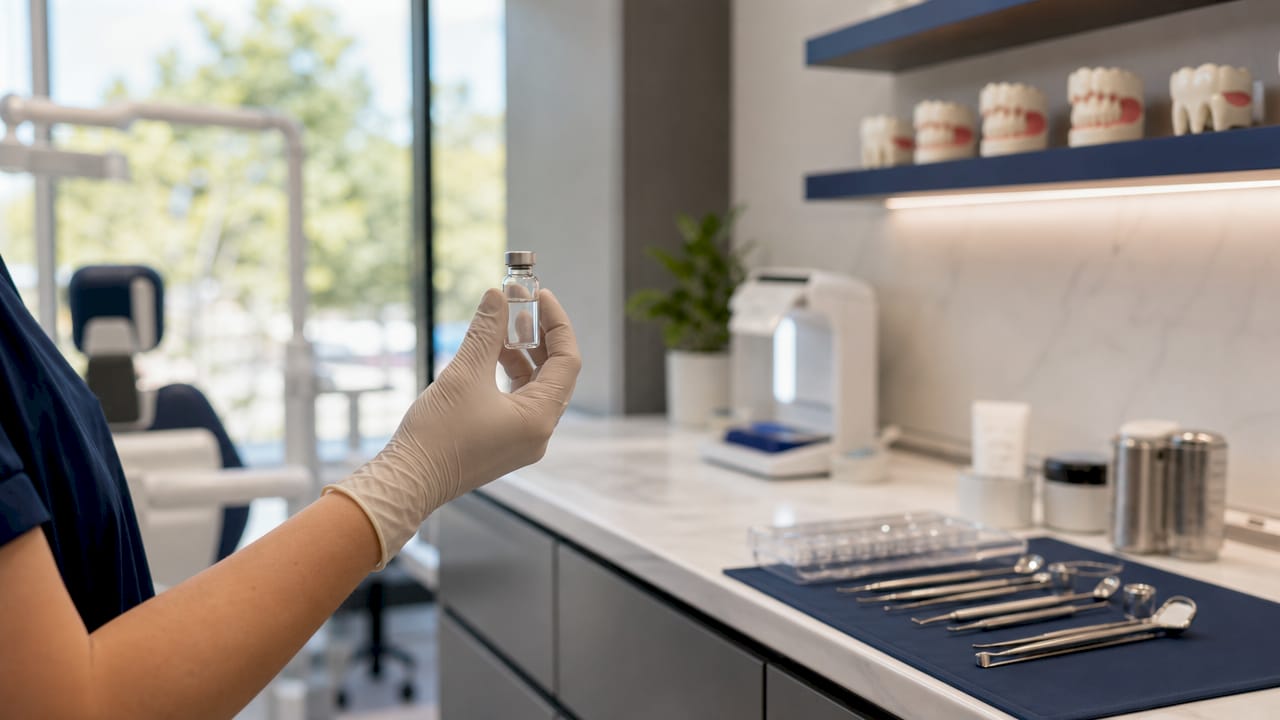
Chemical whitening with non-peroxide agents is the most widely used approach. PAP is the leading example. PAP breaks down stains chemically without releasing the free radicals that peroxide produces. Free radicals are unstable molecules that attack both stain compounds and healthy tooth structure, causing sensitivity and gum irritation. PAP avoids that entirely, targeting discoloration while leaving enamel intact.
Piezoelectric whitening is a newer and less familiar method. It uses particles that generate reactive oxygen species when activated by the mechanical stress of brushing. Brushing activates reactive oxygen species generation, which then chemically dissolves stain compounds on the enamel surface. This means the whitening action is triggered by your toothbrush, not by a harsh chemical sitting on your teeth. Piezoelectric whitening does not work in gel or strip formats because those systems cannot apply the brushing stress needed to activate the particles.
Here is how these methods compare to conventional abrasive whitening:
- Abrasive whitening pastes use particles like hydrated silica or calcium carbonate to physically scrub stains off enamel. They work, but most whitening toothpastes can damage enamel if used too aggressively or too often.
- Chemical non-abrasive whitening dissolves stains without any physical scrubbing, protecting enamel microhardness.
- Piezoelectric whitening combines mild brushing with chemical activation, achieving stain removal without abrasive particle contact.
Pro Tip: If you are switching from a conventional whitening paste, check the product’s RDA score before buying. Any score above 100 means the formula is abrasive enough to wear enamel over time.
What are the benefits of non-abrasive whitening for your teeth?
Non-abrasive whitening offers three concrete advantages over abrasive and peroxide-based methods: enamel preservation, reduced sensitivity, and safer daily use.
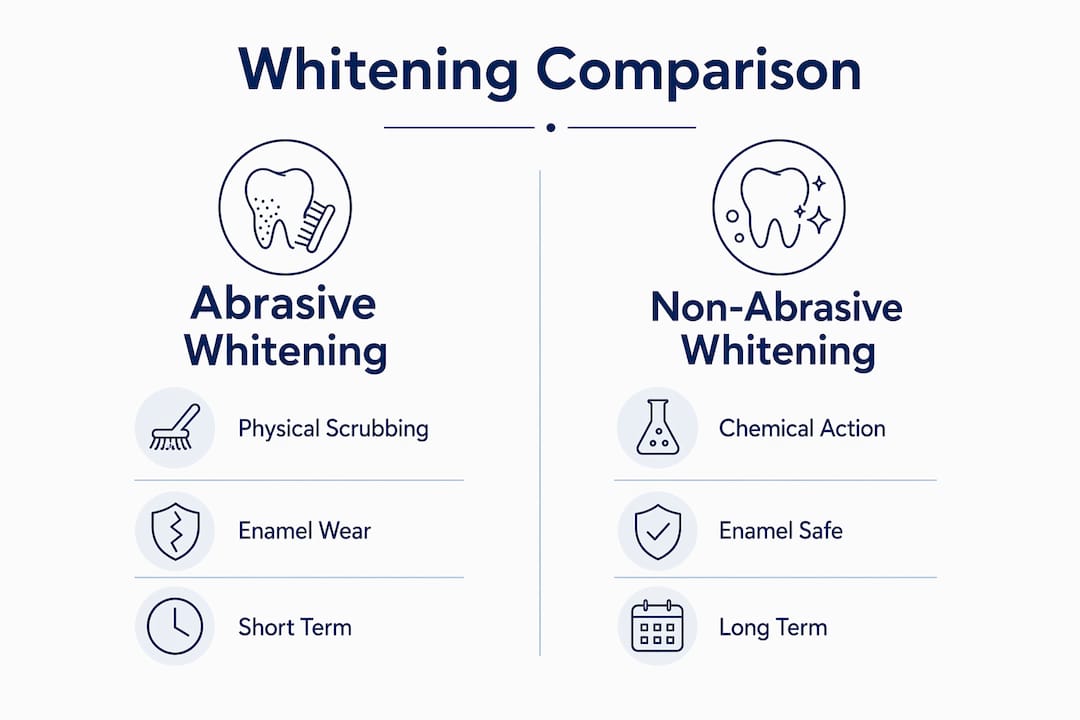
Enamel preservation is the most significant benefit. Piezoelectric whitening maintains enamel surface microhardness, avoiding the demineralization that peroxide-based treatments can cause. Enamel does not regenerate once it erodes. Protecting it from the start is far easier than trying to repair it later.
Reduced sensitivity and gum irritation follow directly from avoiding peroxide. PAP whitening avoids peroxide’s oxidative damage, which means fewer people experience the sharp tooth sensitivity or inflamed gums that are common complaints with bleaching treatments. For people who have tried peroxide strips and stopped because of discomfort, non-peroxide methods are a practical alternative.
“Switching to non-abrasive toothpaste helps preserve enamel, reduce sensitivity, and improve gum health versus abrasive whitening pastes.” — Eau Claire Park Dental
Safe daily use is another practical advantage. Low RDA formulations protect weakened enamel against erosion, making them suitable for regular brushing without the cumulative damage risk that higher-abrasion products carry. You can use a non-abrasive whitening toothpaste every day without worrying about stripping your enamel over weeks or months.
The table below summarizes the key differences between abrasive and non-abrasive whitening approaches.
| Feature | Abrasive whitening | Non-abrasive whitening |
|---|---|---|
| Stain removal method | Physical particle scrubbing | Chemical breakdown or piezoelectric activation |
| Enamel impact | Can cause irreversible wear | Preserves enamel microhardness |
| Sensitivity risk | High, especially with peroxide | Low, particularly with PAP-based formulas |
| Daily use suitability | Limited, depends on RDA score | Generally suitable for daily use |
| Best for | Quick surface polish | Long-term enamel-safe brightening |
What limitations should you know about non-abrasive whitening?
Non-abrasive whitening is effective, but it has a defined scope. Understanding what it cannot do prevents disappointment and helps you use it correctly.
-
It targets extrinsic stains, not intrinsic discoloration. Non-abrasive whitening mainly targets surface stains caused by coffee, tea, wine, and tobacco. It does not alter the internal color of your teeth. If your teeth are naturally yellow or have been discolored by antibiotics or trauma, non-abrasive methods will not produce dramatic results on their own.
-
The whitening effect is gradual and subtle. Non-abrasive whitening brightens your smile over consistent use, not overnight. People expecting the same intensity as professional bleaching will find the results more modest. That is not a flaw. It reflects the gentler mechanism at work.
-
Brushing technique and frequency matter. For piezoelectric methods especially, the whitening action depends on proper brushing. Rushing through a 30-second brush will not give the technology enough time to activate. Two minutes of thorough brushing, twice daily, is the standard that delivers results.
-
Non-abrasive whitening complements professional treatment. Non-abrasive whitening should complement professional whitening for best results. Think of it as a maintenance tool. After a professional whitening session, using a non-abrasive product daily helps preserve those results for longer without risking enamel damage between appointments.
For people managing whitening methods for sensitive teeth, non-abrasive options are often the only realistic daily-use choice. The key is setting the right expectations from the start.
How to choose safe non-abrasive whitening products for daily care
Selecting the right product comes down to three factors: the RDA score, the active ingredients, and how the product fits into your broader oral care routine.
Start with the RDA score. RDA stands for Relative Dentin Abrasivity, and it measures how abrasive a toothpaste is against tooth structure. Abrasive toothpastes with RDA over 100 can irreversibly strip enamel, while an RDA under 70 is considered low-abrasion and enamel-safe. Many whitening toothpastes on store shelves sit above that threshold without disclosing it prominently. Always check before buying.
Look for these specific ingredients:
- PAP (Phthalimidoperoxycaproic Acid): The gold-standard non-peroxide whitening agent. Breaks down stains without free radicals.
- Fluoride: Strengthens enamel and helps remineralize areas weakened by daily acid exposure from food and drink.
- Nano-hydroxyapatite: A mineral that fills microscopic surface scratches in enamel, reducing sensitivity and improving shine. A hydroxyapatite toothpaste with calcium is one practical option for enamel repair alongside whitening.
- Neutral pH formula: Acidic toothpastes soften enamel temporarily, making it more vulnerable to abrasion. A neutral pH avoids that risk.
Avoid products with high RDA scores and aggressive marketing claims. Dental professionals note that many whitening toothpastes cause permanent enamel erosion because high abrasivity is confused with effective cleaning. A paste that feels gritty or leaves your teeth feeling “squeaky clean” is often removing more than just stains.
Integrate professional whitening for optimal results. Non-abrasive daily care and periodic professional treatments work well together. Professional sessions address intrinsic discoloration that home products cannot reach. Daily non-abrasive use then maintains those results without undoing them through enamel damage. For a deeper look at approved whitening ingredients that meet current safety standards, that resource covers the full picture.
Pro Tip: Pair your non-abrasive whitening toothpaste with an overnight retainer cleaner that includes gentle whitening action. Products like the Overnight Retainer Cleaner with Whitening can help manage surface stains on dental appliances without abrasive scrubbing.
Key Takeaways
Non-abrasive whitening is the most enamel-safe approach to cosmetic brightening, using chemical agents or piezoelectric activation instead of physical scrubbing to remove surface stains.
| Point | Details |
|---|---|
| Mechanism matters | PAP and piezoelectric methods remove stains chemically, not by grinding enamel. |
| RDA score is your guide | Choose products with an RDA below 70 to avoid irreversible enamel wear. |
| Scope is surface stains | Non-abrasive whitening targets extrinsic discoloration, not deep tooth color changes. |
| Sensitivity drops significantly | Avoiding peroxide and abrasives reduces tooth sensitivity and gum irritation. |
| Best used as daily maintenance | Pair non-abrasive products with periodic professional whitening for lasting results. |
Why I think most people are choosing whitening products wrong
Most people pick a whitening toothpaste based on the brightness of the packaging or the boldness of the claim on the front. I have seen this pattern play out repeatedly, and the result is almost always the same: short-term satisfaction followed by increased sensitivity, thinner enamel, and eventually a dentist visit that costs far more than the toothpaste ever did.
The uncomfortable truth about whitening is that the products marketed most aggressively are often the ones doing the most damage. High-abrasion pastes feel like they are working because they leave your teeth feeling polished. That sensation is real. What you are feeling is enamel being removed, not just stains.
Non-abrasive whitening flips that logic entirely. The best results I have seen come from people who commit to a low-RDA, PAP-based formula for 60 to 90 days and stop chasing the immediate “wow” effect. The gradual brightening that builds over consistent use is far more durable than anything a harsh paste delivers in a week.
My honest recommendation is to treat your enamel like the irreplaceable resource it is. You get one set of adult teeth. A safe whitening formula that works slowly is always better than an aggressive one that works fast and leaves damage behind. Professional consultation once or twice a year rounds out the routine and catches anything daily home care cannot address.
— Lenney
Getsmilefam’s BLU whitening products for enamel-safe daily care
Getsmilefam built its BLU Whitening Technology specifically around the principles of non-abrasive care. The BLU Whitening Toothpaste uses a low-RDA formula designed for daily use, targeting surface stains without the enamel wear that conventional whitening pastes cause. It is developed in Singapore with lab-approved ingredients and no hydrogen peroxide, making it suitable for people with sensitive gums or thinning enamel.
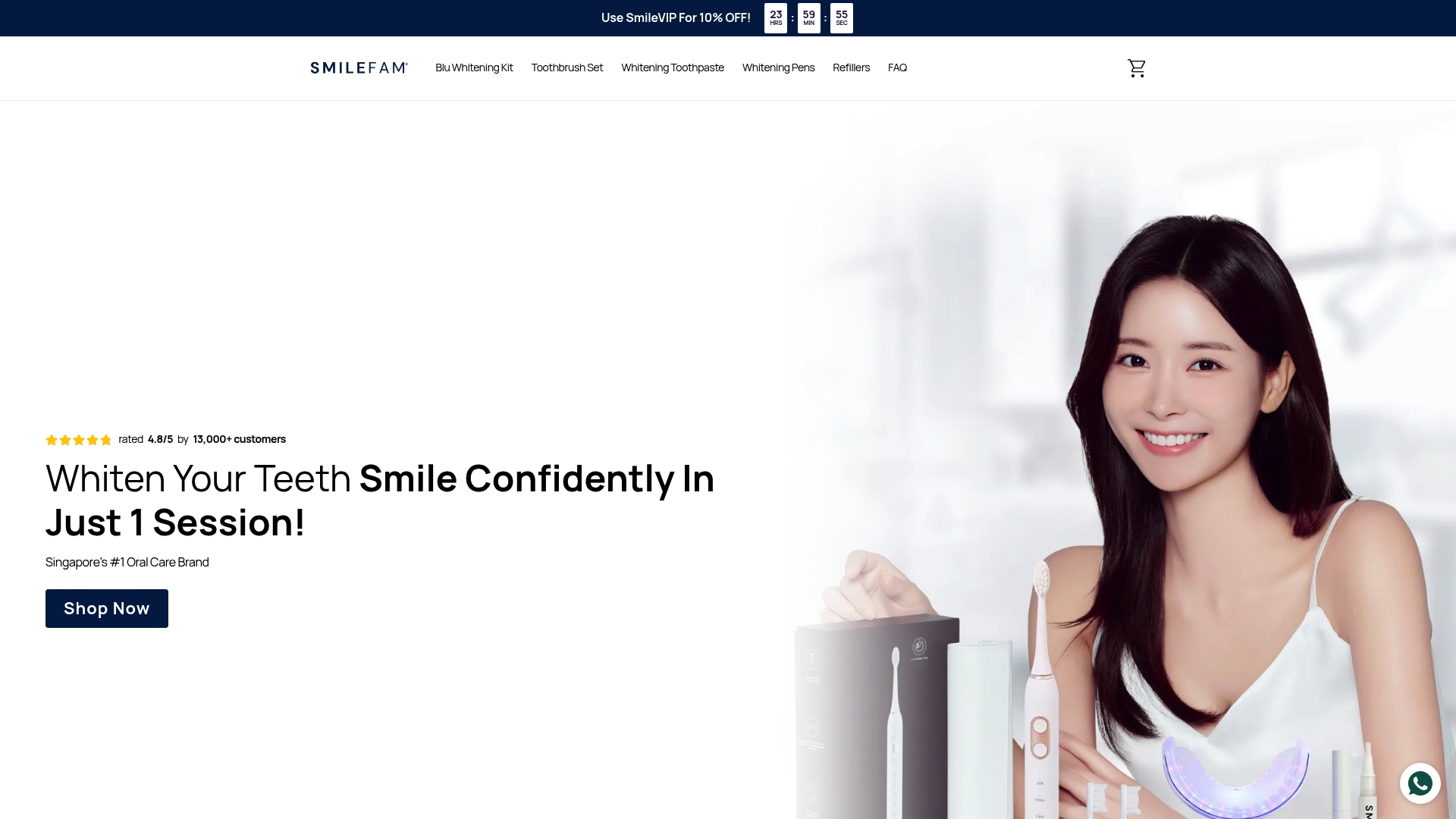
For people who want a more complete whitening routine, the BLU Teeth Whitening Kit combines gentle stain removal with the convenience of at-home use. Both products reflect Getsmilefam’s focus on delivering real cosmetic results without compromising dental health. If you are ready to whiten safely and consistently, these are the products built for exactly that purpose.
FAQ
What is non-abrasive whitening in simple terms?
Non-abrasive whitening removes tooth stains through chemical agents or piezoelectric activation rather than physical scrubbing. It brightens your smile without grinding down enamel surfaces.
Is non-abrasive whitening effective for sensitive teeth?
Non-abrasive whitening is one of the best options for sensitive teeth. PAP-based formulas avoid the free radicals that peroxide produces, which are the main cause of whitening-related sensitivity and gum irritation.
How long does non-abrasive whitening take to show results?
Results build gradually over consistent daily use, typically becoming noticeable after several weeks. Non-abrasive whitening is designed for maintenance and long-term brightening rather than rapid bleaching.
What RDA score should I look for in a whitening toothpaste?
Choose a toothpaste with an RDA score below 70 for enamel-safe daily use. Products with an RDA above 100 carry a real risk of irreversible enamel erosion over time.
Can non-abrasive whitening replace professional dental treatments?
Non-abrasive whitening targets surface stains and works best as a complement to professional whitening, not a replacement. Professional treatments address deeper discoloration that home products cannot reach on their own.