

Lab-approved whitening is defined as any teeth whitening product or method that has been scientifically tested and certified to meet established safety and efficacy standards before reaching consumers. The term is not an official regulatory category but a widely used descriptor for products that pass rigorous lab testing, comply with Good Manufacturing Practices (GMP), and often carry recognized seals like the American Dental Association (ADA) Seal of Acceptance. If you want a brighter smile without risking enamel damage or gum irritation, understanding what lab approval actually means is the first step toward making a genuinely informed choice.
What is lab-approved whitening, and what standards does it involve?
Lab-approved whitening is grounded in a specific set of tests and regulatory checkpoints. Products earn this status by passing ingredient verification, efficacy trials, and safety assessments conducted by accredited laboratories. No single government body issues a universal “lab-approved” stamp, but several overlapping standards define what the term means in practice.
The most recognized benchmark in the United States is the ADA Seal of Acceptance. The ADA reviews product data to confirm both safety and whitening effectiveness before granting the seal. Earning it is voluntary, which means a product without the seal is not automatically unsafe. But a product with the seal has cleared a documented, third-party review process.
Beyond the ADA, manufacturers rely on ISO/IEC 17025 accredited labs for independent testing. These labs issue Certificates of Analysis (COAs) that verify peroxide concentration, pH balance, and microbial safety for each product batch. That level of documentation is what separates a genuinely lab-tested product from one that simply claims to be safe on its packaging.
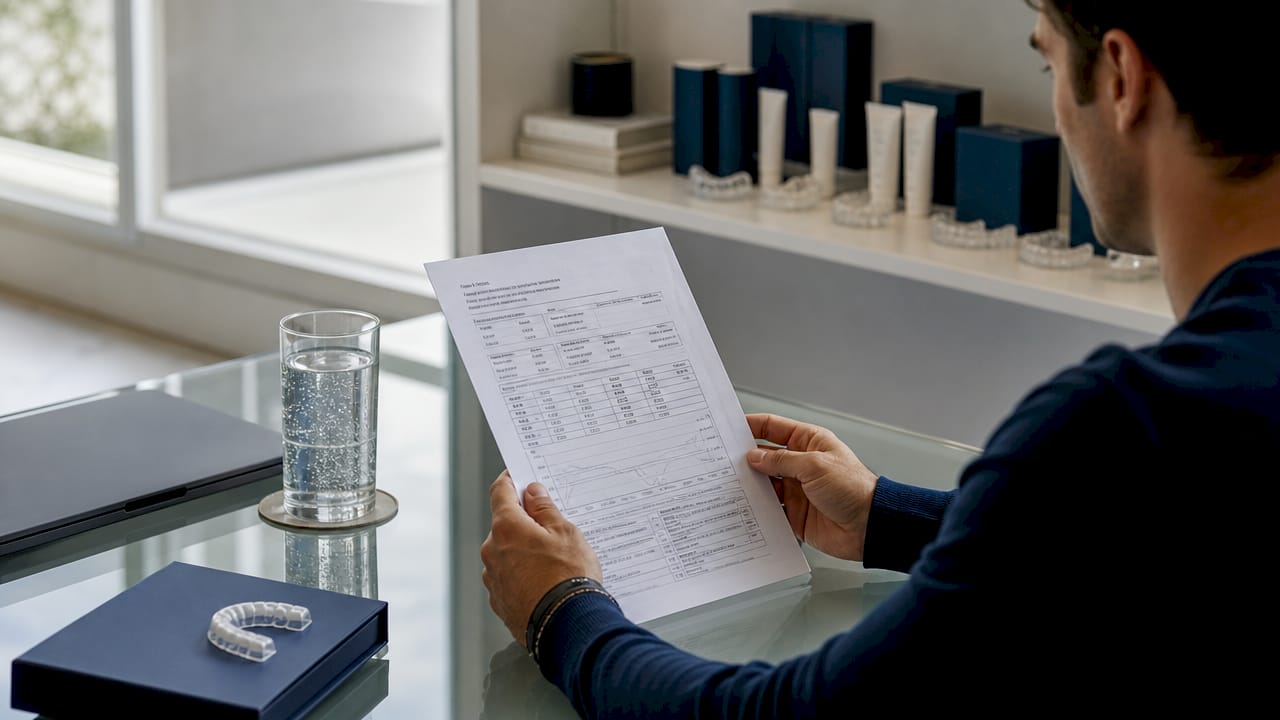
Pro Tip: When shopping for approved teeth whitening products, ask the brand directly whether they can share a COA or ISO test report. Reputable brands keep these on file and will share them on request.
Regulatory compliance adds another layer. Most whitening products are not FDA approved in the pre-market sense. FDA registration means the manufacturing facility complies with inspections and GMP standards. It does not mean the FDA has reviewed or endorsed the product formula itself. That distinction matters. A product made in an FDA-registered facility follows consistent production controls, but the formula still needs independent lab validation to be considered genuinely lab-tested whitening.
- ADA Seal of Acceptance: Voluntary, requires submission of safety and efficacy data for review
- FDA registration: Applies to the manufacturing facility, not the product formula
- ISO/IEC 17025 COA: Independent lab report verifying ingredient purity, concentration, and microbial safety
- GMP compliance: Ensures consistent production quality and contamination controls
- ISO certifications: Confirm quality management systems across the manufacturing process
How do approved whitening ingredients actually work?
The science behind lab-approved whitening products is straightforward once you understand the chemistry. Peroxide-based agents are the primary drivers of effective whitening, and they work in a way that surface scrubbing simply cannot replicate.
- Hydrogen peroxide penetrates enamel. The molecule is small enough to pass through the enamel surface and reach the dentin layer beneath. This is where most deep staining occurs.
- A chemical reaction breaks down stain molecules. Peroxide releases oxygen radicals that oxidize the colored compounds responsible for yellowing. The tooth itself is not thinned or removed.
- Carbamide peroxide works more slowly. It breaks down into hydrogen peroxide and urea over time, releasing whitening agents gradually. This makes it common in overnight or extended-wear formats.
- Concentration determines speed and intensity. At-home lab-tested whitening products typically use lower peroxide concentrations than professional treatments. Professional in-office treatments apply peroxide gels up to 6%, with gum protection applied to manage sensitivity at those levels.
- Abrasive toothpastes work differently. Whitening toothpastes often lack peroxide entirely and remove only surface stains through mild abrasion. They are less potent than peroxide-based chemical whiteners and do not address deeper discoloration.
Non-peroxide whitening technologies are an emerging category. Some use enzymes, activated charcoal, or blue covarine to create optical brightness effects. These approaches are still accumulating lab validation data, and their long-term efficacy profiles are less established than peroxide-based methods. Getsmilefam’s BLU Whitening Technology, developed in Singapore, takes a different approach by delivering results without relying on hydrogen peroxide, making it a notable example of this newer direction in safe whitening methods.
Does lab-approved whitening protect your enamel?
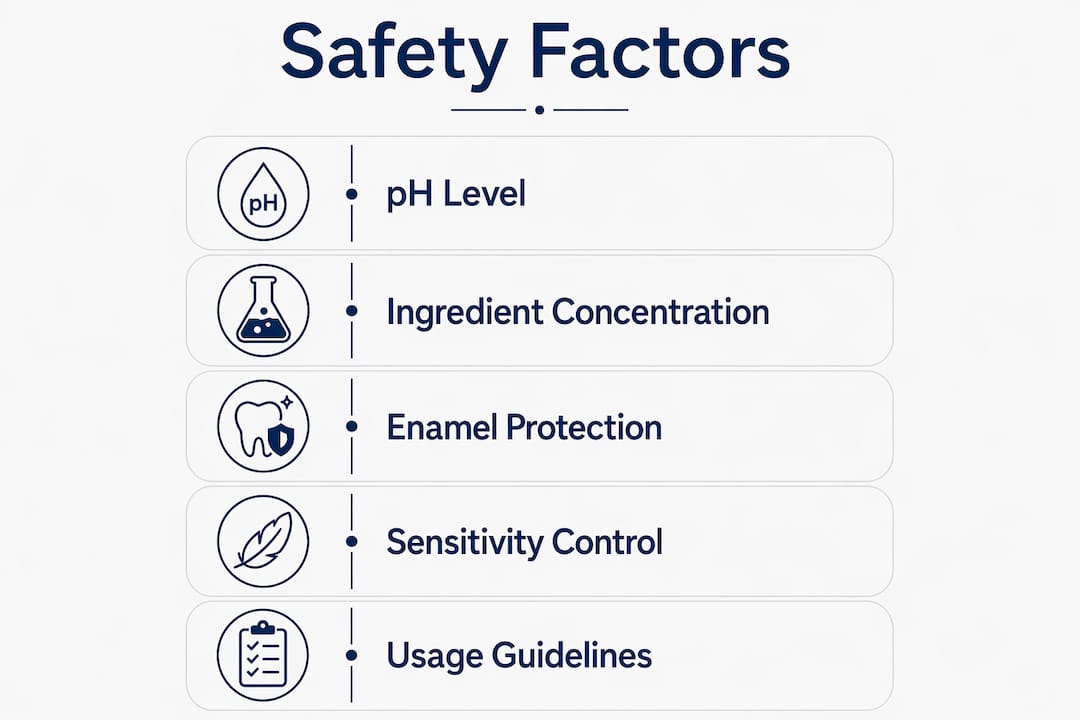
Enamel protection is the central safety concern in any whitening product, and lab approval directly addresses it. The key variables are pH level, peroxide concentration, and contact time. A product that gets all three right can whiten effectively without weakening enamel structure.
Proper formulation pH and ingredient concentration are vital to protecting enamel and preventing tooth sensitivity. Lab-approved products balance potency with enamel safety by maintaining optimal pH and limiting peroxide concentration. Products with a pH below 5.5 risk demineralizing enamel, which is why accredited lab testing includes pH verification as a standard checkpoint.
| Safety factor | What lab testing checks |
|---|---|
| pH level | Must stay above the enamel demineralization threshold |
| Peroxide concentration | Verified against regulatory limits for at-home use |
| Contact time guidance | Labeling must reflect safe usage durations |
| Microbial safety | COA confirms no harmful bacterial contamination |
| Ingredient toxicity | Assessed against established safety limits |
Sensitivity is the most common side effect of whitening, and it is usually temporary. It occurs when peroxide temporarily increases the permeability of enamel, allowing stimuli to reach the nerve more easily. Lab-approved formulas minimize this by using buffered peroxide systems and including desensitizing agents like potassium nitrate or fluoride in the formula.
Pro Tip: Space your whitening sessions by at least 48 hours to give enamel time to remineralize between treatments. Pair whitening with a fluoride toothpaste to support enamel recovery.
Overuse is the most common cause of enamel damage from whitening products. Following the labeled instructions is not optional guidance. It is the safety parameter the product was tested against. Using a strip for twice the recommended time does not double your results. It doubles your exposure risk.
How can you identify a genuinely lab-approved whitening product?
Identifying a real lab-approved product requires looking past marketing language and checking for verifiable evidence. The whitening category is crowded with products that use words like “clinically tested” or “dentist recommended” without any supporting documentation.
Recognized certification seals like the ADA Seal, ISO certificates, and transparent ingredient lists are the most reliable indicators of genuine lab backing. Here is what to look for before you buy:
- ADA Seal of Acceptance: Visible on the packaging or the brand’s website. Verifiable through the ADA’s own product database.
- ISO/IEC 17025 COA: Ask the brand for a batch-specific certificate. This document names the testing lab, the test date, and the exact results.
- Full ingredient disclosure: Lab-tested products list every active and inactive ingredient. Vague terms like “proprietary blend” without further detail are a warning sign.
- Peroxide concentration listed clearly: At-home products should state the exact percentage. If a brand hides this, that is a red flag.
- Third-party clinical data: Look for references to peer-reviewed studies or independent clinical trials, not just internal brand testing.
At-home kits and professional treatments both fall within the lab-approved spectrum when they meet these criteria. At-home whitening benefits are real and well-documented when the product carries proper certification. The difference between a professional treatment and a quality at-home kit is primarily concentration and supervision, not the presence or absence of lab validation.
ADA-accepted strips can show visible whitening within 30 days of regular use. That timeline is realistic for at-home products with proper lab backing. Products making claims of dramatic results in 24 hours without any supporting lab data deserve skepticism.
Key Takeaways
Lab-approved whitening means a product has passed independent safety and efficacy testing, carries verifiable certifications, and uses regulated ingredient concentrations to whiten teeth without damaging enamel.
| Point | Details |
|---|---|
| Lab approval is not one single stamp | It combines ADA seals, ISO COAs, GMP compliance, and FDA-registered manufacturing. |
| Peroxide drives real whitening | Hydrogen and carbamide peroxide penetrate enamel and break down stains chemically. |
| pH and concentration protect enamel | Lab testing verifies both to keep products safe for regular at-home use. |
| Verify before you buy | Ask for a COA, check the ADA database, and confirm full ingredient disclosure. |
| Overuse causes most damage | Following labeled instructions is the safety parameter the product was tested against. |
Why lab validation is the one thing I won’t compromise on
I have spent years reading whitening product labels, and the pattern is always the same. Brands spend more on packaging design than on third-party testing. The phrase “clinically tested” appears on products where the “clinic” was the brand’s own internal team. That is not independent validation. That is marketing.
The products that have genuinely changed my view on at-home whitening are the ones that can hand you a COA without hesitation. When a brand knows exactly what is in each batch, what the pH reads, and what the peroxide assay confirms, that confidence shows up in the product’s performance too. Formulation discipline and testing discipline go together.
My honest view on the at-home versus professional debate is that the gap is smaller than most people think, provided the at-home product carries real lab backing. The concentration difference matters less than the consistency of use and the quality of the formula. A well-formulated, lab-tested at-home kit used correctly will outperform a poorly formulated professional treatment every time.
The one thing I tell anyone who asks: do not let a brand’s confidence substitute for documented evidence. Confidence is free. A COA costs money and accountability. That is the difference worth paying for.
— Lenney
Getsmilefam’s lab-tested whitening products
Getsmilefam builds its entire product line around the principle that whitening should be safe first and fast second. The BLU Teeth Whitening Kit uses BLU Whitening Technology, formulated without hydrogen peroxide and designed for sensitive gums, making it one of the cleaner examples of lab-tested whitening available for home use.
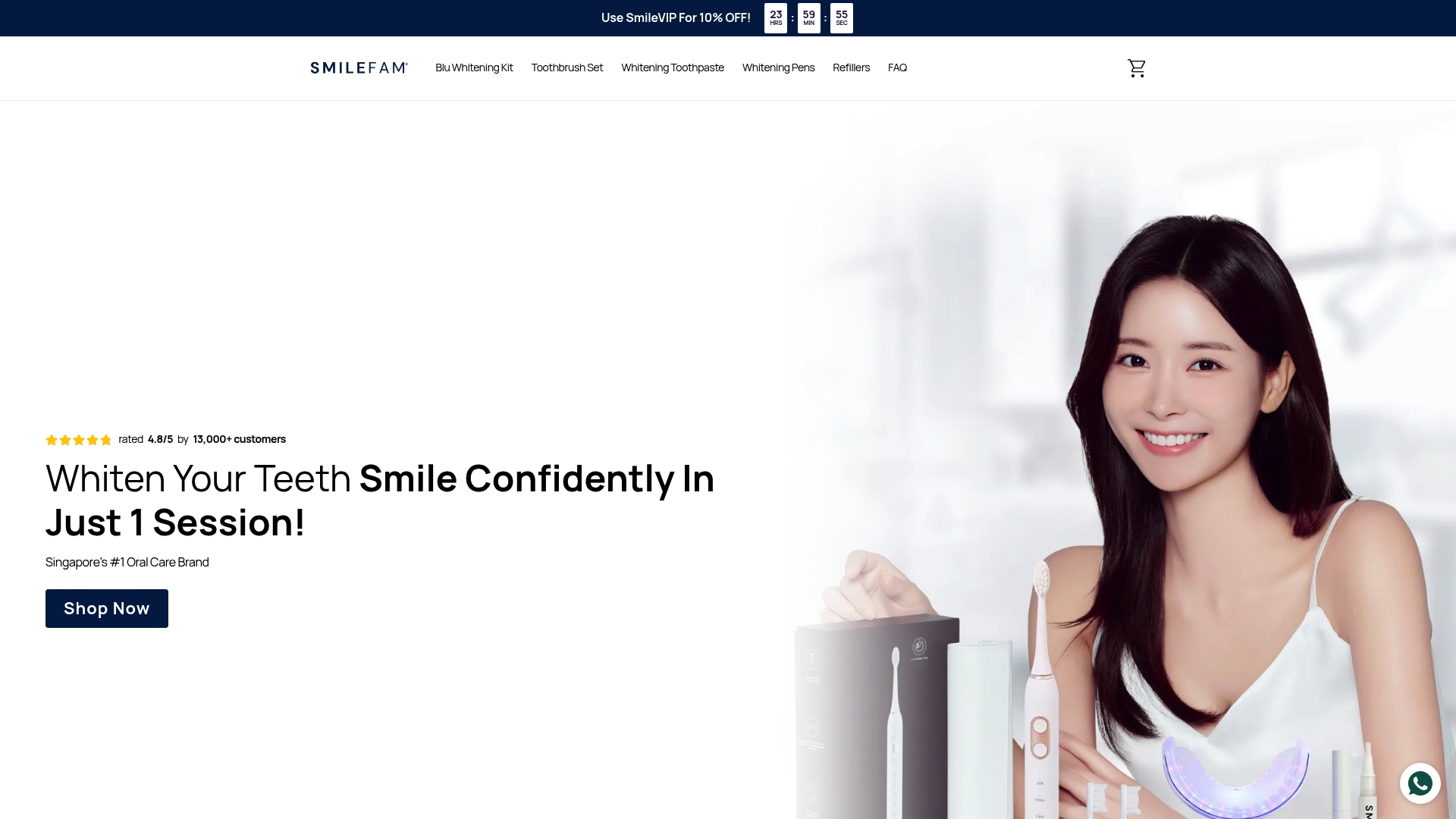
The BLU Whitening Toothpaste complements the kit by maintaining brightness between sessions while supporting enamel health. Both products reflect Getsmilefam’s focus on ingredient transparency and enamel-safe formulation. For anyone who wants effective teeth whitening options without the guesswork of unverified claims, Getsmilefam’s catalog is worth a close look.
FAQ
What does “lab-approved whitening” actually mean?
Lab-approved whitening refers to products that have passed independent safety and efficacy testing, typically verified through ISO/IEC 17025 COAs, ADA Seal review, or GMP-compliant manufacturing. It is not a single official certification but a combination of verifiable standards.
Is FDA approval required for whitening products?
No. Most whitening products are not FDA approved in the pre-market sense. FDA registration applies to the manufacturing facility and confirms GMP compliance, not product formula safety. Independent lab testing fills that gap.
How do I know if a whitening product is genuinely lab-tested?
Look for the ADA Seal of Acceptance on the packaging, request a Certificate of Analysis from the brand, and confirm the product lists its peroxide concentration and full ingredient profile clearly.
Can lab-approved whitening damage enamel?
Lab-approved products are formulated to protect enamel by maintaining safe pH levels and regulated peroxide concentrations. Damage typically results from overuse or ignoring labeled instructions, not from the product itself when used correctly.
How long does it take to see results from approved whitening products?
Consistent use of ADA-accepted at-home whitening products delivers noticeable brightness improvements within 30 days. Results vary based on the degree of staining and the product’s peroxide concentration.