

Enamel loses its whiteness because it thins over time, making the darker dentin layer underneath more visible. This process is the primary driver of tooth discoloration, and it starts earlier than most people expect. Acid erosion, surface staining from coffee and tobacco, and mechanical damage from brushing too hard all accelerate the process. Understanding why enamel loses whiteness is the first step toward protecting what you have and making informed choices about restoring it.
How natural enamel thinning causes whiteness loss
Enamel is the hardest substance in the human body, but it is not permanent. Natural enamel erosion occurs at a rate of 10–15 micrometers per year, which adds up to roughly 20–30% enamel loss by age 50. That cumulative loss is not just a structural concern. It directly changes how your teeth look.
Enamel is translucent, not white. It filters light and creates the bright, reflective appearance most people associate with healthy teeth. As enamel thins, less light is filtered, and the dentin beneath becomes more visible. Dentin is naturally yellow to gray in tone, so thinner enamel means a darker, duller smile.
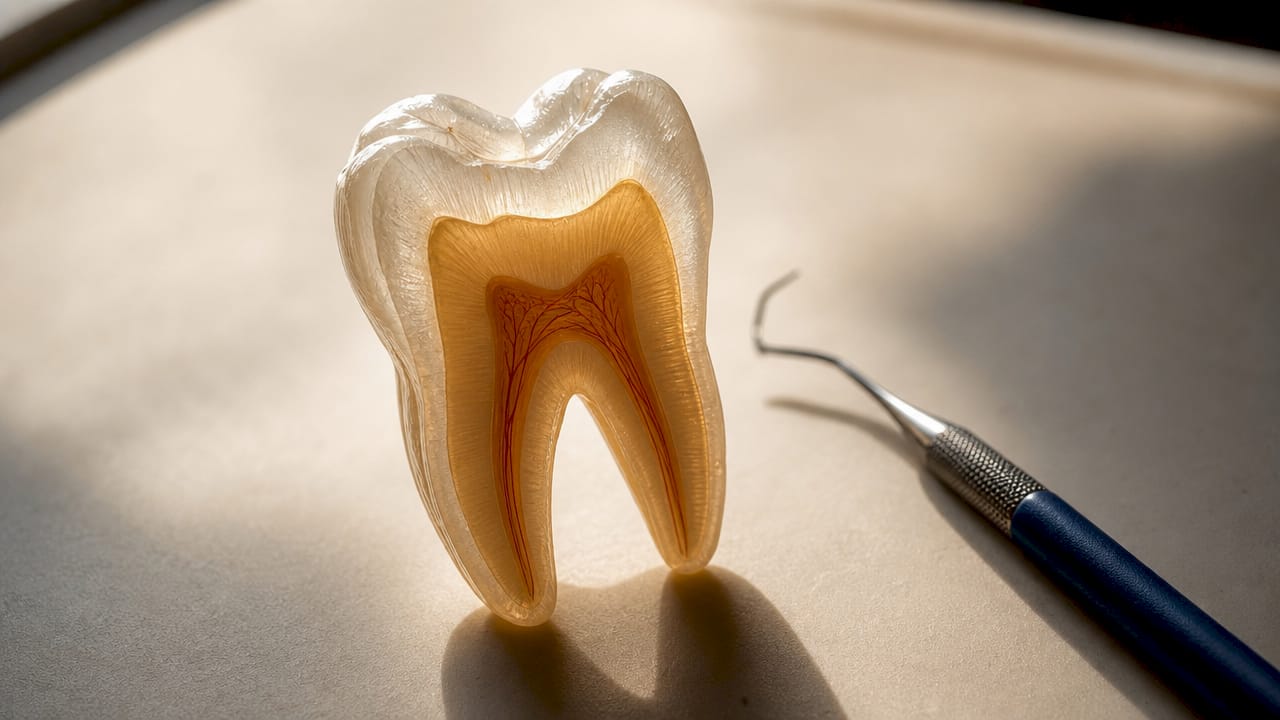
The aging effect compounds over time. Teeth darken by about 1–2 shades per decade from the combined effect of enamel thinning and dentin darkening. That means a person in their 50s may have teeth several shades darker than they had at 20, even with excellent oral hygiene.
| Age range | Estimated enamel loss | Visual effect |
|---|---|---|
| 20s–30s | Minimal (10–30 micrometers) | Little visible change |
| 40s | Moderate (40–60 micrometers) | Slight yellowing begins |
| 50s and beyond | Significant (up to 30% total) | Noticeable darkening and translucency |
Dentin also darkens independently as secondary dentin deposits build up inside the tooth over decades. This internal change is separate from surface staining and cannot be addressed by cleaning alone.
What else causes enamel discoloration?
Aging explains gradual whiteness loss, but several other factors accelerate the process significantly. These causes of enamel discoloration are largely preventable, which makes understanding them worth your time.
Acid erosion from food and drink is one of the fastest drivers of enamel loss. Acidic beverages like soda can erode enamel at rates of 50–100 micrometers per year. That is up to ten times faster than natural wear. Citrus juices, sports drinks, and wine carry similar erosive potential. Frequent exposure gives enamel no time to recover between acid attacks.
Oral bacteria and sugar work together to damage enamel from within. Enamel hydroxyapatite crystals dissolve when oral pH drops below approximately 5.5. Bacteria metabolize sugars and produce acids that push pH below that threshold, triggering demineralization. This is why frequent snacking on sugary foods is more damaging than eating the same amount in one sitting.
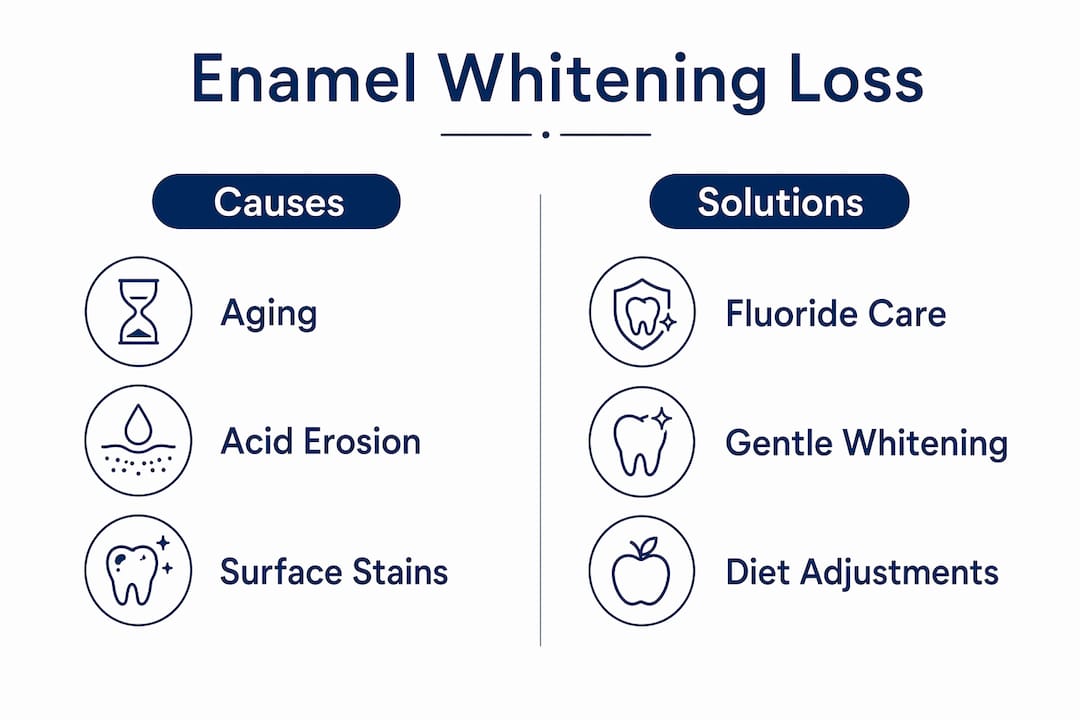
Surface stains from tobacco, coffee, tea, and pigmented foods accumulate on enamel over time. These stains sit on the outer surface rather than inside the tooth structure. That distinction matters because surface stains are often reversible, while structural enamel loss is not.
Mechanical damage also plays a role. Brushing too hard or grinding teeth causes enamel microdamage that increases susceptibility to both acid erosion and staining. A worn enamel surface is rougher and more porous, which means pigments from food and drink absorb more easily.
Other contributing factors include:
- Acid reflux, which exposes teeth to stomach acid repeatedly
- Dry mouth, which reduces saliva’s natural buffering and remineralizing effect
- Certain medications that reduce saliva flow or directly stain enamel
- Chlorinated swimming pools, which carry enough acid to erode enamel with frequent exposure
Pro Tip: Wait at least 30 minutes after eating or drinking acidic foods before brushing. Brushing immediately after acid exposure removes softened enamel crystals before they can reharden.
Can enamel discoloration be reversed?
Not all discoloration is the same, and the difference between reversible and permanent changes determines what treatment actually works. Knowing which type you are dealing with saves time, money, and potential enamel damage from unnecessary whitening attempts.
Surface stains from tobacco, coffee, and pigmented foods are classified as extrinsic discoloration. They sit on or just below the enamel surface and respond well to professional cleaning, whitening toothpastes, and at-home whitening treatments. These stains are the most common reason people notice their teeth looking less white, and they are also the most treatable. Learning more about lifestyle changes for whiter teeth can help you address extrinsic stains before they become embedded.
Intrinsic discoloration is a different category entirely. This type originates inside the tooth, either from dentin darkening with age, developmental issues, or exposure to certain substances during tooth formation. Deep intrinsic discoloration from tetracycline antibiotics or a dead tooth pulp cannot be reversed with whitening products. These cases require restorative procedures such as veneers or crowns.
| Discoloration type | Cause | Reversible? | Treatment |
|---|---|---|---|
| Extrinsic staining | Coffee, tobacco, food pigments | Yes | Cleaning, whitening products |
| Enamel erosion | Acid, mechanical wear | Partial | Remineralization, whitening |
| Intrinsic dentin darkening | Aging, secondary dentin | No | Veneers, crowns |
| Tetracycline or pulp-related | Medication, trauma | No | Restorative dentistry |
The key insight from dental research is that distinguishing reversible stains from structural discoloration is the foundation of effective treatment planning. Applying a whitening product to intrinsic discoloration will not produce meaningful results and may cause unnecessary enamel stress.
Pro Tip: If your teeth appear gray or blue-gray rather than yellow, that tone often signals intrinsic discoloration. A dentist can confirm the type and recommend the right path forward.
Practical enamel whitening tips that actually work
Protecting enamel and maintaining whiteness requires consistent daily habits, not just occasional whitening treatments. The following strategies are grounded in oral health research and address both prevention and restoration.
-
Brush twice daily with a whitening toothpaste. Use a soft-bristled brush and gentle pressure. Abrasive whitening toothpastes remove surface stains without requiring harsh chemicals. Avoid medium or hard bristles, which contribute to enamel microdamage over time.
-
Reduce your intake of acidic and staining foods and drinks. Coffee, tea, red wine, citrus, and soda are the primary culprits. You do not need to eliminate them entirely. Drinking through a straw, rinsing with water afterward, and limiting frequency all reduce their impact on enamel.
-
Use fluoride treatments to support remineralization. Fluoride strengthens remaining enamel and slows further thinning, though it cannot regrow enamel that has already been lost. Fluoride toothpaste, mouth rinses, and professional fluoride treatments all contribute to this protective effect.
-
Choose enamel-safe whitening products. Harsh whitening agents at high concentrations can strip enamel and increase tooth sensitivity. Look for products that use enamel-safe formulas and avoid unnecessary abrasives. Understanding how to protect enamel while whitening helps you get results without trading long-term enamel health for short-term brightness.
-
Schedule regular professional cleanings. A dental hygienist removes calculus and embedded surface stains that daily brushing cannot reach. Most adults benefit from cleanings every six months. People with faster stain accumulation or acid reflux may need more frequent visits.
-
Address grinding and clenching. If you grind your teeth at night, a custom night guard prevents the mechanical enamel loss that accelerates both thinning and discoloration. This is one of the most overlooked factors in preventing enamel yellowing.
-
Stay hydrated and support saliva production. Saliva is your mouth’s natural defense against acid. It buffers pH, washes away food particles, and delivers minerals back to enamel surfaces. Drinking water throughout the day, especially after meals, supports this process.
Key takeaways
Enamel loses its whiteness primarily through thinning that reveals darker dentin, accelerated by acid erosion, surface staining, and mechanical damage, all of which require different prevention and treatment strategies.
| Point | Details |
|---|---|
| Enamel thins with age | Natural erosion of 10–15 micrometers per year causes 20–30% loss by age 50. |
| Dentin darkens independently | Teeth darken 1–2 shades per decade even with good oral hygiene. |
| Acid is the fastest eroder | Acidic drinks can erode enamel at 50–100 micrometers per year, far faster than normal wear. |
| Surface stains are reversible | Extrinsic stains from coffee and tobacco respond to cleaning and whitening products. |
| Intrinsic discoloration needs dental care | Tetracycline stains and dentin darkening require restorative procedures, not whitening products. |
What I’ve learned about enamel and the whitening trap
Most people I talk to assume their teeth are yellowing because they are not whitening enough. The reality is almost always the opposite. They are whitening too aggressively, too often, with products that are not designed to protect enamel in the process.
Enamel does not grow back. That fact should shape every decision you make about oral care. When you use a harsh whitening product repeatedly, you are trading long-term enamel health for a short-term brightness boost. The irony is that thinner enamel makes teeth look darker over time, so aggressive whitening can actually worsen the problem it is meant to solve.
What actually works is a consistent, gentle approach. Fluoride remineralization, soft brushing, reducing acidic drinks, and using enamel-safe whitening products at reasonable intervals. These habits do not produce dramatic overnight results, but they protect the enamel you have and keep your teeth looking their best for decades.
The other thing worth saying plainly: not all discoloration is cosmetic. Gray tones, uneven coloring, or sudden darkening of a single tooth are signals worth discussing with a dentist. Cosmetic whitening is not a substitute for a proper diagnosis, and treating the wrong type of discoloration wastes time and money while potentially causing harm.
— Lenney
Getsmilefam’s enamel-safe whitening options
If you are ready to address surface stains without compromising your enamel, Getsmilefam offers products built specifically for that balance. The BLU Whitening Toothpaste uses a formula developed without hydrogen peroxide, making it suitable for people with sensitive gums or concerns about enamel wear. For a more complete approach, the BLU Teeth Whitening Kit delivers results in a single session using BLU Whitening Technology developed in Singapore.
Both options are lab-approved and designed to work on extrinsic stains without the aggressive chemistry that thins enamel further. If you are older and concerned about cumulative enamel loss, Getsmilefam also offers a dedicated line of gentle oral care products for that specific concern.
FAQ
Why do teeth turn yellow as you age?
Teeth yellow with age because enamel thins and becomes more translucent, revealing the naturally darker dentin beneath. Dentin also darkens by approximately 1–2 shades per decade independently of surface staining.
What foods stain enamel the most?
Coffee, tea, red wine, tobacco, and deeply pigmented foods like berries and tomato sauce are the primary sources of surface staining. These stains are extrinsic and can be removed with professional cleaning or whitening products.
Can enamel be restored once it is lost?
Enamel cannot regrow once it is lost, but fluoride treatments can remineralize and strengthen remaining enamel to slow further loss. Restorative options like veneers or bonding can address severe cases cosmetically.
Is whitening toothpaste safe for enamel?
Whitening toothpastes with low abrasivity ratings are generally safe for daily use. Products that rely on gentle polishing agents rather than high-concentration bleaching chemicals pose less risk to enamel integrity.
When does discoloration require a dentist instead of whitening products?
Gray or blue-gray tones, single-tooth darkening, or discoloration that does not respond to whitening products signal intrinsic discoloration. These cases require a dental evaluation, as whitening products are ineffective and potentially harmful for structural or pulp-related causes.