

Teeth whitening technology is defined as a chemical process where peroxide-based agents penetrate enamel and break down pigment molecules inside the tooth structure. This oxidation reaction changes the color of the tooth from within, rather than simply scrubbing the surface clean. Understanding how whitening technology works separates realistic expectations from marketing promises. The American Dental Association (ADA) recognizes hydrogen peroxide and carbamide peroxide as the two primary active ingredients in clinically validated whitening treatments. Getsmilefam’s BLU Whitening Technology, developed in Singapore, takes a different approach by delivering results without harsh peroxide formulas, making it suitable for people with sensitive gums.
How whitening technology works: two core mechanisms
Two fundamentally different mechanisms drive all whitening products: abrasion and oxidation. They produce very different results, and confusing the two leads to disappointment.
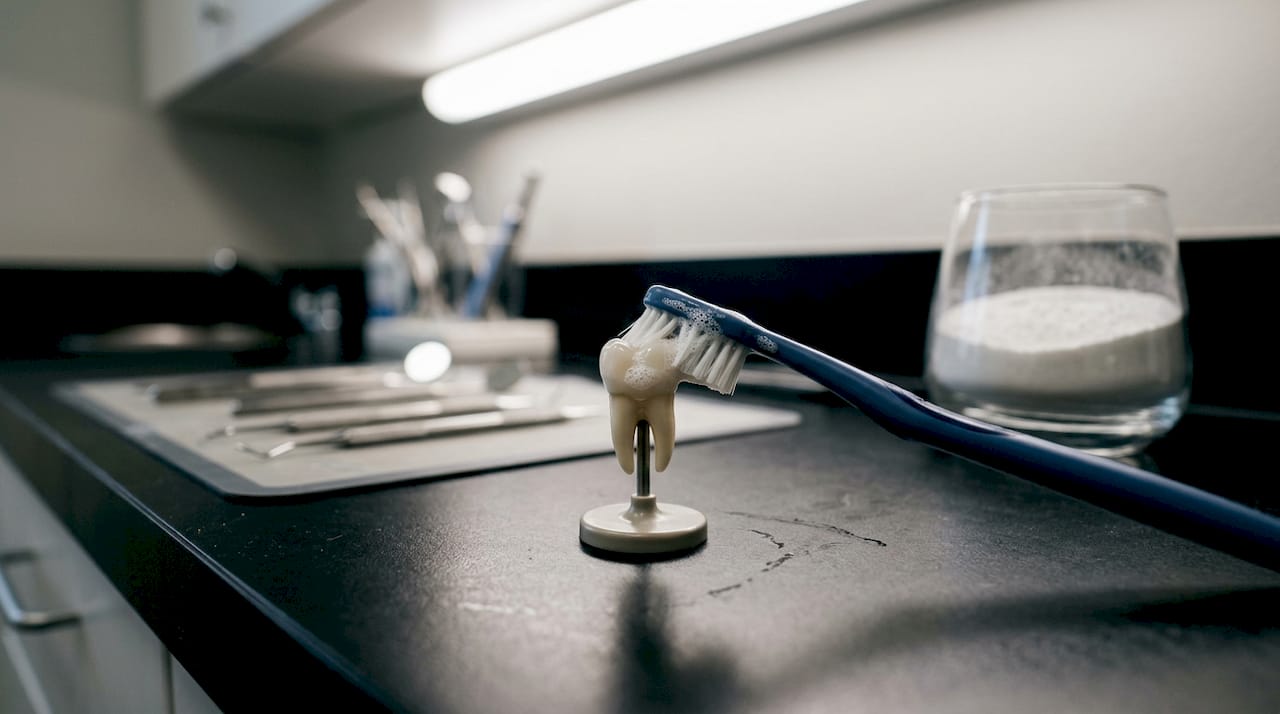
Abrasion removes extrinsic stains sitting on the tooth surface. Think of it as polishing. Whitening toothpastes, baking soda, and activated charcoal all work this way. The problem is that abrasion only restores your teeth to their natural baseline color. It cannot make teeth lighter than they naturally are. Baking soda and activated charcoal do not chemically bleach intrinsic stains, and the ADA does not recommend them for daily use because overuse damages enamel.
Oxidation is the mechanism behind real bleaching. Peroxide agents penetrate the enamel and reach the dentin layer, where most discoloration lives. Oxidation typically yields 2–10 shade improvements, while abrasion only restores original brightness. That gap explains why whitening strips and professional gels outperform charcoal toothpaste by a wide margin.
The types of whitening treatments available in 2026 span both categories:
- Whitening toothpastes: mild abrasives plus low-dose peroxide for surface maintenance
- Whitening strips: thin films coated with peroxide gel for at-home bleaching
- Custom tray systems: dentist-fitted trays with higher-concentration gels
- In-office professional treatments: the highest peroxide concentrations, often paired with light activation
- Whitening pens: portable gel applicators for targeted touch-ups
Each product type sits on a spectrum from surface polishing to deep chemical bleaching. Knowing where a product falls on that spectrum tells you what results to expect before you spend a dollar.
What happens inside your tooth during peroxide oxidation?
Peroxide does not just sit on the surface. It diffuses through the enamel and into the dentin, where chromogen molecules cause the yellow and brown tones you see. Peroxide releases free radicals, specifically hydroxyl radicals, that attack these chromogen molecules directly.
The chemistry works like this: chromogens are long-chain organic molecules that absorb visible light in specific wavelengths, which is what makes them appear colored. Hydroxyl radicals cleave the chemical bonds in these chains. Breaking long pigment chains into smaller, colorless fragments changes how the tooth reflects light. The result is a tooth that looks visibly whiter because it no longer absorbs the same wavelengths.
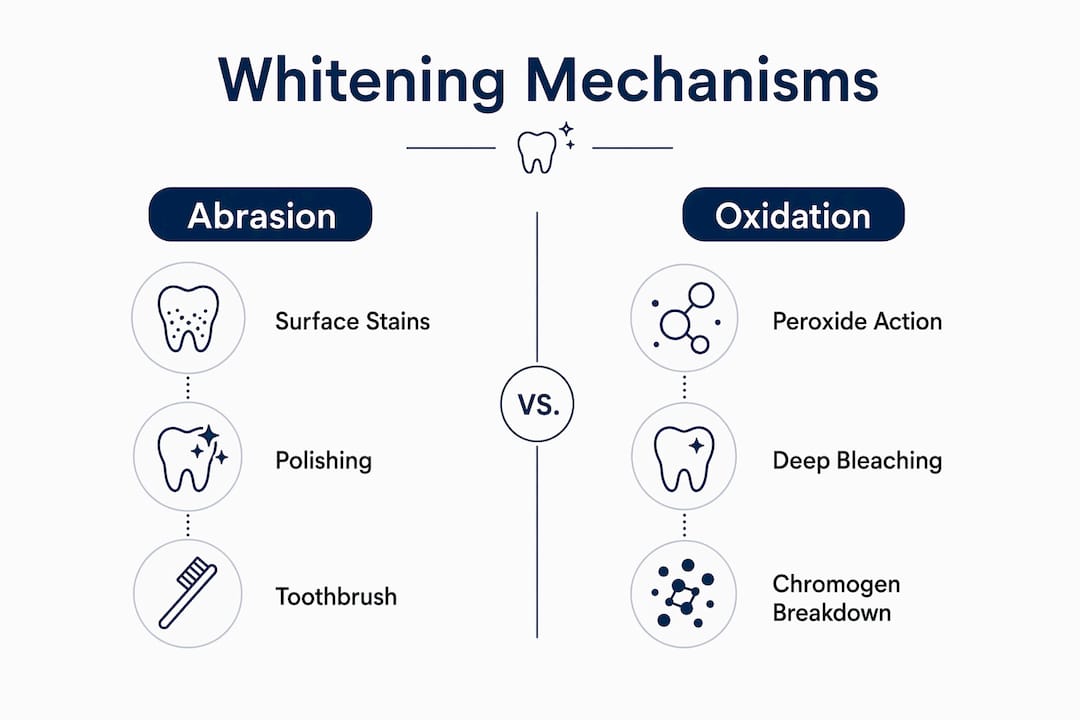
This reaction happens inside the enamel and dentin layers simultaneously. That depth of penetration is what separates oxidation from surface abrasion. No amount of scrubbing reaches the dentin. Only chemistry does.
Pro Tip: Apply whitening gel to clean, dry teeth. Saliva dilutes the peroxide concentration and slows the oxidation reaction. Pat teeth dry with a clean cloth before application for faster, more even results.
The speed of this reaction depends on two variables: peroxide concentration and contact time. Higher concentration means more free radicals released per minute. Longer contact time means more chromogen bonds broken. Both variables are adjustable, which is why professional and at-home products produce different outcomes.
How does peroxide concentration affect whitening results?
Concentration is the single biggest factor separating professional whitening from at-home products. Professional in-office whitening uses 15%–43% hydrogen peroxide, which can achieve 6–10 shade improvements in a single session. That level of concentration requires dental supervision because misapplication causes chemical burns to the gums and soft tissue.
At-home kits operate at lower concentrations for safety. Typical ranges are 3%–20% hydrogen peroxide or 10%–35% carbamide peroxide. Carbamide peroxide breaks down into hydrogen peroxide when it contacts saliva, releasing the active agent more slowly. This slower release makes carbamide peroxide gentler and better suited for overnight tray treatments.
Sensitivity during whitening comes from peroxide opening dentinal tubules, not from enamel damage. This distinction matters. Temporary sensitivity is a normal physiological response, not a sign that the product is harming your teeth. Products containing potassium nitrate help manage this sensitivity by calming the nerve response inside the tooth.
Key facts about concentration and safety:
- Higher concentration produces faster results but requires professional oversight
- Lower concentration products are safe for unsupervised at-home use
- Overuse of any peroxide product, regardless of concentration, increases sensitivity risk
- Professional supervision prevents chemical burns and maximizes results from high-concentration treatments
- Strict regulations in many countries require a dentist’s prescription for whitening agents above certain thresholds
Pro Tip: If you experience sensitivity after whitening, use a toothpaste containing potassium nitrate for 48 hours before your next application. It reduces nerve response without interrupting your whitening schedule.
The whitening best practices that dental professionals recommend consistently point to controlled application time as the key to balancing results with comfort.
What role do LED and laser lights play in whitening?
LED and laser systems are accelerators, not whitening agents. LED and laser lights primarily speed oxidation by heating the peroxide gel, which increases the rate of free radical release. The chemical gel causes the actual color change. Light alone does nothing to chromogen molecules.
Clinical evidence shows light activation improves treatment speed but does not necessarily produce a better final shade outcome compared to gel alone. This finding contradicts the heavy marketing emphasis placed on light systems. Many at-home LED devices are sold as the primary whitening mechanism, which misrepresents the science.
The practical takeaway is straightforward. If a product uses LED activation alongside a quality peroxide gel, the light may shorten your treatment time. If a product markets the light as the whitening agent itself, that claim is not supported by clinical evidence. The gel does the work. The light speeds it up.
Pro Tip: When evaluating any light-activated whitening kit, check the peroxide concentration in the gel first. A high-quality gel with no light will outperform a weak gel with a powerful LED every time.
The confidence boost from a brighter smile is real, and cosmetic confidence research consistently links aesthetic improvements to measurable gains in self-esteem. That outcome depends on the chemistry working correctly, not on the color of the light.
How long do whitening results last, and what affects longevity?
Whitening results are not permanent because teeth naturally reabsorb pigments from food, drinks, and lifestyle habits. The same porous enamel structure that allows peroxide to penetrate also allows staining compounds to re-enter over time. How quickly results fade depends almost entirely on what you eat, drink, and do after treatment.
The main factors that accelerate stain recurrence:
- Coffee, tea, and red wine contain tannins that bind to enamel rapidly
- Tobacco use introduces tar and nicotine, which stain deeply and quickly
- Acidic foods temporarily soften enamel, making it more porous and absorbent
- Poor brushing habits allow surface stains to accumulate and set
Lifestyle adjustments and routine aftercare are the most effective tools for extending whitening longevity. Rinsing with water after consuming staining beverages, using a straw for coffee and tea, and brushing within 30 minutes of meals all reduce pigment absorption. Gentle maintenance with a low-abrasion whitening toothpaste removes surface stains before they set without stripping enamel.
Avoid overusing abrasive products during maintenance. Excessive use of abrasive agents like charcoal or baking soda can harm enamel and worsen discoloration over time. The goal of maintenance is gentle, consistent care, not aggressive daily scrubbing. A lifestyle guide for whiter teeth covers the specific daily habits that make the biggest difference in keeping results visible for longer.
Key Takeaways
Whitening technology works through peroxide oxidation, which breaks chromogen molecules into colorless fragments inside the enamel and dentin, producing shade improvements that abrasion alone cannot achieve.
| Point | Details |
|---|---|
| Two mechanisms exist | Abrasion removes surface stains; oxidation bleaches intrinsic stains up to 10 shades deeper. |
| Peroxide drives the chemistry | Hydroxyl radicals from peroxide cleave pigment chains, changing how teeth reflect light. |
| Concentration determines results | Professional treatments use 15%–43% hydrogen peroxide; at-home kits use lower concentrations for safe gradual bleaching. |
| LED accelerates, not whitens | Light activation speeds peroxide oxidation but does not replace the gel as the active whitening agent. |
| Results require maintenance | Teeth reabsorb pigments over time; lifestyle habits and gentle aftercare directly extend whitening longevity. |
The science is clear, but the marketing rarely is
I have spent years reading clinical studies on whitening chemistry, and the gap between what the science says and what product marketing claims is genuinely wide. The oxidation mechanism is well-established. Peroxide works. The shade improvements are real. What gets distorted is everything around that core fact.
The LED and laser marketing is the most consistent offender. I have seen at-home devices sold primarily on the strength of their light output, with the gel treated as an afterthought. That is backwards. A weak gel with a powerful LED produces weak results. The chemistry is the product. The light is a timer.
The other thing I would push back on is the assumption that more concentration always means better results. For most people doing at-home whitening, a moderate-concentration gel used consistently over two weeks produces results that are indistinguishable from a single high-concentration professional session. The difference is speed, not final outcome. Professional treatments are worth it when you need fast results. They are not automatically superior for long-term maintenance.
What I find genuinely useful is the distinction between abrasion and oxidation. Once you understand that charcoal toothpaste cannot bleach your teeth, you stop wasting money on products that cannot deliver what you want. The common whitening misconceptions that circulate online mostly come from this one confusion. Know your mechanism, and you know your product.
— Lenney
Getsmilefam’s approach to safe, effective whitening
Getsmilefam builds its whitening products around the science covered in this article, with one key difference: its proprietary BLU Whitening Technology delivers results without harsh peroxide formulas, making it a strong option for people with sensitive gums or those cautious about chemical exposure.
The BLU Teeth Whitening Kit is formulated for home use with professionally aligned ingredient standards and enamel-safe chemistry. For daily maintenance, the BLU Whitening Toothpaste keeps surface stains from resetting between treatment sessions. Both products are lab-approved, free from harsh chemicals, and designed to work with the oxidation principles explained here. If you want results grounded in real chemistry rather than marketing claims, Getsmilefam is worth a close look.
FAQ
What is the main active ingredient in teeth whitening?
Hydrogen peroxide and carbamide peroxide are the two primary active ingredients in clinically validated whitening treatments. Both release hydroxyl radicals that break down pigment molecules inside the tooth.
How many shades can teeth whitening improve?
Oxidation-based whitening typically yields 2–10 shade improvements depending on peroxide concentration and treatment duration. Abrasion-only methods restore original brightness but cannot lighten teeth beyond their natural baseline.
Does LED light actually whiten teeth?
LED light does not whiten teeth on its own. It accelerates the peroxide gel’s oxidation reaction by adding heat, which speeds up free radical release. The gel is the active whitening agent.
Why do teeth feel sensitive after whitening?
Sensitivity occurs because peroxide temporarily opens dentinal tubules, exposing the nerve endings inside the tooth. This effect is temporary and not a sign of enamel damage. Products containing potassium nitrate reduce this response.
How long do whitening results last?
Results vary based on diet and lifestyle, but teeth naturally reabsorb pigments over time. Avoiding staining foods and drinks, rinsing after meals, and using a gentle maintenance toothpaste extend results significantly.