

BLU Whitening Technology is a teeth whitening method that combines blue LED light with peroxide-based or PAP-based whitening gels to accelerate stain removal and produce faster, more visible results than gel alone. Developed and refined for both professional and at-home use, this approach has become one of the most discussed advances in cosmetic dental care. Getsmilefam built its product line around this technology, specifically because the blue light acts as a catalyst that makes whitening chemistry work harder in less time. If you are researching what is blu whitening technology and whether it actually delivers, this guide covers the science, the results, and the safety considerations you need.
How does BLU whitening technology work?
BLU Whitening Technology works by using blue LED light in the 400–500 nm range as a catalyst that accelerates the breakdown of hydrogen peroxide or PAP gel applied to your teeth. That wavelength is not arbitrary. It matches the absorption range of the peroxide molecule, triggering faster decomposition into free radicals.
Those free radicals are the actual whitening agents. They penetrate the enamel surface and break apart the carbon bonds in stain compounds, which are the discolored molecules embedded in your tooth structure from coffee, tea, wine, and tobacco. Without light activation, peroxide still works, but it works slowly. Blue light speeds that process by approximately 50%, which is why a single session with a BLU device can match what would otherwise take days of gel-only treatment.
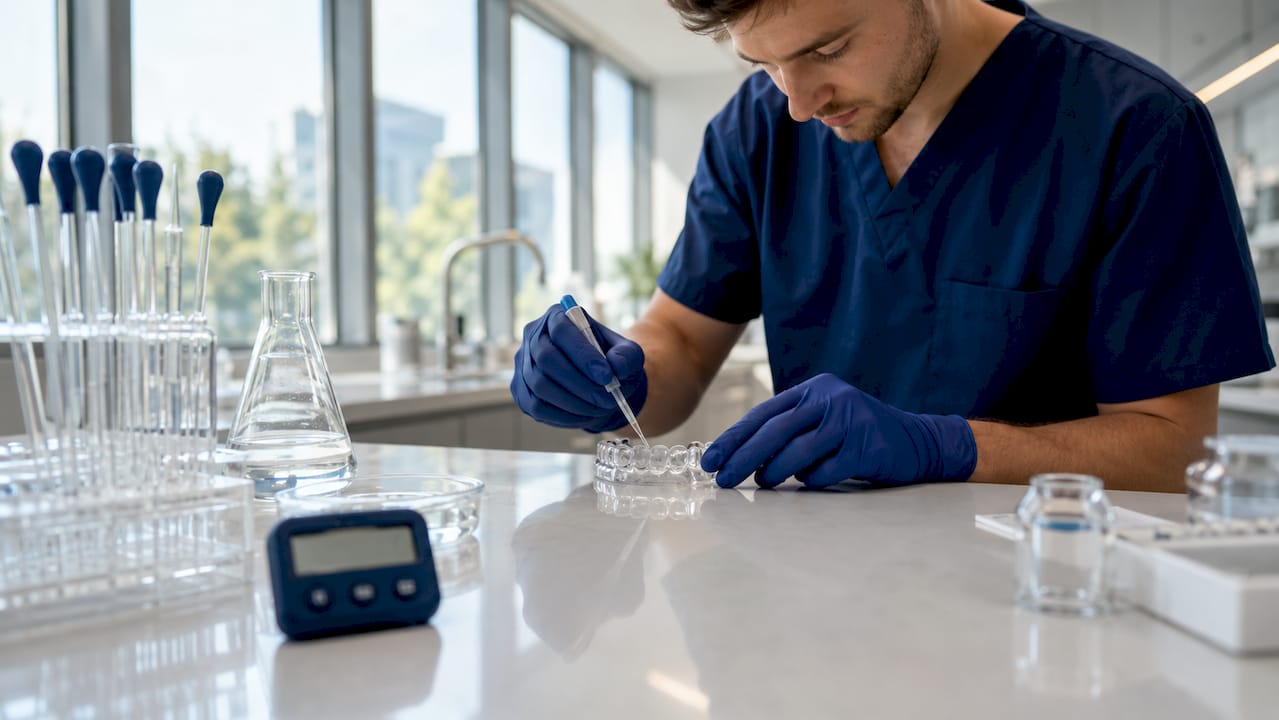
At approximately 456 nm, blue light activates stain molecules in combination with hydrogen peroxide or PAP gels, reaching discoloration that the chemical agent alone cannot address. This is the photobleaching effect, and it is what separates BLU technology from basic strip or tray whitening.
One critical point most people miss: light alone yields negligible whitening without the appropriate gel. The LED is a trigger, not the treatment. The gel does the chemical work; the light makes that work faster and more thorough.
- Blue LED operates in the 400–500 nm wavelength range
- Peroxide or PAP gel is applied to teeth before light activation
- Free radicals from gel decomposition penetrate enamel and break stain bonds
- Photobleaching targets discoloration unreachable by gel alone
- Light without gel produces minimal visible change
Pro Tip: Apply your whitening gel evenly across all tooth surfaces before activating the LED. Uneven gel coverage creates uneven results, regardless of how long you run the light.
What are the benefits and results of BLU whitening?
The most compelling benefit of BLU whitening is speed. Visible shade improvement is often noticeable within a single 30-minute session, with sustained results developing over 1–7 days. That timeline is significantly faster than whitening strips, which typically require 10–14 days of daily use to produce comparable results.
Shade improvement ranges from 1 to 7 shades depending on the treatment protocol, gel concentration, and the baseline condition of your teeth. Heavily stained teeth from years of coffee or red wine consumption tend to see the most dramatic lift in the first few sessions. Teeth with intrinsic discoloration, which is staining inside the tooth structure rather than on the surface, respond more slowly and may require professional-grade treatment.
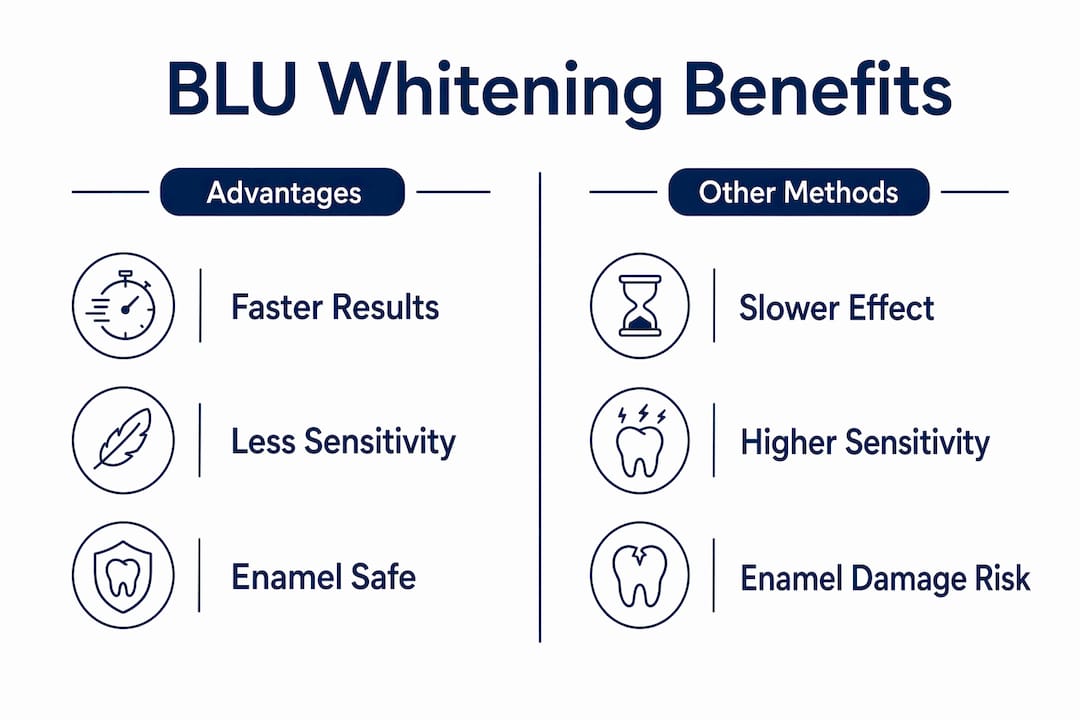
Sensitivity is where BLU technology genuinely separates itself from older whitening methods. Blue LED plus desensitizers like potassium nitrate protect enamel and reduce the post-treatment sensitivity that makes traditional high-concentration peroxide treatments uncomfortable. This matters especially for people who have avoided whitening because of past sensitivity experiences.
The at-home whitening benefits of BLU technology extend beyond convenience. When the gel formula includes enamel protectants like fluoride alongside the blue light activation, the treatment becomes genuinely suitable for regular use without the cumulative enamel damage associated with aggressive bleaching.
Key benefits at a glance:
- Results visible within a single session in many cases
- 1–7 shade improvement depending on protocol and tooth condition
- Reduced sensitivity compared to high-concentration peroxide treatments
- Enamel-safe when gel includes desensitizers and fluoride
- Suitable for at-home use with properly formulated kits
BLU whitening vs. other teeth whitening methods
Comparing whitening technologies reveals where BLU technology holds a genuine advantage and where the differences are more nuanced.
| Method | Efficacy | Sensitivity Risk | Treatment Time | Enamel Safety |
|---|---|---|---|---|
| BLU LED plus peroxide gel | High | Low to moderate | 30 min per session | Good with desensitizers |
| Peroxide gel only (no light) | Moderate | Moderate to high | 10–14 days | Moderate |
| PAP gel plus LED | High | Low | 30 min per session | Good |
| LED light only (no gel) | Negligible | Very low | N/A | Excellent |
| Whitening strips | Moderate | Moderate | 10–14 days | Moderate |
The table makes one thing clear: LED light without gel is not a whitening treatment. It is a marketing feature. The real competition is between peroxide-activated BLU systems, PAP-activated systems, and traditional gel-only approaches.
PAP combined with LED can achieve whitening comparable to higher-concentration peroxide with less enamel impact, though research on long-term synergy effects is still developing. PAP, or phthalimidoperoxycaproic acid, is a peroxide-free bleaching agent that produces fewer free radicals and therefore causes less enamel stress. For people with sensitive teeth or thin enamel, PAP plus LED is worth considering.
Professional BLU devices deliver 40–60 watts of power compared to under 1 watt for most at-home kits. Professional gels also run 35–37% peroxide concentration versus 10–15% in consumer kits. That gap explains why in-office treatments produce more dramatic results in a single visit, but it also explains why at-home kits are safer for unsupervised use.
Dual blue and red light devices represent an emerging best practice, combining accelerated whitening with sensitivity and gum health management in one device. Red light at longer wavelengths supports tissue repair, which reduces the inflammation that sometimes follows peroxide exposure.
What should you know about safety and best practices?
Safe BLU whitening depends as much on the gel formula as on the light device. The LED is only as safe as the chemistry it activates. Gel ingredients like desensitizers and enamel minerals are crucial for safe whitening with blue light devices, yet most consumers focus entirely on the device and ignore what is in the tube.
Potassium nitrate is the most common desensitizer in quality whitening gels. It works by blocking the dentinal tubules, which are the microscopic channels that transmit sensitivity signals to the nerve. Fluoride in the gel formula remineralizes enamel during treatment, offsetting the temporary softening that peroxide can cause. If your whitening kit does not list either ingredient, that is worth noting before you commit to a full treatment course.
Session duration and frequency matter. Most at-home BLU kits recommend 10–30 minute sessions, repeated no more than once daily for 7–14 days. Overuse does not produce faster results. It produces enamel erosion and chronic sensitivity. Stick to the protocol on the product you are using.
Red light modes support gum health and reduce whitening sensitivity by supporting tissue repair during treatment. If you experience gum tenderness after sessions, a device with a red light mode used after whitening can meaningfully reduce that discomfort.
- Check gel ingredients for potassium nitrate and fluoride before purchasing
- Follow session duration guidelines, typically 10–30 minutes
- Do not exceed recommended frequency to avoid enamel damage
- Use red light mode post-session if gum sensitivity is a concern
- Consult a dentist before starting if you have crowns, veneers, or significant enamel erosion
Pro Tip: If you notice white spots on your teeth after a session, stop treatment for 48 hours. Those spots indicate temporary dehydration of the enamel, not damage. They resolve on their own, but continuing treatment while they are present increases sensitivity risk.
For a deeper look at protecting your enamel during treatment, the Getsmilefam guide on avoiding whitening sensitivity covers practical steps you can take before, during, and after each session.
Key takeaways
BLU Whitening Technology works because blue LED light catalyzes peroxide or PAP gel decomposition, producing faster and more thorough stain removal than gel alone, with reduced sensitivity when the formula includes potassium nitrate and fluoride.
| Point | Details |
|---|---|
| Light is a catalyst, not the treatment | Blue LED accelerates gel chemistry; it produces no meaningful whitening without an activated gel. |
| Speed advantage is real | Blue light speeds peroxide breakdown by approximately 50%, delivering visible results in a single session. |
| Gel formula determines safety | Potassium nitrate and fluoride in the gel protect enamel and reduce sensitivity during treatment. |
| At-home vs. professional power gap | Professional devices run 40–60 watts; at-home kits run under 1 watt, making gel concentration the key variable. |
| Dual light devices add value | Red light modes used alongside blue light reduce gum inflammation and support tissue repair post-treatment. |
Why i think most people are using BLU whitening devices wrong
After spending years watching how people approach at-home whitening, the pattern I see most often is this: someone buys a BLU whitening kit, focuses entirely on the LED mouthpiece, and treats the gel as an afterthought. That is exactly backwards.
The light is the accelerant. The gel is the engine. I have seen people run 30-minute LED sessions with a gel that contains no desensitizers, no fluoride, and a peroxide concentration that is either too low to do anything meaningful or too high for daily unsupervised use. The result is either disappointment or sensitivity that puts them off whitening entirely.
My honest advice: before you buy any BLU whitening system, read the gel ingredient list first. If the brand does not publish it, that tells you something. A quality gel will list potassium nitrate, fluoride, or both. It will also specify peroxide concentration so you can match it to your sensitivity level.
The other mistake I see is expecting professional results from consumer hardware. At-home BLU kits are genuinely effective for maintenance and moderate whitening. They are not a substitute for an in-office treatment if you have deep intrinsic staining. Knowing that distinction saves you money and frustration.
Getsmilefam’s approach of combining enamel-safe gel formulas with BLU technology is the right direction. The safe vs. harsh whitening comparison they publish is worth reading before you decide on any whitening protocol.
— Lenney
Try getsmilefam’s BLU whitening kit at home
Getsmilefam designed its BLU Teeth Whitening Kit specifically around the science covered in this article: blue LED light activation paired with a gel formula that includes desensitizers for enamel protection. The kit combines blue and red LED modes, so you get accelerated whitening alongside gum sensitivity management in a single device.
The formula is lab-approved, free from harsh chemical concentrations that cause chronic sensitivity, and built for regular at-home use. For ongoing maintenance between whitening sessions, the BLU Whitening Toothpaste extends your results daily without additional light treatment. If you want a whitening system that takes the science seriously, Getsmilefam is worth your time.
FAQ
What exactly is BLU whitening technology?
BLU Whitening Technology is a teeth whitening system that uses blue LED light in the 400–500 nm range to accelerate the breakdown of whitening gel, producing faster stain removal than gel-only methods. The light acts as a catalyst; the gel does the actual bleaching work.
How many shades can BLU whitening improve?
Results typically range from 1 to 7 shades of improvement depending on gel concentration, session frequency, and the baseline condition of your teeth. Visible change is often noticeable after a single 30-minute session.
Is BLU whitening safe for sensitive teeth?
BLU whitening is generally safe for sensitive teeth when the gel formula includes desensitizers like potassium nitrate and enamel protectants like fluoride. Devices with a red light mode provide additional support by reducing gum inflammation during treatment.
Does the blue LED light whiten teeth on its own?
No. Blue LED light alone produces negligible whitening without an activated gel. The light triggers faster chemical decomposition of the whitening agent; without gel, there is no meaningful bleaching reaction.
How does at-home BLU whitening compare to professional treatment?
Professional LED devices deliver 40–60 watts of power with gels up to 37% peroxide concentration, while at-home kits run under 1 watt with 10–15% peroxide. At-home kits are effective for maintenance and moderate whitening; professional treatment is better suited for deep or intrinsic staining.