

Visible brightening and reduced yellowing are the clearest signs teeth whitening is working. Most people starting a whitening treatment, whether using at-home strips, a whitening pen, or professional in-office sessions, want to know fast if the process is actually doing something. The good news is that your teeth give you real, measurable feedback. A color difference value called ΔE above 2.5 is considered visibly noticeable whitening. Knowing what to look for, and when, removes the guesswork and keeps you on track.
1. Signs teeth whitening is working: your teeth look brighter
The most obvious sign is a visible increase in brightness. You will notice your teeth reflecting more light, especially in natural daylight or under bathroom lighting. This change often appears within the first 3–5 days for most at-home treatments. It is not subtle once it starts.
- Yellow and brown surface stains begin to fade
- Teeth look more uniform in color across the front surface
- The contrast between your teeth and your gums becomes more noticeable
- Smile photos look noticeably different from your baseline
Pro Tip: Take a photo of your teeth on day one in natural light. Compare it weekly using the same lighting and distance. This removes the bias of daily observation and shows real progress.
2. Reduced staining along the gum line
Stains along the gum line are often the last to go, but their fading is a strong whitening progress sign. This area accumulates pigment from coffee, tea, and red wine over time. When you start seeing the color even out from the center of the tooth down toward the gum, the whitening agent is penetrating the enamel effectively. This is one of the clearest signs teeth are getting whiter in a meaningful way.
3. Temporary tooth sensitivity
Mild sensitivity in the 24–48 hours after a whitening session is a common and expected sign of active whitening. It happens because whitening agents temporarily increase enamel permeability, allowing the bleaching compounds to reach deeper stain layers. This is not damage. It is chemistry doing its job.
- Sharp, brief twinges when drinking cold water
- Heightened response to air or temperature changes
- Discomfort that fades within one to two days
The key distinction is duration. Sensitivity that lasts longer than 48 hours or feels severe warrants a dentist visit. Normal whitening sensitivity is mild and short-lived.
Pro Tip: Apply a desensitizing gel before or after your whitening session. Getsmilefam’s enamel-safe formula is designed to minimize this reaction, but a potassium nitrate-based gel adds an extra layer of comfort if you have naturally sensitive teeth.
4. Slight gum irritation around the edges
Mild gum irritation or a whitish tinge along the gum line immediately after treatment is a normal physical reaction. It signals that the whitening agent made contact with soft tissue. This effect typically resolves within a few hours. Persistent redness, swelling, or pain beyond that window is not normal and should be checked by a dentist.
5. A temporary “too white” or chalky look
Right after a whitening session, teeth can look almost unnaturally white or slightly chalky. This happens because the enamel is temporarily dehydrated. Teeth appear brighter immediately due to dehydration but stabilize within approximately 2 days after treatment. The final color settles slightly darker than that peak, which is your true whitened shade. Do not panic when the color softens slightly after day two. That is the result stabilizing, not fading.
6. Dramatic shade shift after a professional session
Professional in-office whitening produces a 2–8 shade improvement in a single 60–90 minute session. That is a significant jump that you will see immediately in the mirror. Most professional whitening achieves an average 4–6 shades lighter, which is faster and more dramatic than any over-the-counter option. If you had a professional session and your teeth look dramatically different the same day, that is the treatment working exactly as intended.
7. Gradual, consistent improvement over weeks
At-home systems work differently from professional treatments. The signs of whitening effectiveness here are gradual but consistent. At-home custom trays show improvement over 2–4 weeks, while over-the-counter strips yield lighter, slower gains. Peak whitening for at-home strips typically falls between day 14 and day 20.
Here is a simple timeline to set your expectations:
| Timeframe | What you should see |
|---|---|
| Days 1–5 | Initial brightening, surface stains begin to lift |
| Days 6–13 | More uniform color, reduced yellowing |
| Days 14–20 | Peak results for most at-home systems |
| 48 hours post-treatment | Shade stabilizes after dehydration effect fades |
| 6–12 months later | Results hold with proper maintenance |
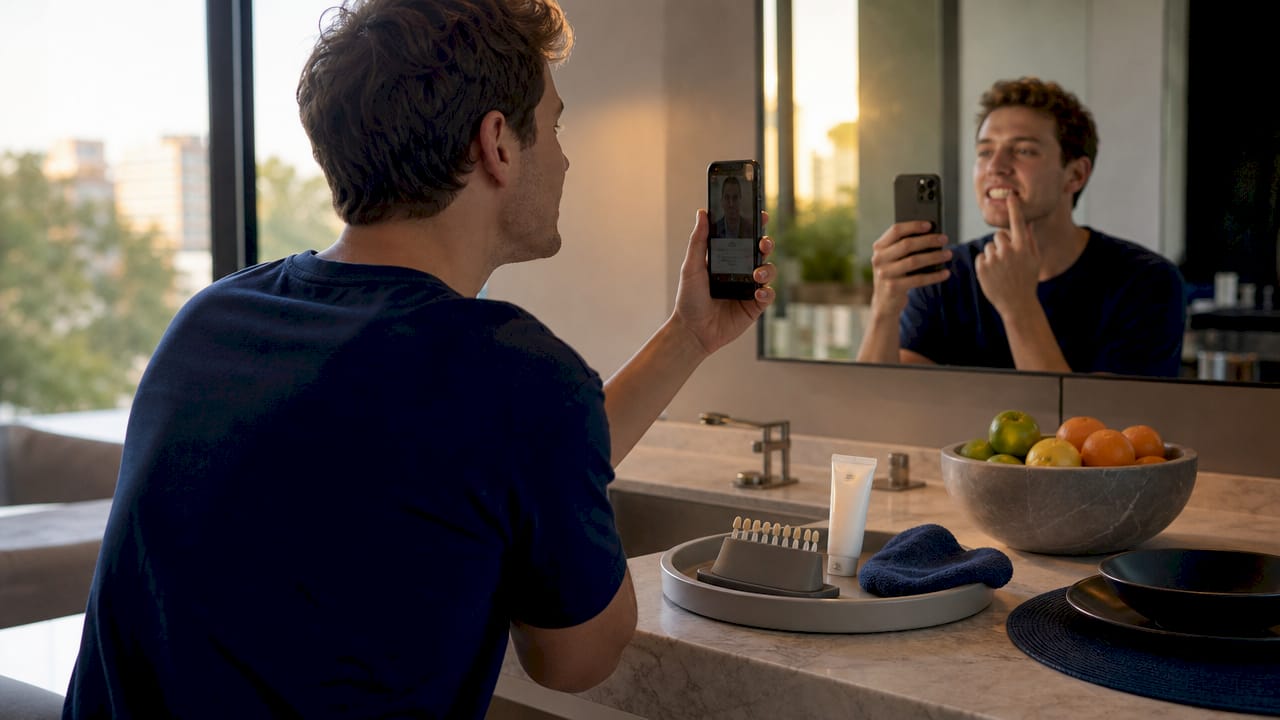
Pro Tip: Use a dental shade guide, available at most pharmacies, to track your progress objectively. Hold it next to your teeth in consistent lighting every five days. The numbers do not lie.
8. How signs differ by whitening method
The signs of whitening effectiveness look different depending on which treatment you use. Understanding these differences helps you read your results accurately.
Professional in-office whitening delivers fast, strong shade shifts within a single session. Sensitivity is brief and resolves quickly. The dramatic change is visible the same day.
At-home whitening trays produce gradual but consistent improvements over two to four weeks. The signs are subtler day to day but clear when you compare week-one photos to week-three photos.
Over-the-counter strips and gels show modest, slower visible changes. Results take longer and are less dramatic, but the signs are the same: reduced yellowing, more uniform color, and mild sensitivity during active treatment.
One critical factor across all methods: whitening only affects natural enamel. Dental crowns, veneers, and fillings do not change color. If you have restorations, you may notice a mismatch as your natural teeth brighten. A dentist consultation before starting treatment prevents this surprise.
9. Tips to confirm your whitening is working
Tracking progress objectively makes a real difference. Relying only on memory or daily observation leads to underestimating results.
- Use digital shade tracking or a physical shade guide every five days
- Photograph your teeth in the same spot, same light, same distance each time
- Avoid staining foods and drinks during treatment, especially coffee, red wine, and tomato sauce
- Use a straw for dark beverages to reduce pigment contact with enamel
- Brush 30 minutes after meals to limit stain buildup during the whitening period
The first 48 hours after whitening are the most critical. Enamel pores remain open during this window, making teeth more absorbent to pigments. Treat this period as a white diet window. What you avoid in those two days directly affects how long your results last.
Professional whitening results typically last 6–12 months, extendable up to 2 years with consistent maintenance. Touch-up trays used one to two nights per month help prevent permanent stains from resetting your progress.
Pro Tip: Schedule a follow-up appointment with your dentist at the one-month mark. They can confirm color uniformity, check for any enamel concerns, and recommend touch-up timing based on your actual shade.
Key takeaways
The most reliable signs teeth whitening is working are visible shade improvement within the first week, mild temporary sensitivity, and consistent brightening that peaks around day 14–20 for at-home systems.
| Point | Details |
|---|---|
| Visible brightening starts early | Most people see initial results within 3–5 days of starting treatment. |
| Sensitivity signals activity | Mild 24–48 hour sensitivity is normal and shows the whitening agent is working. |
| Dehydration causes peak brightness | Teeth look their whitest right after treatment, then settle to the true shade within 2 days. |
| Method determines speed | Professional sessions deliver 2–8 shade shifts in one visit; at-home systems take 2–4 weeks. |
| The 48-hour window matters | Avoiding staining foods right after treatment directly extends how long results last. |
What I have learned about trusting the whitening process
People expect whitening to work like a light switch. They do one session or apply one strip and check the mirror every hour. That mindset sets them up for unnecessary doubt.
The truth is that whitening is a chemical process with a biological timeline. Enamel permeability varies from person to person, which is why some people bleach faster and more dramatically than others. Someone using the exact same product as you might see results on day three while you see them on day seven. Neither result is wrong.
The biggest mistake I see is people quitting too early because they do not recognize the early signs. The chalky look, the brief sensitivity, the subtle shift in how light reflects off the tooth surface: these are all the process working. They are not problems to fix.
My honest advice is to photograph your teeth on day one and not look in the mirror obsessively after that. Let the photos do the comparing. And if you have dental restorations, talk to a dentist before you start. Whitening natural enamel next to a fixed crown creates a mismatch that no amount of whitening will resolve. A five-minute consultation prevents weeks of confusion.
Patience and consistency are the two things that separate people who get great results from those who give up too soon. The signs are there. You just need to know what you are looking at.
— Lenney
Getsmilefam products that support visible whitening results
Seeing real whitening progress depends on using a product that actually delivers. Getsmilefam’s Snow Serum™ Whitening Pen uses BLU Whitening Technology, developed in Singapore, with an enamel-safe formula free from harsh chemicals like hydrogen peroxide. It is designed for people who want effective brightening without the sensitivity that comes with stronger treatments.

For people who want added peace of mind, Getsmilefam offers a 1 Year Warranty on its whitening products, plus a Premium Travel Kit for maintaining results on the go. These options make it easy to stay consistent with your whitening routine, which is the single biggest factor in how long your results last.
FAQ
How soon can I see signs that whitening is working?
Most people notice initial brightening within 3–5 days of starting an at-home treatment. Professional in-office whitening delivers visible results within a single 60–90 minute session.
Is tooth sensitivity a sign that whitening is working?
Yes. Mild sensitivity in the 24–48 hours after treatment is a common sign that the whitening agent is actively penetrating the enamel. It typically resolves on its own within two days.
Why do my teeth look extra white right after treatment?
Teeth appear brighter immediately after whitening because the enamel is temporarily dehydrated. The shade stabilizes within about 2 days, settling at your true whitened color.
How do I track whitening progress objectively?
Use a dental shade guide or take consistent photos in the same lighting every five days. Digital shade meters also provide objective measurements of color change over time.
Do whitening results look different with strips vs. professional treatment?
Yes. Professional whitening produces 2–8 shade shifts in one session, while at-home strips deliver gradual improvement over 2–4 weeks with more modest overall gains.