

For most surface stains, properly chosen whitening methods can replace or at least postpone expensive cosmetic dental procedures. That’s the short answer. OTC strips vary in cost, dentist take-home trays generally cost significantly more, and in-office whitening sessions are the most expensive option. The gap between those numbers and the cost of veneers or bonding is significant enough that whitening deserves a serious look before you commit to anything irreversible.
The catch is stain type. Extrinsic stains, the kind left by coffee, tea, wine, and tobacco, respond well to peroxide-based whitening. Intrinsic stains from tetracycline, fluorosis, or dental trauma usually don’t. If your teeth are structurally sound and the discoloration is surface-level, an evidence-backed OTC product or a dentist-prescribed take-home tray is a reasonable first move. If you’re dealing with gray banding from antibiotics or a cracked tooth, whitening won’t fix it and you’ll need restorative work.
- Extrinsic stains: respond to OTC strips, whitening pens, take-home trays, and in-office bleaching
- Intrinsic stains: require veneers, bonding, or other restorative procedures
- Structural issues (cracks, decay, exposed roots): whitening can worsen symptoms; see a dentist first
- Existing crowns or veneers: whitening agents don’t change the shade of restorations
Before starting any whitening regimen, review a pre-start safety checklist to rule out conditions that could make whitening painful or counterproductive.
Table of Contents
- How do whitening methods compare on cost and results?
- What stains does whitening actually fix?
- What are the real risks of lower-cost whitening options?
- When can whitening replace expensive treatments, and when can’t it?
- Do whitening treatments actually save money over time?
- How do you pick a safe, effective at-home whitening option?
- Why SmileFam’s BLU approach works for most U.S. buyers
- Key Takeaways
- The gap between what whitening promises and what actually matters
- Start with a lower-cost option that’s built for sensitive teeth
- Useful sources and further reading
How do whitening methods compare on cost and results?
The whitening market covers a broad price range, from low-cost whitening toothpastes to premium in-office laser sessions. Understanding what each method actually delivers, and at what price, is the fastest way to find the right fit.
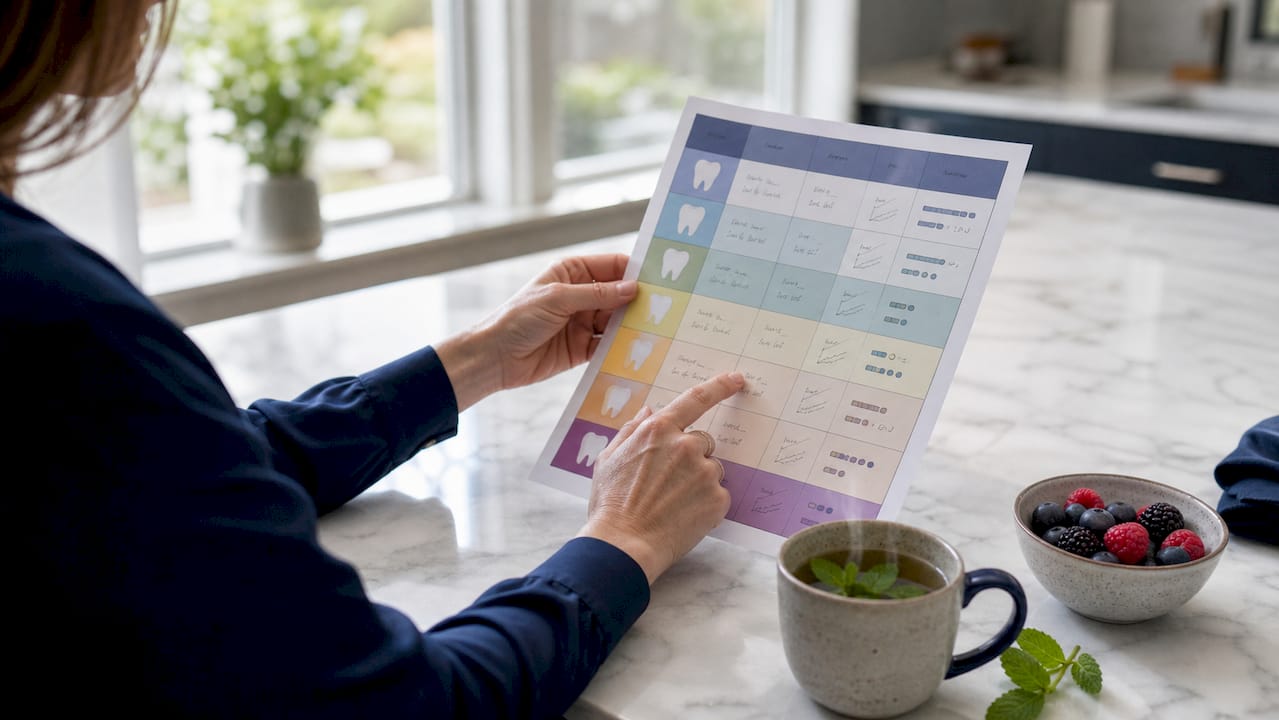
| Method | Typical U.S. Cost | Expected Shade Improvement | Time to Results | Maintenance Cost |
|---|---|---|---|---|
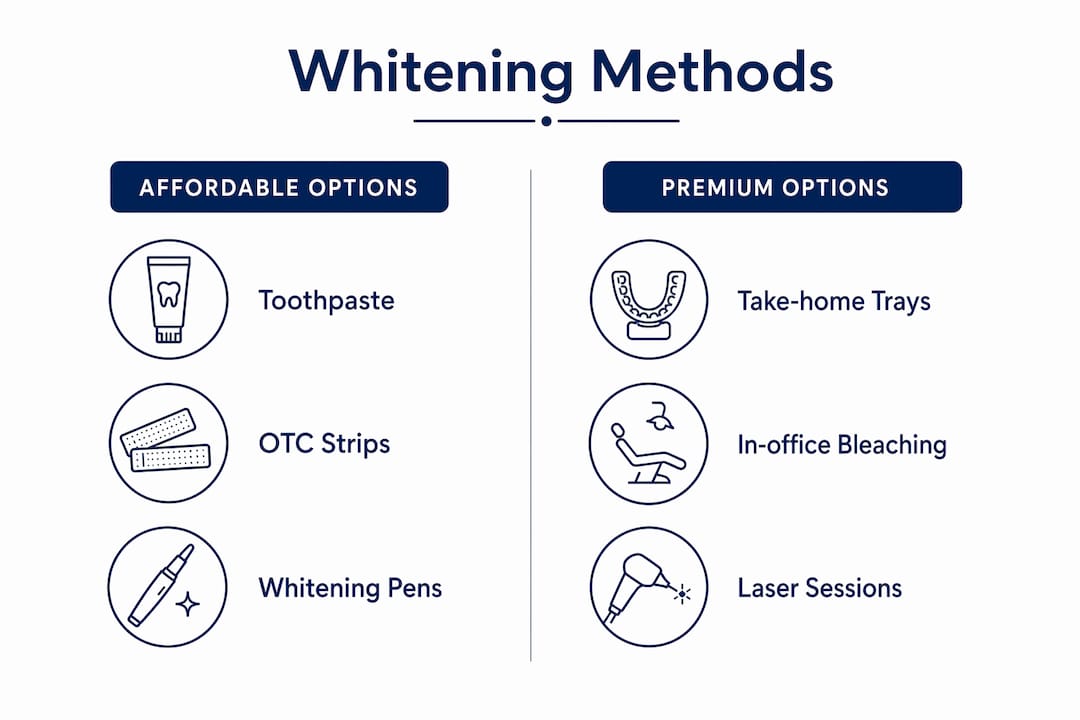
| Whitening toothpaste | Low-cost | 1 shade (surface only) | Weeks of consistent use | Ongoing maintenance required |
| Baking soda adjuncts | Affordable | Minimal shade improvement (primarily polishing) | Weeks | Ongoing use |
| OTC strips/gels | Moderately priced | Noticeable shade improvement | Within a few weeks | Cost per treatment round |
| Whitening pens | $20–$60 per pen | 1–3 shades improvement | Within a few weeks | Cost per pen |
| LED home kits | Moderate cost range | Moderate shade improvement | Within a few weeks | Gel refills needed |
| Dentist take-home trays | $100–$600 initial, refills $30–$80 | 4–8 shades improvement | One to two weeks | Gel refills required |
| In-office chairside bleaching | Premium cost | Largest shade improvement in one visit | About one to one and a half hours | Touch-up treatments add cost |
Whitening toothpaste works by mild abrasion and low-level peroxide, which removes fresh surface staining but won’t change your tooth’s underlying color. Good for maintenance, not transformation.
OTC strips are the sweet spot for most people. Products with higher peroxide concentrations, around 14% hydrogen peroxide, can deliver 2–5 shades of improvement in roughly 20 days at a cost of $40–$60. That’s a meaningful result for a fraction of what you’d spend in a dental chair.
Whitening pens like the Snow Serum™ Whitening Pen are designed for targeted application and on-the-go touch-ups. They’re not a replacement for a full whitening course, but they’re genuinely useful for maintaining results between treatments or for spot-treating specific areas.
Dentist take-home trays are the most cost-effective long-term option for most people. The tray itself is reusable, so after the initial $100–$600 investment, you’re only buying gel refills at $30–$80 per round. Over time, that math beats repeated OTC purchases and is far cheaper than annual in-office sessions.
In-office bleaching delivers the fastest results, but the light-activation premium often adds $200–$400 to the base price without changing the chemical agent. You’re paying for speed and the clinical setting, not a fundamentally different chemistry.
What stains does whitening actually fix?
Whitening agents work by oxidizing chromogens, the pigmented molecules embedded in enamel and dentin. What they can and can’t reach determines everything about realistic outcomes.
Extrinsic stains sit on or just below the enamel surface. Coffee, tea, red wine, tobacco, and certain foods all leave this kind of discoloration. Peroxide-based whitening penetrates the enamel and breaks up these chromogens effectively. Most people with extrinsic staining see meaningful results from OTC strips or take-home trays.
Intrinsic stains are embedded deeper in the dentin or are structural. Tetracycline antibiotics taken during tooth development leave gray or brown banding that peroxide can lighten only marginally. Fluorosis creates white spots or brown mottling that whitening can actually make more visible. Trauma-related discoloration from a dead pulp is similarly resistant. For these cases, veneers or bonding are the appropriate path.
Realistic shade outcomes by method:
- OTC strips (14% H₂O₂): 2–5 shades over 10–20 days
- Whitening pens: 1–3 shades, best for maintenance and spot treatment
- Dentist take-home trays: 4–8 shades over 1–2 weeks
- In-office bleaching: 6–10 shades in a single session
Pro Tip: For a major event like a wedding, the most effective approach is an in-office session to get the initial lift, followed by take-home trays for maintenance. That combination produces the largest, most stable shade improvement. If the event is more than a month away, take-home trays alone often reach comparable results at a fraction of the cost.
One thing worth stating plainly: whitening does nothing to change the color of crowns, veneers, or composite bonding. If you have visible restorations in your smile zone, whitening your natural teeth can actually create a mismatch. That’s a conversation to have with your dentist before starting.
What are the real risks of lower-cost whitening options?
The safety record for peroxide-based whitening at consumer concentrations is solid. Hydrogen peroxide at 3–14% and carbamide peroxide at equivalent concentrations do not permanently damage enamel when used as directed. The two most common side effects are temporary tooth sensitivity and mild gum irritation, both of which typically resolve within a day or two of stopping treatment.
The risks that actually matter are narrower and more specific.
Common side effects:
- Transient sensitivity (cold, sweet, or air sensitivity during and shortly after treatment)
- Gum irritation from tray overflow or strip misalignment
- Uneven whitening if strips don’t conform well to tooth shape
Rare but serious risks:
- Enamel erosion from acid-plus-abrasive DIY combinations (lemon juice with baking soda is the classic bad idea)
- Severe sensitivity when whitening over active decay, cracks, or exposed roots
- Irreversible gum damage from high-concentration professional-grade gels used without supervision
For readers with sensitive teeth, carbamide peroxide or non-peroxide alternatives tend to cause less temporary discomfort than high-concentration hydrogen peroxide. Getsmilefam’s BLU Whitening Technology uses enamel-safe, non-peroxide formulas specifically designed for sensitive gums, which makes it a practical option for people who’ve had trouble with conventional strips.
Safety checklist before you start:
- Get a dental exam to rule out active decay, cracks, or exposed roots. Whitening over these conditions can cause severe pain and worsen the underlying problem.
- Avoid acid-plus-abrasive DIY combinations. Lemon juice, apple cider vinegar, and activated charcoal with baking soda are the most common offenders.
- Follow product directions on timing and frequency. More is not better with peroxide.
- Use a desensitizing toothpaste (potassium nitrate or stannous fluoride) in the days before and during treatment if you have a history of sensitivity.
- Stop and consult a dentist if you experience sharp, lingering pain rather than mild transient sensitivity.
For more on managing sensitivity specifically, the guide to avoiding sensitivity during whitening covers practical strategies in detail.
When can whitening replace expensive treatments, and when can’t it?
The decision comes down to five factors: stain type, desired shade, timeline, existing restorations, and structural health. Get those right and you can make a clear call.
Decision checklist:
- Stain type: Extrinsic only? Whitening is a strong candidate. Any intrinsic component? Manage expectations or consult a dentist about whether whitening is even worth attempting.
- Desired shade: Wanting 2–4 shades lighter? OTC strips or a whitening pen can get you there. Wanting 8+ shades or a specific aesthetic outcome? You’re likely looking at in-office treatment or restorative work.
- Timeline: More than 3–4 weeks? Take-home trays reach comparable results to in-office at a fraction of the cost. Less than a week? In-office is the only whitening option that delivers in that window.
- Existing restorations: Crowns, veneers, or bonding in the smile zone? Whitening won’t change them, and it may create a visible mismatch with your natural teeth.
- Structural health: Any decay, cracks, or gum disease? Get a dental exam before starting anything.
Concrete scenarios:
- Coffee and tea stains on otherwise healthy teeth: OTC strips at $40–$60 per round are the right first move. Most people see 2–4 shades of improvement in under three weeks.
- Mild generalized yellowing from aging: Dentist take-home trays deliver 4–8 shades over one to two weeks and cost far less than veneers, which run $900–$2,500 per tooth.
- Moderate intrinsic discoloration (mild tetracycline, mild fluorosis): Dentist-supervised whitening may provide some improvement, but results are unpredictable. A dentist consultation is the right first step, not an OTC purchase.
- Severe intrinsic staining, structural damage, or visible restorations: Whitening won’t solve the problem. Veneers, bonding, or crowns are the appropriate path.
- Wedding or event in 10 days: In-office bleaching is the only whitening method that delivers significant results that fast. Budget $300–$1,000 and book early.
For readers who want to whiten without an expensive dentist visit, the take-home tray route, or a well-formulated at-home kit, covers the majority of real-world cases.
Do whitening treatments actually save money over time?
The honest answer is: it depends on which path you choose and whether you account for all the costs. Here’s what the numbers look like over a realistic timeframe.
| Path | Year 1 Cost | 3-Year Total (Est.) | Notes |
|---|---|---|---|
| OTC strips only | $40–$60 | $100–$600 | 2–3 rounds per year; add desensitizing products |
| Take-home trays + gel refills | $200–$400 | — | Tray is reusable; refills $30–$80 per round |
| Annual in-office session | $300–$1,000 | $900–$2,500 | Touch-ups between sessions add cost |
| Veneers (per tooth, 6–8 teeth) | — | —+ | Replacement needed every 10–20 years |
Custom take-home trays are frequently the most cost-effective path when evaluated over 3–5 years. The reusable tray plus inexpensive gel refills lowers the per-touch-up cost well below what you’d spend on repeated OTC boxes or multiple in-office sessions.
That said, hidden costs can erode the savings faster than most people expect. Desensitizing toothpaste, protective gels, and additional OTC boxes add up. A realistic budget for OTC-only whitening over three years should include those items, not just the strip cost.
The break-even math for take-home trays versus repeated OTC purchases typically hits somewhere in year two, assuming two whitening rounds per year. After that, you’re spending $30–$80 per round on gel refills versus $40–$60 per round on new strip boxes, with the tray delivering better contact and more consistent results.
For more detailed money-saving whitening strategies, including how to sequence methods for maximum value, the Getsmilefam blog covers the planning side in depth.
How do you pick a safe, effective at-home whitening option?
The market is crowded and the marketing claims are aggressive. Here’s what actually separates a worthwhile product from a waste of money.
What to look for:
- Proven active ingredient: Hydrogen peroxide (3–14%) or carbamide peroxide (10–22%) at a stated concentration. Non-peroxide alternatives with clinical backing are also valid, particularly for sensitive users.
- Ingredient transparency: The label should list the active ingredient and its concentration. If it doesn’t, move on.
- Clear instructions: Application time, frequency, and contraindications should all be stated. Vague directions are a red flag.
- Refill availability: For any kit-based system, check that gel refills or replacement components are available before you buy the initial kit.
- Satisfaction guarantee: Reputable products stand behind their results. A money-back guarantee signals confidence in the formula.
Red flags:
- Acid-based DIY recipes (lemon juice, vinegar) marketed as “natural whitening”
- Activated charcoal powders with no stated peroxide content and abrasiveness claims
- “Instant whitening” promises with no timeframe or shade-change data
- Missing safety instructions or no mention of sensitivity precautions
- No return policy or guarantee
Decision flow:
- Sensitive teeth + mild staining: Start with a non-peroxide formula or low-concentration carbamide peroxide. Getsmilefam’s BLU line is built for exactly this profile.
- Moderate extrinsic staining + normal sensitivity: OTC strips at 10–14% hydrogen peroxide or a dentist take-home tray.
- Significant staining + time pressure: In-office bleaching, ideally followed by take-home maintenance.
- Intrinsic staining or structural concerns: Dentist consultation before any whitening purchase.
The at-home whitening guide from Getsmilefam walks through the selection process in more detail, including how to read ingredient labels and what to ask your dentist.
Why SmileFam’s BLU approach works for most U.S. buyers
Getsmilefam’s BLU Whitening Technology was developed with two priorities that most OTC products don’t balance well: immediate visible results and a formula that’s genuinely safe for sensitive gums. The system avoids harsh peroxide concentrations while still delivering meaningful whitening, which puts it in a different category from standard drugstore strips.
The BLU product line covers the main use cases:
- BLU Whitening Toothpaste: Daily maintenance and surface stain prevention. Works as a standalone for light staining or as a complement to a full whitening course.
- Snow Serum™ Whitening Pen: Targeted application for spot treatment and on-the-go touch-ups. Useful for maintaining results between full treatment rounds.
- BLU Whitening Technology kits: Designed for a full whitening course, with enamel-safe formulas and options suited to sensitive users.
Where BLU fits in the decision flow: it’s a strong first-line option for extrinsic stains, particularly for people who’ve experienced sensitivity with conventional peroxide strips. It also works well as a maintenance tool after a professional lift, keeping results stable without the recurring cost of in-office touch-ups.
Pro Tip: If you’re new to whitening and unsure how your teeth will respond, start with the BLU Whitening Toothpaste for two to three weeks before moving to a full whitening kit. It lets you gauge sensitivity and remove fresh surface staining before applying a stronger treatment.
The satisfaction guarantee removes the financial risk from trying the system. If results don’t meet expectations, the return policy covers you. For readers who want to achieve salon-level results at home, the BLU line is a practical starting point.
Key Takeaways
At-home whitening with the right method can replace expensive cosmetic dental procedures for most extrinsic stains, delivering meaningful shade improvement at a fraction of the cost of veneers or in-office bleaching.
| Point | Details |
|---|---|
| Whitening works for extrinsic stains | Coffee, tea, tobacco, and aging-related yellowing respond well to OTC strips, pens, and take-home trays. |
| Cost range is wide | OTC options run $5–$60; dentist take-home trays cost $100–$600; in-office sessions run $300–$1,000. |
| Take-home trays win on long-term value | Reusable trays with $30–$80 gel refills beat repeated OTC purchases and annual in-office sessions over 3–5 years. |
| Safety first | Get a dental exam before whitening; avoid acid-plus-abrasive DIYs; use desensitizing toothpaste if sensitive. |
| Getsmilefam BLU line | A non-peroxide, enamel-safe option for sensitive users seeking a first-line at-home whitening solution. |
The gap between what whitening promises and what actually matters
Most whitening content focuses on shade numbers and cost comparisons, which are useful. But the more interesting question is why so many people spend $800 on in-office bleaching when a $200 take-home tray produces a comparable result over two weeks.
Part of it is the clinical setting. Sitting in a dental chair with a UV lamp pointed at your teeth feels like something is happening. A tray you wear at home for 30 minutes feels less dramatic, even when the chemistry is doing the same work. The light-activation premium is real and well-documented: it often adds $200–$400 to the price without changing the active agent.
The other part is that whitening marketing tends to oversell and undersell simultaneously. It oversells speed (“whiter in one session!”) and undersells maintenance. Results from any whitening method fade. Coffee drinkers who don’t adjust their habits will be back to baseline in three to six months regardless of whether they spent $50 or $800. The honest ROI calculation has to include that.
What actually matters for most people is simpler than the marketing suggests: identify whether your staining is extrinsic, pick a method with a stated peroxide concentration or a clinically backed non-peroxide alternative, follow the instructions, and budget for maintenance. That approach covers the vast majority of real-world cases without a single in-office visit.
When whitening genuinely can’t help, the answer is usually obvious: gray banding from tetracycline, white spots from fluorosis, or a tooth that’s darkened after trauma. Those situations call for a dentist, not another box of strips. Knowing the difference is the most useful thing this article can give you.
Start with a lower-cost option that’s built for sensitive teeth
Spending $300–$1,000 on an in-office session makes sense in specific situations, but for most people with extrinsic staining, a well-formulated at-home kit delivers comparable results at a fraction of that cost.
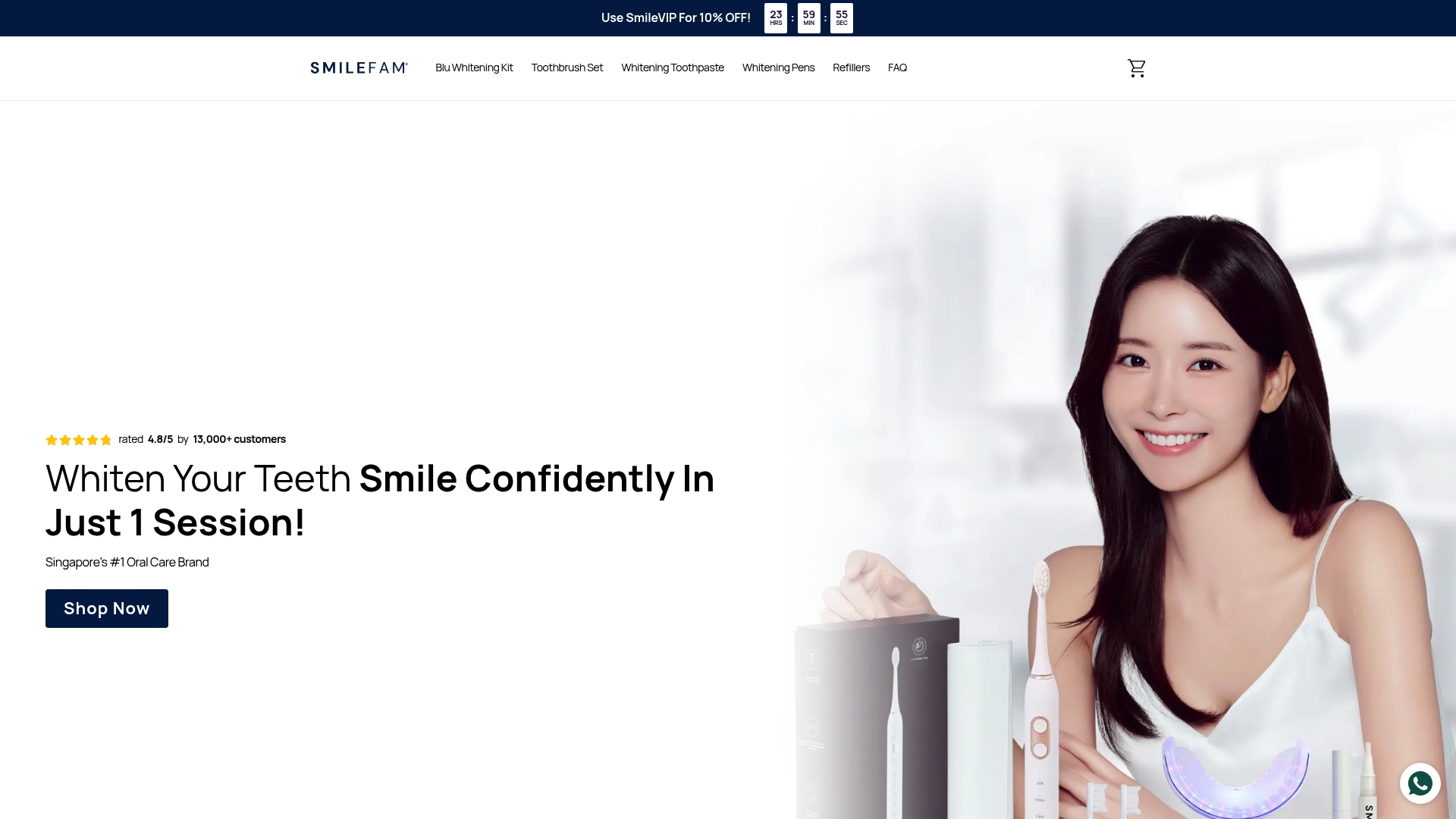
Getsmilefam’s BLU Whitening Toothpaste is the lowest-friction entry point: a daily-use formula that removes surface staining and maintains whitening results without the sensitivity that comes with high-peroxide strips. For a more complete first treatment, the Premium Travel Kit bundles the core BLU system into a compact, travel-ready format that’s easy to use consistently. Both are backed by a satisfaction guarantee, so there’s no financial risk in trying them. Before you start, run through the teeth whitening checklist to make sure your teeth are ready.
Useful sources and further reading
The claims in this article draw from clinical research, authoritative dental organization guidance, and consumer cost data. The most relevant sources for readers who want to verify or dig deeper:
- American Dental Association: Whitening — the ADA’s official guidance on whitening safety, methods, and professional supervision
- Mouth Healthy (ADA consumer resource) — plain-language overview of whitening options and safety considerations
- Cleveland Clinic: How to Whiten Teeth — clinical perspective on methods, risks, and realistic outcomes
- PubMed: Clinical review of tooth whitening — peer-reviewed research on whitening efficacy and safety
- PMC: Whitening safety and enamel effects — research on peroxide concentrations and enamel integrity
- Boston University: The Truth about Teeth Whiteners — academic perspective on OTC vs. professional whitening claims
- Getsmilefam: Affordable whitening options for every budget — practical breakdown of budget-friendly approaches for U.S. consumers
- Getsmilefam: Whitening methods for sensitive teeth — guidance on sensitivity-safe choices and non-peroxide alternatives
This article is general information, not professional dental advice. Confirm current guidelines and your specific situation with a licensed dentist before starting any whitening treatment.