

A whitening pen is a precision gel applicator designed for targeted stain removal, while whitening strips are adhesive films that cover the full tooth surface for broader, faster results. The whitening pen vs whitening strips debate comes down to one core trade-off: coverage versus convenience. Strips can lighten teeth by 5 to 7 shades, while pens typically brighten by 2 to 3 shades with greater precision. Brands like Crest Whitestrips, HeySmile, and Colgate Optic White Pen each occupy different positions in this spectrum. If you want a structured whitening course, strips win on raw results. If you need a portable, discreet touch-up tool, a pen is the smarter choice.
1. How effective are whitening pens versus whitening strips?
Whitening strips deliver faster and more dramatic results because they maintain consistent gel contact across the entire tooth surface for 30 minutes or more. Strips typically whiten 5 to 7 shades within a 7 to 14 day course, making them the stronger option for anyone starting from a noticeably stained baseline. That shade range is the difference between a subtle refresh and a genuinely visible transformation.
Whitening pens carry a higher concentration of bleaching agent in a smaller dose, but the results are more gradual. Pens require repeated applications because saliva dilutes the gel quickly after application, reducing contact time and overall effectiveness. This is not a flaw in the formula. It is a structural limitation of the delivery method.
Coverage is the other key variable. Strips conform to the front surface of every tooth simultaneously, which means uniform whitening across the smile. Pens work tooth by tooth, which gives you precision but creates a real risk of uneven results if you rush the application or miss sections. People with crowded or overlapping teeth often find strips give more consistent coverage.
- Strips: Best for full-course whitening with measurable shade improvement
- Pens: Best for spot treatment, maintenance, and targeted stain correction
- Sensitivity: Both can cause temporary sensitivity, but gentle PAP formulas like those used by HeySmile reduce this risk significantly
Pro Tip: Apply your whitening strip or pen at least 30 minutes after brushing. Brushing immediately before whitening removes the protective pellicle layer, which increases sensitivity without improving results.
2. What are the cost differences between strips and pens?
Whitening strips generally cost between $20 and $55 for a full treatment kit, depending on the brand and strip count. HeySmile strips cost roughly 70p per treatment at £19.99 for 28 strips, making them one of the most cost-effective options on the market. That per-treatment cost is a more honest metric than the sticker price, because it accounts for how many sessions you actually get.
Whitening pens typically retail between $10 and $30, which looks cheaper upfront. The catch is that pens run out faster than most users expect, especially if you apply them twice daily as most brands recommend. Over a full month of consistent use, the cost per shade of improvement often exceeds what you would spend on a strip kit.
| Product type | Typical price range | Treatments per pack | Cost per treatment |
|---|---|---|---|
| Whitening strips | $20 to $55 | 14 to 28 | $0.75 to $2.50 |
| Whitening pen | $10 to $30 | 20 to 40 applications | $0.50 to $1.50 |
| Bundle kits (strips + pen) | $35 to $70 | Varies | Best overall value |
Bundle packaging with 7-day or 14-day kits consistently drives stronger perceived value and repeat purchases. Buying a strip course paired with a maintenance pen is the most cost-efficient strategy for long-term whitening results.
Pro Tip: Calculate cost per treatment, not cost per product. A $15 pen that lasts 10 days costs more per use than a $40 strip kit that covers 14 full sessions.
3. Which product offers more convenience and ease of use?
Whitening pens win on portability without question. They fit in a pocket, a purse, or a carry-on bag, and pens are ideal for quick touch-ups and on-the-go use in ways that strips simply cannot match. You can apply a pen in under two minutes after a coffee or a meal, which makes it a practical tool for anyone with an active schedule.

Strips require more setup and commitment. You need a clean, dry mouth, 30 minutes of wear time, and a reasonably still face to prevent slippage. Most people build strip use into a morning or evening routine, which works well for a structured course but is impractical during a workday or while traveling.
Application technique also differs significantly between the two formats:
- Pen: Twist the base to dispense gel, brush onto each tooth surface, hold mouth open for 30 to 60 seconds to let the gel dry before closing
- Strips: Peel the strip from its backing, press firmly onto upper and lower teeth, fold the excess behind the teeth, and remove after 30 minutes
- Common pen mistake: Closing your mouth too quickly, which wipes the gel off before it bonds to the enamel
- Common strip mistake: Applying over wet teeth, which prevents adhesion and causes slippage
The Getsmilefam Premium Travel Kit is built specifically for the on-the-go use case, pairing a whitening pen with travel-ready accessories so you never skip a maintenance session. For a deeper look at safe pen application, Getsmilefam’s application guide covers every step with real-result expectations.
4. What are the most common user mistakes to avoid?
Overuse is the single most damaging mistake in at-home teeth whitening. Dentist Fatima Khan, cited in Newsweek, identifies overuse as the leading cause of sensitivity and enamel damage in at-home whitening users. More product applied more often does not produce faster results. It produces pain and, in severe cases, permanent enamel erosion.
“The biggest mistake I see is patients doubling up on treatments thinking it will speed things up. Whitening works on a biological timeline. Enamel needs recovery time between sessions, and ignoring that causes sensitivity that can last weeks.” — Dentist Fatima Khan, via Newsweek
Brushing immediately before applying a whitening product is the second most common error. Brushing removes the pellicle, a thin protective protein layer on the tooth surface. Without it, the whitening agent contacts the enamel more aggressively, which increases sensitivity without improving whitening speed. Wait at least 30 minutes after brushing before applying any whitening product.
Proper use protocols, including correct product quantity and treatment frequency, are the primary factor in minimizing side effects. Skipping this discipline is what separates users who get great results from those who quit after a week due to discomfort. If you experience persistent sensitivity, whitening methods for sensitive teeth offer gentler alternatives worth reviewing.
5. How to choose between a whitening pen and strips based on your needs
The right choice depends on what you are trying to accomplish, not which product looks more impressive on a shelf. Strips are the correct starting point for anyone who wants a measurable whitening course. A 7 to 14 day strip regimen delivers the kind of shade change that is visible in photos and noticeable to other people.
Pens are the correct tool for maintenance after a strip course, for targeted stain treatment on specific teeth, and for travel. Combining a strip course with a maintenance pen is the most effective strategy for sustained whitening results over time. Think of strips as the foundation and the pen as the finishing coat.
| Your situation | Best choice | Why |
|---|---|---|
| Starting whitening for the first time | Strips | Faster, more uniform shade improvement |
| Maintaining results after a course | Pen | Precise touch-ups without over-treating |
| Traveling or on-the-go | Pen | Portable, no setup required |
| Sensitive teeth | Strips with PAP formula | Lower irritation risk with proper formula |
| Budget-conscious, long-term use | Bundle kit | Best cost-per-result ratio |
Tooth sensitivity and enamel health should also factor into your decision. Vegan-friendly, enamel-safe formulas are now widely available in both formats, so there is no reason to accept unnecessary chemical exposure. If you have existing sensitivity, start with a gentler PAP-based strip before moving to a higher-concentration pen formula. For a full breakdown of at-home whitening benefits, Getsmilefam’s resource covers the practical case for both formats.
Key takeaways
Whitening strips deliver faster, broader results for a full whitening course, while whitening pens are the superior tool for maintenance, travel, and targeted touch-ups.
| Point | Details |
|---|---|
| Strips outperform pens on results | Strips whiten up to 7 shades in 7 to 14 days; pens achieve 2 to 3 shades gradually. |
| Pens win on portability | Pens apply in under two minutes with no setup, making them ideal for daily maintenance. |
| Cost per treatment matters more than sticker price | A $40 strip kit often costs less per session than a $15 pen used twice daily. |
| Combining both methods is most effective | Use strips for the initial course, then a pen for ongoing maintenance and spot treatment. |
| Overuse causes more harm than under-use | Following product frequency guidelines prevents sensitivity and protects enamel long-term. |
Why I think most people buy the wrong product first
I have spent years reviewing teeth whitening products, and the pattern I see most often is this: someone buys a whitening pen because it is cheaper and easier to find, uses it inconsistently for two weeks, sees minimal results, and concludes that at-home whitening does not work. That conclusion is wrong. The product selection was wrong.
Whitening pens are maintenance tools. They are not designed to transform a stained smile from scratch. Using a pen as your primary whitening method is like using a touch-up paint pen to repaint a car. It is the right tool for the right job, just not that job.
My honest recommendation is to start with a strip course of at least seven days, then switch to a pen for weekly maintenance. That sequence produces results that last. I have also seen users dramatically improve their outcomes simply by avoiding certain foods after whitening, which is a step most people skip entirely.
One more thing worth saying: the formula matters as much as the format. A PAP-based strip with no hydrogen peroxide will outperform a cheap peroxide pen in both comfort and safety. Do not let price alone drive the decision. Read the ingredient list and match the formula to your sensitivity level.
— Lenney
Find your whitening match at Getsmilefam
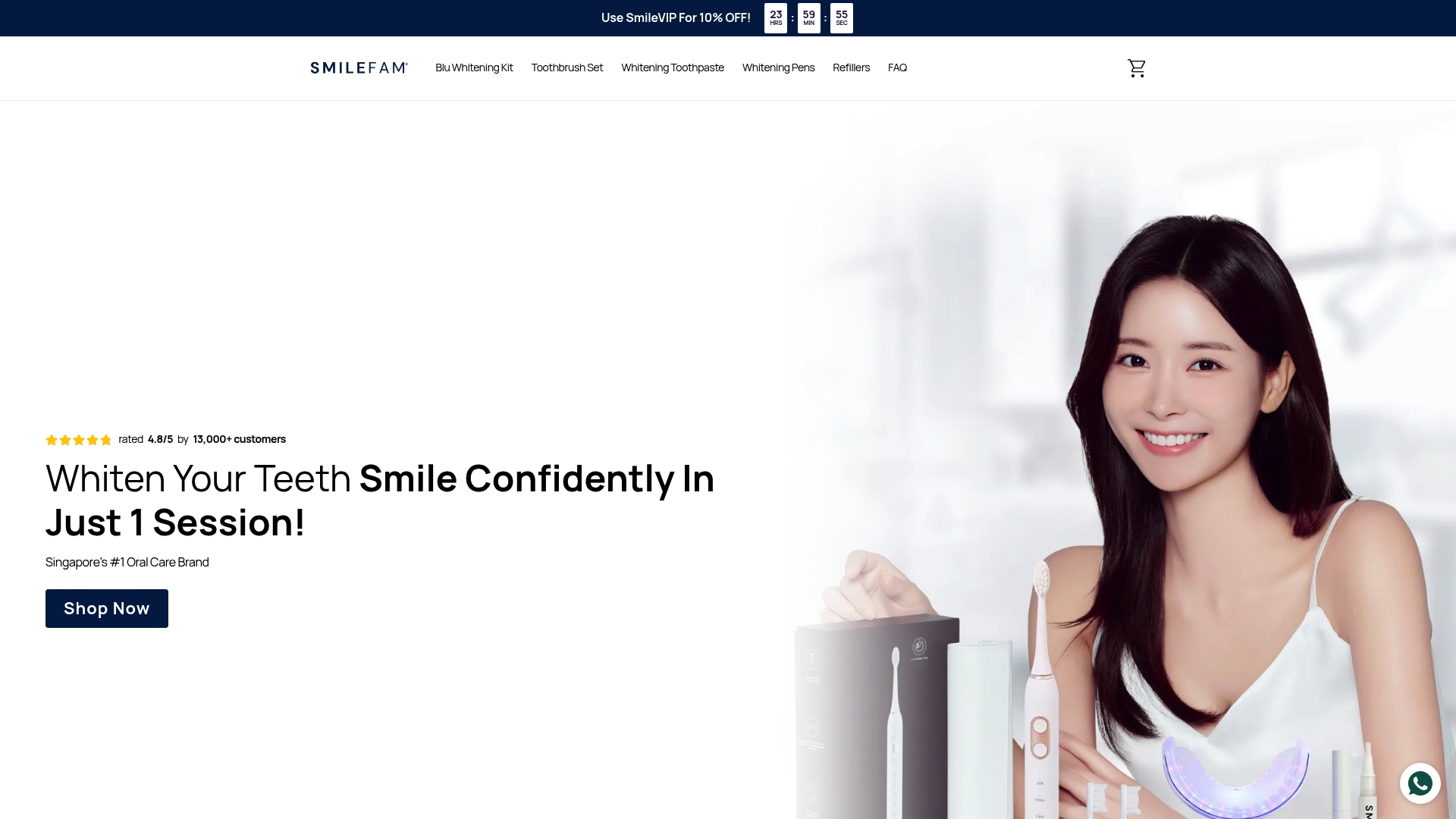
Getsmilefam builds its whitening products around BLU Whitening Technology, developed in Singapore, using enamel-safe, hydrogen-peroxide-free formulas that work for sensitive gums. The Snow Serum™ Whitening Pen delivers precise, on-the-go whitening with lab-approved ingredients and visible results in a single session. For a full whitening course, the BLU Teeth Whitening Kit combines professional-grade technology with at-home convenience. Both products are backed by real customer results and a satisfaction guarantee, so you are not guessing at what works.
FAQ
How many shades can whitening strips lighten teeth?
Whitening strips can lighten teeth by 5 to 7 shades over a 7 to 14 day course. Results depend on the formula strength and how consistently you follow the treatment schedule.
Are whitening pens safe for daily use?
Whitening pens are safe when used as directed, but daily use beyond the recommended frequency causes sensitivity and enamel damage. Follow the product’s stated treatment schedule and take breaks between courses.
Which is better for sensitive teeth: a pen or strips?
Strips with a PAP-based formula are generally better for sensitive teeth because they deliver controlled coverage without the concentrated spot application of a pen. Look for formulas labeled enamel-safe and hydrogen-peroxide-free.
How long does a whitening pen last?
Most whitening pens provide 20 to 40 applications per unit, depending on how much gel you dispense per use. Twice-daily use typically exhausts a standard pen within two to three weeks.
Can you use a whitening pen and strips together?
Yes, and this is the most effective strategy for sustained results. Complete a strip course first for broad whitening, then use a pen for weekly maintenance and targeted touch-ups on specific teeth.