

Getting whiter teeth under an hour is achievable through professional in-office whitening or targeted at-home methods using concentrated peroxide agents. Cosmetic dentistry defines rapid teeth whitening as any treatment that delivers visible shade improvement within a single 60-minute session. Professional procedures like Zoom Advanced Power and laser whitening lead the field for speed and dramatic results. Certain home methods, including hydrogen peroxide and baking soda paste or short-duration whitening strips, offer milder but real improvements. The key difference between methods is peroxide concentration, delivery system, and how long the agent stays in contact with your enamel.
Which professional treatments can whiten teeth under an hour?
Professional in-office whitening uses up to 35% hydrogen peroxide, the highest concentration available outside a clinical setting. That concentration is what separates a dentist’s chair from anything you buy at a drugstore. The full appointment runs roughly 90 minutes including preparation and post-care, with active treatment time around 60 minutes. Results can reach multi-shade improvement in a single session.
Laser whitening is the fastest single-session option available. A special light activates the peroxide gel applied to your teeth, accelerating the oxidation process that breaks down stain molecules. Laser whitening delivers immediate, strong whitening effects in one hour-long session, with results lasting up to three years. That longevity makes the upfront cost easier to justify.
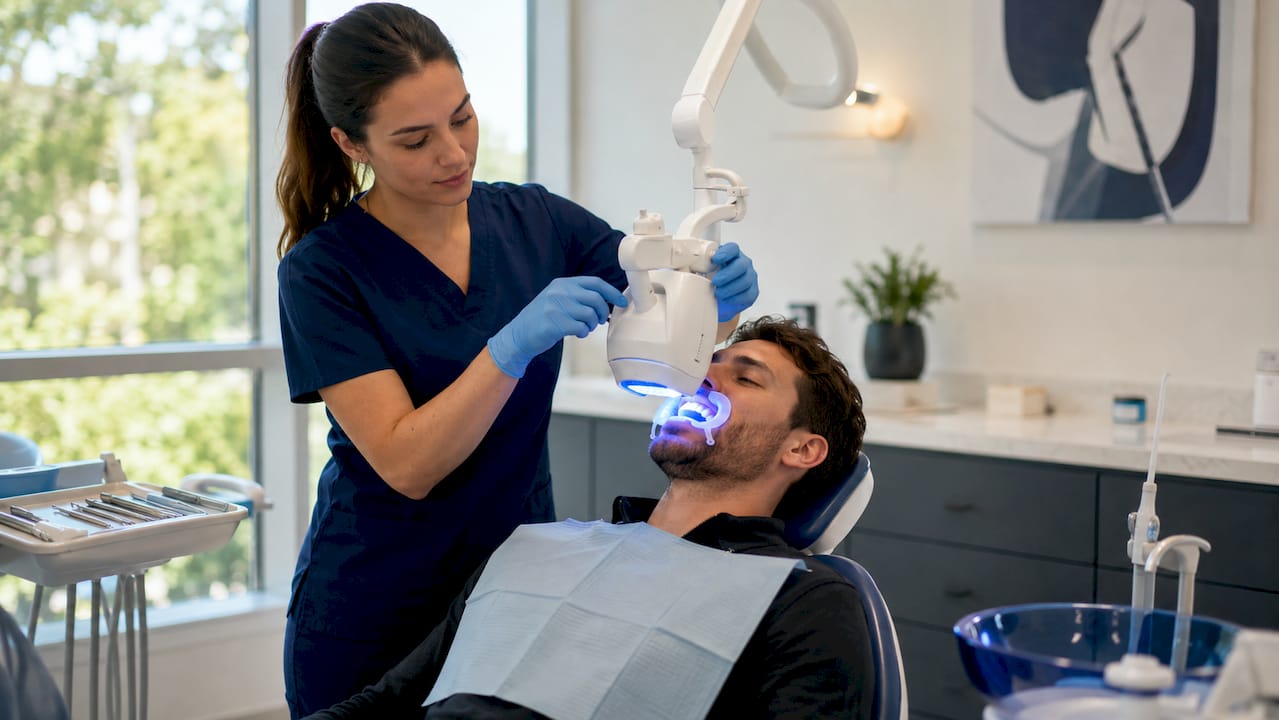
Zoom Advanced Power follows a similar light-activation model. The dentist applies a peroxide gel, activates it with an ultraviolet lamp, and repeats the cycle two to three times within the appointment. Each cycle runs about 15 minutes. The cumulative effect across cycles is what produces the dramatic shade lift most people associate with professional whitening.
Professional whitening costs about $500 per session. That price reflects the clinical-grade materials, the dentist’s time, and the protective measures taken to shield your gums from high-concentration peroxide. The cost is steep compared to home options, but no over-the-counter product matches the speed or the shade improvement.
Key facts about professional quick whitening treatments:
- Active treatment time is approximately 60 minutes, with total chair time closer to 90 minutes.
- Peroxide concentration reaches up to 35%, far above any OTC product.
- Light activation accelerates peroxide oxidation, producing faster and deeper whitening.
- Results can lift teeth by multiple shades in a single session.
- Sensitivity after treatment is common and typically resolves within 24–48 hours.
Pro Tip: Use an anti-sensitivity toothpaste for two weeks before your professional whitening appointment. Dentists recommend this approach to reduce post-treatment discomfort, which is often described as a sharp “zing” sensation in the hours following high-concentration peroxide exposure.
What fast at-home methods can whiten teeth in under an hour?
At-home quick whitening falls into two categories: DIY paste methods and OTC whitening strip or tray products. Both work, but neither matches professional results in a single session. Understanding what each can realistically deliver helps you choose the right option for your timeline and budget.
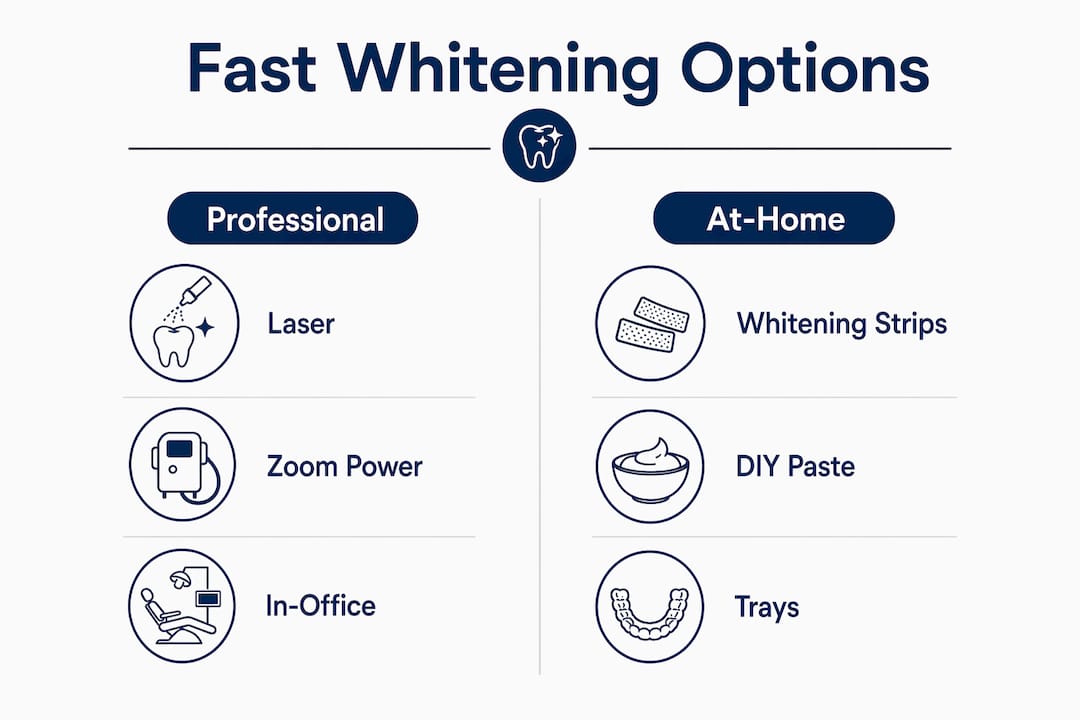
The baking soda and hydrogen peroxide paste is the fastest DIY approach. Mix 2 tablespoons of hydrogen peroxide with 1 tablespoon of baking soda into a paste, apply it to your teeth for 3–5 minutes, then rinse thoroughly. Baking soda is a mild abrasive that lifts surface stains. Hydrogen peroxide provides a low-level bleaching effect. The result is a mild, temporary brightness rather than a dramatic shade change.
OTC whitening strips are the most widely used rapid home method. Whitening strips contain a thin, concentrated peroxide gel applied directly to the front teeth. Best results require about 45 minutes of contact time per application. Most OTC strips contain 7–10% peroxide, which is effective for surface stains but limited for deeper discoloration. They work well for people who want a noticeable refresh before an event without a dentist appointment.
The numbered steps below show how to get the most from a quick at-home whitening session:
- Brush your teeth first. Clean teeth allow the whitening agent to contact enamel directly rather than sitting on plaque or food residue.
- Apply the strip or paste precisely. Keep the product off your gums. Peroxide irritates soft tissue even at lower concentrations.
- Time the application strictly. Do not exceed the recommended contact time. Longer exposure does not produce better results and increases sensitivity risk.
- Rinse completely. Remove all product residue before eating or drinking anything.
- Avoid staining foods for at least two hours. Your enamel is temporarily more porous after whitening, making it easier for pigments to re-stain.
Pro Tip: If your teeth feel sensitive after strips, switch to a product labeled for sensitive teeth. These contain lower peroxide concentrations and often include potassium nitrate, which calms nerve response in the tooth.
Whitening results depend on peroxide concentration, the delivery system, and how long the agent stays in contact with your teeth. Strips cover only the front teeth and may not reach between teeth. Trays provide better coverage but require a custom fit for maximum contact. Neither system replicates the controlled environment of a dental office.
How to choose the right quick whitening method for your needs
Choosing between professional and at-home whitening comes down to four factors: urgency, budget, enamel health, and your personal sensitivity tolerance. Successful whitening balances speed of results with your individual tolerance for sensitivity. The delivery system matters more than chasing a single “magic” one-hour product.
| Method | Speed | Effectiveness | Cost | Sensitivity risk |
|---|---|---|---|---|
| Professional laser whitening | 60 minutes | Very high (multi-shade) | ~$500 | High |
| Zoom Advanced Power | 60–90 minutes | High (multi-shade) | ~$500 | High |
| OTC whitening strips | 45 minutes per session | Moderate (surface stains) | $20–$60 | Low to moderate |
| Hydrogen peroxide and baking soda paste | 3–5 minutes | Mild (surface only) | Under $5 | Low |
If you have an event in a few hours and no dental appointment available, OTC strips are your best option. If you want dramatic results and can schedule an appointment, professional laser whitening or Zoom Advanced Power delivers the most noticeable change in the shortest time. People with existing sensitivity or enamel erosion should consult a dentist before using any high-concentration peroxide product.
Cosmetic dentists consistently advise against using multiple whitening methods simultaneously. Layering strips on top of a DIY paste, for example, increases sensitivity without proportionally increasing whitening. Pick one method, follow the instructions, and give your enamel time to recover before repeating.
For people with sensitive gums or thin enamel, whitening methods for sensitive teeth provide a useful framework for choosing lower-risk options. The goal is a brighter smile without compromising the long-term health of your teeth.
Post-whitening care: how to keep your results after a quick treatment
Post-whitening care determines how long your results last. High-concentration peroxide temporarily dehydrates enamel, leaving pores open and teeth more vulnerable to staining in the hours immediately after treatment. What you do in the first 24–48 hours has a direct impact on how long your whiter shade holds.
The “white diet” is the standard recommendation from cosmetic dentists for the 24–48 hours following any whitening treatment. Following a white diet means avoiding coffee, tea, red wine, berries, tomato sauce, and any other deeply pigmented food or drink. These are the exact foods that caused staining in the first place, and your temporarily porous enamel absorbs them faster than usual right after treatment.
Practical post-whitening habits that protect your results:
- Use a soft-bristled toothbrush and gentle pressure for at least 48 hours after whitening.
- Switch to an anti-sensitivity toothpaste for one to two weeks post-treatment.
- Drink water instead of coffee or tea for the first day. If you must have coffee, use a straw.
- Avoid smoking or tobacco products, which stain enamel faster than almost any food.
- Schedule touch-up treatments based on your method. Professional whitening typically holds for six months to a year with good oral hygiene. OTC strips may need reapplication every four to six weeks.
Avoiding teeth sensitivity during and after treatment is as much about aftercare as it is about the whitening product itself. Gentle brushing, fluoride rinses, and staying away from acidic foods all help your enamel recover faster and hold the whitening longer.
Key Takeaways
The fastest and most reliable way to whiten teeth in under an hour is professional in-office treatment using high-concentration peroxide with light activation, though effective at-home options exist for milder, budget-friendly results.
| Point | Details |
|---|---|
| Professional whitening is fastest | Laser and Zoom Advanced Power treatments deliver multi-shade results in 60–90 minutes. |
| At-home methods have real limits | OTC strips and DIY paste offer mild surface whitening, not dramatic shade changes. |
| Sensitivity is a real trade-off | High-concentration peroxide causes temporary sensitivity; use anti-sensitivity toothpaste before and after. |
| Post-treatment diet matters | Avoid staining foods for 24–48 hours to protect temporarily porous enamel. |
| Delivery system drives results | Contact time and peroxide concentration determine outcome more than brand name alone. |
The trade-off nobody talks about with fast whitening
Fast whitening is real. I have seen people walk out of a laser whitening session with a genuinely brighter smile in under an hour. But the conversation around quick teeth whitening often skips the part that matters most: what happens in the 48 hours after.
Most people focus entirely on the whitening session itself and then immediately go back to their normal routine. Coffee at 9 a.m. the next morning. Red wine at dinner. That is how you undo a $500 treatment in less than a day. The enamel dehydration that makes professional whitening so effective in the short term is the same reason your teeth are stain magnets right after the procedure.
The other thing I push back on is the idea that faster always means better. A 3-minute baking soda paste is not going to give you the same result as a professional session, and that is fine. For someone who wants a quick refresh before a job interview or a date, OTC strips used correctly are a perfectly reasonable choice. The mistake is expecting professional-grade results from a $25 product.
My honest advice: if you have the budget and a meaningful event coming up, book a professional appointment at least a week out. That gives you time to prep with anti-sensitivity toothpaste and recover fully before the event. If you are working with a tighter timeline or budget, quick-result whitening methods at home can still make a visible difference when used correctly. Just be realistic about what “under an hour” actually delivers at each price point.
— Lenney
Getsmilefam’s at-home whitening options for fast, safe results
Getsmilefam offers at-home whitening products built around BLU Whitening Technology, developed in Singapore and designed for people who want visible results without a dental appointment.
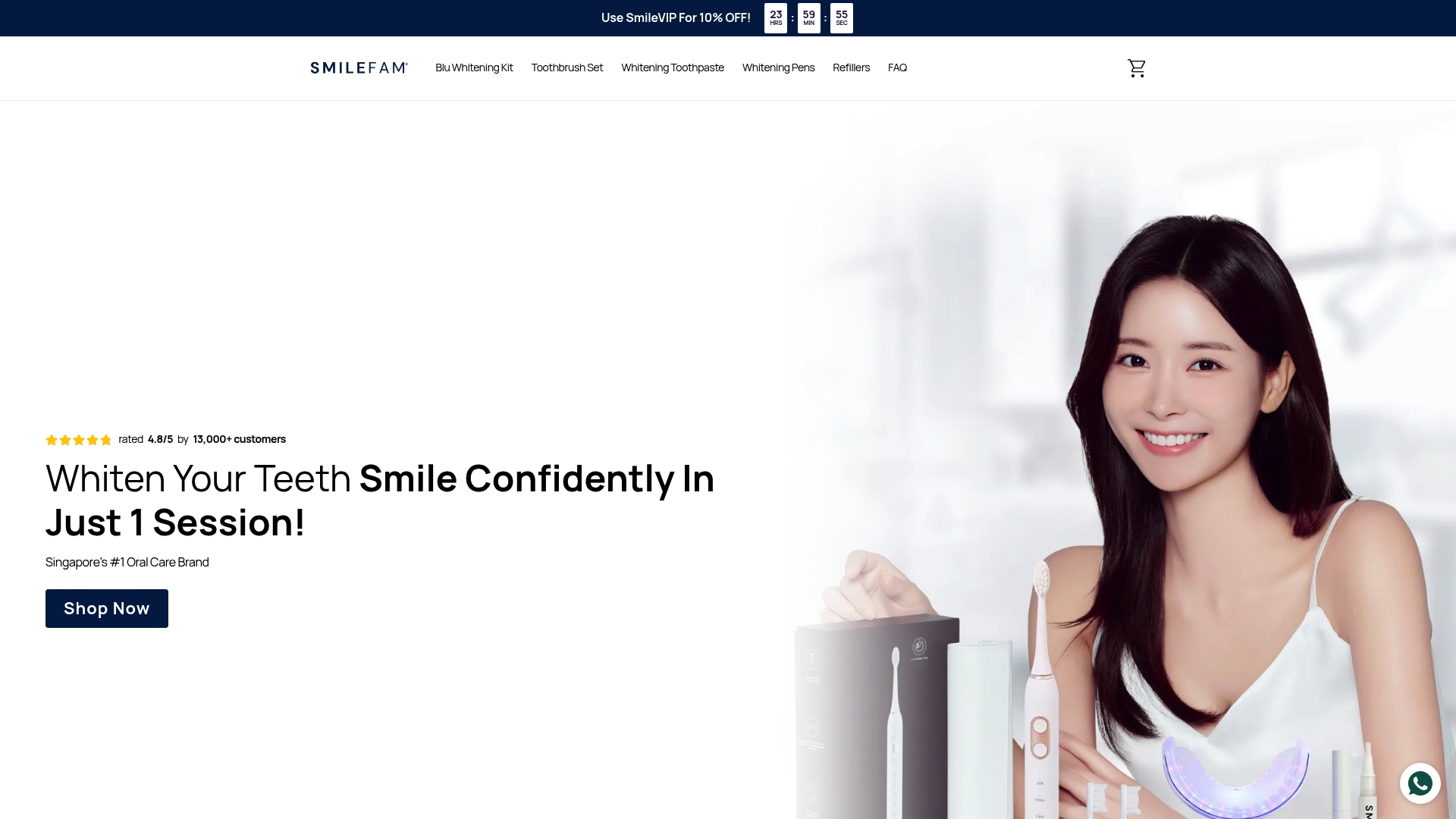
The BLU Teeth Whitening Kit uses an enamel-safe formula without harsh peroxide concentrations, making it a practical option for people with sensitive gums who still want a noticeably brighter smile. The BLU Whitening Toothpaste supports daily stain removal and works well as a maintenance step after any quick whitening treatment. For people who whiten on the go, Getsmilefam’s Premium Travel Kit keeps your routine consistent wherever you are. All products are lab-approved and backed by a satisfaction guarantee.
FAQ
How fast can you realistically whiten teeth at home?
At-home whitening strips with 7–10% peroxide deliver mild surface whitening in a single 45-minute session. Dramatic shade changes require multiple sessions or a professional treatment.
Is laser whitening safe for sensitive teeth?
Laser whitening uses high-concentration peroxide and commonly causes temporary sensitivity. People with existing sensitivity should consult a dentist before booking a session and use anti-sensitivity toothpaste in the weeks leading up to treatment.
Can baking soda and hydrogen peroxide whiten teeth in minutes?
A paste of 2 tablespoons hydrogen peroxide and 1 tablespoon baking soda applied for 3–5 minutes removes surface stains and provides mild brightening. It does not change the underlying tooth color the way professional treatments do.
How long do quick whitening results last?
Professional laser whitening results can last up to three years with good oral hygiene. OTC strip results typically fade within four to six weeks without touch-ups or maintenance products.
What foods should you avoid after whitening teeth?
Avoid coffee, tea, red wine, berries, and tomato-based foods for 24–48 hours after any whitening treatment. Enamel pores remain temporarily open after treatment, making teeth significantly more prone to re-staining during that window.