

Chemical-free whitening is defined as any teeth whitening method that excludes conventional bleaching agents like hydrogen peroxide, relying instead on non-toxic alternatives such as Phthalimidoperoxycaproic Acid (PAP), natural abrasives, and enzymatic agents to brighten teeth safely. The industry term for this category is “peroxide-free whitening,” and both phrases describe the same core approach. These methods avoid the free radical release that causes tooth sensitivity and gum irritation in traditional bleaching. For people who want a brighter smile without the burn, non-toxic teeth whitening is no longer a compromise. It is a clinically supported alternative with real results.
What is chemical-free whitening and how does it work?
Chemical-free whitening works through three distinct mechanisms, none of which involve peroxide bleaching. Each targets surface stains differently, and understanding the difference helps you pick the right product for your situation.
- PAP (Phthalimidoperoxycaproic Acid): PAP is a peroxide-free oxidizer that breaks down stain molecules on the tooth surface. Unlike hydrogen peroxide, PAP avoids free radical release, which means it whitens without triggering the sensitivity or enamel demineralization that peroxide causes.
- Baking soda: Sodium bicarbonate acts as a mild mechanical abrasive. It physically scrubs surface stains off enamel without dissolving tooth structure. Its low Relative Dentin Abrasivity (RDA) score makes it one of the safest abrasives in oral care.
- Papain and bromelain: These plant-derived enzymes, sourced from papaya and pineapple respectively, break down protein-based stains through enzymatic action. They work gradually but without any chemical aggression.
- Violet pigments (optical correctors): Some peroxide-free products use violet pigments to cancel out yellow hues visually. This is a temporary optical effect, not true whitening of the tooth’s intrinsic shade.
- Oil pulling: Swishing oils like coconut oil removes surface debris through the fat-attracting nature of oils. The effect is mild and works best as a complementary habit rather than a standalone treatment.
The safest chemical-free formulas share two characteristics: a low RDA score (ideally under 70) and a neutral pH. High acidity softens enamel, making abrasion more damaging. Experts recommend ingredient transparency and clinical validation as the baseline criteria when selecting any non-toxic whitening product.
Pro Tip: Check the RDA score on any whitening toothpaste you buy. Anything above 150 is considered high abrasivity by the American Dental Association and can wear enamel over time.
How effective is chemical-free whitening compared to peroxide?
The honest answer is that chemical-free whitening works, but it works differently. Natural methods lighten teeth by 1–3 shades over 4–8 weeks, while peroxide-based treatments can achieve 6–8 shades of improvement. That gap matters, and anyone choosing a peroxide-free approach should know it upfront.
The type of stain also determines results. Chemical-free methods excel at removing extrinsic stains, the surface discoloration caused by coffee, tea, red wine, and tobacco. Intrinsic stains, which sit inside the tooth structure from aging, medication, or trauma, require stronger oxidizing agents and often need professional treatment. No natural whitening method reliably addresses intrinsic discoloration.
| Method | Shade improvement | Treatment time | Best for |
|---|---|---|---|
| PAP strips | 2–3 shades | 10–14 days | Extrinsic stains, sensitive teeth |
| Baking soda paste | 1–2 shades | 4–8 weeks | Mild surface stains |
| Oil pulling | Minimal | Ongoing | Maintenance, debris removal |
| Violet pigment correctors | Optical only | Immediate | Temporary color correction |
| Peroxide bleaching | 6–8 shades | 1–2 weeks | Extrinsic and intrinsic stains |
PAP-based strips sit at the top of the chemical-free effectiveness range. PAP strips applied daily for 30 minutes over a 10–14 day course consistently show reduced irritation and no sensitivity, making them the closest peroxide-free equivalent to traditional whitening strips. Baking soda and oil pulling require patience and work best as maintenance tools rather than primary whitening treatments.
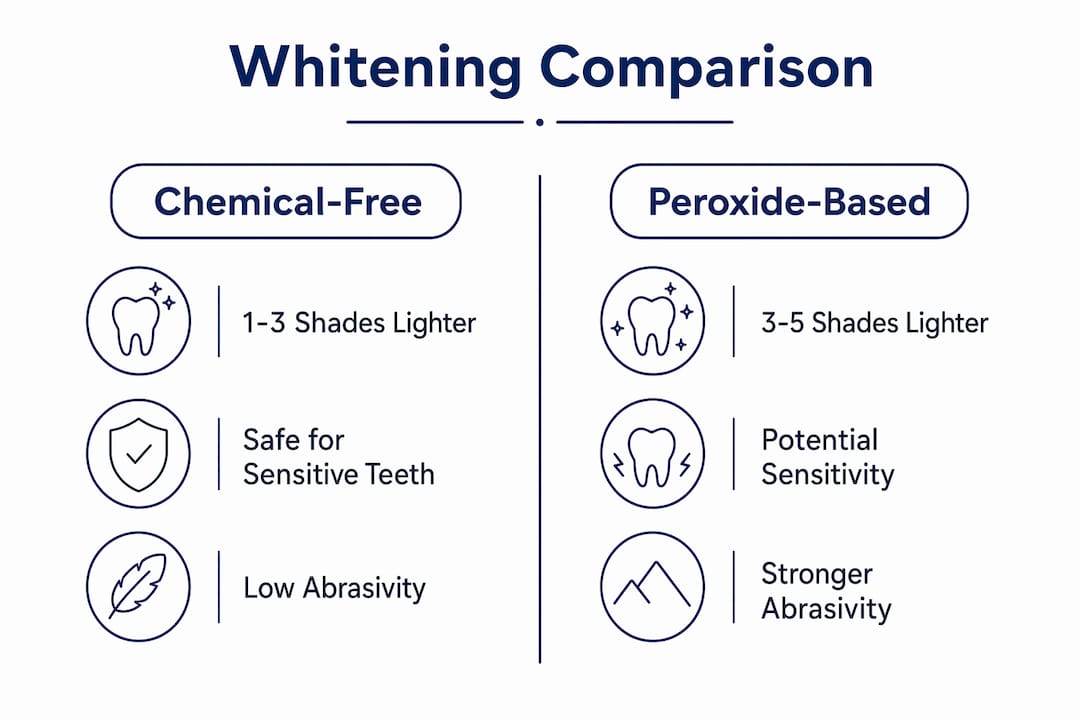
The key takeaway: chemical-free whitening is not a shortcut. It is a safer, gentler path that rewards consistency over time.
What safety advantages do chemical-free whitening products offer?
Peroxide bleaching works by releasing free radicals that oxidize stain molecules. Those same free radicals attack enamel proteins and irritate gum tissue. Hydrogen peroxide causes enamel erosion, tooth sensitivity, and gum irritation through this mechanism. That is not a rare side effect. It is a predictable consequence of how the chemistry works.
PAP avoids this entirely. It oxidizes stains without releasing free radicals, which means the whitening reaction stays targeted at the stain rather than spreading to surrounding tissue. People with naturally sensitive teeth or thin enamel benefit most from this distinction.
The safety profile of chemical-free products depends on three factors:
- RDA score: Abrasive agents must stay within a safe range. Low-RDA abrasives like baking soda remove stains without grinding down enamel. High-RDA abrasives, found in some whitening charcoal products, can cause long-term enamel wear.
- pH balance: Acidic whitening products soften enamel before abrasion occurs, multiplying the damage. A neutral or slightly alkaline pH protects the tooth surface during treatment.
- Hydroxyapatite: This biomimetic mineral remineralizes teeth by filling exposed dentin tubules, directly reducing sensitivity. Products that combine PAP with hydroxyapatite offer both whitening and enamel repair in one step.
Pro Tip: If you have naturally sensitive teeth, look for products that list hydroxyapatite alongside PAP. The combination whitens and repairs simultaneously, cutting recovery time between sessions.
Experts consistently recommend enamel protection during whitening as the primary selection criterion, above shade improvement claims. A product that whitens two shades without damaging enamel is a better long-term choice than one that promises six shades at the cost of sensitivity. For people over 40, where enamel naturally thins, this trade-off becomes even more significant. Reviewing cosmetic safety guidance for women 40+ can help frame ingredient choices across your entire oral care routine.
How can you safely use chemical-free whitening methods at home?
Safe at-home whitening follows a clear sequence. Skipping steps or mixing methods without a plan reduces results and increases the risk of enamel wear.
- Start with PAP-based strips or a kit. Apply strips for 30 minutes daily over a 10–14 day course. Do not exceed the recommended application time. PAP strips cause significantly less irritation than peroxide strips, but overuse still stresses enamel.
- Use baking soda paste two to three times per week. Mix a small amount with water to form a paste and brush gently for two minutes. Expect gradual results over 10–14 days for surface stains. Do not use baking soda daily, as even low-RDA abrasives accumulate wear with excessive frequency.
- Avoid lemon juice and apple cider vinegar. These are popular in viral home remedy content, but both are highly acidic. Acidic ingredients soften enamel before any abrasion occurs, making every subsequent brushing session more damaging. The short-term brightening effect is not worth the enamel cost.
- Add a hydroxyapatite whitening toothpaste to your daily routine. Use it as your regular toothpaste between whitening sessions. Hydroxyapatite rebuilds mineral density in enamel and reduces sensitivity caused by open dentin tubules.
- Limit stain-causing foods and drinks during treatment. Coffee, tea, red wine, and dark berries re-stain teeth faster than whitening removes stains. Cutting back during a 10–14 day PAP course dramatically improves final results.
- Maintain results after your whitening course ends. Long-term maintenance includes using whitening toothpaste, avoiding staining foods, and repeating a short PAP course every few months. Consistency matters more than intensity.
Oil pulling fits best as a morning habit before brushing, not as a replacement for any of the steps above. Swish for 10–15 minutes, then brush normally. The oil removes overnight debris and creates a cleaner surface for your whitening products to work on.
For anyone starting a new whitening routine in 2026, reviewing current whitening best practices before buying products saves both money and enamel.
Key Takeaways
Chemical-free whitening is the most effective safe alternative for people with sensitive teeth, delivering 1–3 shades of improvement through PAP, natural abrasives, and enzymatic agents without the free radical damage of peroxide bleaching.
| Point | Details |
|---|---|
| PAP is the top peroxide-free option | PAP oxidizes stains without releasing free radicals, avoiding sensitivity and enamel damage. |
| Expect 1–3 shades of improvement | Chemical-free methods work best on extrinsic stains and require 4–8 weeks of consistent use. |
| RDA and pH determine safety | Choose products with low RDA scores and neutral pH to protect enamel during treatment. |
| Hydroxyapatite adds remineralization | Pairing PAP with hydroxyapatite whitens teeth and rebuilds enamel mineral density simultaneously. |
| Maintenance extends results | Avoiding staining foods and using whitening toothpaste after treatment preserves your results long-term. |
Why I think the “natural is always safer” rule needs a reality check
People assume that if something is natural, it cannot hurt their teeth. That assumption causes real damage. Lemon juice is natural. Activated charcoal is natural. Both can strip enamel faster than a peroxide strip used correctly. The word “natural” is not a safety certificate.
What actually matters is the mechanism and the concentration. Baking soda is safe because its RDA is low and its pH is neutral. Lemon juice is harmful because its pH is around 2, which dissolves enamel on contact. PAP is safe because it oxidizes without releasing free radicals. The chemistry is what protects you, not the marketing label.
That said, I genuinely believe chemical-free whitening is the right choice for most people who are not chasing dramatic results. If you have sensitive teeth, thin enamel, or a history of gum irritation from whitening products, PAP-based treatments are a meaningful upgrade. The results are real, the side effects are minimal, and the long-term enamel health trade-off is far better than peroxide bleaching done repeatedly over years.
The one area where I push back on the category is intrinsic discoloration. If your teeth are gray or deeply yellowed from tetracycline, aging, or fluorosis, no chemical-free product will fix that. A dentist consultation is the honest next step, not a stronger DIY kit. Knowing the limit of a method is part of using it well.
— Lenney
Getsmilefam’s peroxide-free whitening line
Getsmilefam builds its whitening products around the same principles this article covers: no hydrogen peroxide, low-abrasivity formulas, and hydroxyapatite for enamel support. The BLU Whitening Toothpaste combines gentle polishing agents with hydroxyapatite to whiten and remineralize in one daily step, making it a practical foundation for any chemical-free routine.
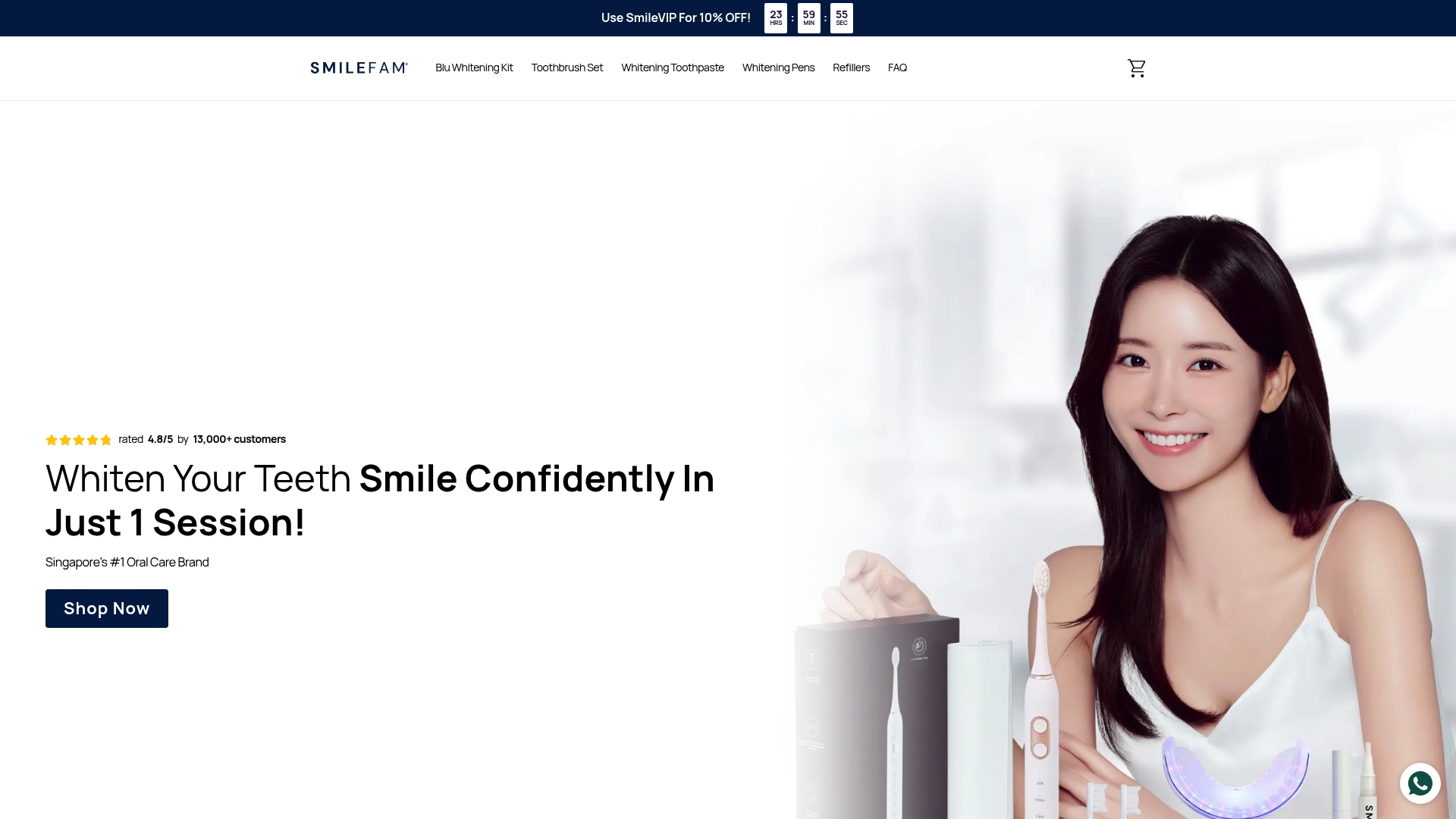
For a complete at-home course, the BLU Teeth Whitening Kit delivers a structured peroxide-free treatment designed to minimize sensitivity while producing visible results. Both products use lab-approved, enamel-safe ingredients and are suitable for people with sensitive gums. If you want a gentle starting point that does not require a dentist visit, Getsmilefam’s lineup gives you a clinically grounded option at home.
FAQ
What is chemical-free whitening in simple terms?
Chemical-free whitening refers to teeth whitening methods that skip hydrogen peroxide and other bleaching agents, using alternatives like PAP, baking soda, and plant enzymes to remove surface stains safely.
Is chemical-free whitening actually effective?
Yes, but with realistic expectations. Natural whitening methods typically lighten teeth by 1–3 shades over 4–8 weeks, compared to 6–8 shades with peroxide treatments. They work best on surface stains from coffee, tea, and tobacco.
Who benefits most from non-toxic teeth whitening?
People with sensitive teeth, thin enamel, or a history of gum irritation from peroxide products benefit most. PAP-based treatments deliver whitening results without the free radical release that causes those side effects.
Can I use homemade whitening solutions safely?
Baking soda paste used two to three times per week is safe and effective for mild surface stains. Avoid acidic DIY ingredients like lemon juice or apple cider vinegar, as their low pH softens enamel and causes long-term damage.
How long does chemical-free whitening take to show results?
PAP-based strips show results after a 10–14 day treatment course. Natural methods like baking soda take 4–8 weeks of consistent use. Neither approach produces overnight results, but both improve with regular maintenance.